

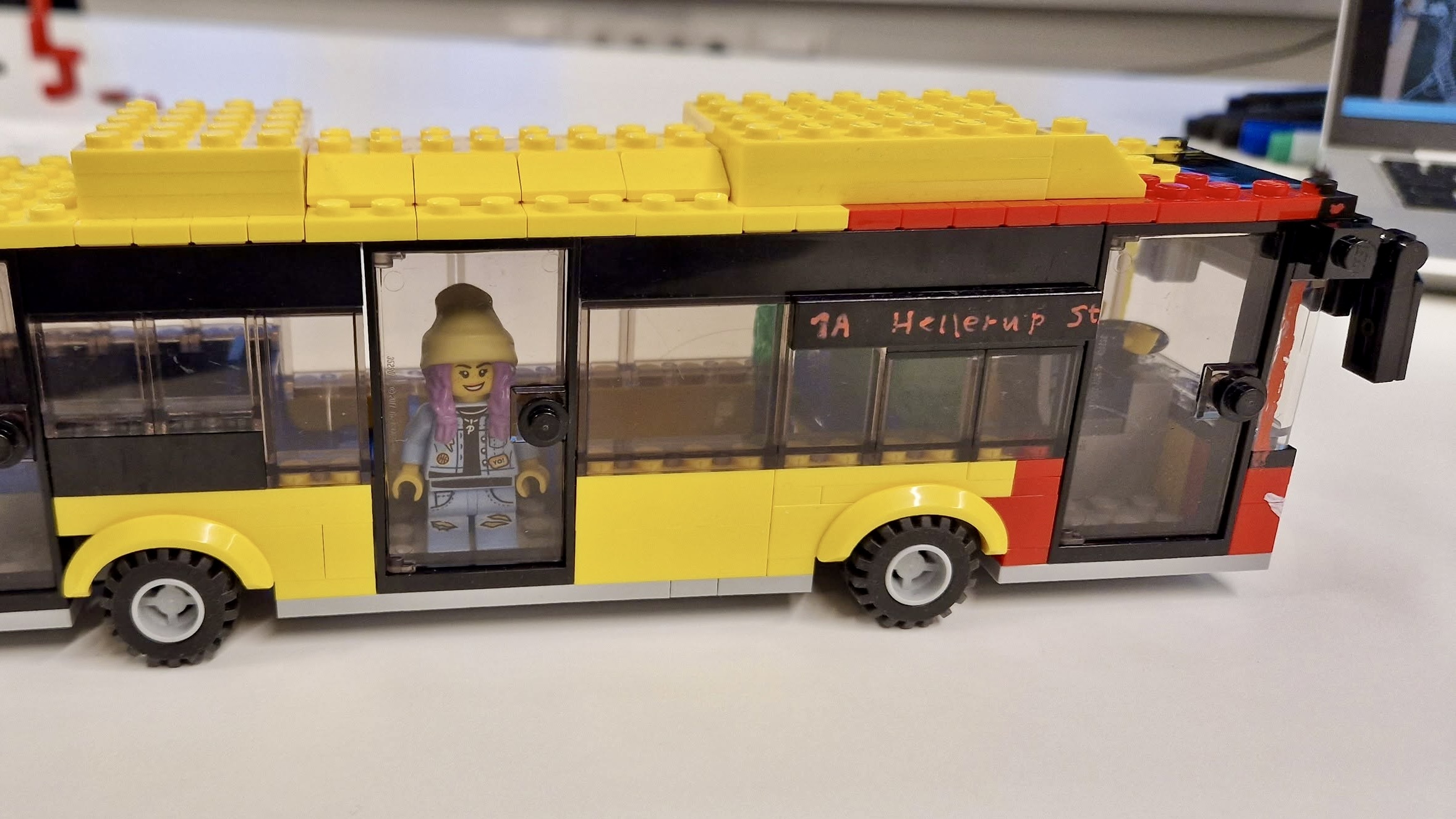
I could pretend we drew on well-reasoned criteria when considering what area of Copenhagen to live in as we transitioned back to Denmark after six years away. The truth is, we ending up going mostly on vibes when picking a neighborhood. Thankfully, we lucked into amazing transit access.
We live outside of Copenhagen proper (but still in the Greater Copenhagen region), no more than seven minutes walking from a station that sees multiple S-Tog lines, a regional train, and several bus routes pass through it. Hopping on either suburban rail (S-Tog) or a proper train gets us to one of the city center stops in roughly 15 minutes. But it’s a bus route I’ve come to rely on (and kinda love).
Like many people, I have snobbish ideas about buses. I’m pretty sure I’ve never referred to them as “loser cruisers” (a not unpopular derogatory term for buses in Canada), but, before this last year, I would have chosen a train over a bus every time. Trains are more predictable, less dependent on the whims of traffic snarls, and more likely to arrive and depart on time. They’re somehow more sophisticated, with nods to both modernity (I’m thinking bullet trains) and a bygone era (channeling the Orient Express).
But now an A bus route is my transit mainstay.
It’s an A bus that transports me to and from teaching yoga at least weekly. That takes me for errands or drops me in Nørrebro for more varied restaurant options than near our apartment. The reliable, if not always timely, the A bus has driven me home during snow storms and in the pelting rain. I’ve watched a double rainbow peek between buildings along its route and sweltered on Denmark’s few really warm days (A buses don’t have stellar temperature control). I don’t rely on the A to get me into city center (other than during S-Tog diversions for track work), but otherwise, it’s my transit of choice.
In Copenhagen, A-buses are marked with red corners at the front and back of their yellow bodies, corresponding to red corners on their stop signage. During rush hour they don’t follow a specific schedule, instead arriving every four to seven minutes (often leading to two or three arriving in a clump). The frequency slows to every ten minutes outside of rush hour and down to once in 30 minutes overnight (yes, my favorite bus line runs around the clock).
The six A routes in Copenhagen (plus others in Helsingør, Holbæk, Køge, Ringsted, and Roskilde, along with Aarhus where they operate slightly differently) are intended to simplify bus travel through long, frequent routes with many stops. It certainly does the job for me!
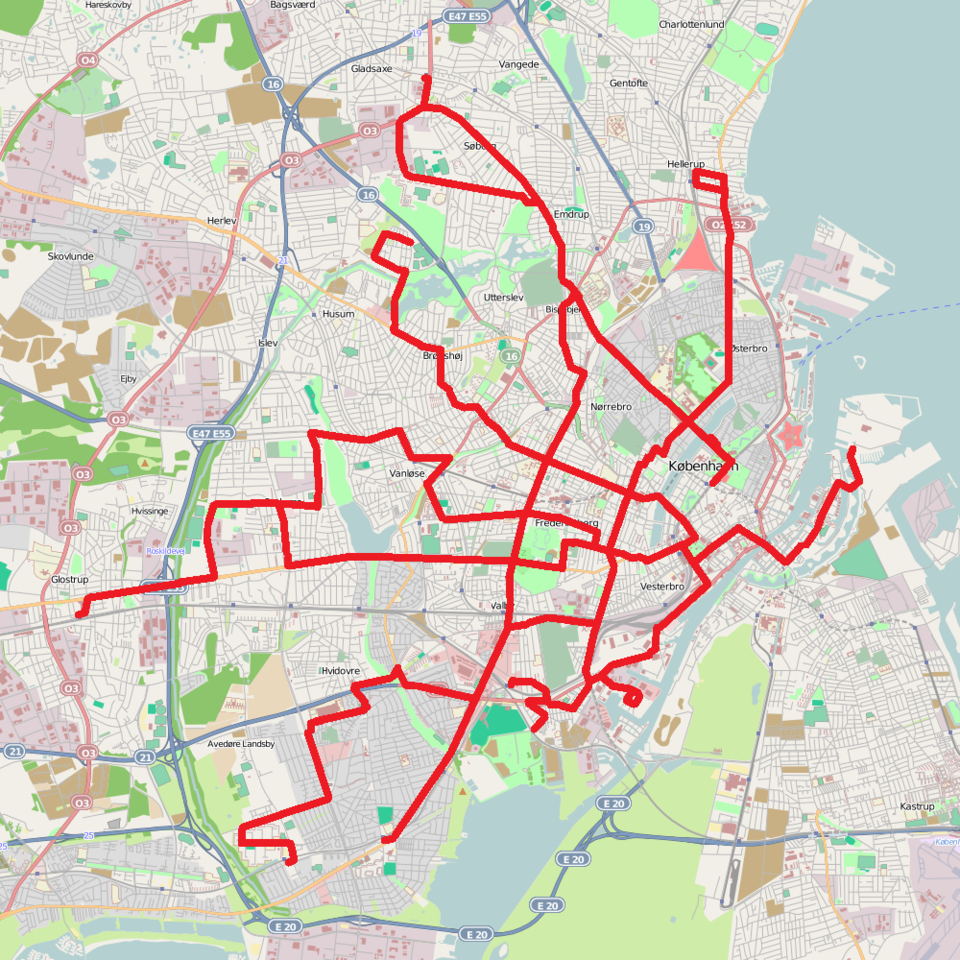
Photo credit: Leif Jørgensen via Wikimedia Commons
Even after living in Denmark for several years, I’m astonished to have so many transit options nearly at my doorstep. For the two years we lived in England, the closest train station was at least a half hour walk or 10 minutes by car, and the idea of catching a bus to the station (or anywhere, really) was laughable. Unlike most European cities where the central train station is plopped right in the middle of the action, English train stations are frequently on the outskirts of town, perhaps to encourage frequenting a pub or two along the walk to your final destination (London’s multiple major train stations in its heart are an obvious exception).
But even an-out-of-the-way train station was inconceivable growing up in a suburb of Vancouver, Canada. Vancouver now has a decent, driver-less light rail system (somewhat like Copenhagen’s Metro), but SkyTrain wasn’t particularly useful until long after I moved away to go to university. And the city’s transit infrastructure runs mostly north/south. For instance, my high school is 4.5km due east from the house I grew up in, but nearly an hour away by transit (under ideal conditions, it clocks in around 45 minutes, but an unreliable transfer between buses means those conditions rarely materialize). To address the hundreds of students who lived to the west, the transit authority put on a couple special post-school day buses. I pitied the poor drivers who had to deal with only high school students as passengers, but at least it spared riders on the regular routes from our shenanigans!
Copenhagen’s A routes crisscross the region, transporting passengers from suburbia to city center and out to far-flung destinations like Reffen (the harbor-side street food market on Refshaleøen, a former industrial site about 3.5km from the nearest Metro station). Movia (the company responsible for the As and other Sjælland-area buses) even adds extra service during busy times, like the delightfully numbered Bus 666 that supplements the 2A route to Refshaleøen during Copenhell. Why do I suspect its riders are better behaved than suburban Canadian adolescents!
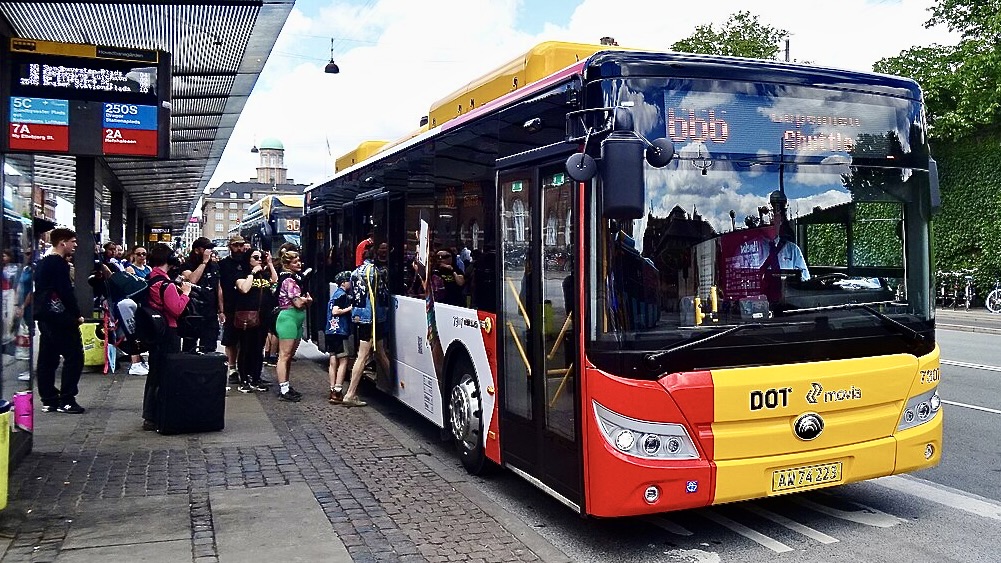
Image credit: Leif Jørgensen via Wikimedia Commons
When we relocated to Denmark at the start of 2025, I knew I was returning to a lot of what I already loved (and a few surprising things, too). I could never have dreamed that a bus route would be one of my favorite bits of living here, but I’m thrilled to have fallen in love with an A!