
Are Danes Really That Happy? A Local’s Perspective
Every year, Denmark ranks among the happiest countries in the world, at least according to the World Happiness Report. The 2025 edition is no exception, with Denmark landing in second place, just behind our Nordic neighbour, Finland. If you’ve followed these rankings over the years, this probably doesn’t come as a surprise. Since the report started in 2012, Denmark has never dropped out of the top three.
But are we really as happy as these reports suggest? And what does “happiness” even mean in a Danish context? As someone who’s lived here my whole life, I wanted to reflect a bit on this topic that keeps popping up in conversations whenever new rankings are released.
Why Denmark Scores So High
Let’s start with why Denmark keeps scoring so well. The Happiness Report measures things like income, social support, life expectancy, freedom, generosity, and corruption levels. In the report, people from 143 countries rate their lives on a scale from 0 to 10, with 10 representing the best possible life. This year, Finland scored 7.7, closely followed by Denmark at 7.6.
Denmark’s high ranking is driven by several factors that paint a very positive picture of Denmark. On paper, Denmark basically ticks all the right boxes for having a “happy population”.
A big contributor to the score is the strong sense of security provided by the welfare system. Free healthcare? Check. Free education plus student grants? Yep. Long parental leave and solid unemployment benefits? Also yes. If you lose your job, you won’t end up on the street. If you get sick, you won’t have to sell your kidney to pay for hospital bills. And parents don’t have to save for decades just to send their kids to university. In that sense, Danes face less uncertainty in life than many others around the world.
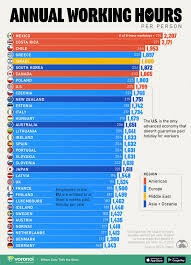
Another reason for the high ranking is Denmark’s work-life balance. With a standard 37.5-hour full-time workweek, but with over a quarter of employees (26.2% in 2023) working part-time, the actual average comes to just 33.3 hours per week. Compared to Mexico – the hardest-working country in the world – Danes work nearly 1,000 hours less per year. That’s a lot of extra time to prioritize your personal life, hobbies, friends and family.
Trust is also a huge part of Danish society. We trust the government, authorities, institutions, and each other. You’ll see parents leave their babies in strollers outside cafés, people leaving their bikes or houses unlocked, and it’s common to leave personal belongings unattended in public spaces. There’s a shared belief and general assumption that people will follow the rules, creating a society where people feel safe and connected.
While Denmark is an expensive country, income inequality is also relatively low compared to other countries. The high tax rates fund a well-functioning society, and most people, whether working in an office or a supermarket, can afford a decent standard of living.
The Danish Idea of Happiness
All these factors might sound amazing to other parts of the world that could only dream of this. But if you ask Danes whether they feel truly “happy” on a daily basis, they will often hesitate. Do I feel happy? Do I see my friends, family or colleagues as happy? That depends…Is happiness really about joy, or is it about something else?
When writing this column, I asked people around me what happiness means both in Denmark and for themselves… and I got the same response over and over: It’s not about constant joy or excitement, it’s about contentment.
The Danish idea of happiness is rooted in being satisfied with a simple, balanced life. Contrary to what many people think when they hear “happiness report”, this type of living doesn’t necessarily mean a life free of challenges or struggles, but an overall feeling that the simple way of living brings happiness to your life.
The Hidden Challenges of Danish Life
Despite all these advantages, it doesn’t mean life here is perfect. Nowhere is perfect, otherwise we would all go there! But the way the system works helps to reduce major sources of stress, but this doesn’t necessarily guarantee happiness in the way people might expect.
As with any other place, Denmark also has its challenges (that funnily enough don’t appear in the report!). For one, Denmark is a highly individualistic society, resulting in a huge loneliness pandemic. People tend to form tight-knit groups early in life, and making new friends as an adult, especially as an international, can be tough. Social interactions are often reserved, and while Danes are polite, they don’t typically engage in small talk or invite strangers into their homes. Many internationals struggle to integrate, and even Danes, especially those who didn’t form close groups as a child, can feel lonely and isolated.
Another obvious challenge everyone notices every year is the long, dark winters. While hygge helps people get through the cold months (at least we try to convince ourselves of that), the lack of sunlight can affect mood and energy levels. Many people suffer from Seasonal Affective Disorder (SAD) and the short summer only makes the long winters feel even longer.
Then there’s the cultural expectation to fit in. Denmark is a country that values equality, which is positive in many ways, but it also means that ambition and personal success aren’t always celebrated. The unspoken rule of janteloven (the idea that you shouldn’t think you’re better than others) can feel limiting for many people. If you’re used to a culture that celebrates personal success, Denmark’s preference for modesty can feel just a tiny bit suffocating.
Finally, despite the strong social system, the high cost of living can still create pressure. Rent, especially in Copenhagen, is astronomical, groceries are pricey. And while salaries are high, many people still feel financial strain, particularly those without financial support from family.
So, Are We Actually That Happy?
Happiness is tricky to measure because it’s a very subjective experience. From my perspective, Denmark provides excellent conditions for happiness by having financial security, trust, a strong social safety net and a good work-life balance. But daily happiness? That depends entirely on the person.
For internationals, the experience can be mixed. Some thrive in the structured, predictable society, while others struggle with the reserved social culture and long dark winters.
Denmark may not be a utopia, but it offers a lot of positive aspects (in my opinion). And while it’s not always the fairytale land the Happiness Report makes it out to be, it’s still a pretty good place to live.