When movement becomes a language of belonging
My name is Mette Ørbæk, and I am endlessly fascinated by the language of movement. Through my many years of working with people, I’ve learned that movement speaks its own language – one that allows us to express, connect, and grow together. I am passionate about people, their stories, and the moments when they discover their potential through the body.
As a certified Dance Movement Therapist, Body Psychotherapist, MPF, and teacher, I have more than 20 years of experience in dance and social educational work. For the last 12 years, I have worked therapeutically with movement. I’ve led dance and movement workshops for a wide range of groups – including people with chronic pain – and I run Sans for Bevægelse (“Sense for Movement”) in Denmark. I am also a co-founder of the Institute of Dance Movement Therapy, where we train future therapists in using the body and movement as tools for healing, learning, and growth.
Movement as a language of life
We hear it over and over: movement is essential to our health and well-being. The World Health Organization identifies physical inactivity as one of the world’s major health risks — people who move too little have a 20 – 30% higher risk of premature death and a greater likelihood of cardiovascular disease, diabetes, and depression. Research shows that even just a few hours of sitting can slow blood flow to the brain and strain our metabolic systems.
As children, we move instinctively – jumping, running, dancing without a second thought. Yet despite what we know, something changes as we grow older. As adults, we slow down – we spend our days seated, navigating deadlines, screens, and commutes. Movement becomes something to schedule, and something that often falls off the to-do list when life gets busy.
Finding connection through movement
That’s why the Erasmus+ project “Move, Dance and Feel Good” came at such an important time. Led by partners from Denmark, Romania, and Slovenia, the project explores how inclusive dance practices can not only create an important opportunity to move but also foster connection and well-being among both neurotypical and neurodivergent young people.
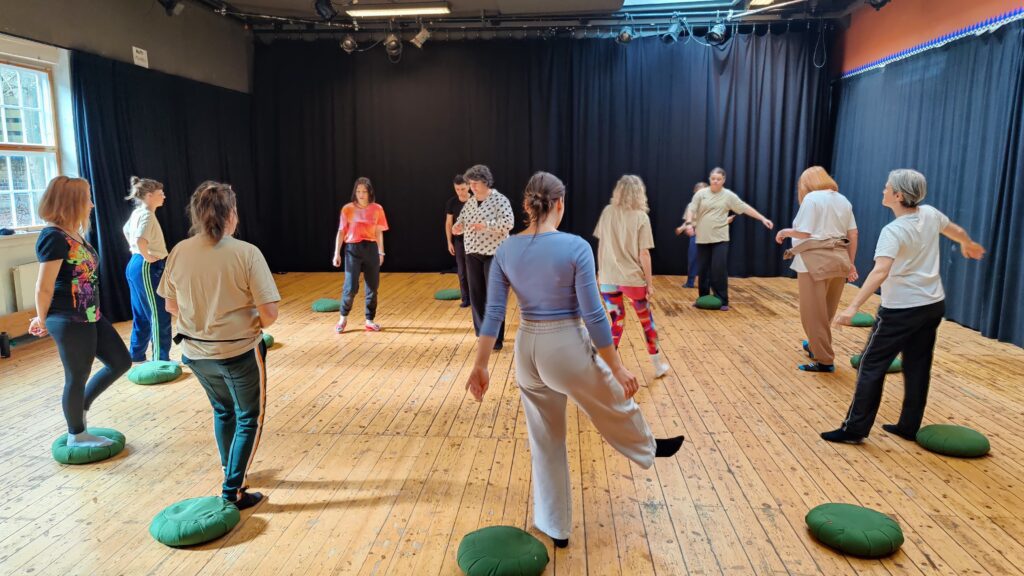
The Danish part of the project was hosted by Sense for Movement and facilitated by me. Over several days at GLAD STU in Copenhagen, we came together from across Europe to explore dance, improvisation, and co-creation, showing that dance is a language that transcends cultures. In this video, you can watch the transformation unfold in real time. At first, participants move cautiously: arms folded, tentative glances exchanged. But as the workshop begins, something beautiful unfolds. Small gestures grow into expansive movements, laughter fills the space, and the room begins to breathe with rhythm and play.
Step by step, the energy swells with spontaneous dancing—followed by applause and smiling faces. One of the visiting facilitators, Tepuru Danut Gabriel from Romania, reflected on the spirit of collaboration and sense of belonging with the participants: “We included them—and they included us. Through creativity and dance, we felt part of the group, and I think they felt part of the group.”
These moments reveal the power of movement as a language that transcends words. As facilitator, Sorina Petrescu shared: “We are building bridges between worlds that are considered very different. Dancing is the place, the space, and the instrument that guides people through their inner self – and also between them. That’s the beauty and the magic of dance therapy.”
Co-creation as inclusion
The project was never about teaching a fixed method but about co-creating new ones. Across youth camps and international exchanges, participants helped shape the activities – such as choosing music, leading improvisations, or suggesting variations. Inclusion became something lived rather than taught.
Collaboration across Denmark, Romania, and Slovenia came with some expected challenges, like language barriers, but instead of obstacles, these differences became sources of creativity. Sara Jurkas Omerzo, a psychology student from Slovenia, reflected: “It was so cool that we had this experience in such a safe space, and that we had Mette guiding us and supporting our facilitation. Usually, I go and do something and then reflect.” Here, reflection was part of the process itself.
The lasting impact
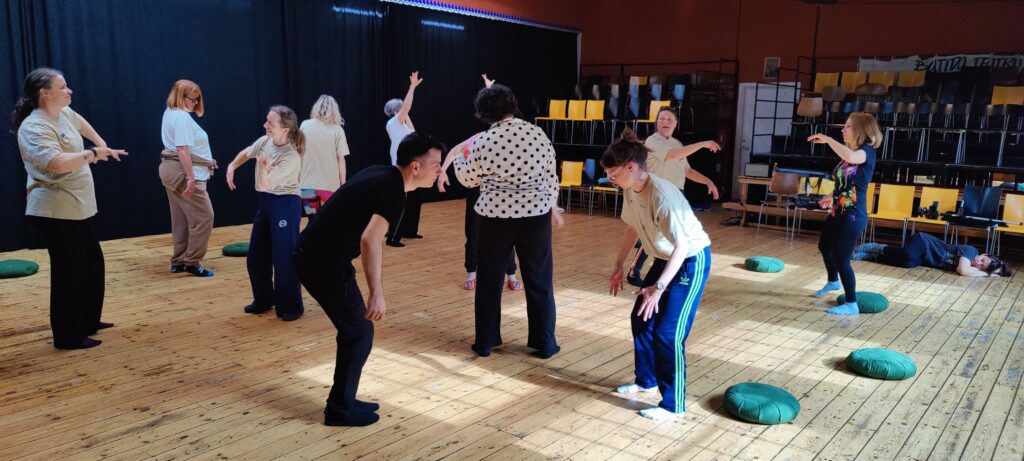
The Danish setting of GLAD STU added another layer of meaning. Founded on the idea that people with and without disabilities should create art together, GLAD’s ethos mirrors the heart of Move, Dance and Feel Good: inclusion not as a goal but as a way of being together. By the final session, participants who had once stood back shyly were leading group dances, guiding others through the room, and laughing freely. This, to me, is where the true legacy of the project lies—where movement becomes a mirror of trust, confidence, and community.
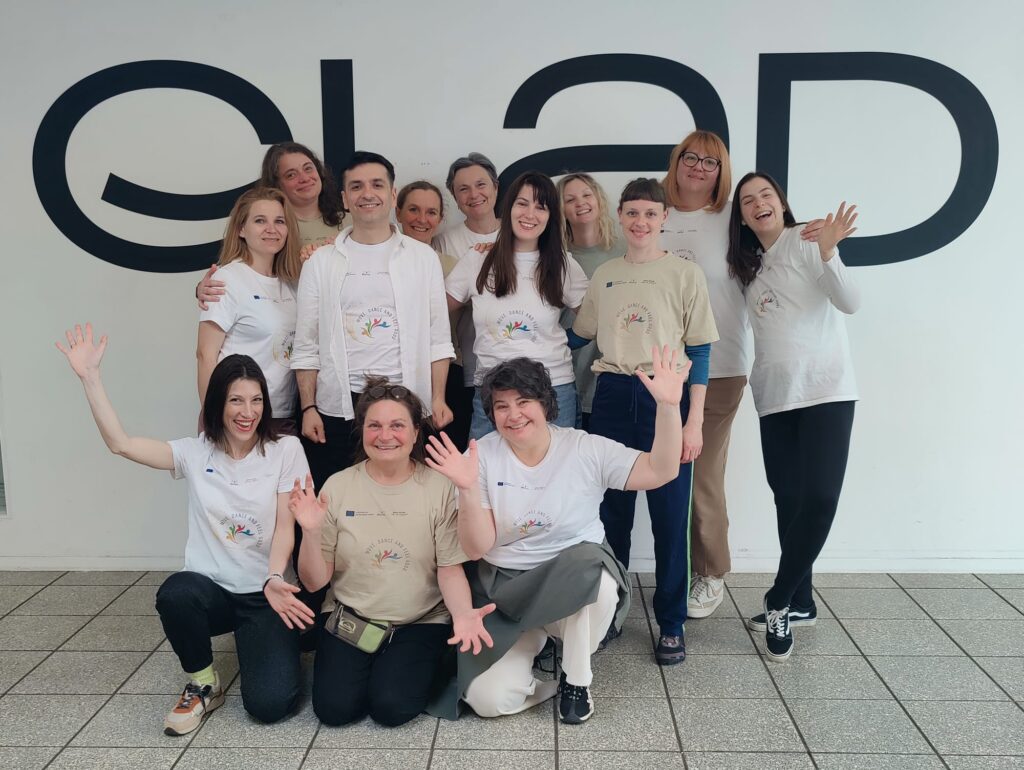
As one participant shared afterwards: “The meeting in Denmark was an exceptional experience. We were able to put theoretical knowledge into practice. The entire group contributed to everyone being able to reach their maximum.”
Another participant summed up the experience beautifully: “It opens up empathy, joy and understanding for other people – and it can only be so if we meet and do things together… like move, dance, and feel good.”
Such reflections capture what words alone cannot – that way, dance and movement help us rediscover our connection. To ourselves, to one another, and to life itself.
Beyond the project
Although Move, Dance and Feel Good has officially concluded, its spirit continues. The partners are sharing tools with educators, therapists, and youth workers across Europe and planning new initiatives to keep the movement alive.
Perhaps the most moving part is that dance, something so deeply human, can remind us how to meet each other again and create spaces where everyone is welcome. Feeling inspired? You can learn more about my work and how to get involved here. Most importantly, remember to keep dancing!
Co-authored by Mette Ørbæk.