
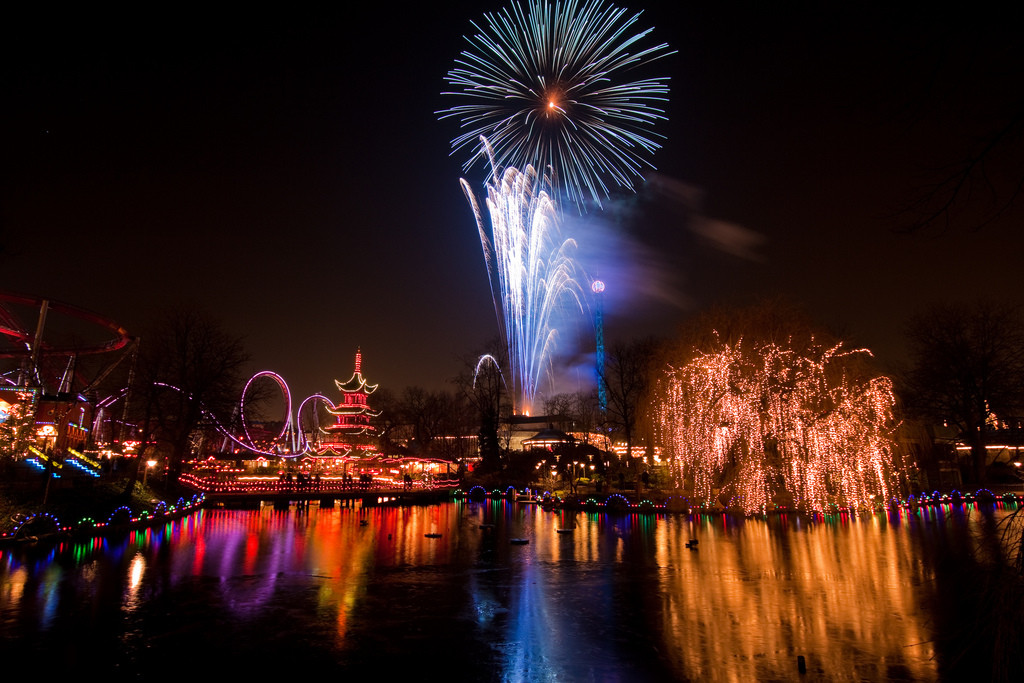
Every year on December 31st, my family has the same ritual. No matter how busy the kitchen is, no matter who’s chopping vegetables or setting the table, everything stops at 6 p.m. sharp. We put down whatever we’re doing, gather in the living room, and turn on the TV for one of the most Danish moments of the year: the King’s New Year’s speech.
And we’re not the only ones. Many Danes plan their entire evening around this moment – even house guests often make a point of arriving before 6 p.m. so they don’t miss it. There’s something deeply charming about the way the country collectively quiets down for a few minutes, almost like hitting a shared “pause” button before the real festivities begin. And I get equally emotional every year.
For me, this moment has always felt both grounding and comforting: a chance to reflect, to breathe, and to feel connected to something bigger than whatever is bubbling away on the stove.
A tradition full of history
The tradition actually dates back to the 1880s, when Christian IX held what was then called the “skåltale for fædrelandet” – a toast to the fatherland. Back then, it was given at the New Year’s banquet on January 1st, not on New Year’s Eve as we know it today.
Under Frederik VIII, the national newspapers began printing the speech so more people could follow it. And in 1941, during the difficult years of the German occupation, the speech was broadcast on the radio for the very first time.
I’m sure the King’s words offered comfort and encouragement at a time when people desperately needed it. The same King Christian X famously rode through the streets of Copenhagen on horseback every single day during the occupation – a simple daily ritual that became a powerful symbol of resistance and that he as their king was still present and didn’t hide away. Thousands gathered to watch him ride by, turning those moments into a national meeting point that strengthened solidarity and made the king a beloved figure.
With the spread of television, 1958 became a turning point. It was decided that the speech should be transmitted on both radio and TV, and moved to December 31st. Suddenly, the tradition became something everyone in Denmark could experience together at the exact same moment.
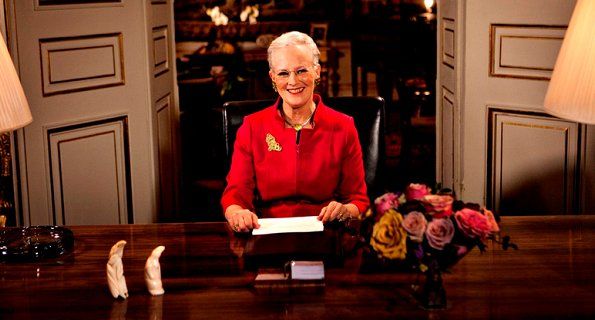
And when Queen Margrethe II took over the throne in 1972, she made the tradition truly her own. Her warm, thoughtful, and often subtly humorous style turned the speech into something many Danes felt personally connected to. For more than 50 years, her voice at 6 p.m. on December 31st became as reliable as the kransekage waiting in the kitchen – a familiar, steady presence closing out the year.
What the message is all about
The speeches themselves have changed a lot over the years. In earlier times, the King often commented more directly on political issues. Frederik VIII, for instance, spoke in 1909 about strengthening Denmark’s defense.
But as democracy matured and the world changed, so did the tone. By the mid-20th century, Frederik IX and later Queen Margrethe II focused more on shared values, gratitude – often linked to significant events of the past year and Denmark’s place in a bigger global picture.
And if there is one thing Queen Margrethe was especially admired for, it was her ability to give the Danish people a gentle (and sometimes not-so-gentle) nudge in the ribs – always elegantly phrased, always with warmth, and often with that little linguistic “svirp”, where you suddenly think, “She might have a point there.”
She was famously clear in her language when something mattered. Experts often highlighted how she didn’t shy away from holding up a mirror to the nation. In 1984 she addressed our tendency toward coolness, mockery, and unkind remarks – a moment many Danes still remember because she managed to say something uncomfortable in a way that made people nod, not bristle.
In 2012 she spoke directly to the younger generation, warning against living life entirely in cyberspace and forgetting real human connection – a message that might be even more relevant today. In that same speech she also reminded the nation of Denmark’s place in Europe, marking 40 years in the EU, and emphasized how cooperation had brought both prosperity and peace. This international perspective was typical of her: although she was the national anchor, her outlook was always wider.
In the wake of major world events, she also found the exact right tone. After the 2001 terror attacks in the US, her speech focused on freedom, democracy, and solidarity. She rarely said anything that wasn’t already part of public debate – but when she said it, it suddenly felt bigger. That is the power of the New Year’s speech: small sentences that become national conversation starters.
Another long standing tradition is the closing line: “Gud bevare Danmark.” (God preserve Denmark). These words were first introduced by Frederik VIII, later continued by Frederik IX, and even Christian X ended his speeches with a blessing over the nation — a phrase that took on special symbolic weight during the occupation from 1940-45. Today, the words feel like a small but powerful reminder of continuity.
A new Danish voice
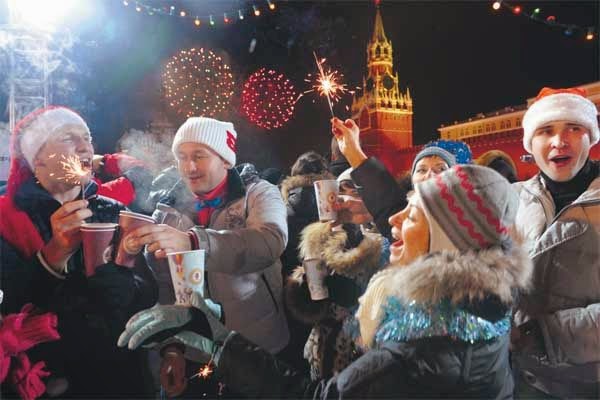
With King Frederik X stepping into his role on January 14, 2024, Denmark has started a new chapter. And with a new monarch comes a new voice — not wildly different, but still distinctly his.
Like his predecessors, he will shape the tone of the New Year’s speech in his own way. His task is to balance the tradition everyone knows with the realities of a modern, global Denmark. And honestly, I don’t envy the pressure of knowing the entire country is watching you at exactly 6 p.m..
Why does it matter so much to the Danes?
To many people (myself included), the New Year’s speech feels like more than a royal moment. It’s a small ritual that brings the whole country together. Even if your living room is chaotic, even if someone forgets the timer on the potatoes, even if your champagne is already open… the speech still creates a shared stillness. There’s something deeply unifying about knowing that millions of people are listening at the exact same time.
Here’s what makes it special:
- Unification: the feeling that everyone presses “pause” at the same time, creating a moment of national togetherness.
- A collective identity: listening to the speech often reinforces a sense of belonging and shared pride in being part of the Danish community.
- A bridge: connecting past and future, linking generations and family traditions.
- Reflection: a reminder of what matters, and what Denmark stands for.
- A symbol: continuity, even when leadership changes hands.
And the tradition doesn’t end with the speech itself. In the days following New Year’s, the royal household hosts the classic New Year’s banquets and receptions – an old custom dating back at least to the 1600s, where representatives of the people come forward to wish the monarch a happy new year. At Det Gule Palæ, visitors can even write personal New Year’s greetings to the King and Queen on special guest lists.
Every year, I’m reminded that the speech isn’t just a festive greeting – it’s a gentle reaffirmation of Danish identity, shaped by history and carried into the year ahead.
This article was written by Sigga Nordgaard Hansen, founder of and Danish teacher at Lingua Danica – an online learning platform that has helped thousands speak a more active and confident Danish.
👉 Follow @linguadanica on Instagram (instagram.com/linguadanica) for almost daily tips and tricks on learning the Danish language and understanding Danish culture