

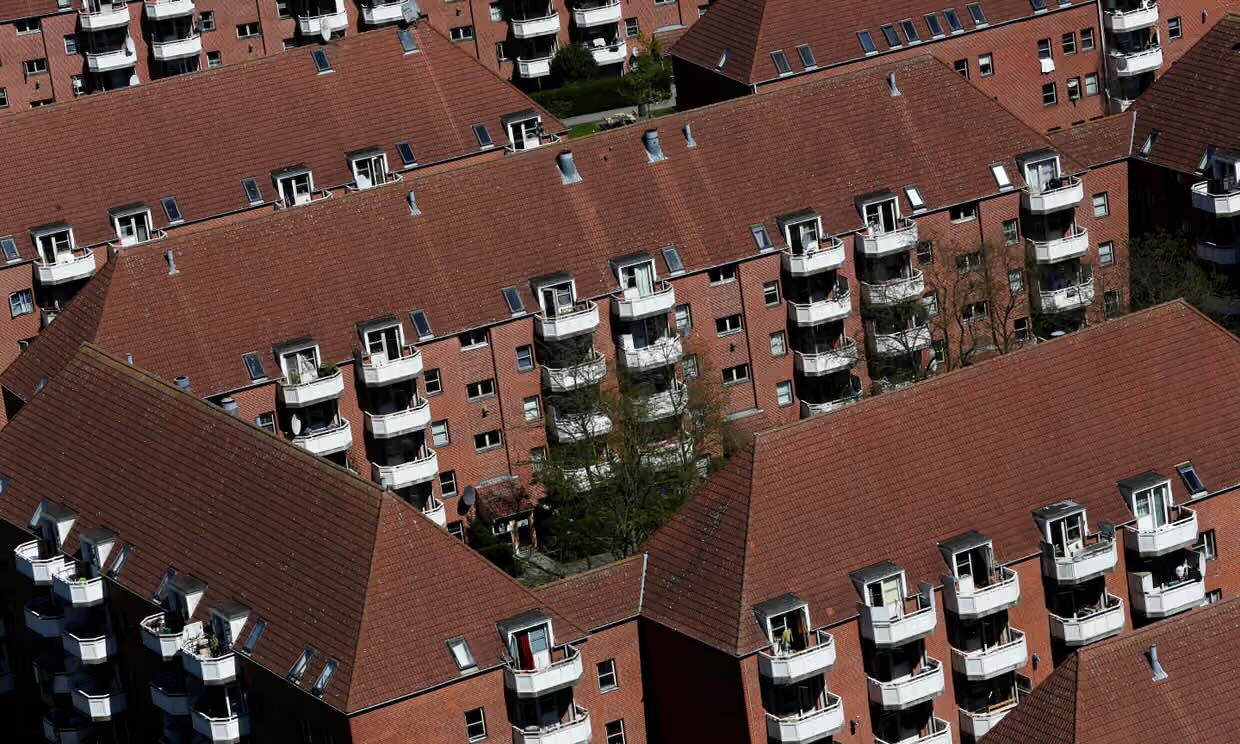
As the new school year slowly arrives, local and international students are scrambling across major cities to find accommodation for their stay. In Denmark, housing can become an issue without the proper awareness. Criminal networks are known to exploit the housing problem by taking advantage of the students who don’t know better and charging them for houses that are not registered or obtained under false pretenses.
Students like Julie and Mathilde are looking for a house in Copenhagen and pay money for houses they can’t even stay in for more than 5 days, as their so-called landlord kicks them out without proper reasoning. We’ve heard these horror stories before. Victims of these organized crimes often feel ashamed to report them to authorities, leaving scammers to operate unchecked.
Read on to learn how to recognize and avoid housing fraud:
Types of Housing Frauds
Type 1 – Illegal Renting
This happens when the so-called tenant has the house under their name but illegally rents it out to other people for an overcharged price. Unlike Airbnb scams, you can’t even stay at the house for more than five days. A major red flag is when they give either weak or no excuses for kicking you out, even when they are legally bound to provide a valid justification. It shows they are doing somethıng that they don’t want any other third party to know. Often, they also don’t make any CPR registrations.
See below for more info on CPR numbers.
Type 2 – Fake Property
In this case, the property they’re trying to sell you technically doesn’t exist in the market. The fake tenant neither has any ownership of the place nor is the apartment in any way up for sale. They usually target naive people (a lot of students unfortunately fit the bill) who don’t think to ask for a tour of the house. They also target people who wouldn’t look for the records of the house.
Scammers usually target naive people who don’t think to ask for a tour of the house or people who wouldn’t look for the records of the house. Students, lower-class citizens, and racial minority groups, unfortunately, often fit this bill and are the biggest victims of this heartless crime. The desperation for housing is how these scammers get their way, since the more desperate you get, the less likely you are to ask questions.
Type 3 – Arbitrary Withholding of Deposit
Some owners have no intention of giving your deposit back to you. They think of it as extra money they get to keep. So they create arbitrary reasons for why they think you damaged their property and why you lost your right to keep it. Since there isn’t exactly a legal line that gets them into trouble, they simply don’t care. This one perhaps wouldn’t exactly count as illegal, but is still considered immoral. A lot of people only rent with the expectation of getting the deposit back, so the owner would tend to take advantage of the tenant’s situation because they will leave the city.
What is CPR
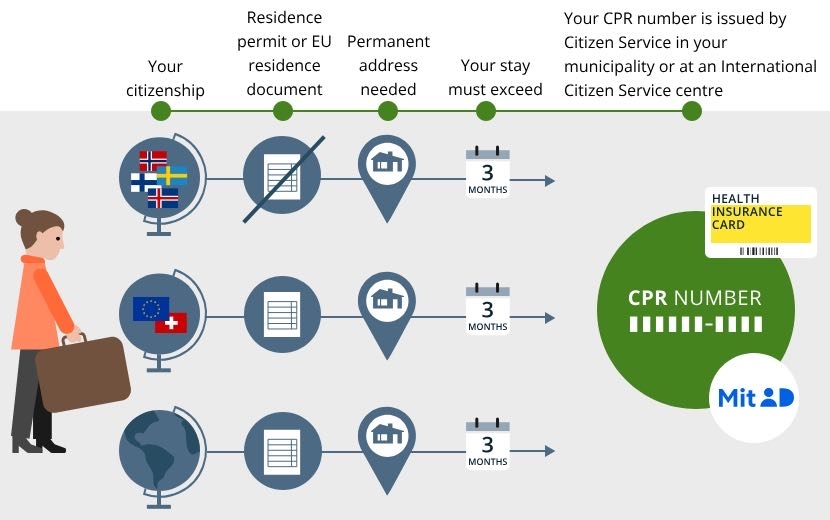
CPR stands for Central Person Register. The CPR number is essential in relation to any contact with the Danish public authorities and any public services. In order to get a CPR number, you need proof that you plan to live in Denmark for more than three months. So you might not need a CPR registration if you are an exchange student staying less than three months.
This means you need to apply to stay for more than three months when getting a visa or a residence permit in the EU or in Denmark (Nordic Countries’ citizens are the exception). You cannot be issued a CPR number before you have found a place to live and actually live there. Hence, ‘No CPR possible’ listings are properties rented out illegally.
For Nordic Country citizens, you need to have a permanent address in Denmark and a marriage/divorce/death certificate, if you are/were married. EU citizens need an EU residence document along with the same documents requested for Nordic citizens.
Meanwhile, Non-EU residents need a work and residence permit from the Danish Agency for International Recruitment and Integration and the original passport along with the same documents asked from other two regions.
How Housing Works in Denmark
Housing for students and young people usually offers some perks, such as lower prices and housing benefits. In some areas, housing is only available for students with ID checks or student confirmation checks. Some of these apartments even accept students and their families.
Apartments for regular young people are only for people under 35, and apartments for students are only for students under 30. Another condition for being able to reside in these provided accommodations is an antecedent certificate (or a certificate of criminal record) and confirmation of your information periodically.
Here is a list of sites specifically designed to help students. (NOTE: These are just extra help that might make the search easier for you. None of these guarantees that you will get a house!)
- Housing Foundation Copenhagen
- Even though it has Copenhagen in its name, the Housing Foundation serves the entire country. They’re an independent non-profıt foundation providing students/researchers from abroad with flexible and competitive housing opportunities for the time they study. They provide accommodation for up to one year.
-
- S.DK SYSTEM
-
- The purpose of s.dk is to gather access to register for more than 13,000 student housing in one place.
- S.dk collects all the waiting lists from three groups: the Central Nomination Committee in Copenhagen (CIU), RIU-Roskilde, and Agora.
- If you are in Copenhagen, this is the site you need to check.
- Local Portals for Housing
- Studiebolig (Aalborg)
- Ungsdombolig (Aarhus)
- BoligØen (Odense)
- Other Available Rent Advice
- Boligstøtte
- a tax-free monthly subsidy from the Danish government to help cover your rent
- To qualify for it, your living situation must meet the following strict criteria:
- You must be renting the home (subletting or a student dorm/kollegium counts).
- Your apartment or dorm room must have its own dedicated kitchen or kitchenette with running water and a drain.
- You must live there year-round and have your CPR number registered to that exact address
- If you have flatmates, only one person can apply for the entire apartment. The income of all adults living in the household will be factored into the calculation
- You are entitled to rent beneficiaries, if you know how to cook.
- Only EU/EEA and Nordic citizens are fully eligible
- As of the 8th of August, non-EU/EEA and Nordic countries’ nationals are NOT eligible for public benefits if they are residing under a student residence permit. If they are residing with a normal residence permit or a family visa, they CAN apply for public benefits.
- Be careful that your landlord might increase the rent based on this benefit.
- Boligstøtte
-
- LLO
- LLO is an organization that protects tenants’ rights. If you ever find yourself in a situation where you need help with rent negotiation, this is where you go. They will help you secure a home.
- You need to pay monthly for the services.
- LLO’s mission is to safeguard the interests of members in private and public rental housing, in cooperative housing, youth and senior housing, and in commercial leases.
- LLO
Survival Guide for College Students: Approved Ways to Fend Off Scams
DOs
- Take time to research local prices and standards. Ask friends and classmates for input.
- Always get a signed contract stating rent, duration, notice, period, and other terms. You have no legal claim otherwise.
- Check who owns the property.
- Always see the place in person.
- Verify the rent level.
- Document any defects (photos help).
- Know the subletting rules.
- Ensure the property matches the contract.
- Double-check legality if you can’t register your postal address there.
DON’Ts
- Pay cash or via foreign accounts.
- Accept pressure from landlords.
- Pay ‘under the table’.
- Overpay deposits (more than 3 months’ rent is unusual.
- Dismiss a decent location too quickly.
Have you ever been scammed in the Danish housing market? Share your story with LWID: info@lwid.dk