
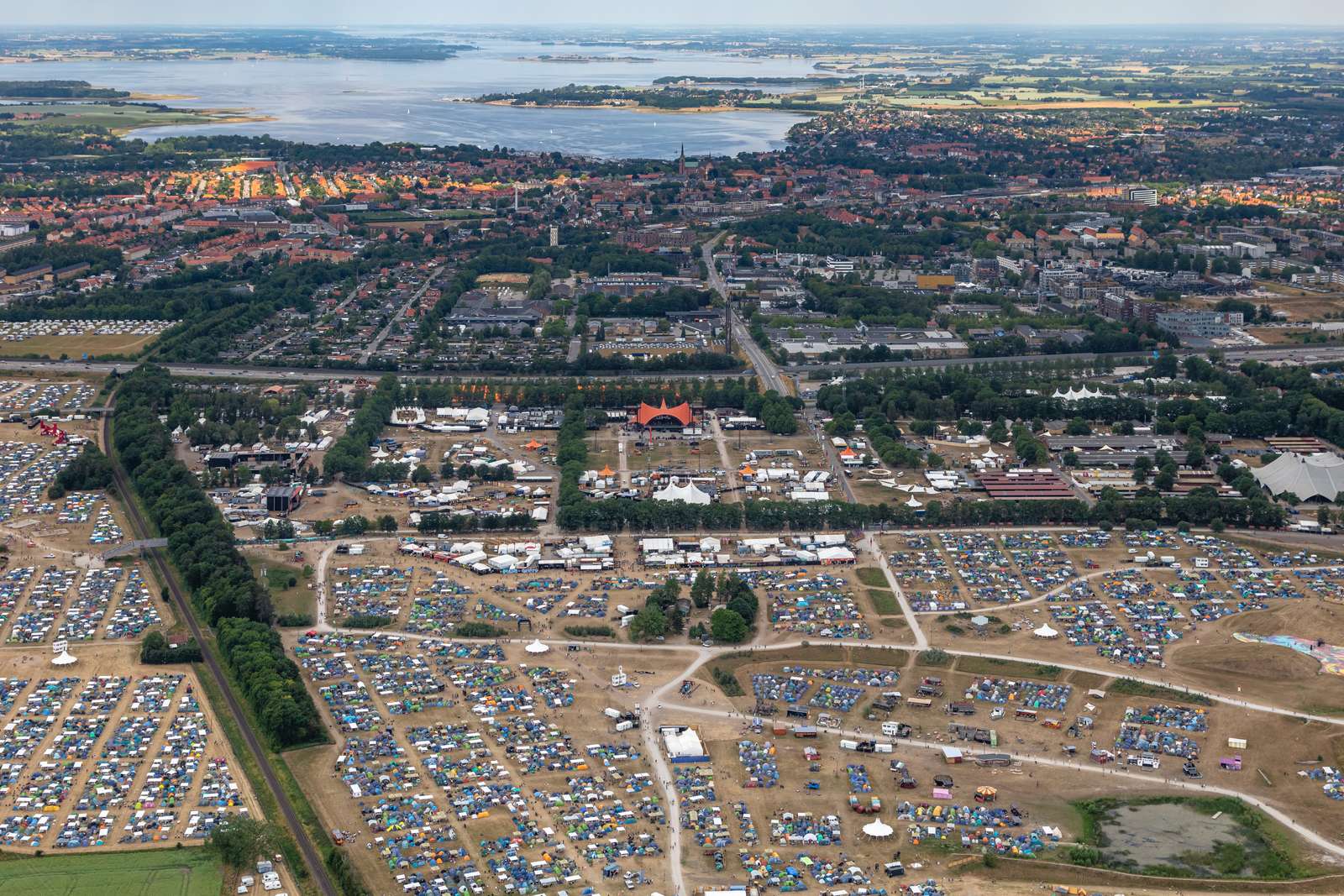
Roskilde Festival is one of the largest music festivals in Europe and the biggest in the Nordic countries. It runs every summer on a farmland just south of the city of Roskilde, about half an hour by train from Copenhagen. This year was the 54th Roskilde Festival, and it was completely sold out, with around 140,000 attendees.
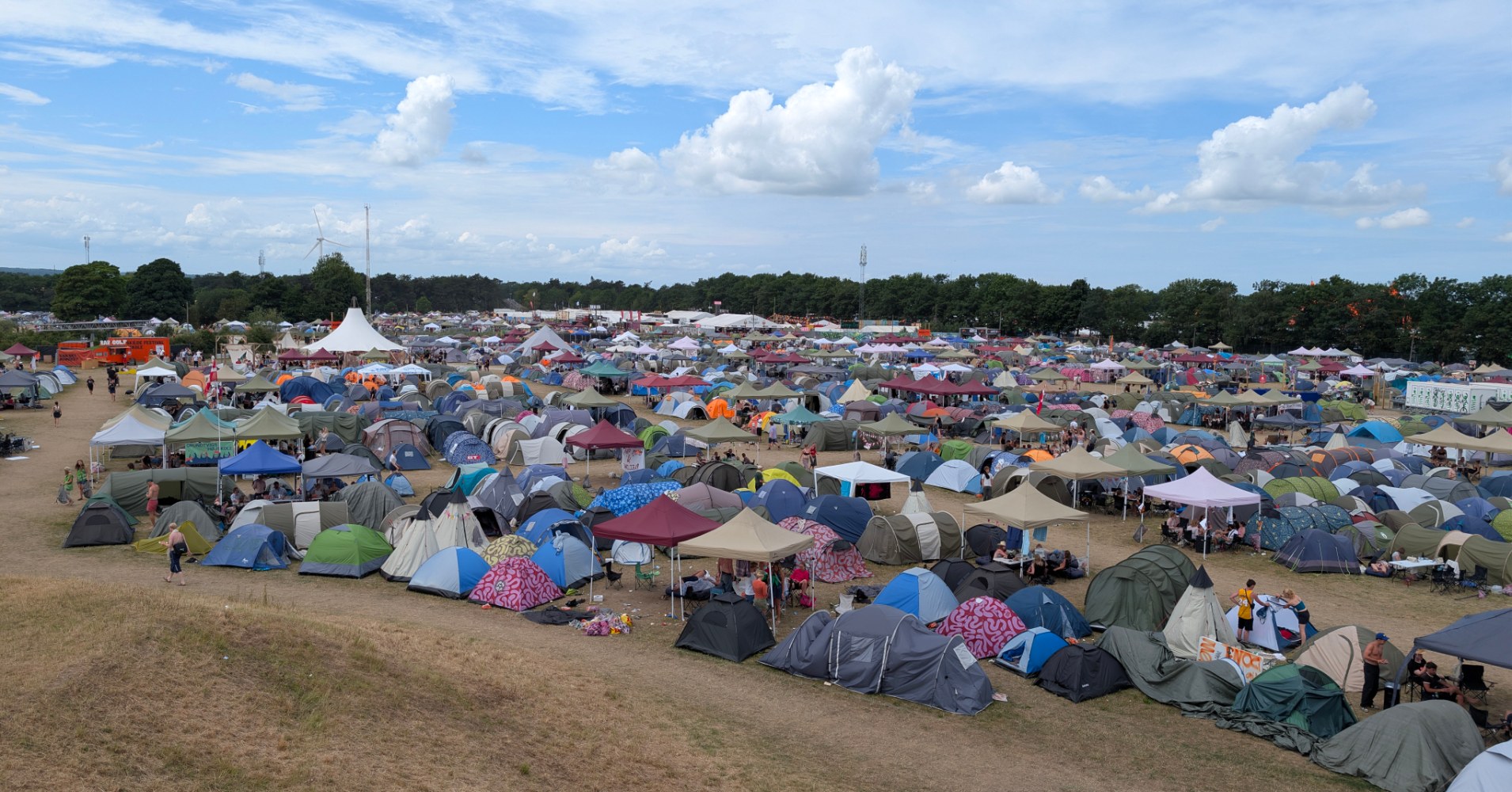
This unique festival began in 1971, organized by two high school students and a promoter who had watched Woodstock and the Isle of Wight from a distance and wanted something similar in Denmark. A year later, the Roskilde Festival Charity Society took over, and it has run the event as a non-profit ever since. The festival week is typically at the beginning of July each year. The camping areas open first, and attendees stay there for a couple of days before the festival starts. The main site, with the stages, opens on Wednesday.
All profits from the festival support humanitarian and cultural work in Denmark, much of it aimed at children and young people. By the festival’s own accounting, it has generated around 476 million kroner since that very first year.
The entire festival is situated on farmland covering about 2.5 million square meters, the size of 350 football pitches. Approximately 50,000 tents go up in the camping areas. There are seven music stages and nine other venues, from a cinema to a skate area. The 2026 program had 177 music acts and more than 90 artists, writers, and performers. The average age of the crowd is 24.
Of the roughly 27,000 volunteers in 2025, about 2,650 came from outside Denmark. Volunteers earn a wristband which allows them to join the Festival’s Charity Society the following year, along with the right to vote at its general meeting and run for its board. Simply put, the people who build the festival are deeply invested.
That charitable model shapes what the festival is. It isn’t just a place to see bands. Each edition is built around a focus on activism, and the organizers treat that as seriously as the lineup. This was my first time at the festival, which was made even better with a press pass in hand. I went for the music like most people do. However, the pass also opened up access to a few things I wouldn’t have found on my own. The first was a guided tour of the festival’s Arts & Activism program on my first day.
Art in the middle of a music festival
Roskilde Festival has a program called Arts & Activism. It places commissioned artworks around the festival grounds, out among the camping areas and walkways rather than in a gallery, where people simply cannot miss them. This year, the program’s stated aim was to open up a sense of hope for the future at a time of conflict and uncertainty, with over 95 contributors involved.
On Wednesday, 1 July, I joined a press tour of that program. There were about 40 of us journalists from across the world. I ended up talking with a writer from Canada who covers music for The Panic Manual, and a Polish writer based in Spain. The tour started near the Orange Stage with a short introduction from the Arts & Activism team, then moved out onto the site, stopping at one work after another while the artists and curators explained their work. What follows is what I saw on that walk, and what the creators of the work had to say about it.
A Slow Walk Above the Campsite
The first stop was a long wooden spiral built over a set of small hills in the campsite. It’s called The Long Way Around, by the British artist Jesse Darling, who won the Turner Prize in 2023. It was featured at the Roskilde Festival last year as well.
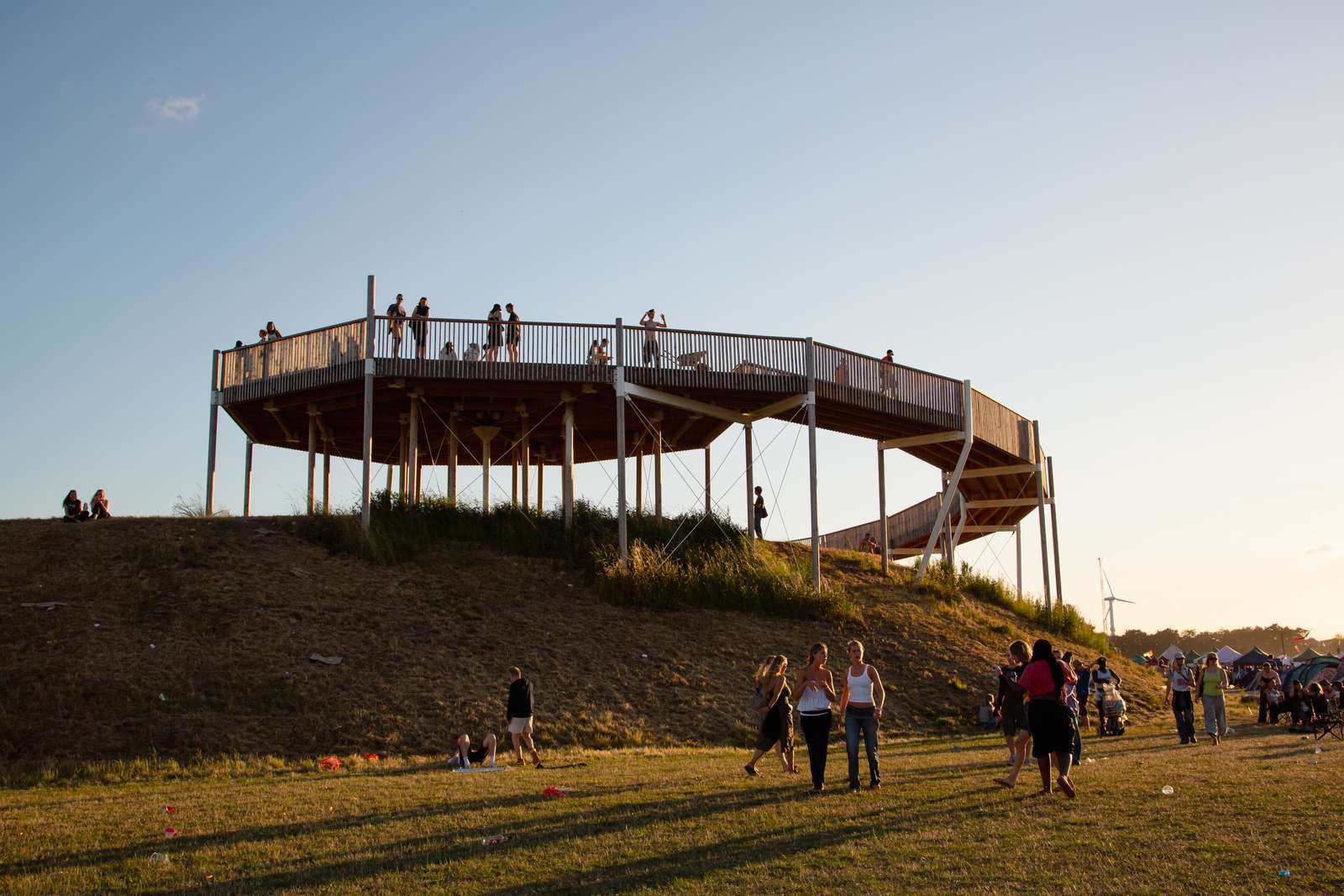
The structure works as a ramp. It gives access to a spot that is otherwise awkward to reach, and it invites you to take the slow route to get there. One of the curators, Jude, described it as a way to offer “a space of contemplation” at the festival, a chance to step out of the noise for a while.
At the top, there’s a ceremonial fire that burns around the clock, with fire keepers who stay with it day and night. This year, Palestinian and Greenlandic artists added small points along the spiral where visitors could stop and think about what it means to belong and to have a home.
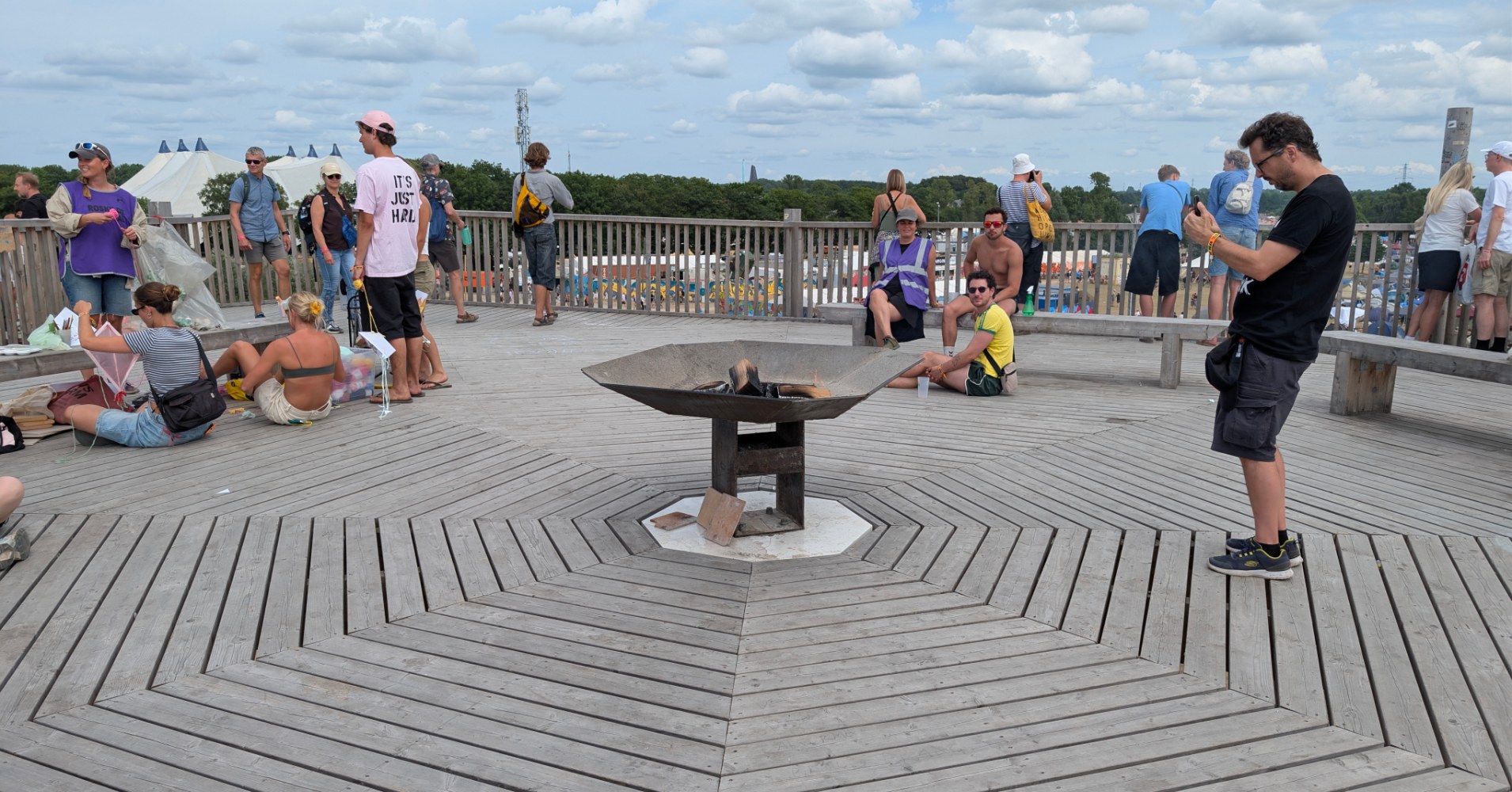
The piece doesn’t leave when the festival ends. It’s public and open all-year-round, part of a larger effort to bring life to this stretch of land throughout the year, when it sits empty as a recreational area near the town.
Horns, ribbons, and the search for someone to blame
The next work was three sculptures shaped like goat horns, by the Danish artist Noah Holtegaard. The English title is ‘I never meant to hurt anyone’. They’re cut from styrofoam by a CNC machine, which carves a shape from a digital 3D file, similar to 3D printing but at a much larger scale.
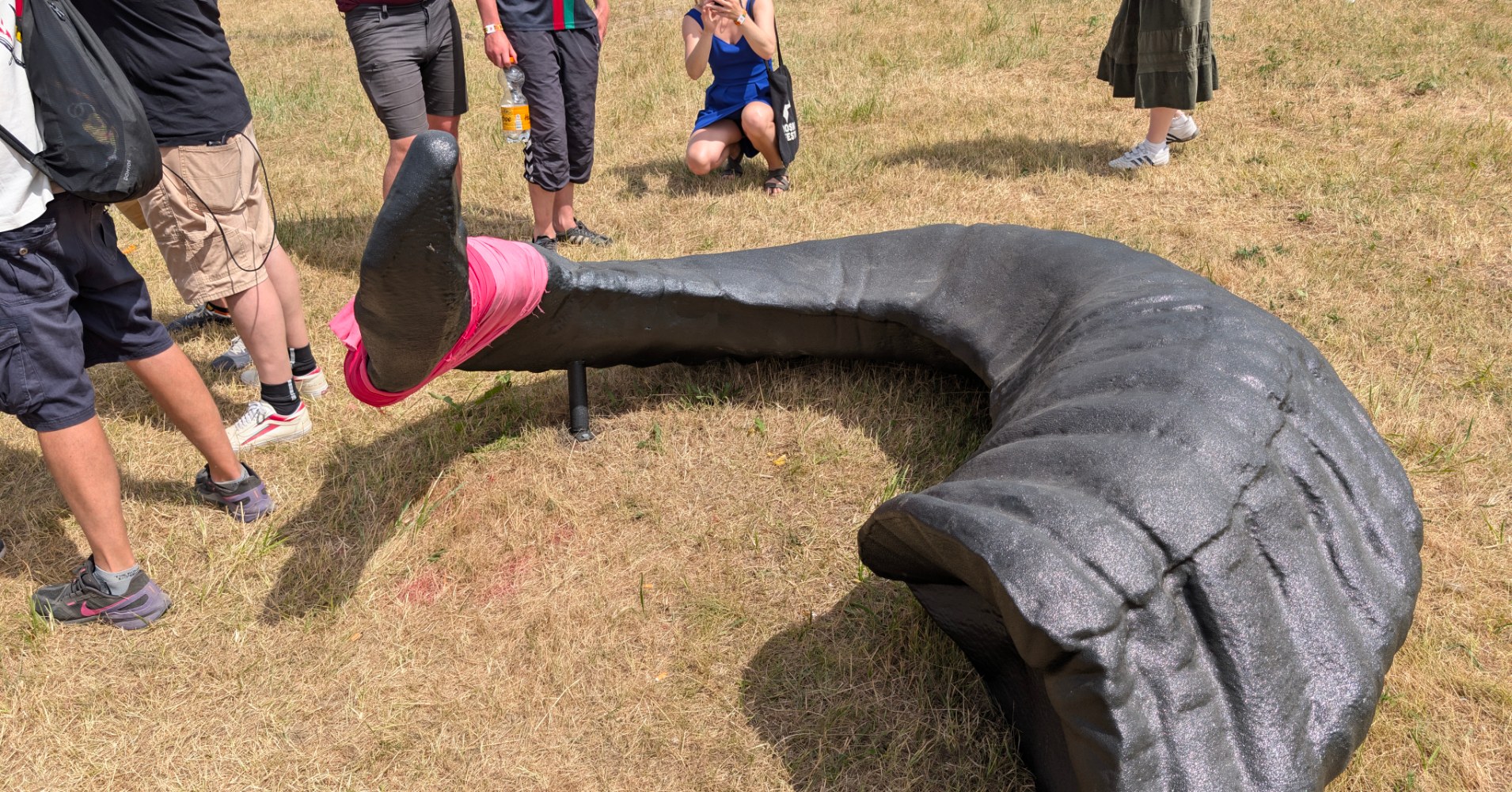
The horns point back to old scapegoat stories. In the earliest versions, a goat was chosen to carry a community’s sins. A red ribbon was tied around its horns, and the animal was sent away. As the myth goes, once the sins were forgiven, the ribbons would turn white.
The ribbons on the sculptures change over time. The work travels between venues, and across the run, they shift from red toward white. During the festival, they were swapped out gradually so they appeared to lighten on their own.
Holtegaard tied the piece to political scapegoats and to how people in power look for someone to blame when they fail. He named Donald Trump as a current example, and the way blame lands on immigrants and the economy when the cause sits elsewhere. He included that along with older cases, such as women accused of witchcraft in the Nordic countries, and groups targeted during the Second World War. He also traced the word ‘stigma’ back to marks that some churches once burned onto sick people and people with mental illness, as a way to make them easy to spot.
A machine that rewrites the festival
The last stop was the newest piece, a walk-in structure of around 100 square meters called Digital Saga. During the first camping days, live action role-players moved through the site in character, pretending to scrape people’s data, collecting their photos and memories.
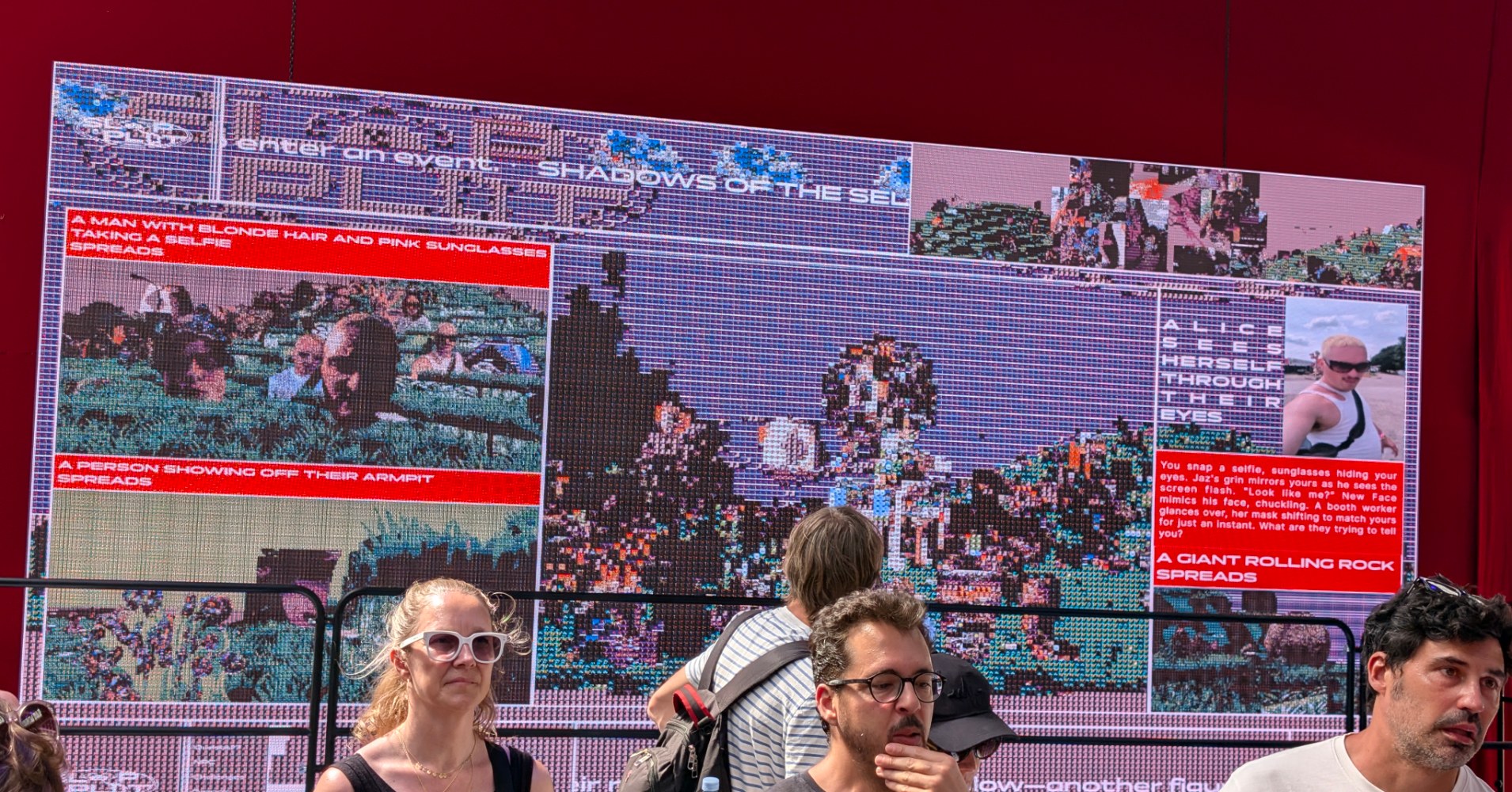
Those memories feed the actual work. You take a picture of a festival moment, upload it through a QR code, and the piece pulls it into a running story. The system looks for what the images have in common and builds a single character out of all of them, a shared avatar who experiences the festival on everyone’s behalf. By Wednesday, it already consisted of over a thousand chapters.
The story follows the classic hero’s journey. The character leaves home, gets a call to adventure, goes through a low point, comes out changed, and returns. The artist maps that onto the festival itself, arriving, losing yourself for a few days, and going home a little different.
His starting point was how much of life now happens on a screen, and what that does to our shared sense of reality. He described watching events on his phone that he sees as a genocide, while hearing public figures deny it, and called that gap a kind of narrative collapse. The work, he said, is an attempt to find the plot again.
One of the curators explained why this belongs at a music festival. Most young people here don’t go looking for art. They catch it out of the corner of an eye, a role player scraping data in the campsite, or their own face on a big screen. There’s a mirrored catwalk where people take selfies, which plays on the idea that everyone treats themselves as the main character.
That was the first afternoon. From there on, the festival opened into what most people come for, the music and the days that followed.
A walk around the site
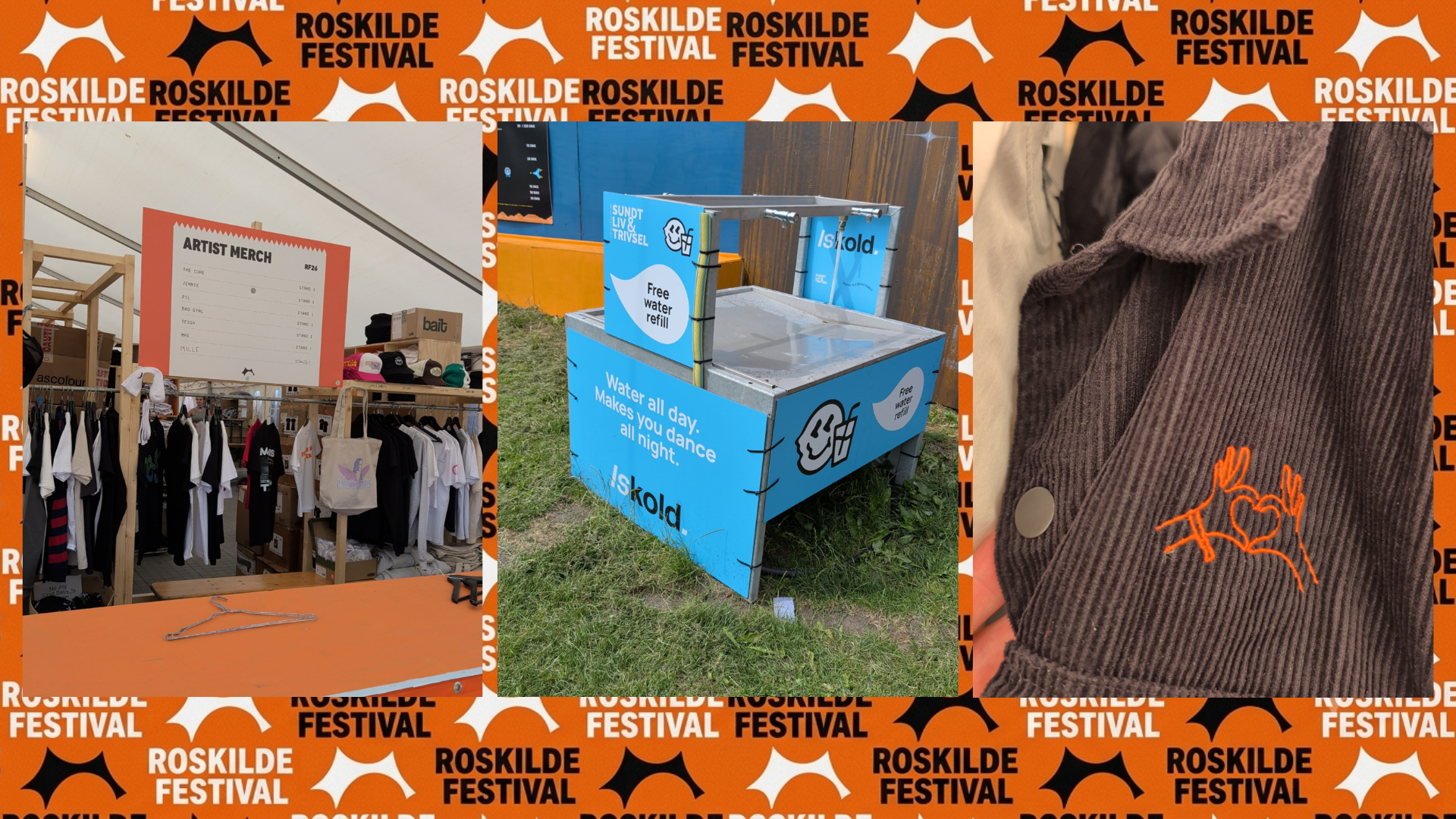
The tour ended around 3 pm. The Cure were the only act on my list that day, and they weren’t on until 10 pm, so I had the afternoon and evening free. I spent it walking the site on my own. I caught bits of a few sets, including Wolf Alice and Jade, and stopped by the merch stand. But a few other things stood out more than the music did.
One was a milkshake stand. It was run entirely by people with speech impairments, and the menu was set up around that. Next to each flavour, the label showed the hand sign for it. So to order, you make the sign. You get your milkshake, and you also walk away knowing the sign for strawberry or banana. I thought it was a clever and inclusive idea.
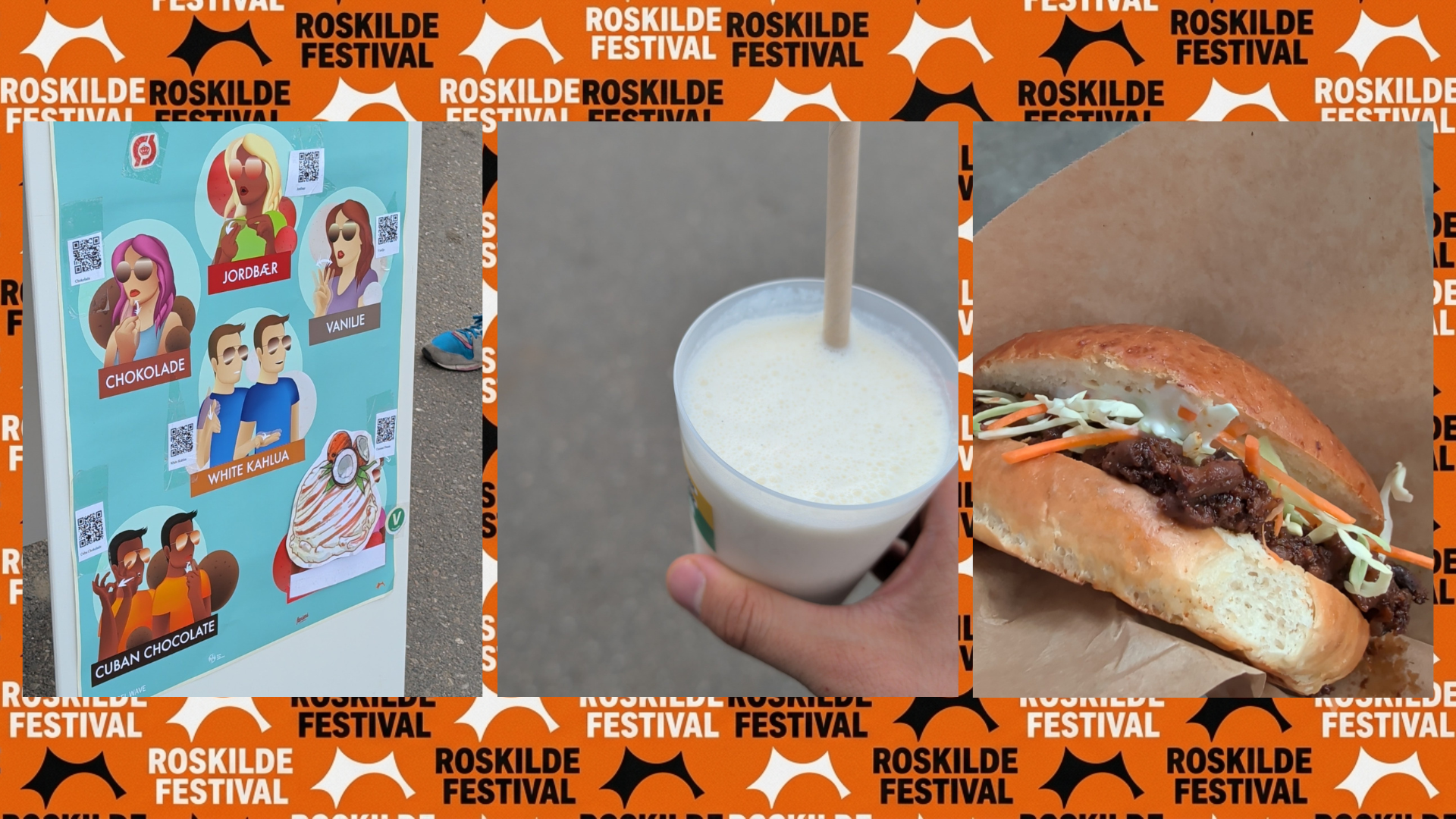
The prices across the site were lower than I expected for a festival. The food was varied too, with a lot more than the usual burger and fries. There were also several second-hand clothing shops to look through. In addition to an upcycling station, you could drop off clothes you no longer wanted or bring your own and have them printed with a festival logo, so you leave with something you’ll actually wear again. There were 18 drinking water points across the festival site and another 35 by the toilets in the camping areas, all free.
Seeing The Cure
Finally, The Cure, at 10 pm. It was my first time seeing them. The show was part of the band’s 50th anniversary and their first time on the festival’s new Orange Stage. Roskilde Festival had replaced its main stage for the first time in 25 years, the fourth version since 1978. The roof sits higher, and the orange tent is bigger, with room for up to 60,000 people in front. It runs on more than 250 speakers and a screen 16 meters wide.
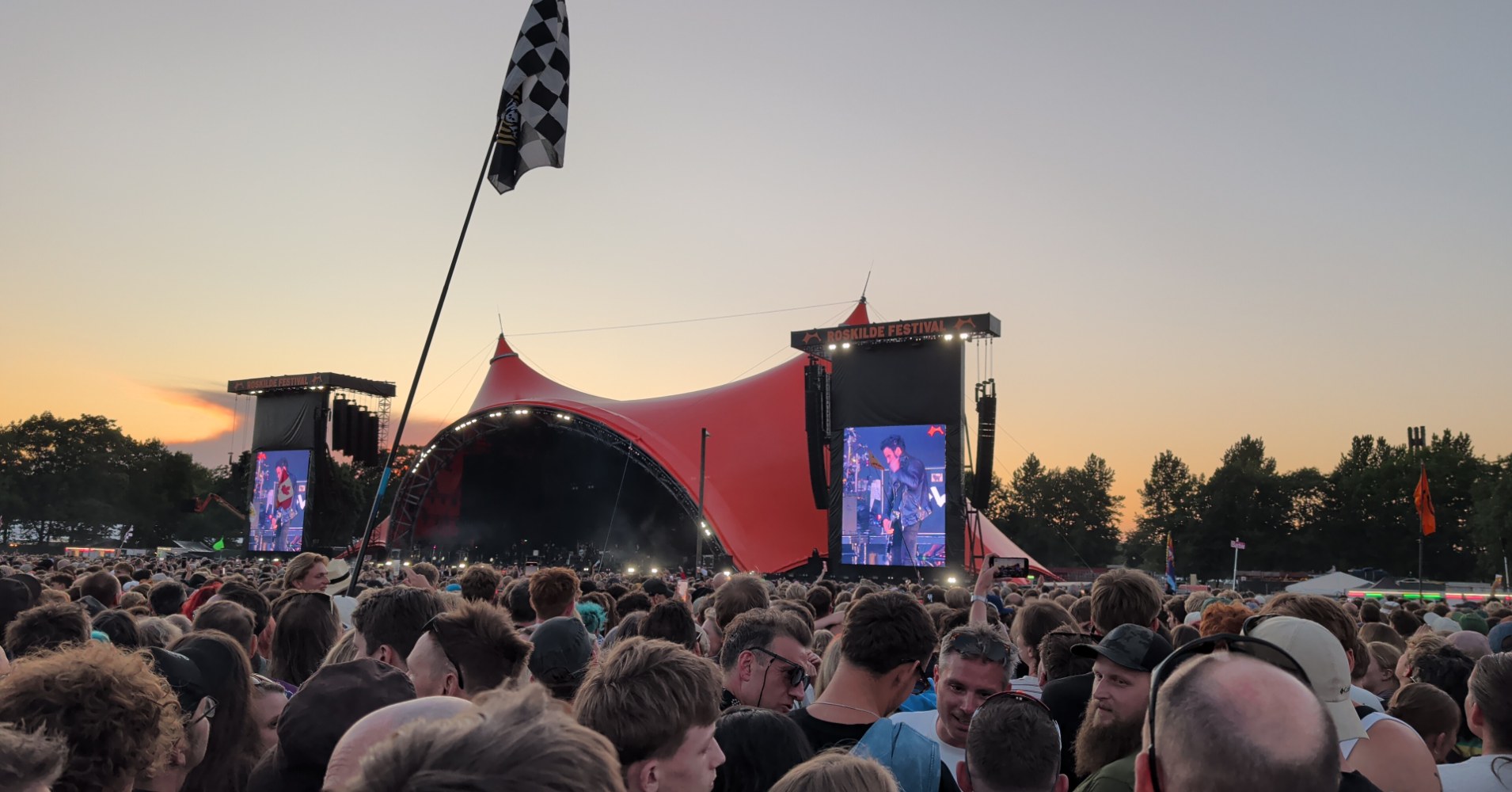
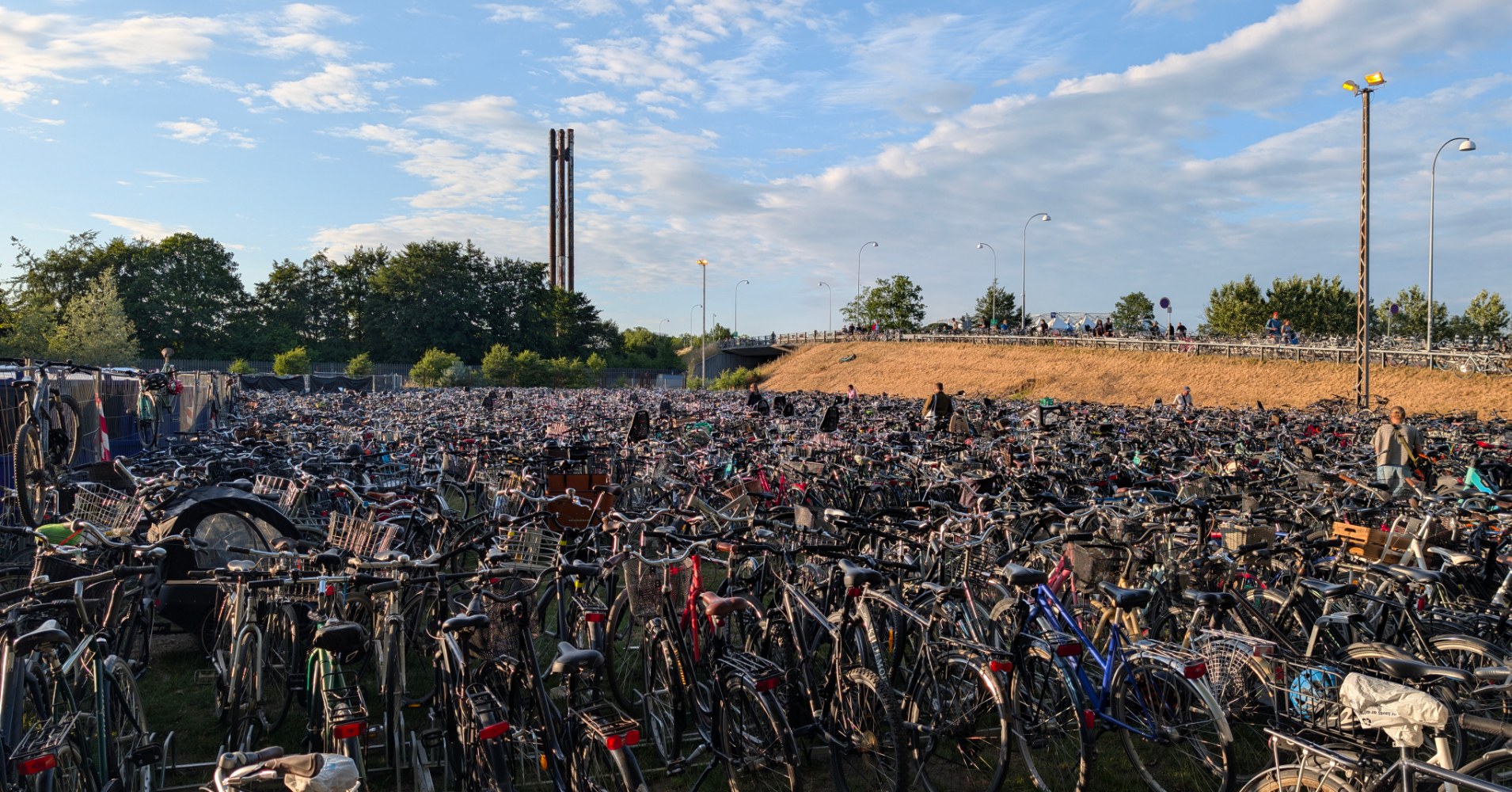
I watched from the edge of the crowd, which is where I usually end up. You could see and hear everything from there without being crushed in the middle. I had arrived at the festival on my bike and left it in a large bike parking area by the entrance. If you’re going without a car, it’s a good way in.
Waiting out the rain
On Thursday, I wasn’t on my own. A good friend and his girlfriend joined me for the day. We had three acts in mind: Gorillaz, Little Simz, and Kneecap, the Irish-language rap group.
Then it started raining, and it didn’t stop for about five hours. I’d brought a rain poncho, so I was fine. We found a wooden bar to shelter under and waited it out over a few beers. When the sun finally came out, the whole place changed. The ground was still soaked, but the mood picked up fast. Gorillaz and Little Simz were the ones I was most excited for, and both were great live. Kneecap didn’t do much for me, just not my taste, though the crowd around us was well into it.
Rain and all, the second day was the most fun I’d had so far.
The practical side
The toilets were the best I’ve seen at a festival. There were a lot of them, they were clean, and soap was provided. The women’s facilities included squat toilets. Queues increased at busy times, but that was the only real downside.
The numbers behind it are large. The inner festival site had 550 toilets, and the camping areas had another 856. All flush, with sinks and soap just outside, and bigger multi-tap sinks in some spots. There were squat urinals for women and anyone who needs to sit, and this year the festival tested three designs, including one it built itself. Free menstrual products were there too, organic tampons and pads from dispensers at 15 points, on a short delay so they don’t run out. For accessibility, there were 6 step-free toilets on the festival site and 10 more at the camping, plus two with ceiling hoists at Handicamp.
Payment was by card. You could top up your wristband and pay with that, though it wasn’t required. Drinks came in reusable cups with a deposit. You return the cup and the deposit goes back onto your wristband. It’s the same idea as the Danish pant system on bottles and cans, built into the festival.
Prices were low. Food and drink cost less than a normal meal out in Copenhagen, which isn’t what you expect at an event of this size. A full-week ticket costs 2,600 kroner, about 348 euros, with cheaper two-day and one-day options.
I didn’t camp. I took the train back to Copenhagen each night and came in again the next day. The trains were crowded, as you’d expect. If you didn’t leave right after the main act finished, it was manageable.
What the press pass got me
The pass gave me more than the art tour. I had access to the backstage village, a quiet area with a few bars and places to eat, set apart from the crowds. I also had access to the media center, a workspace with power outlets, free coffee, and quiet. I mainly used it as a space to cool down and enjoy some quiet throughout the day.
Getting by in English
As an international, navigating the Roskilde Festival was easy. Everything was in English and I had no trouble following what was going on. The one exception was the opening speech, given in Danish by the festival’s CEO. A lot of international media were in the room, and none of us could follow it.
The sustainability push
A few days before it opened, Roskilde Festival 2026 became the first festival to receive the Nordic Swan Ecolabel, the official environmental label of the Nordic countries. To qualify, it was measured against 35 requirements covering energy, waste, food, biodiversity, and how it uses resources.
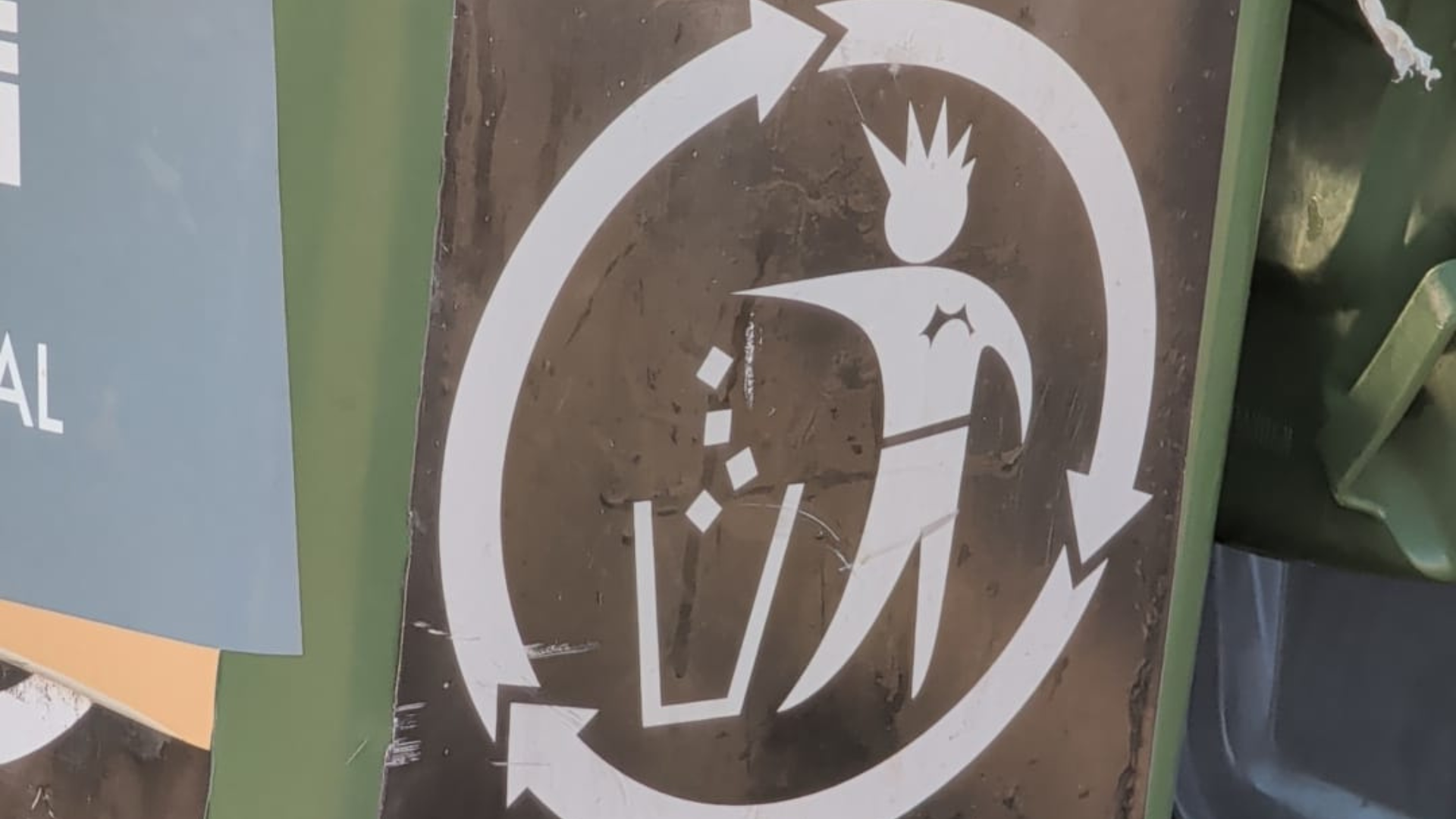
The festival pushed people to be sustainable, and it did it with humor. Instead of plain rules, there were funny signs and messages around the site telling people to return their cups and not litter. The focus on cutting waste showed up all over the site.
The festival serves more than a million meals in a week. Lower-footprint dishes carry a One Planet Plate label, and this year each dish was capped at 2 kg of CO2e.
The festival wants to be climate neutral by 2028. In 2025, it produced more than 1,700 tonnes of waste and recycled 22 percent of it. The target is 1,000 tonnes and 65 percent by 2028. Campers sort waste into three bags – metal, plastic, and the rest – and hand them in at stations around the site. You can also rent your camping gear instead of hauling it from home. In 2025, more than 9,500 people did. On power, the festival dropped its diesel generators a few years ago and now runs off the grid, with about a third of its electricity matched by a nearby solar park.
After the festival
Roskilde Festival 2026 is over. It sold out, with around 140,000 people on site across the week. The festival expects a record profit this year, and all of it goes where it always does, to charity work for children and young people. That’s the whole point of the event, and it’s easy to forget while you’re standing in a field watching a band.
The CEO, Signe Lopdrup, attributed another successful year to the community, the volunteers and the crowd taking part rather than just showing up. The festival has already shown some of what’s coming in 2027, more work on the camping areas, and the same push on sustainability. Tickets for next year are already on sale, paid in installments across the year.
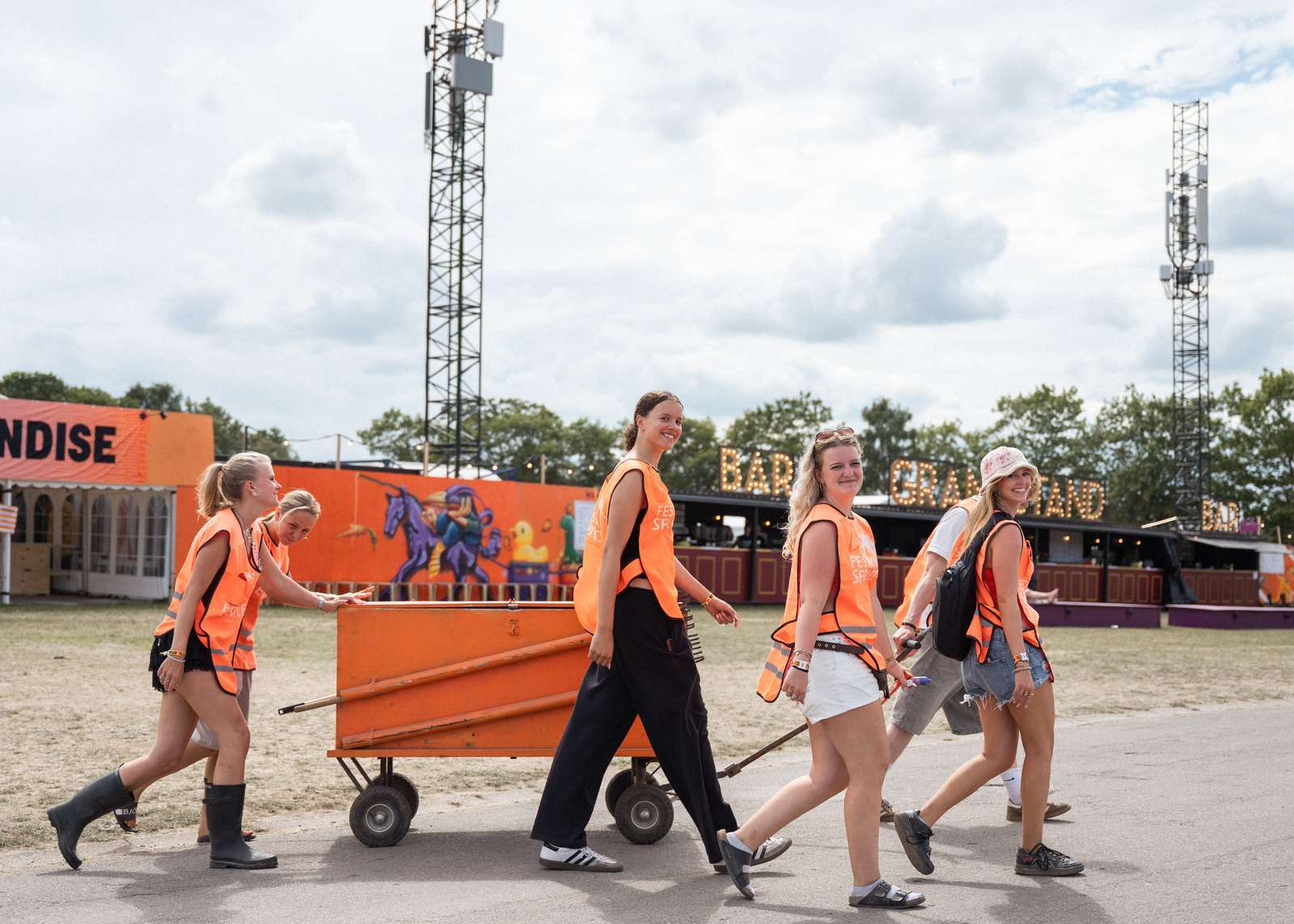
The stages have been dismantled, the tents stored away, and the fields are once again empty. Next summer, tens of thousands of volunteers will build the whole thing again from scratch. If you live in Denmark and have never been, it’s worth the trip. Go for the music, but pay attention to how the mechanics of a temporary city come together for a memorable, fun, and impactful week.