
Theatre has been part of my life for as long as I can remember. My dad used to take my brother and me to Broadway productions and smaller venues around New York — the big, spectacular nights of seeing The Lion King and Cats, and the off-piste shows where you were close enough to see every expression. Later, I studied in Edinburgh, where I was lucky enough to experience the Fringe — where countless world-class acts are at your fingertips. After that, when I lived in London, I was spoiled for choice. You could go grand or independent, and places like my local Bush Theatre made it easy to show up on a weeknight and take in new work from rising talent — often for as little as £20 (172 DKK).
When I moved to Denmark, I quietly assumed this part of my life would have to take a backseat. Not because I wanted it to, but because I assumed English-language productions would be hard to come by. I didn’t expect to find something that felt familiar so quickly — or so unexpectedly.
That changed when a friend, Angela, invited me to A Very Musical Christmas, a guest production from CPH Musicals at The Deer and Rabbits, a small but mighty theatre by the lakes in Copenhagen. CPH Musical’s mission is to perform and encourage a broader appreciation of musical theater in Denmark. Before the show even began, Joseph Sherlock — founder and artistic director of The Deer and Rabbits, and clearly a consummate host — was greeting guests and offering warm spiced cider. It felt less like entering a venue and more like being welcomed into a space that made you feel immediately at home.
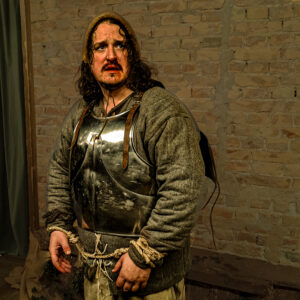
Photo credit: Joseph Sherlock
Sherlock’s journey to Denmark wasn’t driven by a long-held dream of Copenhagen. When I asked what inspired him to leave the UK, he answered plainly, “Brexit.” The move happened quickly, “It was something like four weeks between my wife having the interview and us moving,” he said. What began as a move away from the UK quickly became something else. “Luckily, we absolutely loved it. We’re like, ‘Oh, this is great.’ It fit very nicely.”
Once in Denmark, Sherlock worked as a freelance director in Copenhagen and Malmö, where he met Sarah Dahl Hasselgren, his creative partner. Together, they founded the Copenhagen Shakespeare Company. At first, the plan was straightforward: create productions and rent existing theatres, as you would in London or Australia. But Denmark proved unexpectedly difficult. “It just became so difficult, surprisingly difficult, to get Danish theatres, even when they are dark… to open their doors to smaller productions.”
Even when offering to rent space, the answer was often no. “There is something about the way that theatres are structured here and the way that they are funded that means that they are very hesitant to let outside companies in.” He also noticed how tightly audiences here are linked to specific venues. “They’re very loyal to a theatre and surprisingly difficult to get… cross-pollinating.” That combination led to a clear conclusion: “If we’re going to build an audience here, we need to have a consistent place.”
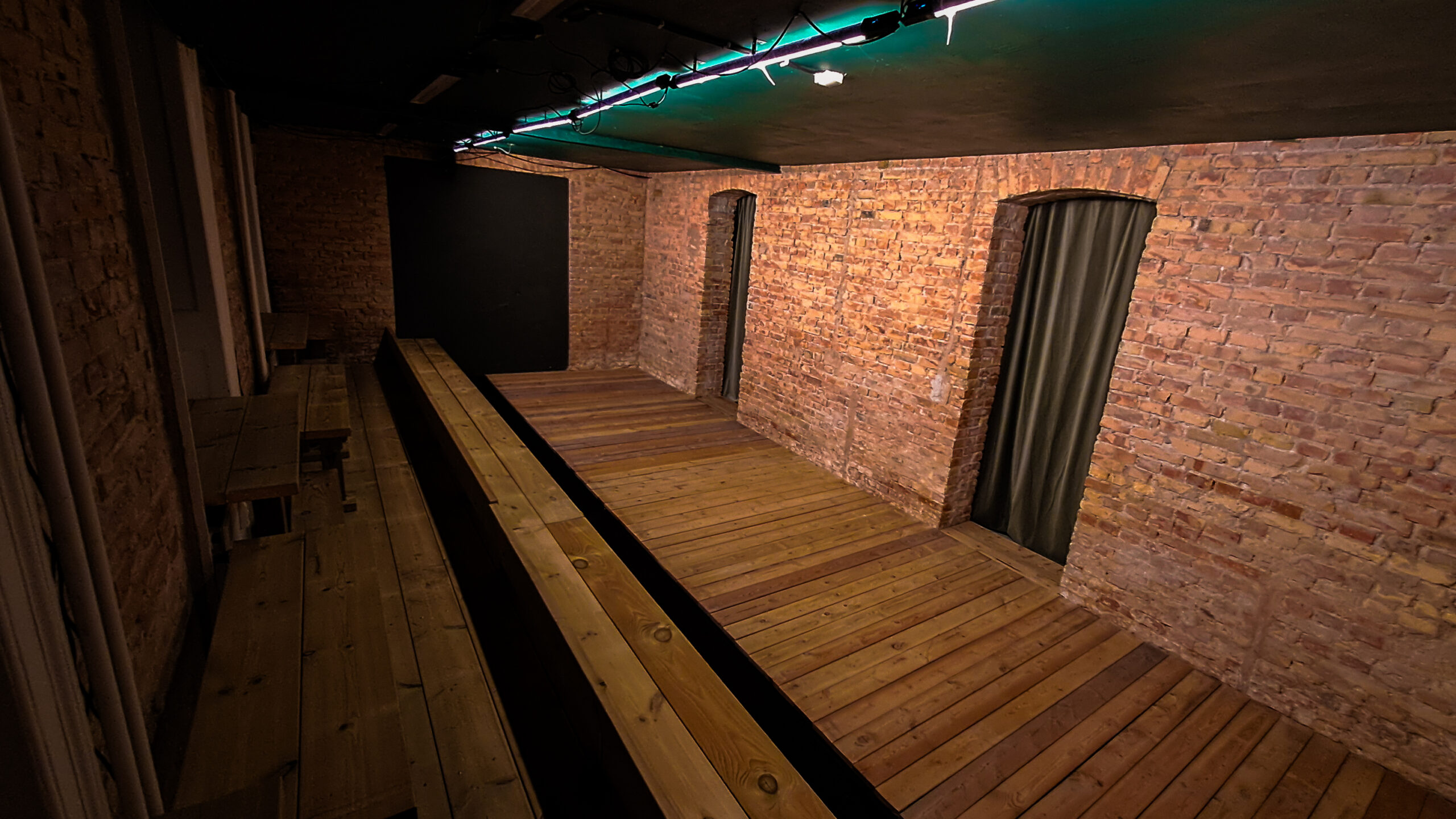
That place became The Deer and Rabbits — a former antique shop overlooking the lakes. Sherlock remembers pushing back when the building owners suggested using it as storage. “You can’t use this for storage of bikes and old couches. This has to be something.” The result is a space built around a very clear philosophy. “We were actually excited about the intimacy of it,” Sherlock said. “The only thing that theatre does best is the thing that it only can do, which is you are live, you are having the conversation, you are talking to the audience.”
Nothing about the space is flashy, and that’s intentional. “Every bit of technology that we add is trying to be as minimal as possible.” Everything — from the wooden benches to the stage — is handmade and slowly improved. “Every production, we reinvest in it and make it a bit better every time.” As Sherlock put it, “We’re a poor theatre, not an amateur theatre.”
That intimacy is what makes the experience feel different. Sitting in the audience, you’re not observing from a distance. You’re part of the room. The actors can see you. You feel close to them. It creates a kind of shared connection that’s easy to forget theatre can have. Language plays a big role here, too. The Deer and Rabbits hosts work in multiple languages, and the Copenhagen Shakespeare Company is explicitly multilingual. “This is theatre, and sometimes it’s in English, and sometimes it’s multilingual, and sometimes it’s in Danish.” Part of the mission is helping audiences feel comfortable crossing that line. “Danes underestimate how good they are in English,” he said. “You can absolutely come to the theatre and understand a show and be fine.”
The next production, Daughters of Lear, is entirely in English and already drawing attention. It centers on the daughters of King Lear and explores power, family, and survival under a narcissistic patriarch. “They are the daughters of this tyrant king,” Sherlock explained, “and they don’t have the power to just stop it.” The themes feel all too timely. “It’s just Europe discussing Trump,” he said, describing a world where powerful figures divide things up on a whim.
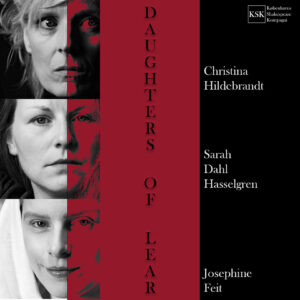
Photo credit: Joseph Sherlock
When I asked what keeps him going on the harder days, his answer was grounded. “I really get joy from the performance itself,” he said, and from hearing how shows land with audiences. Lately, what energizes him most is planning ahead. “Honestly, my favorite thing at the moment is planning things with Sarah… thinking two to three years ahead.” Asking simple but essential questions: “What will people like? What will be a good evening?”
That’s exactly what The Deer and Rabbits offers — an evening that lingers long after you leave. Not in a polished, overly reverent way, but in a way that feels human, welcoming, and alive. If theatre has ever mattered to you — or if you’ve been meaning to make space for it again — take this as your sign. Check out what’s coming up at The Deer and Rabbits, including Daughters of Lear, and see for yourself what happens when powerful storytelling, real voices, and a clear vision come together.