




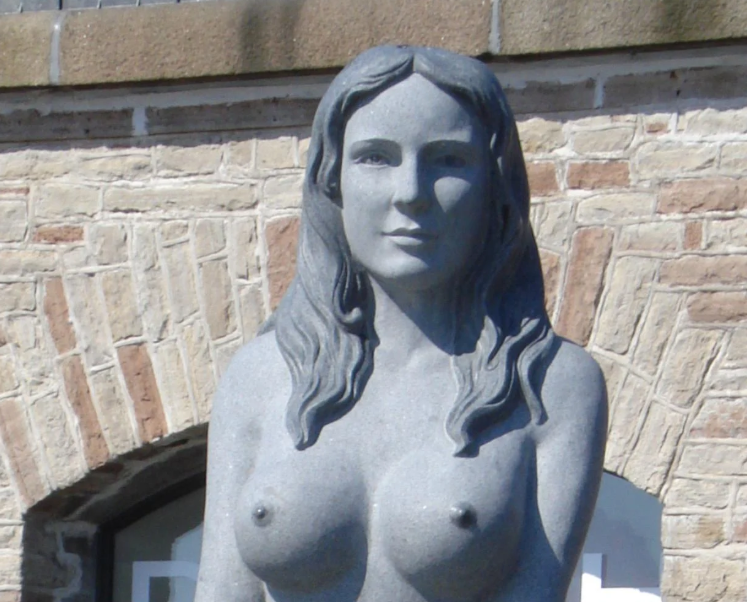
She’s making waves – and headlines.
A scintillating debate over the fate of Den Store Havfrue (the Big Mermaid) has come to Denmark’s shores. Earlier this year, my husband and I visited Dragør, a seaside town 13 kilometers southeast of Copenhagen. We were charmed by the hollyhock-lined alleys, the delicious fish at the local røgeri, and the candy-colored creations at the blown-glass shop, The Glasseriet. We walked around the bustling harbor and paid our respects at the monument honoring the Jewish inhabitants, whose escape during World War II was made possible thanks to the courageous townspeople.
And then we came upon the Big Mermaid. She is a showstopper: mammoth and striking, her steady gaze looking resolutely ahead. We smiled to ourselves, as it’s not a statue you see every day, and continued. The mermaid was swimming away in my memory until I saw this article in The Guardian, which explores how the statue has been dubbed “pornographic” and “a man’s hot dream of what a woman should look like.” Consequently, the statue will now be removed after the Danish Agency for Palaces and Culture decided it “does not align with the cultural heritage” of the site.
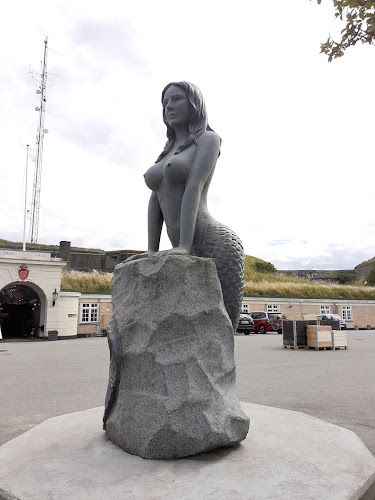
For many, this decision is puzzling and un-Scandi. After all, Denmark’s most famous cultural symbol, the Little Mermaid, is also topless and visited by over one million people each year – but is unscathed by controversy (though it has suffered some very unfortunate beheadings). There are some clear differences: while the Little Mermaid is small, delicate, and shyly looking downward, the Big Mermaid is voluptuous, boldly positioned, and decidedly not a wallflower. Though it’s her breasts, arguably scaled to match her four-meter frame, that have become the focal point of criticism.
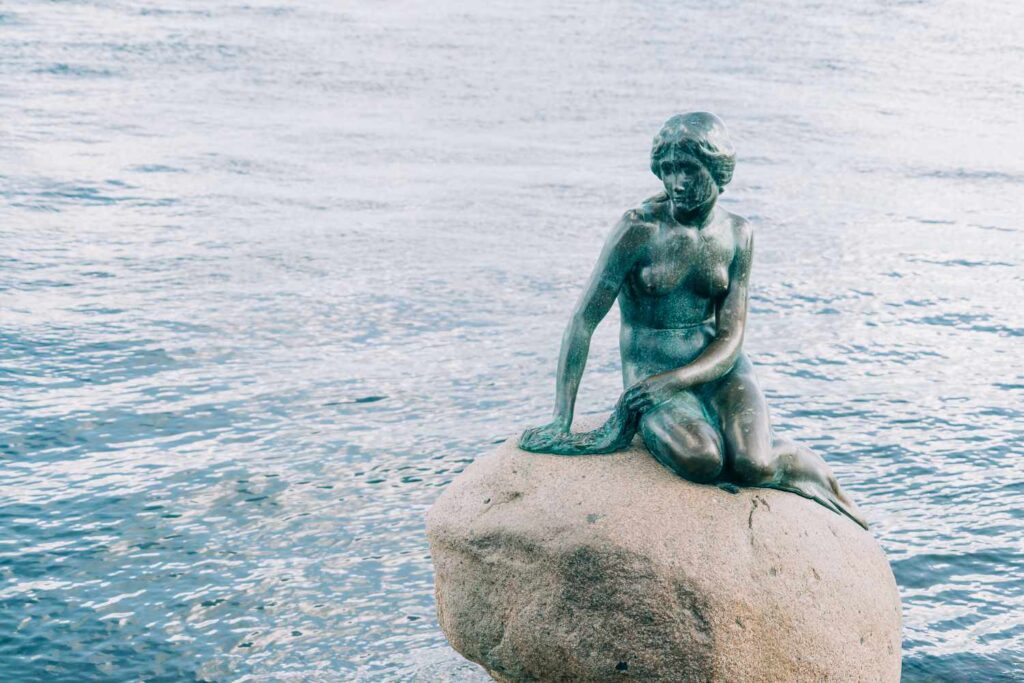
Photo credit: TripSavvy
As Berlingske editor Aminata Corr Thrane pointed out, the scrutiny of the mermaid’s proportions veers into body-shaming. She writes, “Do naked female breasts have to have a specific academic shape and size to be allowed to appear in public?” Why should one breast size be acceptable, while another becomes “pornographic”?
The reaction to the Big Mermaid is about more than a singular statue: it’s about society’s long, complicated relationship with nudity and where we draw the line between what is art and what is vulgar. For context, art historians have long had two definitions for what is categorized as “nude” and “naked.” The “nude” is idealized, symbolic, elevated — the body as an expression of beauty, virtue, or power. The “naked,” on the other hand, is much more raw and is often seen as vulnerable or indecent. One is a dignified tribute to the human body in its most natural form, and the other is often steeped in shame.
One of the most famous examples of this distinction occurred when the Realist artist Édouard Manet unveiled his work Le Déjeuner sur l’herbe in 1863. It scandalized the Salon – the conservative gatekeeper of taste — in Paris. The reason was that his female subject was unmistakably naked, a real (read: flawed) woman staring unflinchingly at the viewer. Two years later, his Olympia – which depicted the same model, Victorine Meurent – stoked the fires of outrage even further. Parisians collectively gasped, How dare this woman feel so comfortable in her own skin?!
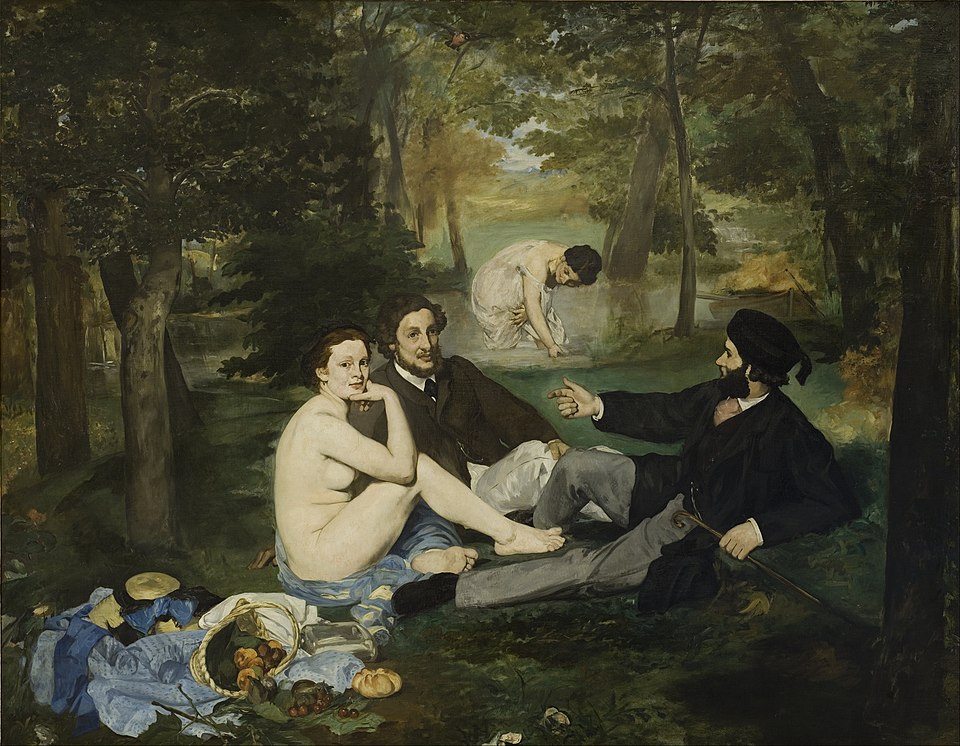
Photo credit: Musée d’Orsay
By contrast, Michelangelo’s David, unveiled in 1504, demonstrates how male nudity was framed differently. His carefully carved body is flawless. Monumental. Heroic. David’s nudity is not about exposure, but about strength, virtue, and divine favor. He is nude, but not naked. From a Scandinavian perspective, Bertel Thorvaldsen, Denmark’s most celebrated Neoclassical sculptor, created works like Jason with the Golden Fleece and Christus. His nude forms are idealized, heroic, and elevated — carefully designed to communicate virtue rather than vulnerability.
A Scandinavian Paradox
Living in Scandinavia, one quickly sees that nudity is experienced as a fairly banal part of daily life. When kayaking, I once saw a man step straight out of a sauna in the harbor, stark naked, and stretch as he soaked in the July sunshine. Nobody did a double-take. Nudity in this context is ordinary, unremarkable, communal — part of a culture that treats the body as natural rather than sensational.
Research shows that this cultural comfort with nudity has roots here because the bare body is normalized. Saunas, beaches, and piers across Denmark, Sweden, and Norway regularly welcome nude swimming and topless sunbathing. I experienced it just the other week, during a lunch break in Nordhavn. Again, nobody batted an eye.
The Big Mermaid sits at the crossroads of two traditions: Scandinavia’s relaxed approach to everyday nudity, and Western art history’s fraught distinction between the “nude” and the “naked.” When nudity is experienced as part of daily life, it is normalized. But when it is cast in stone, especially in a form that refuses to be delicate or allegorical, it suddenly becomes “too much.” Michelangelo’s David embodies male strength; Thorvaldsen’s Jason with the Golden Fleece celebrates heroism and virtue. Does the Big Mermaid unsettle because she is big, bold, and unapologetically taking up a very public space? Where are the distinctions made, and who decides?
This mermaid’s tale is a reminder that how we see the naked body — whether in art or in daily life — is never neutral. It reflects cultural norms, expectations, and shifting ideas of what is acceptable. Though we have to ask: if a skyclad man can stroll from a sauna in Denmark and go unnoticed, why does a stone mermaid provoke such debate?



That’s because a skyclad man is not positioned in place like a statue where anyone and everyone can see the big mermaid at any time and any day.
The big mermaids breasts come into focal point here with her saucy pose, and they take the eye away from the rest. They are the focal point.
Unlike the little mermaid.
Dobra refleksja — dzięki za tekst. Zastanawia mnie jednak, gdzie ta granica między sztuką a „pornografią” powinna być wyznaczana i kto ma prawo ją ustalać. Czy rozmiar i odwaga formy naprawdę powinny przesądzać o wartości dzieła?