


When Kanwaldeep Batra, a chartered accountant from India, moved to Denmark more than a decade ago, she confronted a job market that prized Danish language skills and cultural fit as much as technical credentials. What began as a halftime Environmental, Social and Governance (ESG) responsibility within a finance role evolved, through persistence and internal buy-in, into a multi-person ESG reporting function at Vestas, a pioneer in wind energy.

What is ESG?
ESG, which stands for Environmental, Social, and Governance, is a framework used to evaluate a company’s performance beyond traditional financial metrics. Environmental factors encompass a company’s impact on the natural world, including its carbon footprint, resource management, and pollution. Social factors examine a company’s relationships with its employees, customers, suppliers, and the communities where it operates, focusing on areas like labour practices, diversity, and human rights. Finally, Governance refers to the system of rules, practices, and processes by which a company is directed and controlled, including things like board composition, executive pay, and shareholder rights. Together, these three pillars provide a holistic view of a company’s ethical and sustainable practices, which are increasingly important to investors, employees, and consumers.
From traditional finance to an ESG leadership path
The transition was gradual and tactical. With transferable accounting skills, Kanwaldeep moved between roles until a condition for rejoining Vestas was agreed: “If you give me the ESG part of finance, then I’m coming back.” That initial ESG remit was a halftime allocation that rapidly expanded — from 0.5 FTE into a full team measured in multiple FTEs. Kanwaldeep’s experience shows how sustainability roles can scale when organisations commit resources.
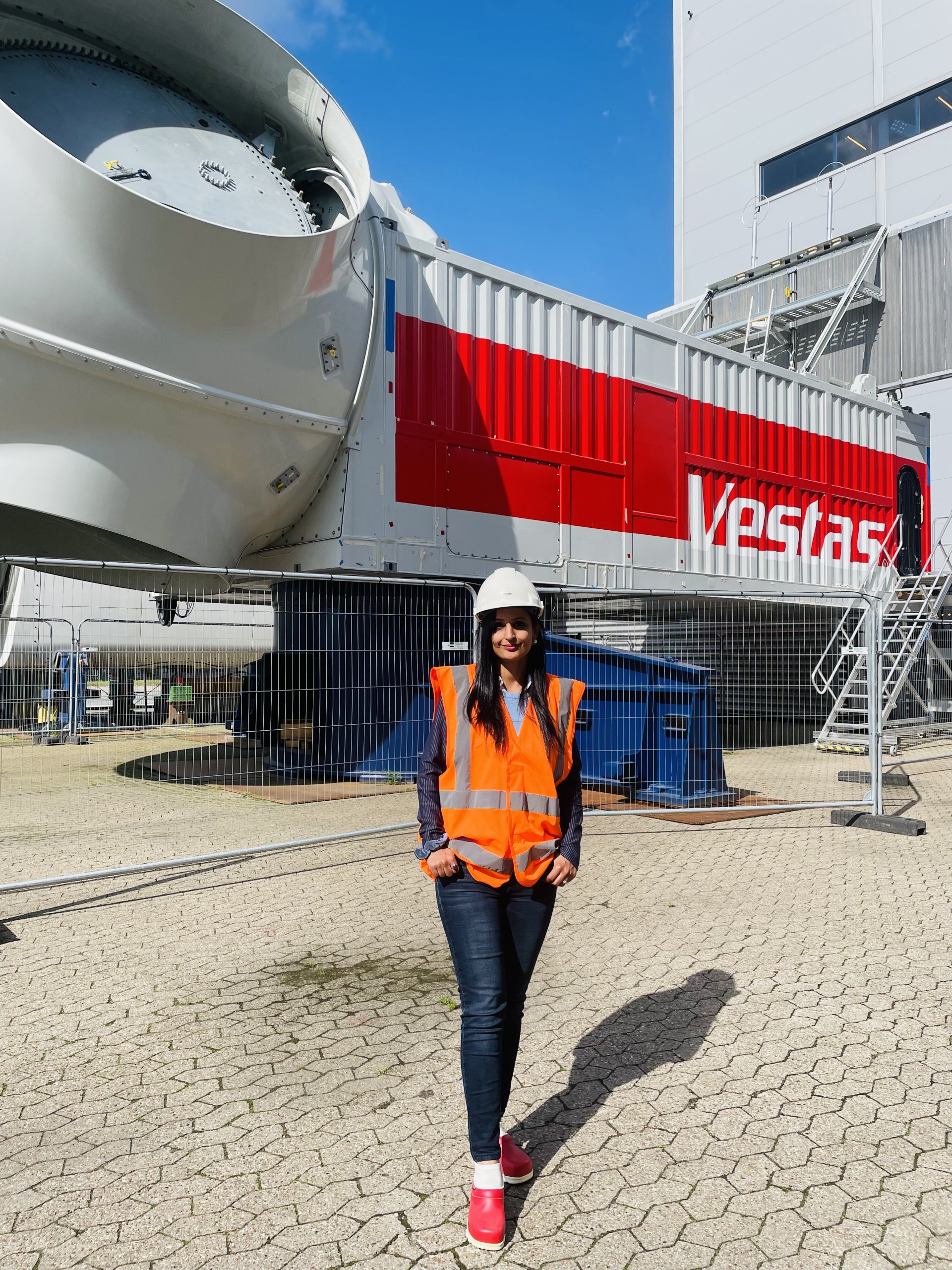
Working at a company whose core product is wind energy made the work resonate beyond compliance. As Kanwaldeep observed, replacing non‑renewable energy with wind is central to the company’s identity, and that alignment helps attract people who want meaningful impact rather than just a paycheck. She contrasts contexts where financial imperative dominates with Denmark’s culture, where employees often ask, “Why am I working in this company?” and value purpose alongside pay.
The social dimension: why S in ESG matters as much as E
For Kanwaldeep, the social element of ESG is central and frequently overlooked: “Social is also my favourite part of ESG. I like to use ESG as a term instead of sustainability, because ESG is a complete term.” She emphasises that employee experience, diversity and community building are practical levers for inclusion and retention — especially for internationals assessing workplace culture.
Kanwaldeep’s journey account also highlights the lived spectrum of belonging. After trying other employers, she returned to Vestas because “it was the culture I was missing”. The company was a place where she felt valued despite language and nationality differences. Kanwaldeep candidly describes encountering bias in other workplaces and choosing to move on rather than fight for acceptance.
What this means for Danish employers and international talent
Kanwaldeep Batra’s journey offers a powerful testament to the value of persistence and the evolving nature of purpose-driven careers in Denmark. For both individuals and companies, her story demonstrates that a strategic focus on ESG is more than just a box to be checked; it’s a pathway to creating more meaningful work and more inclusive, resilient organisations.
Kanwaldeep’s account of encountering bias in other workplaces and her decision to return to Vestas highlights a crucial point: a company’s commitment to the social dimension of ESG, including a culture of belonging and valuing diverse talent, is a key differentiator in retaining international professionals. Ultimately, her story illustrates how the right environment, one that prioritises purpose alongside profit and welcomes all, can transform a part-time responsibility into a core function, benefiting not only the business but also the people it welcomes.