


I’ll never forget what a Danish relative told me when I was expecting my first child: “Having a child is like watching your heart walk outside of your body.” What I didn’t realize at the time was that it also included the heartache you feel when you see your child struggling.
DR just released a documentary called “Skolens Tabte Børn” (The School’s Missing Children). It was created by the parents of two autistic boys who were unable to attend school due to their challenges.
The series follows families across Denmark trying to find schools that meet the needs of their kids with autism or ADHD. These kids didn’t thrive in a typical school setting, and, as a result, were ufrivillig fravær (involuntarily absent) from school. Most were waiting for a school offer from their municipality, some were waiting for years; others were waiting to receive tabt arbejdsfortjenester, compensation for the worktime spent at home caring for their children.
It was heart-rending to watch parents struggle to fight for their children, while also dealing with isolation, work pressure, and their own mental health. As a parent of two autistic teenagers, this documentary resonated deeply with me. It mirrored what I experienced six years ago, when my daughter, Aria, quit going to school. She was eight.
When my family of four moved to Denmark in 2015, autism was nowhere on our radar.
My children were toddlers at the time, and, wanting to integrate quickly, we enrolled them in a Danish kindergarten. Luckily, there was a small kindergarten just across the street from our apartment in Holte. It was a charming yellow cottage with fruit trees in the yard and only 20 children enrolled at a time. There was a lot of personal attention for each child. It felt ideal.
When Aria was around six, I started noticing she was struggling socially. She had always been a fun and creative child with a quirky sense of humor. She enjoyed playing with other children, but her interactions with them were just…different. She didn’t seem to notice invisible social boundaries. There were multiple situations where the other children seemed uncomfortable with her interactions.
My husband and I brought our concerns to the kindergarten leader. “Do you see this too?” “Should we be concerned?”
The kindergarten leader admitted that she’d also observed some of these behaviors, but was optimistic that Aria would outgrow her awkwardness by the time she started elementary school.
Only she didn’t.
The first few months of school seemed to go smoothly, but quickly took a worrying turn. Aria wasn’t making friends. I began to hear other children whispering about her: “Aria is a little weird.” And then the bullying started.
She was threatened with violence. She was hazed. One boy even locked her in a closet, threatened to hit her, and then promised to be her friend if she urinated in her pants. When I reported these instances to the school, my concerns were brushed off. Sometimes, Aria was even blamed.
Aria started experiencing severe panic attacks. Her personality morphed from happy, imaginative, and fun-loving to sad and anxious. She lost interest in everything she once enjoyed, and her life had lost all of its color. She walked around in what she described as a “bubble of sadness.”

When I tried dropping her off at school, she would panic and refuse to let me out of her sight.
At first, I would get frustrated and insist that she be in school. After all, that’s what kids are supposed to do! We went back and forth on this for a while until one morning, when I went to wake her up, she pleaded with me from her exhausted eyes: Please don’t make me go. And it confirmed something in me.
I had already suspected that Aria might be autistic and would need a different school environment. But the only way she could get help was if she had a diagnosis.
I shared my thoughts with her teachers and requested a referral to the children’s psychiatric center nearby. I explained that we had another autist in the family, and in all likelihood, Aria was autistic, too. The teachers were open to the possibility, but referrals are costly and they wanted to be sure it was necessary. So, there were several more hoops we needed to jump through.
I attended a series of meetings with Aria’s teachers and school counselors. Before pursuing a diagnosis, they wanted to try a couple of other things first. Amongst them was a plan to try and bring Aria into school in a calmer way, using a visual chart and clock to prepare her for the day. This plan rarely worked. Often, as soon as I tried to leave, Aria would have a meltdown. In extreme moments, her teachers would have to peel her off of me and carry her into school, screaming.
It wrecked me. At the time, I was working in a job that required a lot of energy and focus, and I was starting to feel depleted. Both my work and home life were becoming chaotic.
After a month of the “quiet” entry plan, the teachers refused to do it anymore. I suspect they were as traumatized as I was, wrangling a highly distraught child. At our next meeting, the school counselor announced that their “new plan” was not to have a plan at all. Aria needed a diagnosis to get additional help, and that required an evaluation from the school psychologist. She was overloaded with cases, so we would just have to wait.
In the meantime, Aria continued to spiral and quit going to school. I started working at home more and bringing her with me to work. But the pressure became too much, and I went on part-time sick leave. We weren’t getting any updates from the psychologist or the school. It felt like we were in limbo.
One day, I shared my frustration with a friend who was a principal at another school. Her advice was simple: show “the ugly.” She explained that if you’re trying to put your best foot forward and they see you can manage, they won’t prioritize you. They have to know it’s urgent.
As an expat, I struggled with that advice because I didn’t want to be perceived as a burden to Danish society or as a problematic parent. But when you are desperate for help, you have to show just how badly you need it.
So I did.
I wrote to the psychologist to request an update and got a generic “I’m very busy” reply. In that moment, my frustration reached its peak. I immediately contacted the school counselor and showed “the ugly.” I explained what the situation was doing to my mental health, reminded him that Aria was not in school anymore, and pointedly asked him what he was going to do about it.
Within a day, I received a message that the psychologist’s schedule had opened up, and she could evaluate my daughter. Showing “the ugly” worked.
Aria was diagnosed in a matter of weeks. When we told her about her diagnosis, she breathed a sigh of relief. After being absent from school for four months, she was placed in a school for children with special needs. My husband and I were also offered psychologist appointments to help Aria navigate her autism.
Returning to school took time. Her first day was only 30 minutes, but afterwards, Aria looked at me with a big smile and exclaimed, “This school is just right for me!” In the following months, I noticed her personality returning. She started getting creative again and coloring in her room. We heard her singing after a long period of silence. Aria was finally comfortable in her own skin because she was in an environment where people understood her. It felt like our daughter returned to us.
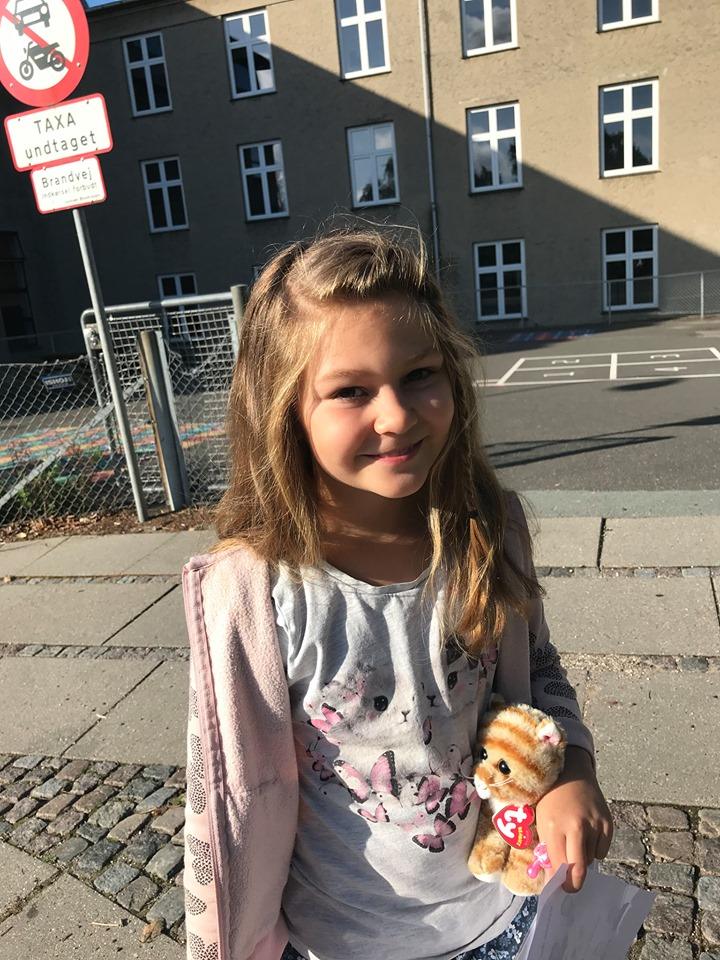
Today, Aria is able to stay in school the entire school day, hang around for after-school activities, and then take the bus home by herself. We are in a much calmer and healthier state than we were six years ago.
I am deeply grateful for the support that our family received, though at times it felt like a massive effort. Navigating the system and getting help would have been impossible without the guidance of Danish friends and colleagues.
One of the powerful takeaways from Skolens Tabte Børn, was how many of the families were pushed to the breaking point before they got the help they needed. It wasn’t just the individual child suffering; it was the entire family. It was the same for us. By the time Aria got her diagnosis, I was burned out and went on full-time sick leave for three months. It took me years to truly fully recover from that experience.
There has to be a better way to support families with vulnerable children. The current process is simply too costly for everyone involved. The families from Skolens Tabte Børn created 11 recommendations to improve the process and the system. They can be found here. The recommendation I believe will have the biggest benefit is also the simplest: Listen to parents. When we see our children struggling, taking us parents seriously early on could make all the difference and save unnecessary suffering. After all, we are the experts on our own children. Sometimes, we just need a little help.