

If it is your first time, you have come to the right place because this article will cover the five forts for visiting and their history. Before we start, let’s dive into a bit of background on Viking Ring Fortresses in Denmark.
As their name suggests, these fortresses have a circular style and have similarities with each other. Mostly, they were built between 970-980 CE, and usually their placement is strategic, such as near an important land or sea routes, or places used for defence. As far as is known, the purpose was the consolidation of power by the Danish king, defence, control of trade routes, and demonstration of new state formation.
Today, you can see five key ring-fortresses in Denmark, and they are included in the UNESCO World Heritage list (2023) as “Viking-Age Ring Fortresses”.
The Top 5 Viking Forts to Visit
1. Trelleborg (near Slagelse, Zealand)
Trelleborg is one of Denmark’s most well-preserved ring fortresses, and it likely served as a royal stronghold. It was excavated between 1934 and 1942, revealing 31 houses and many artefacts. Its position is also very important strategically, because it is between rivers, located in Zealand in the Tude Valley.
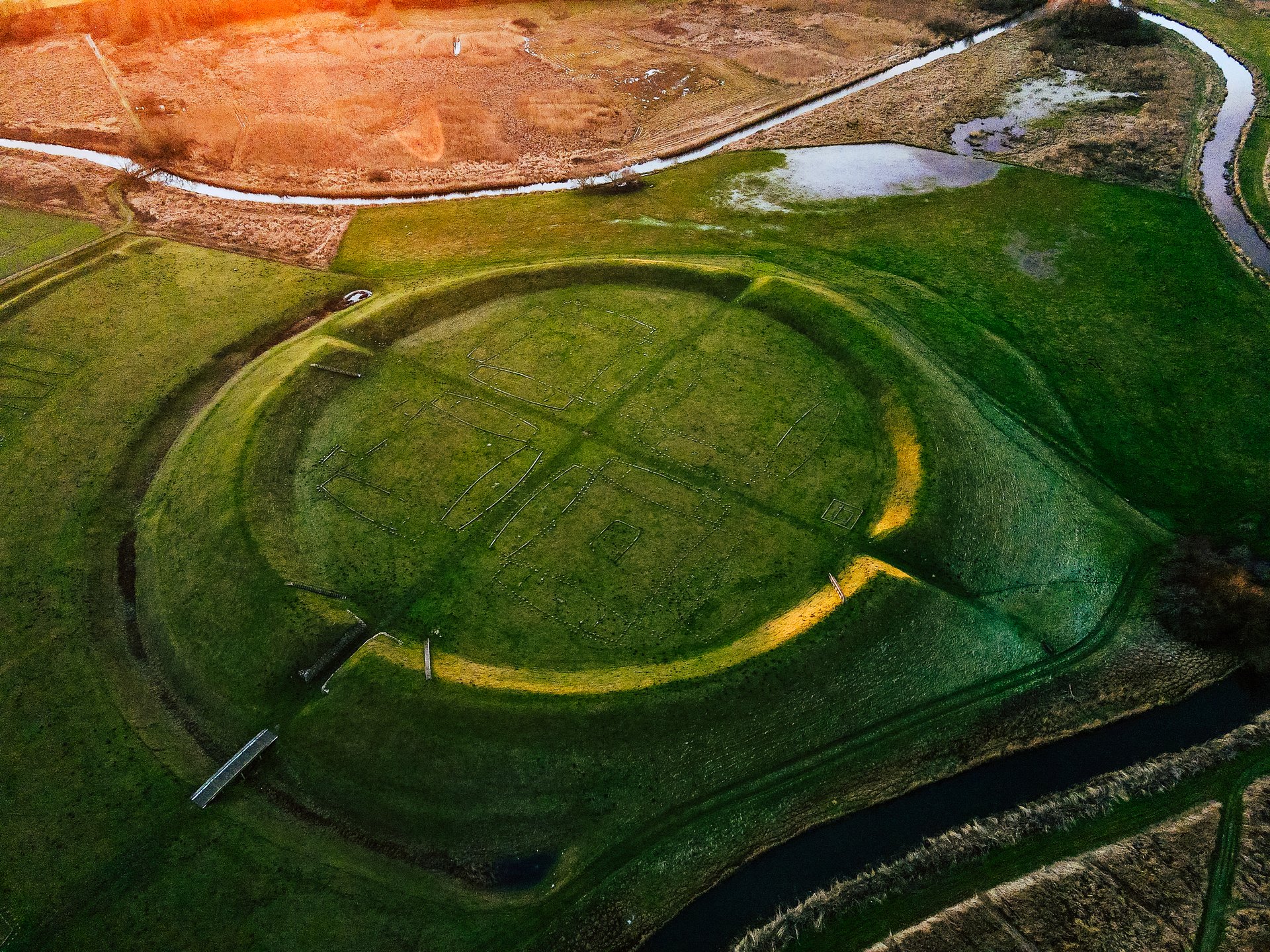
In summer, there are usually events such as the Viking Festival because within the fort, you’ll also find a reconstructed Viking village. If you are planning to start your trip, it is easy to access by car, or you might need public transport from Slagelse. You will see the best-preserved forts and have an immersive experience.
Trelleborg is also the site of legend and myth. They say during the misty summer mornings, you might see the shadowy outlines of Viking warriors training on the ramparts of the fort. People say there are some ghosts from Harald Blåtand’s army, but who knows? Why don’t you give it a try? You can see if it is a legend or real.
2. Fyrkat (near Hobro, Jutland)
Fyrkat had sixteen large longhouses arranged in four quadrants. It was excavated between 1950 and 1958 by C.G. Schultz. You can see some unique things there; for example, there is a grave called “seeress’s,” which is an unusual female burial with grave goods. She was buried with some interesting items, including herbs and jewellery. This shows she might have held a powerful spiritual role. Some historians even say she might have been a ritual priestess, connecting the human world with the Norse gods.
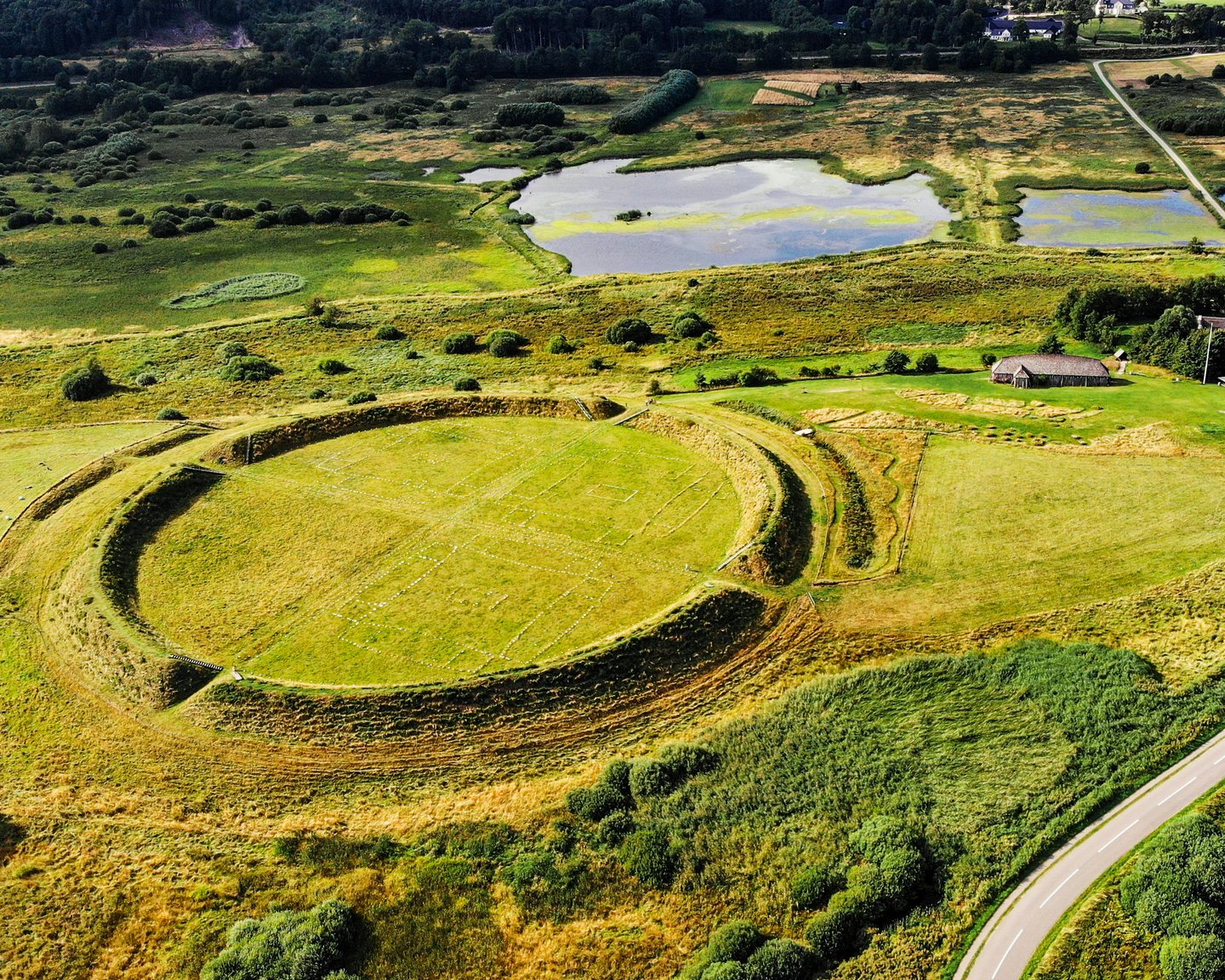
It is also less crowded than some other Zealand sites and very good for a quieter visit. You can also have insights into everyday Viking-Age living in addition to the fort structure, and it is an ideal place to combine history and a nature walk.
3. Aggersborg (near Limfjord, Northern Jutland)
Aggersborg is one of the largest Danish ring fortresses. It was built by Harald Blåtand in the late 970s. The structure is a circular rampart about 9 m wide and 4 m high, with four gates oriented in the cardinal directions. The location is strategically important to control traffic, and it is in the narrowest part of the Limfjord.
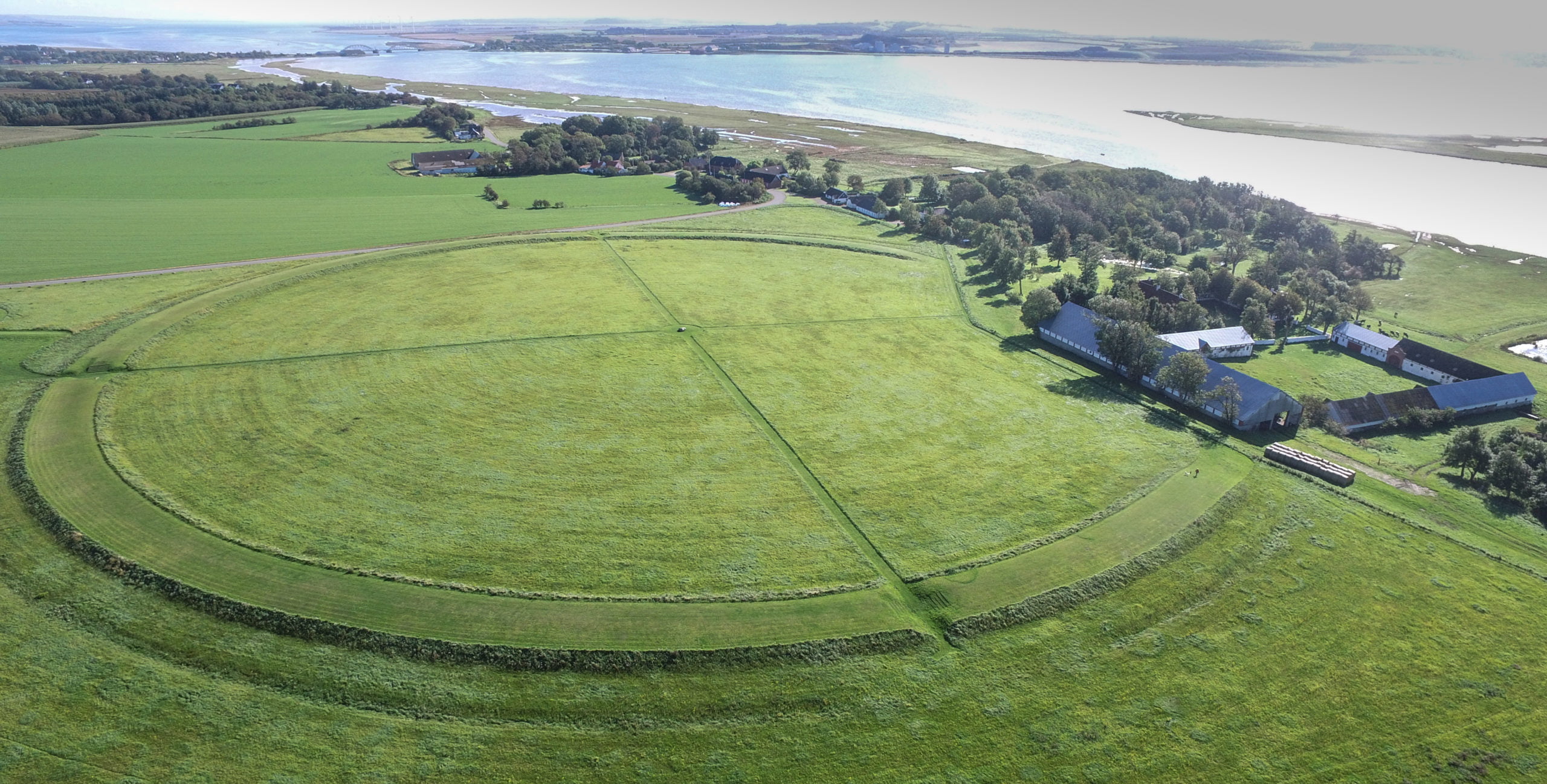
It tends to be less crowded than other forts, and you can see some rudimentary remains. It is near the water and open landscape, which makes it a good place for some fresh air and walks in nature. Because of the location, it also has coastal winds, so do not forget to bring the right clothes. Just a reminder, it is less reconstructed and more raw, so you can have a different experience than other forts.
4. Nonnebakken (Odense, Funen)
Nonnebakken is different from others because much of the fortress is hidden under the city, so there are still ongoing efforts to show it. It is located beneath modern Odense and, just like the others, it is part of Harald Blåtand’s ring-fortress system.
It also has a unique urban style because you are in the city, walking, and you are already in the Viking-Age site. I would say it is great for combining with other things in Odense. You can consider this like urban meets archaeology, which creates a wonderful experience.

5. Borgring (near Køge, Zealand)
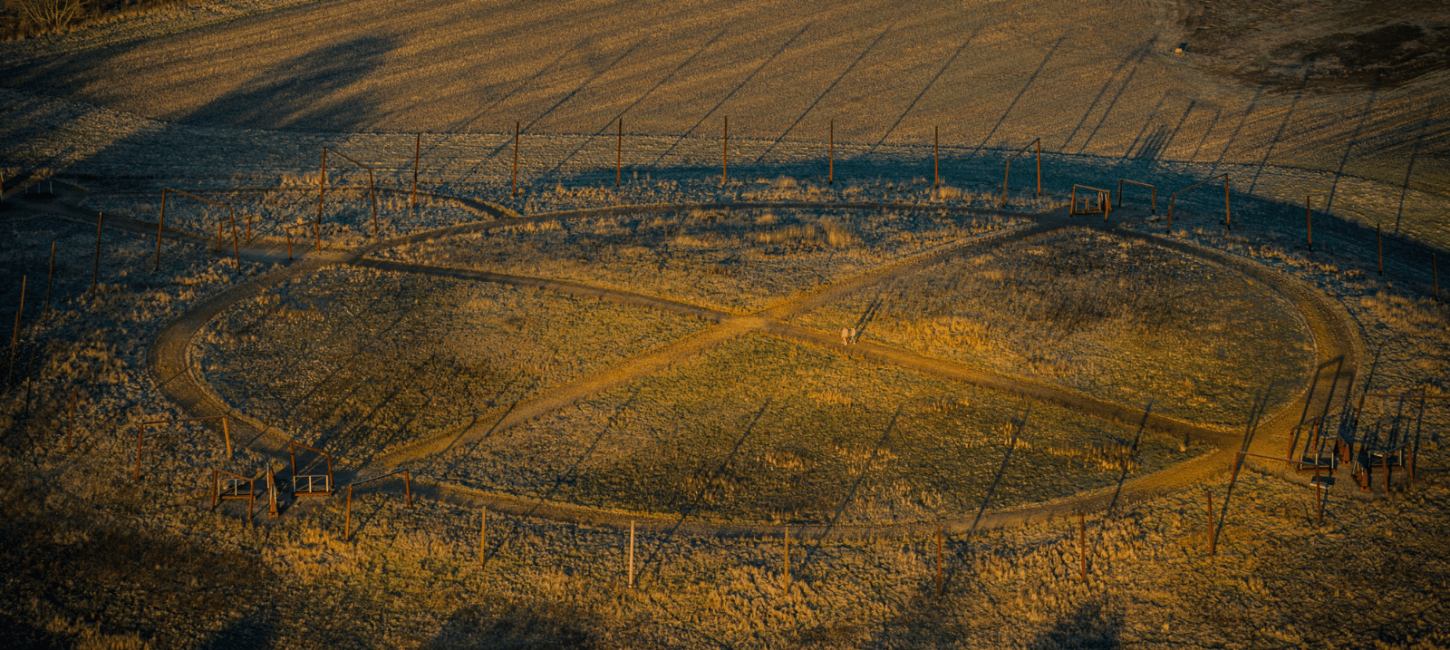
The fifth and final one that you can visit is called Borgring, which is located about 4 km from Køge and was included in the UNESCO list in 2023. If you visit there, you can follow the excavations and recent research. It is also a good one-day trip because of its proximity to Copenhagen, and you can check current exhibitions and openings before you go. It’s going to be perfect if you combine it with a stay in Køge or near Copenhagen.
You have just met Denmark’s Viking Forts, and now it is time to plan your visit! Here you can see some tips for visiting.
Best time to visit: What I have learned is that it’s good to go in late spring to early autumn, which we can say is from May to September. You can enjoy good weather and on-site activities.
Getting around: If you are living in Copenhagen, you can start with the closer ones, such as Trelleborg and Borgring; it’s going to be a day trip. For the further ones, there are regional trains and local buses.
Tickets & tours: Most of the sites are free walks, but museums often charge entry tickets, so you should check their websites.
What to bring: You are living in Denmark, and we never know what happens with the weather. Always have a raincoat and good walking shoes; we don’t want your camera to get wet! Check the weather before you go.
The Viking forts are an important part of Danish history. It is the time when the country transformed into a unified kingdom.
According to the research of Nordjyske Museer, all of these designed fortresses symbolized not only power but also the rise of an organized state.
First of all, their geometric shape shows the Vikings’ advanced engineering skills and strategic thinking. There are studies in Science magazine that say the forts were not random constructions; they were planned very carefully.
You can see that these sites are the connection of modern Denmark to its Viking history, and they are still part of the national heritage, being a good attraction for visitors from around the world. When you visit these sites, you are seeing history and imagining the world a thousand years ago.
References:
UNESCO World Heritage Centre. Viking-Age Ring Fortresses (2023)
National Museum of Denmark — “Viking-Age Ring Fortresses” page