

The Social Democratic Party (Socialdemokratiet) has appointed a spokesperson on democracy with a focus on “spiritual mobilization”. Last Week in Denmark brings you an interview with the spokeswoman Ida Auken and explains the context surrounding the term.
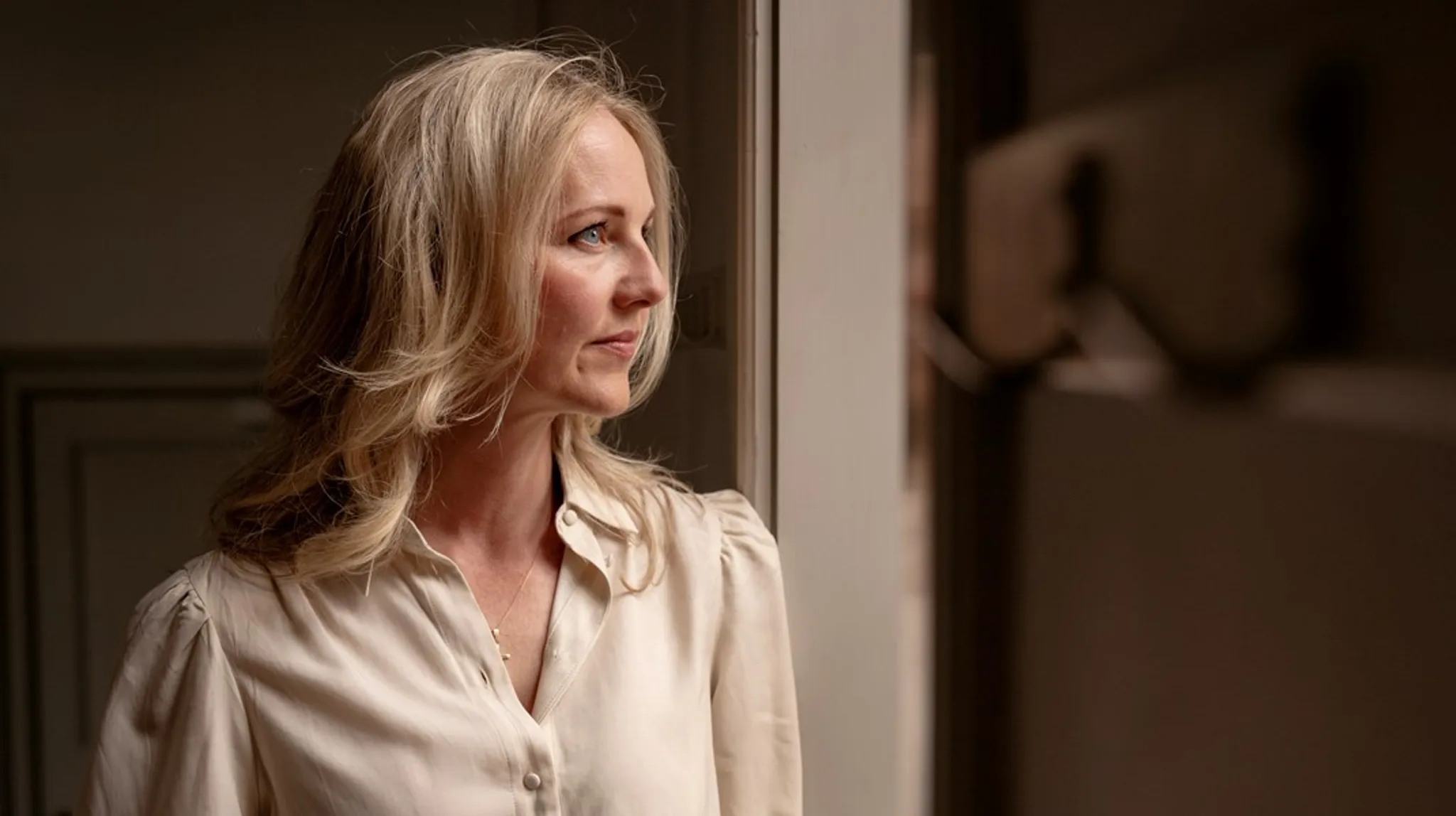
If the concept of “spiritual mobilization” sounds mysterious to you, don’t worry. It also sounds mysterious to many people in Denmark. The concept was launched early in 2025 by the Minister of Children and Education, Matthias Tesfaye and has since been used several times in speeches by Prime Minister Mette Frederiksen.
Lately, the Social Democrats have taken it a step further and appointed a spokesperson on democracy responsible for spiritual mobilization. Ida Auken holds a degree in theology and is also spokesperson for agriculture, green transition and the Capital.
To understand the idea, it’s helpful to understand the Danish origin phrase for spiritual mobilization, “åndelig oprustning”, since it has slightly different connotations than the English translation.
The word “åndelig” can mean two things in Danish. It can mean something similar to the English word “spiritual”, referring to religious and supernatural aspects. But it can also mean something more secular, referring to all kinds of intellectual and artistic endeavours.
Think, for instance, of the French word “esprit” or the German word “Geist”, which also have multiple meanings, referring to general intellect and wit, as well as to the supernatural.
The second part of the concept, “oprustning”, literally means “rearmament”, referring to the equipment of military forces with weaponry. Hence, “spiritual mobilization” is a reflection of the military mobilization happening in Denmark at the moment, suggesting rearming people with something of spiritual and intellectual value.
The future of democracy
The term has been criticized as vague and vacuous and has been criticized in a number of ways. But it has also been met with positive responses from people in educational, cultural and religious quarters.
Mette Frederiksen said in her speech on Constitution Day at Rødding Højskole – no doubt a well-chosen location, being the oldest Danish folk high school in Denmark – that democracy does not thrive in division and polarization. Spiritual mobilization would be a way to combat “conspiracy theories, fake news, robots, algorithms and artificial intelligence”, and would help to “ensure the future of democracy”, as she later added in a speech at Aalborg University.
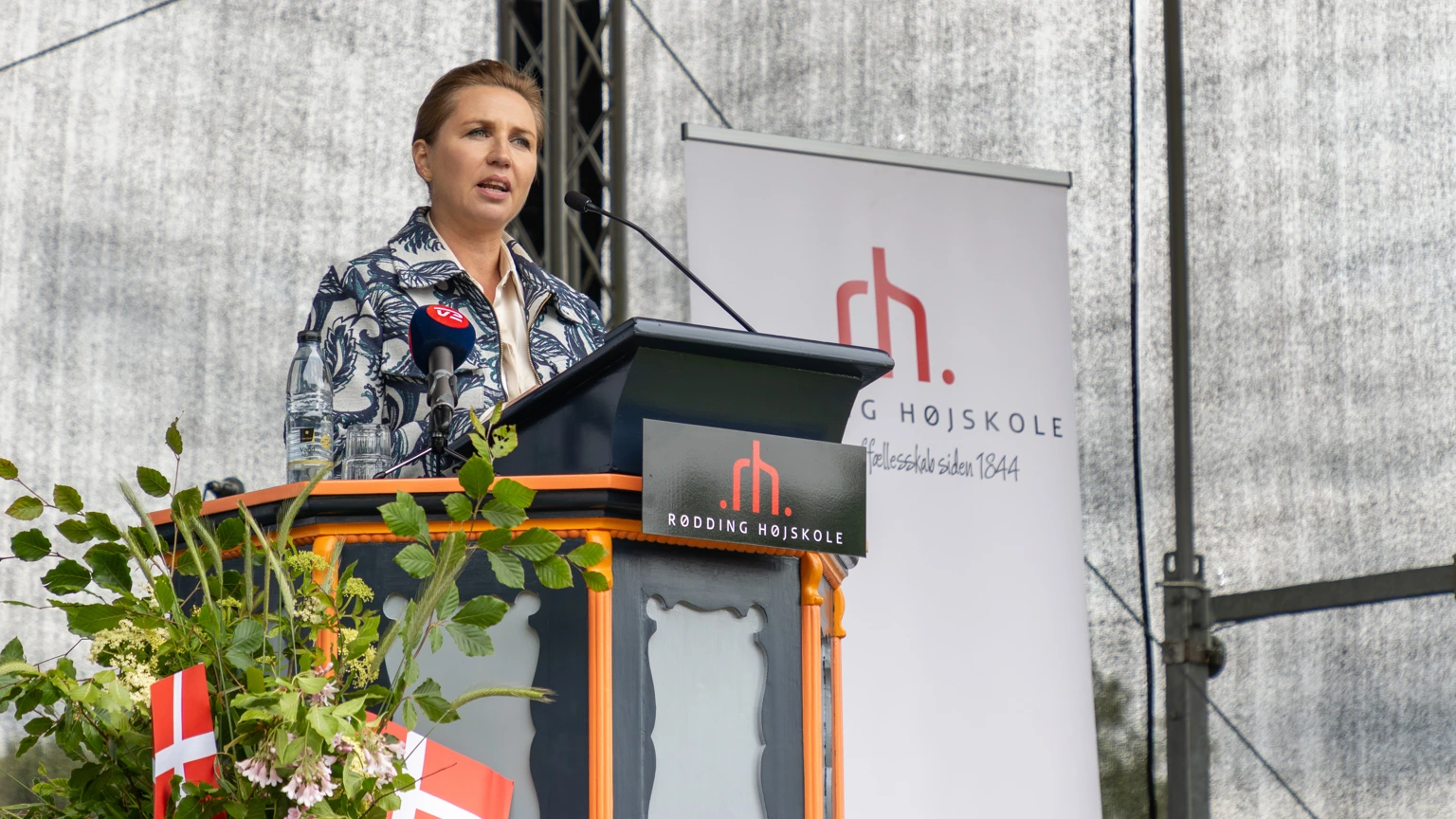
With this in mind, Last Week in Denmark interviewed spokesperson on democracy Ida Auken to gain more insight into spiritual mobilization.
First of all, just a bit of clarification. What is spiritual mobilization?
“Spiritual mobilization is about making us aware that we should not only mobilize militarily, but also be conscious of what we are actually fighting for. It’s an understanding that there is a threat to our community and our democracy, both from the outside, in the form of Russian interests and Russian aggression against Europe, but also from within, in the form of radicalized forces, both from the right and from the left, and also from certain religious environments. So we need to mobilize in order to be ready for this struggle.”
You say there’s a “threat from within”. But when you use this rhetoric of an “us and them”, isn’t there a risk of actually increasing polarization in society?
“It’s a clear risk that one should be aware of, that it’s the weapon of extremists to create an “us and them”. For me, it’s about building a stronger community. And that community consists of the very broad majority of the population, which should be protected against extreme views.”
But aren’t you also creating an “us and them” when you talk about a “threat from within”?
“No. We clearly denounce extremism. And there clearly is an “us and them” when we talk about Russia.”
The idea of spiritual mobilization has been criticized for being an emotionally charged way of mobilizing people which goes against the Enlightenment ideals of critical thinking and institutional autonomy.
“It’s a total misunderstanding that it’s not important to have feelings for our community and for what we are fighting for. You will have a very weak position in a conflict if you don’t have love for the thing you’re fighting for.”
Is spiritual mobilization also about distancing us from the cultural power that the United States has exerted?
“No. For me, there are two things that we shouldn’t copy from the Americans. One is letting the country fall completely apart between rural and urban areas, between the highly educated and the uneducated, the wealthy and the poor, in the way that they have allowed. The other is that Europe must be … we must be Europeans. We must understand that our culture has deep foundations and a heritage that we should cultivate, instead of letting everything come from American culture. European culture is different from American culture.”
Regarding the freedom of religion, does spiritual mobilization also mean giving more space to Islam, Buddhism, and other religions in the public sphere?
“As I see it, it’s important that we in Denmark have freedom of religion, but not equality of religion. That’s why we’ve called on the Church of Denmark – the religion that has shaped Denmark, that has shaped Danish democracy, and that belongs to the majority – to help demonstrate that Christianity can be a reconciling force, a comforting force, a force that binds people together, and not a force of conflict. Other religious minorities that hold the same attitude are, of course, welcome in the public debate.”
So what role do you see for the Church of Denmark?
“I would actually like the Church itself to come up with some proposals. But we can see, for example, that the mosques are quite good at inviting young people and students in to learn about Islam and about the local mosque. Perhaps the Church could do the same. That could be a way of reaching out to the public. It could also be to participate in this debate. In fact, priests and representatives of the Church can say different things than I can as a politician about the role of the Church and of Christianity.”
There are several priests that have criticized this instrumentalization of the Church. Some of them may not want to be part of a political agenda. How do you respond to that?
“No one is asking them to be. I think they should be uplifted when the Prime Minister is asking them to step forward and saying, “There is a need for what you are contributing.” I really can’t see that as an instrumentalization. On the contrary, it’s an invitation for them to fill that space with what they believe is right.”
The Social Democrats pride themselves on having a tough immigration policy. Is this debate about Danish values also a way to position yourselves against the right wing before the coming municipal elections?
“We believe that if you come to Denmark, you must become part of the community. And we have to control the number of people who arrive. It is because we believe it. It has nothing to do with some tactical move.”
In terms of education, successive governments—including Social Democratic ones—have made cuts to the humanities over the years, for instance, with reference to market demands. Isn’t it hypocritical when you suddenly want to strengthen the role of the humanities?
“The whole exercise with the universities has been about getting more people to choose vocational educations—for example, carpenters, blacksmiths, teachers, and pedagogues. I don’t see it as an attack on the humanities. It’s about the need to ensure that, in a period when there are fewer young people overall in the population, more of them choose educations that society needs.”
Are there any concrete proposals you would like to put forward?
“One of the first things I’ll look at is how we can get more young people to engage in democracy. Among other things, by making sure that youth organisations that are members of the Danish Youth Council (DUF, Dansk Ungdoms Fællesråd) have access to all education institutions, so young people can encounter them there, and perhaps get involved politically, even as students. We also need to make sure that they have the right conditions, access to meeting spaces, and so on. And I also think we need to get smarter about how we can strengthen democratic conversation in the media that young people are actually using.”
“Those are some of the first concrete things I’ll be working on. But it will also very much be a spokespersonship about helping the other spokespersons in their areas think about how we strengthen our common values and communities, and the understanding that we cannot take things for granted in these years.”
The parable of the butterfly and the garden
As Ida Auken has said elsewhere, the role of ‘spokesperson for democracy’ will very much be a role that creates debate. The prominent psychologist Svend Brinkmann used to be on board with the idea until proponents started focusing more on the religious aspects of the term. Some may remember when George W. Bush called the war on terror a “crusade”. That notion was repeated when Minister of Ecclesiastical Affairs Morten Dahlin from The Liberal Party (Venstre) said that Danish soldiers “also fight for Christianity”. A remark that would not typically have been heard in Denmark, and which has since been heavily criticized.
Brinkmann also worried that the idea of spirituality – in the secular sense – would get lost if it was only used as a means to an end, and not handled with care, comparing the freedom of the spirit to a delicate butterfly. To that Auken responded that if the garden, in which the butterfly lived, was threatened, then it would be necessary to protect that garden. It would perhaps be nice to just attend to the flowers, but the reality of our times simply calls for more of a fighting spirit.
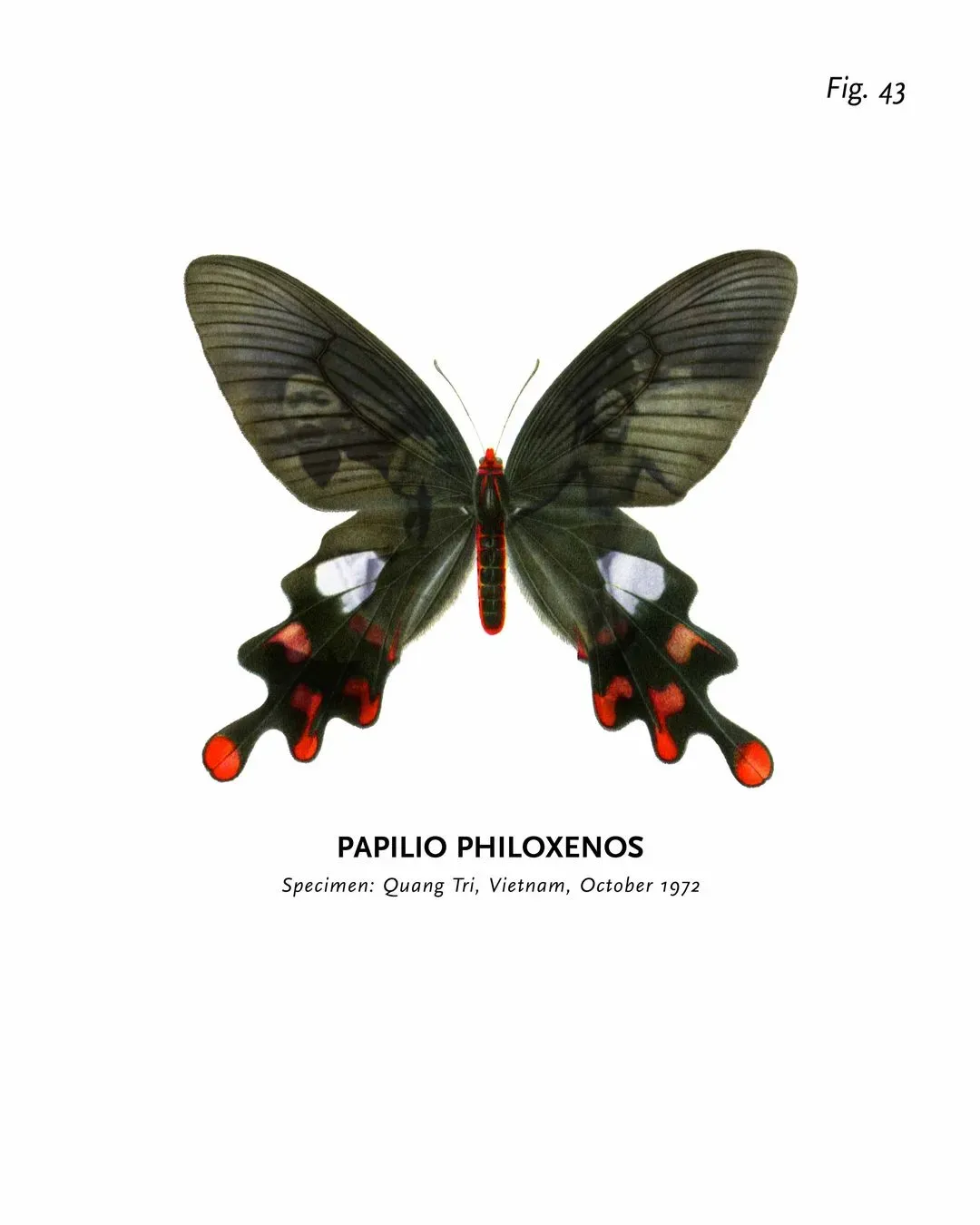
That exchange brought to mind a somewhat disturbing contemporary artwork by Peter Holst Henckel from 2002, entitled World of Butterflies. In a series of scientific illustrations of butterflies, the images of tragic historical events from the habitat of each specimen are merged with their wing patterns. Underneath each illustration, we see a Latin name and the place and date of some modern historical massacre.
The only Danish one is called NYMPHALIS ANTIOPA, better known as the mourning cloak. Underneath the name is written “Specimen: Copenhagen, Denmark, May 1993”, which refers to the May 18th Riots, the only time since the Second World War when Danish police forces shot at a group of violent protesters.
Part of the wonder of the artwork is the juxtaposition between these seemingly incompatible events, which nonetheless happened at the same time. As stones were thrown and shots were fired, a mourning cloak somewhere was finding a place to sleep for the night.
Personally, I haven’t been able to look at butterflies in quite the same way since.