

Emergency preparedness isn’t about panic buying or living in fear or becoming a hardcore prepper. It’s knowing that you could take care of yourself for a few days, and maybe help your neighbors, too. It’s being responsible and resourceful, and freeing up government resources in case of a crisis. Having supplies on hand to keep your family fed and watered isn’t being isolationist or fearful; it’s insurance.
These emergency supplies are meant to hold you over for the first few days following a disaster (whatever that emergency might be). To insulate your family in case of a lockdown order or if stores aren’t open and supply chains are unreliable.
I’m here to reassure you that getting crisis-ready is common across cultures and can be straightforward. And to offer a peek at what my household’s preparedness actually looks like.
Worldwide readiness
Around the globe, national governments want residents to be geared up in case of a crisis and the Covid-19 pandemic showed the importance of emergency preparedness. But there’s always been a level of alertness.
Growing up on Canada’s west coast, earthquake drills were routine. Every new school year started with a review of what to do if the ground started shaking and reminders that aftershocks are a thing. When I started dating my prairie-born and -raised partner, I was baffled that he hadn’t been trained to duck and cover. He did know what a tornado looked like, though.
When we lived in Switzerland, emergency preparedness meant basement storage that doubled as a bunker (by law, every Swiss resident must have access to a fallout shelter) and national stockpiles of food staples (yes, this includes coffee), medicine, and fuel for three to six months. Registering with our Swiss municipality came with a pamphlet on self-preparedness and a voucher for iodine tablets (we lived within a few hundred kilometers of a nuclear power plant).
For the two years we were in England, I can’t remember hearing a peep about being prepared for a disaster. We experienced a couple of water outages (who thought it was a good idea to privatize public utilities?) and the response. The UK has recently launched the Be Ready campaign to urge the populace to be able to take care of themselves. A notable difference between in-case-of-crisis communications from the UK is the recommendation to get to know your neighbors (how un-Nordic!). Exchanging contact info or joining a neighborhood messaging group could help distribute emergency information, identify community members in trouble, and share resources.
Denmark, of course, has the annual siren test on the first Wednesday of May (which also tests phone-based alerts known as S!RENEN).
While emergency preparedness has a different flavor in each country we’ve lived in, most recommend being self-sustaining for three days, which matches the EU’s preparedness strategy. Norway and Sweden take it even further, suggesting a full week of self-sufficiency.
What preparedness actually looks like
The humorless, graphic-less Danish Emergency Management Agency’s Prepared for crises materials are fairly uninspiring (although the black and white pamphlet is available in many languages), so I’ve looked to other countries (notably Norway) for insight as well.
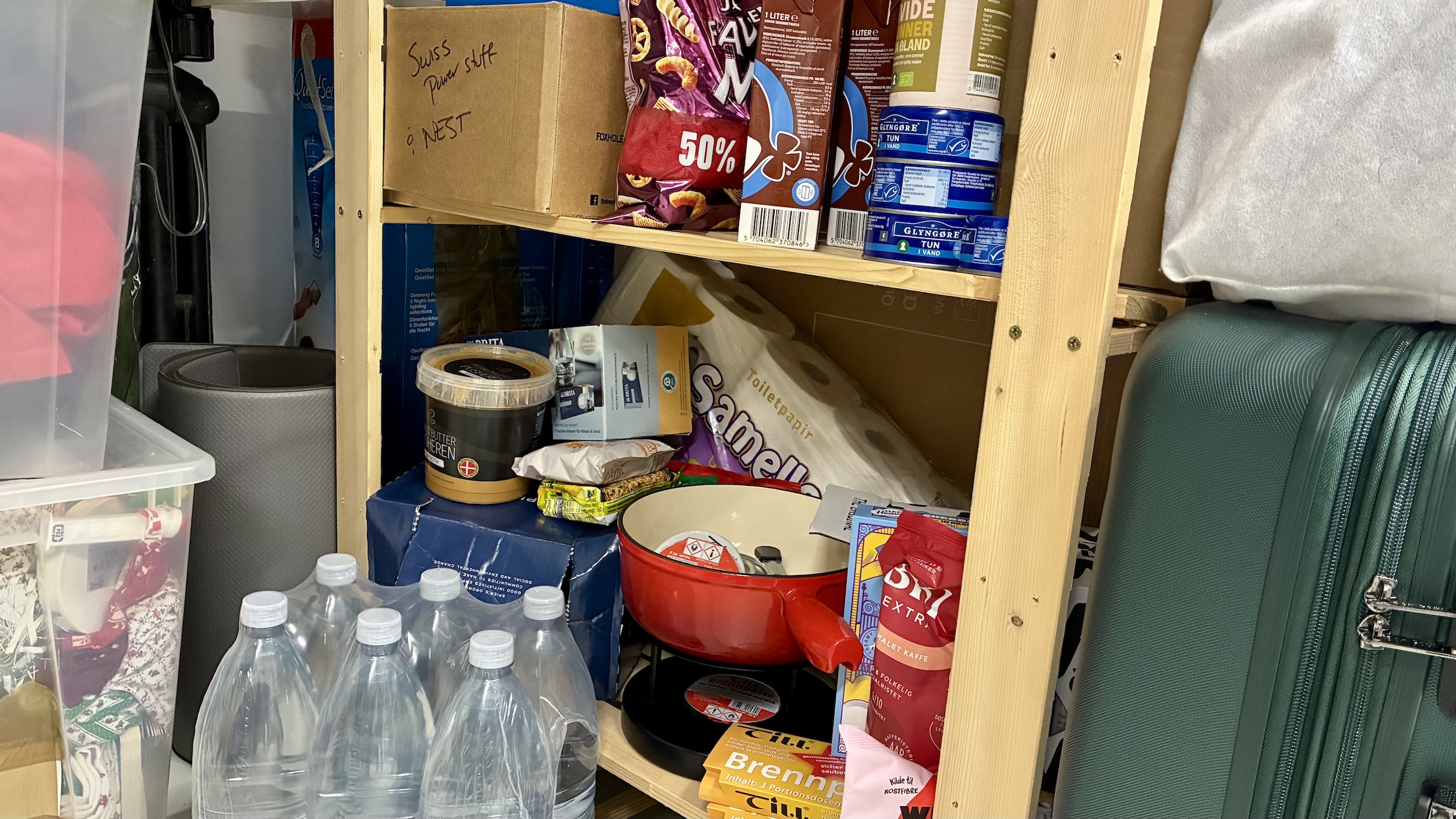
As an international, many of the recommendations seem strange. I didn’t grow up eating knækbrød (crispbread) and canned mackerel, so why would I want to suffer through them in an emergency? The point isn’t to endure unpalatable food for three days; it’s to maintain as much normalcy as possible, while keeping you and your loved ones warm, fed, watered, and sane. Top up your cupboards with stuff you’d eat anyway, including a few treats or nice-to-haves that would make a crisis situation a little cozier.
Here’s how we’ve stocked up:
| Recommendation | Reality |
| Blankets and warm clothes | We have heaps of throws and duvets, along with sweaters and jackets and long underwear (I am Canadian, after all). Most likely, living through the cold winter means you’ll have enough on hand to stay toasty. |
| Flashlight and batteries (and other lights) | While I’m guilty of mostly relying on my phone’s torch, we have bought a couple of standalone, battery-operated flashlights. Not a bad thing for peering under beds or trying to find a leak along a pipe and great for telling ghost stories.
Like most people, we have plenty of candles (how else does one survive the Danish winter!). We also have an LED camping lantern currently in service as a doorstop. |
| Portable power bank | I don’t know how we’ve managed to accumulate so many (the corporate logos make me think conference giveaways), but we’ve got power in spades! |
| Self-powered radio | Not something anyone is likely to use in everyday life, but relatively cheap and easy to stash away. The one we picked up for around 200 kroner can be powered by batteries or plugged in, as well as using a hand crank or the small solar panel. |
| Cash and physical bank/credit cards | In addition to a few hundred kroner in coins and bills, we also have Euros from a trip to Germany and pounds we somehow managed not to spend at British pubs.
We’ve also jotted down the PINs somewhere safe (not on a Post-it stuck to the card!). |
| First aid kit, including wound disinfection products | We’ve supplemented a basic first aid kit with additional bandages (including ones adorned with cartoon characters for the kid in all of us) and a spray bottle of antiseptic wound cleaner. |
| Hygiene projects (toilet paper, hand sanitizer, etc.) | Having lived through the great toilet paper panic of 2020, we always have a spare pack of loo roll in storage. Likewise, we seem to have acquired enough hand sanitizer since the pandemic to disinfect an entire plane. |
| 9 liters of water per person | Six 1.5 liter bottles of flat water, plus two big bottles of Danskevand (my partner loves fizzy water) and a water filter (mostly to curtail limescale buildup in the kettle) with plenty of replacement filters.
We’ve also got containers of juice, my favorite barista oat milk (bought when deeply discounted), and shelf-stable UHT milk. Plus a box of wine and a flat of beer (a crisis is no time to quit drinking!). |
| Some way to boil water or cook without electricity or gas | While an outdoor grill or camping stove are the leading recommendations, we’ve got a fondue pot from our time in Switzerland and plenty of gel fuel packs. I can’t quite imagine making coffee in a caquelon, but I suspect my morning caffeine cravings would be great motivation. |
| Non-perishable food for three days | Admittedly, we do have some crispbread, but most of our back-up stocks are less Scandi: instant ramen, pre-made soup, peanut butter, cans of tuna, oatmeal (easily transformed into bircher muesli with some fruit juice and time), tinned fruit (peaches, pineapple, and cherries are my go-tos), jarred artichoke hearts and sundried tomatoes, gherkins, pasta (shelf-stable gnocchi is a winner and we have boxed mac and cheese), some canned beans, a few granola bars, and, of course, a stash of coffee, cookies, chocolate, and potato chips.
Nothing that would magically make a Michelin-worthy meal, but easy-to-prep stuff that would keep us going for a few days — and a dash of feel-good treats, too. And because it’s food we eat regularly, it’s easy to use up older products and replace them with new ones. |
How to do it
Some larger shops (think Bilka, Bauhaus, and Thansen) and outdoor stores have prepping-specific sections on their websites; one-stop for huge jugs of water, first-aid kits, camping stoves, battery-operated radios, and all manner of other survival gear. Search “prepping guide” or “prepper udstyr” to turn up a few options.
It’s easy to get overwhelmed by the idea of having everything you need for three days in your home right now. All government recommendations note that some kind of self-reliance is better than none — and it doesn’t have to happen all at once.
Pick up an extra can, another container, or an additional bottle when something you like is on sale. Think about shelf-stable foods you and your family enjoy that are already lurking in your cupboards. Discount grocery stores (Aldi, Lidl, Rema 1000) are great places to pick up shelf-stable food, and shops like Normal often have low-cost nearly ready meals like noodles or pasta that provide a bit of variety.
Review what you already have on hand and keep an eye out for essentials that are still on the list. And maybe keep that 100 kroner note you randomly discovered in a coat pocket in case card payments go down.
Once you’ve ticked off most of your emergency preparedness list, set a twice-yearly calendar reminder to comb through your cupboards, rotating out items that are near their best-before dates (perhaps discovering some must-be-consumed-immediately chocolate in the process). Make sure the flashlight still works and the power banks haven’t lost their charge, and rotate out any first aid or hygiene items that are reaching the end of their shelf life.
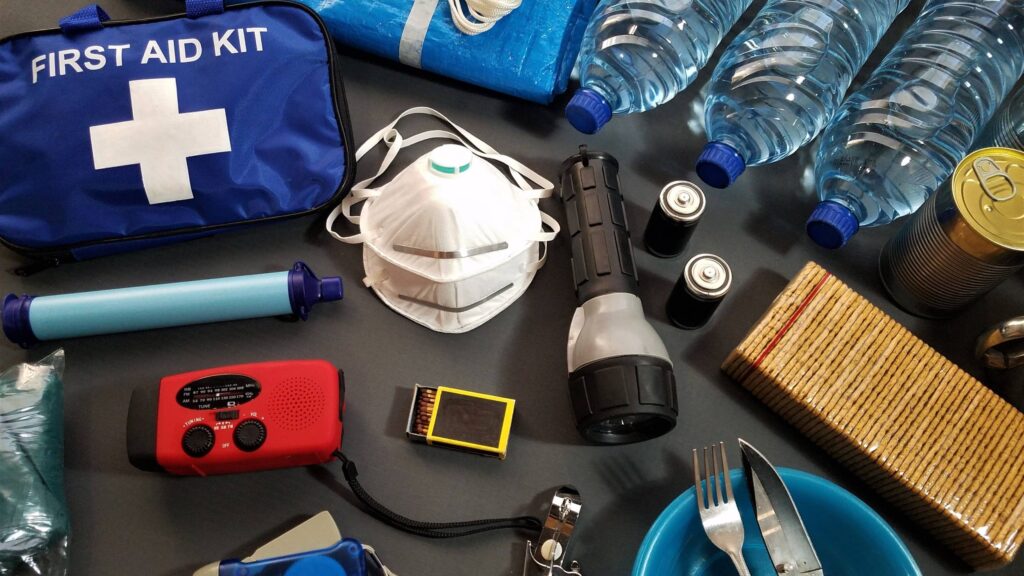
Source: Roger Brown via Pexels
Preparation avoids panic
Although Denmark is ranked one of the safest countries in the world, rogue drones, heavy windstorms, cyber attacks, and increased airport security measures can make it feel as though catastrophe is around the corner. There’s no need to practice ducking and covering (earthquake risk in Denmark is delightfully low) or freaking out during May’s siren tests. And while hoarding (or hamstering, as it was known in some parts of northern Europe) is entirely unnecessary, it’s still a good idea to have supplies on hand in case of a crisis.
Perhaps you’ll even channel the UK’s advice and use emergency preparedness as an excuse to get to know your neighbors. You never know when they might have a spare can of tinned mackerel in tomato sauce.