

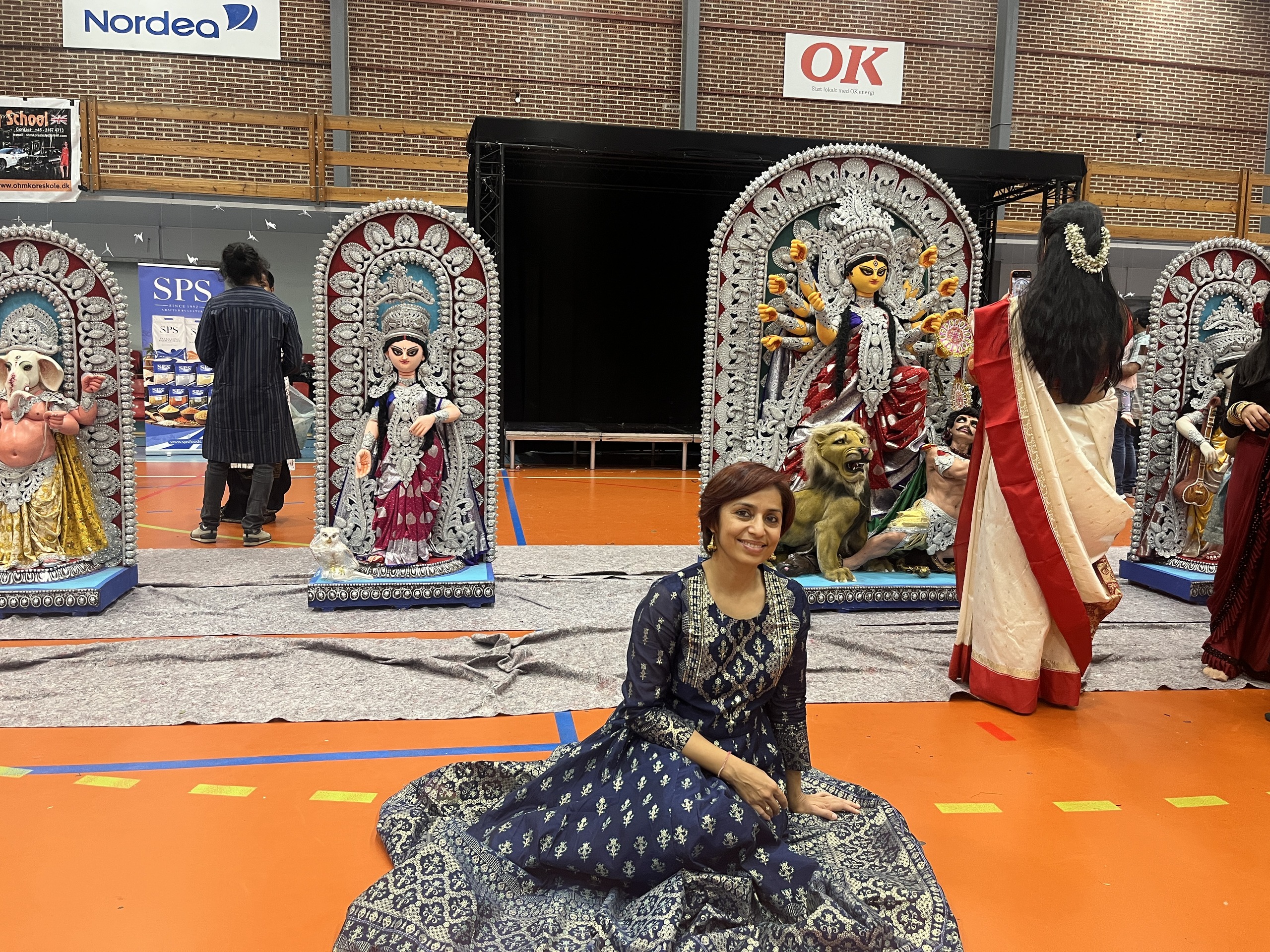
Back home in India, October meant the blooming of white flowers known as Kash. And with that always came the message of one of my favourite Indian festivals, Durga Puja.
This is the time of the year when Maa Durga (Goddess Durga), the daughter of King Himavant (the personification of the Himalayas), comes to visit her parents’ home along with her children and brings a wave of jubilation.
We roam around the city visiting pandals all night, spend hours chatting with friends, dance on the beats of dhak (drum), sing ‘Durga Maa ki Jai’, and eat like there is no tomorrow.
I always thought moving to Denmark would mean missing out on all this. How could a Scandinavian country with a small Bengali community recreate the celebrations I had grown to love in India, especially when this is not a public holiday or a recognised festival time in this part of the world?
But it does.
If there are Bengalis, they will come together to celebrate Durga Puja just like at home. I have always heard this, but in Denmark I got to experience it.
I attended the festival out of curiosity in my first year in this new country. Now, every October, when the autumn paints the streets of Copenhagen in shades of yellow, orange, and red, I start looking forward to Durga Puja celebrations organised by a lovely community of Bengalis in Denmark.
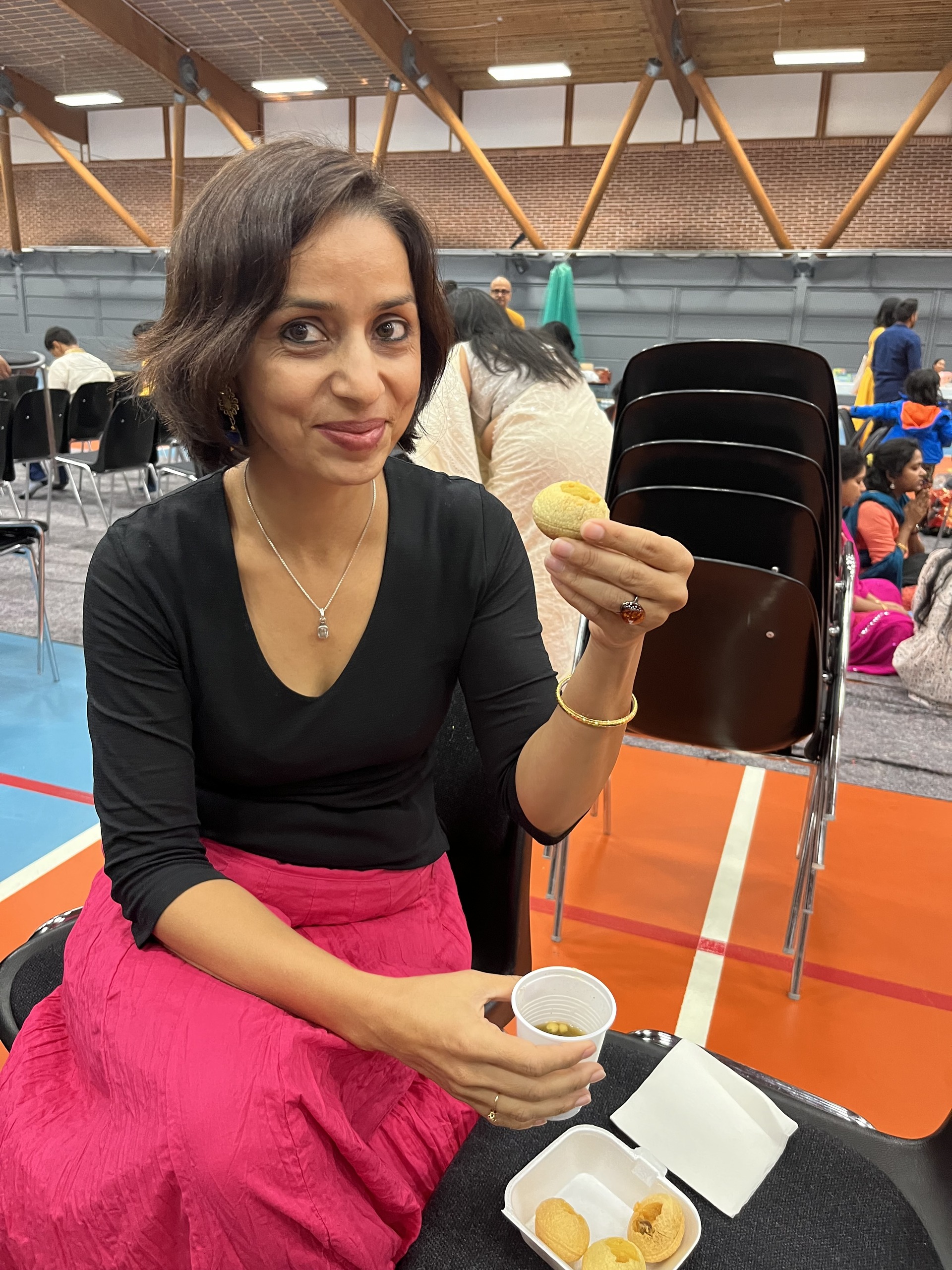
After five years now, this is one Indian festival that my eight-year-old knows so well.
And that makes me think about how traditions travel across generations when families move across countries.
My son is growing up in Denmark. He goes to a Danish school, speaks Danish fluently, and experiences the world very differently from the way I did growing up in India. He is naturally integrated into the Danish culture and looks forward to Christmas, Fastelavn, and Easter.
He would never have remembered Durga Puja if the Bengali community here didn’t try to bring celebrations alive in their home far away from home. But thanks to the home-like celebrations, he finds every ritual, food, and cultural activity during these three days of celebration familiar.
I wouldn’t say he waits for Durga Puja the way I do, but I am sure in a few years he will wait for this festival too. However, his memories associated with the festival will be quite different from mine.
Back home, Durga Puja transforms entire streets and neighbourhoods.
Huge pandals come up in every neighbourhood, each one competing for attention with elaborate decorations, lights and creative themes. No wonder Durga Puja in Kolkata was officially inscribed in 2021 on the UNESCO Representative List of the Intangible Cultural Heritage of Humanity.
Durga Puja pandal is a temporary structure built to house the clay idols of Goddess Durga and her children. They are works of art and often take many months to prepare. The pandal themes can range from replicas of Indian or global monuments to abstract concepts, environmental concerns, or burning social issues.
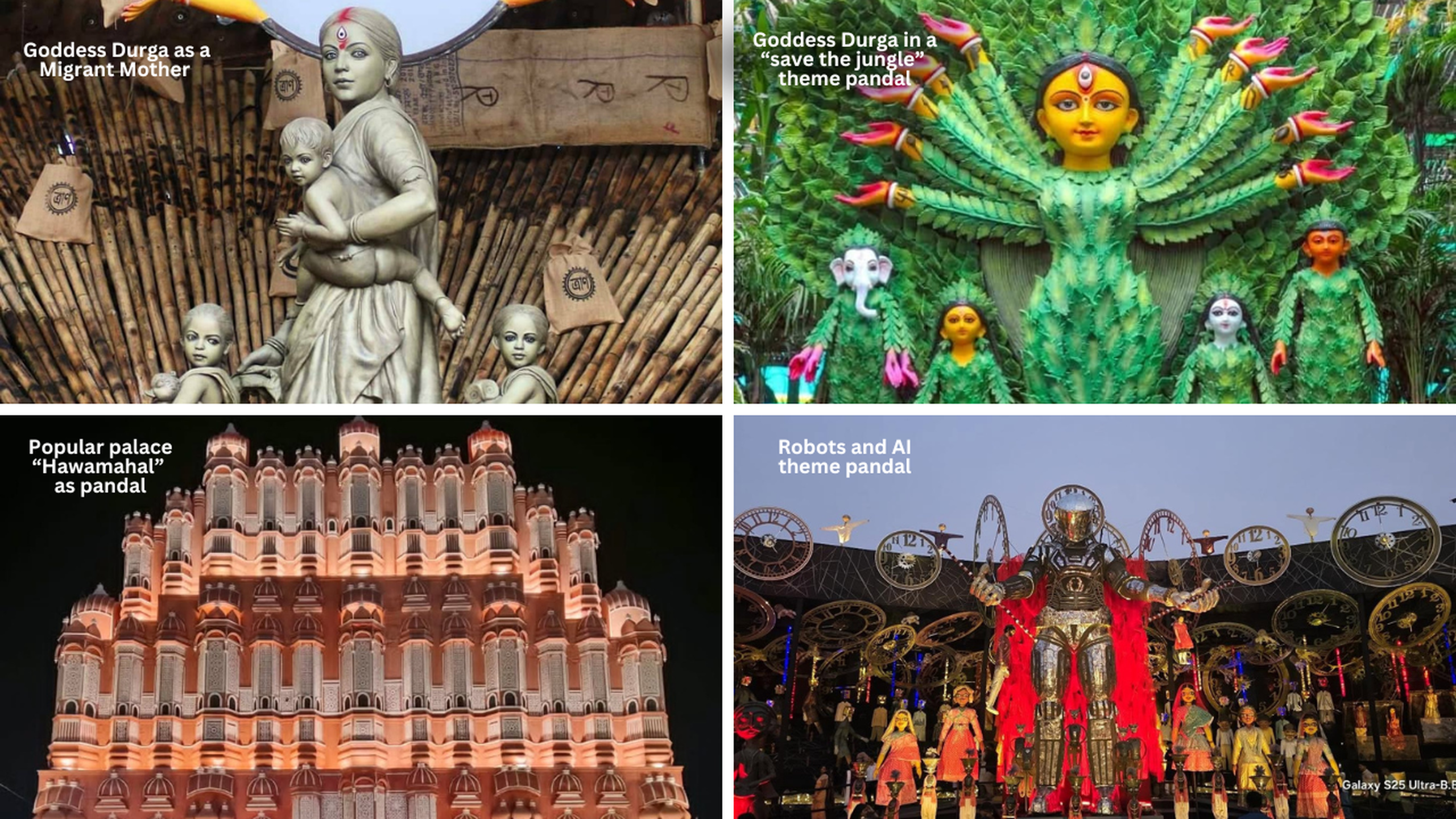
Pandal hopping is one of the rituals. We dress up and stay out late into the night, moving from one pandal to another. There are queues everywhere, food stalls on the streets, music playing in the background, and familiar faces appearing in the middle of the crowd.
Now replicating this in Denmark is impossible, but perhaps we don’t need to.
The Bengali community in Denmark has created its own version of home.
Instead of a pandal in the middle of a neighbourhood, we gather inside a large hall. Instead of professional artisans transforming the space, community members themselves take care of the decorations and preparations. Instead of spreading the celebrations across the city, thousands of us come together in one place.
Even the calendar has to be negotiated with everyday life. Since Durga Puja is not a public holiday in Denmark, the celebrations are organised around a weekend. What would feel like a much longer festival back home is condensed into three packed days.
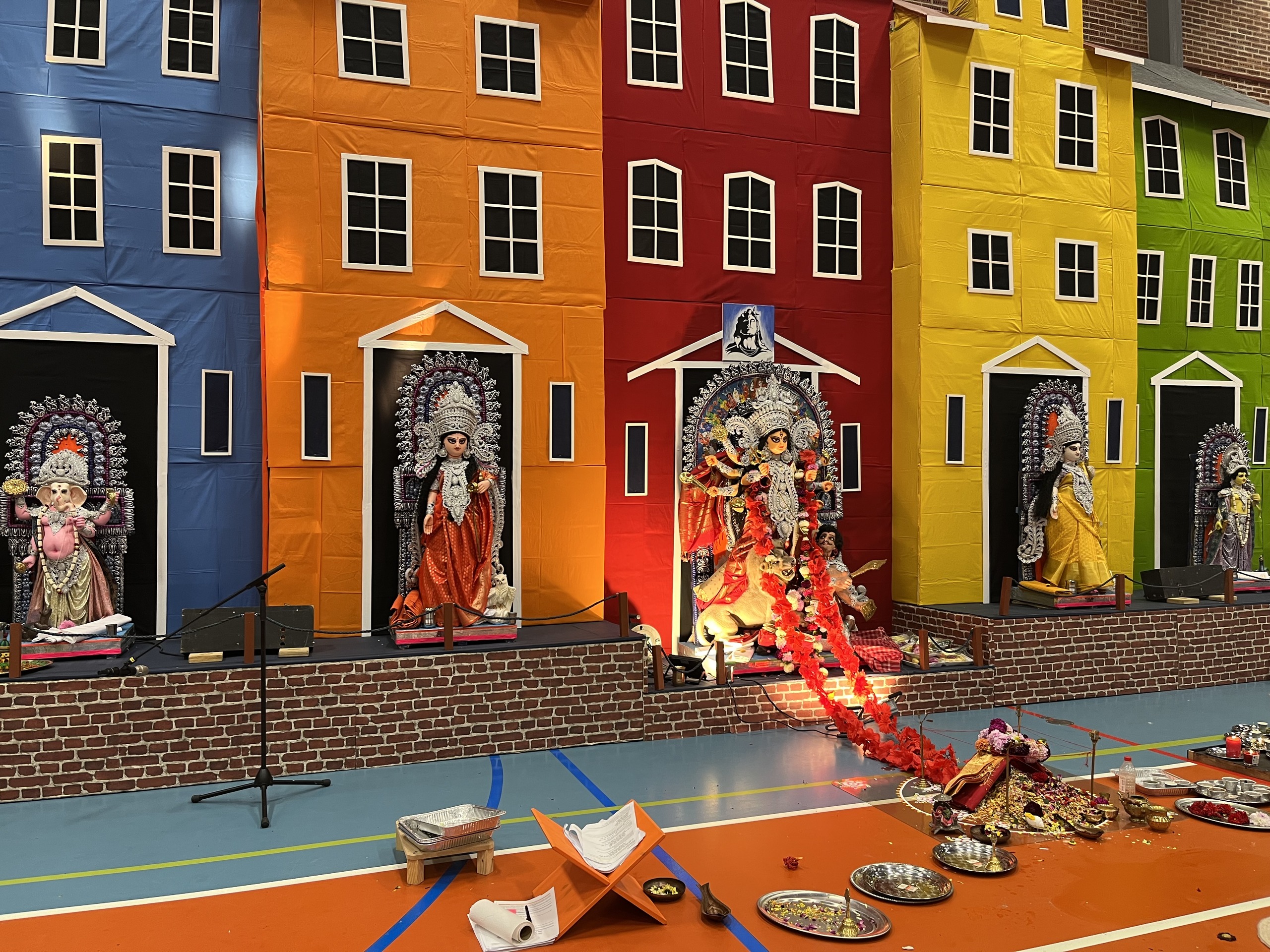
There are limitations, but there is also something beautiful about what happens when people work within those limitations. They bring what they can from home and recreate what they remember.
The idols, the rituals, the dhak, the food, the music, the dance, the cultural programmes. None of it is exactly the same. But together, they create something that feels remarkably familiar.
And perhaps that is what I love most about celebrating Durga Puja in Denmark.
It doesn’t try to become Kolkata.
It simply creates a little space where, for three days, we can feel like we are home.
If you are curious, you can see here how we bring the festivities alive in Denmark with Durga Puja Celebrations: