
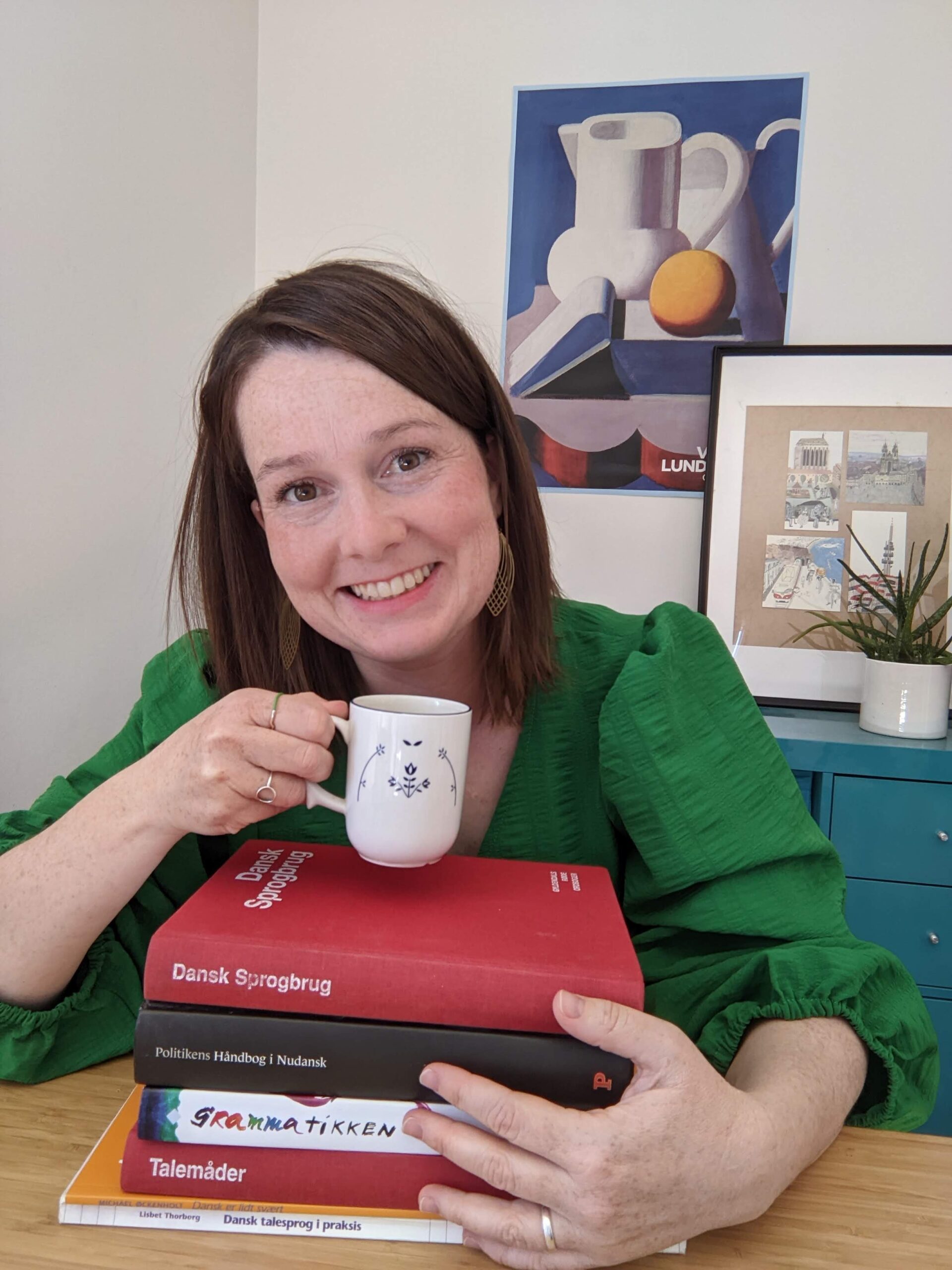
Are you feeling comfortable speaking Danish? But not completely fluent yet? Daniela Hummelgren is here to help internationals jump from “classroom” to “real” Danish, navigating life beyond PD3.
Daniela Hummelgren comes from the Czech Republic. She started studying Danish in 2003 and completed a Master’s degree in Danish at Charles University in Prague. She later moved to Denmark to study, where she met her Danish husband. After living together for three years in the Czech Republic, they moved to Denmark permanently. Through her work with the Danish language in different capacities, she realized that her passion lies in helping internationals feel like they belong by mastering Danish. She has completed additional training for teachers of Danish as a second language and now teaches Danish to international students in Denmark who especially struggle with speaking.
Daniela finds being an international teacher of Danish an advantage, as she understands her own struggles and what helped her overcome difficulties in learning the language. She explains that after some progress, it is normal to feel you hit a wall and that you cannot jump to the next level. Daniela helps people through this process and makes significant progress from that point. She says, “My clients do appreciate that I have the same experience as they go through, and I know how to break this difficult moment when you feel that you actually cannot level up in Danish.” Daniela shows howow it’s possible to overcome struggles and move on with fluency after passing PD3. With her, you can manage even faster, as she faced the same issues and developed a strategy that works for the students.
Many internationals in Denmark, despite English’s popularity, are willing to learn Danish. There are many ways to do it – independently, through private lessons, or by attending a course. The course consists of five modules, and after the last one, you can register for the PD3 exam. This exam is required for permanent residency in Denmark for non-EU nationals and for EU nationals seeking citizenship. Without breaks, the course lasts about two years. They are demanding classes where you practice speaking, listening, reading, and pronunciation, which is key to communicating with Danish speakers.
After such effort, many internationals may think that after passing PD3, they will be close to fluent in Danish. Daniela explains, however, why it is essential to continue learning Danish after PD3 and how it can improve your career opportunities. She notices that after learning for the exam, people are still not able to handle conversations in daily life that they actually need or at their job – they were just prepared for the exam, created in its own style. “There is no conversation in PD3. There is an oral exam in which you have to present a topic for two minutes. They ask you some questions about the prepared topic, and this is not the natural flow of a daily conversation,” Daniela adds. That is when learning after passing PD3 is important to maintain progress and handle more “natural” conversations in spontaneous situations. And of course, especially in Copenhagen, a lot of things can be done in English, but Daniela assumes that if you really want to live here and belong here, Danish is essential.
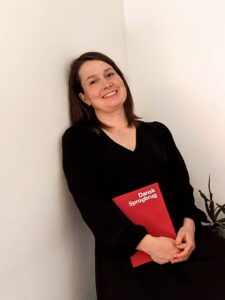
Daniela notices that for many jobs, you can be recruited in English, but if you really want to grow within a company or pursue higher positions, your career can be limited without speaking Danish. The common mistake is to give up learning Danish after passing PD3, when people have already invested so much energy. “People usually try to speak Danish at work, but then it can go wrong, because Danes switch to English for them. Finally, they lose confidence in Danish and start forgetting the language,” Daniela explains. Then, after some time, they may feel uncomfortable in some social situations at the office, and even if people switch to English, they don’t feel particularly happy about making others do so just for them. After some time, it can feel a bit awkward and can create unnecessary distance. Even if you were really positive at the beginning about practicing Danish at the job, real situations can be more difficult to handle than you thought, and could be discouraging in the long run. It’s definitely better to be fluent in Danish, which is not easy but possible, and Daniela proves it is achievable!
Daniela finds pronunciation challenging. She explains that Danish people have difficulty understanding internationals because they are accustomed to hearing fluent Danish. Sometimes, Danes switch to English to help, but for those who really want to practice and learn, it can be counterproductive. Daniela struggled with this, but now she helps people with pronunciation, which has led to handling real-life conversations with Danes and professional ones at work.
Of course, the sooner you are advanced in Danish, the better! The ideal situation would be for you to speak Danish comfortably during the recruitment process. But if you are already hired, want to be promoted and grow within the company, Daniela advises to learn the language, because if you want to be a manager even in an English-speaking company, you will probably need to cooperate with other departments (e.g. production), when it is more natural to speak Danish.
Daniela’s main mission is to help people to bridge the gap between PD3 and fluent language. It is very satisfying for her to see how people make such a big step forward and become confident in speaking Danish. She teaches through private lessons and also leads introductory courses for groups. The takeaway for you from her would be that you shouldn’t give up on learning Danish even if it becomes difficult, because she promises that with some effort, you definitely can be fluent.
Please see Daniela’s website www.danielahummelgren.dk and LinkedIn profile to get in touch and work together to polish your Danish.