
This winter has been my first working winter with a child. It has also been my first winter with a child in a vuggestue (EN: daycare), which in practice meant a few months of constant sickness.
Between those sick, dark days and disrupted nights, my experience of the city shrank to a small radius. Cultural life did not feature much in that routine.
Last week, as the light returned and the air softened, Copenhagen began to feel open again. And not just to me. If you have lived here for a while, you recognize this moment. After the long winter, people seem to reappear in the city like spring bulbs suddenly blooming everywhere, and cultural life becomes visible again.
This past week also marked the opening of the CPH:DOX festival, one of Copenhagen’s largest cultural events. But I would like to turn your attention to something much smaller.
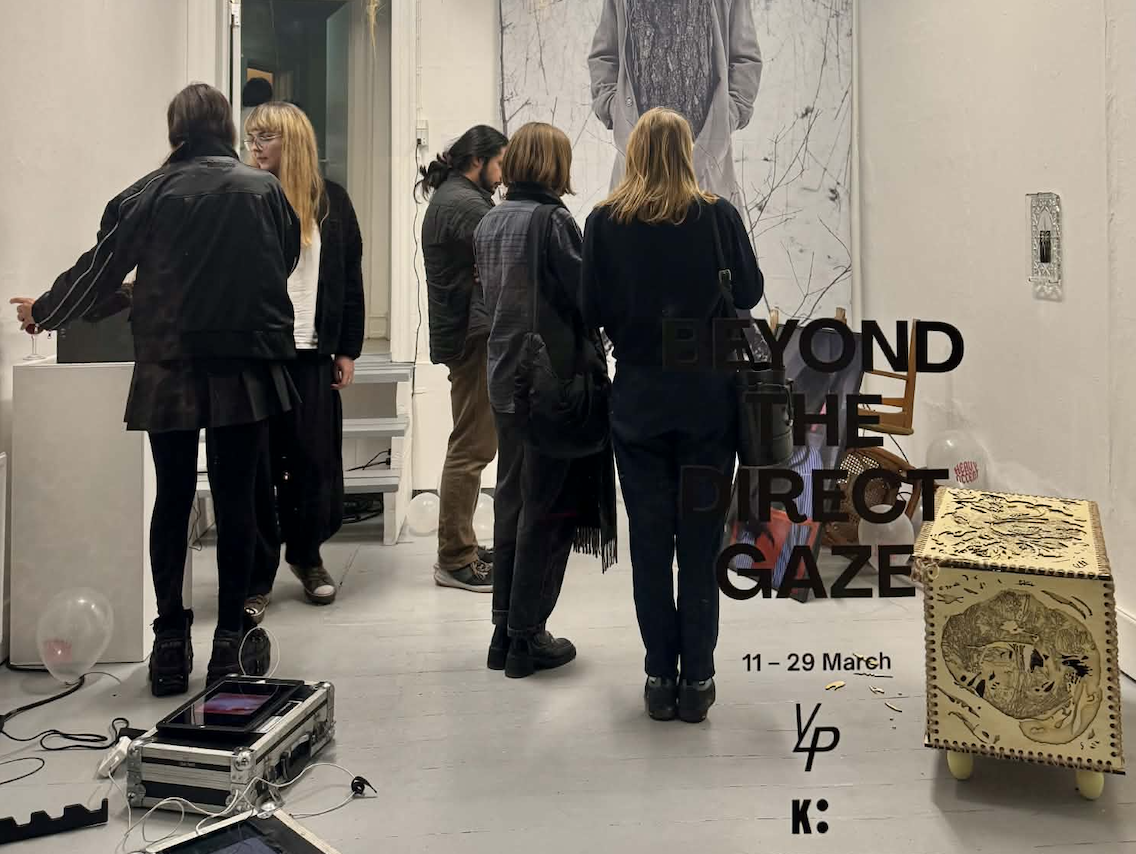
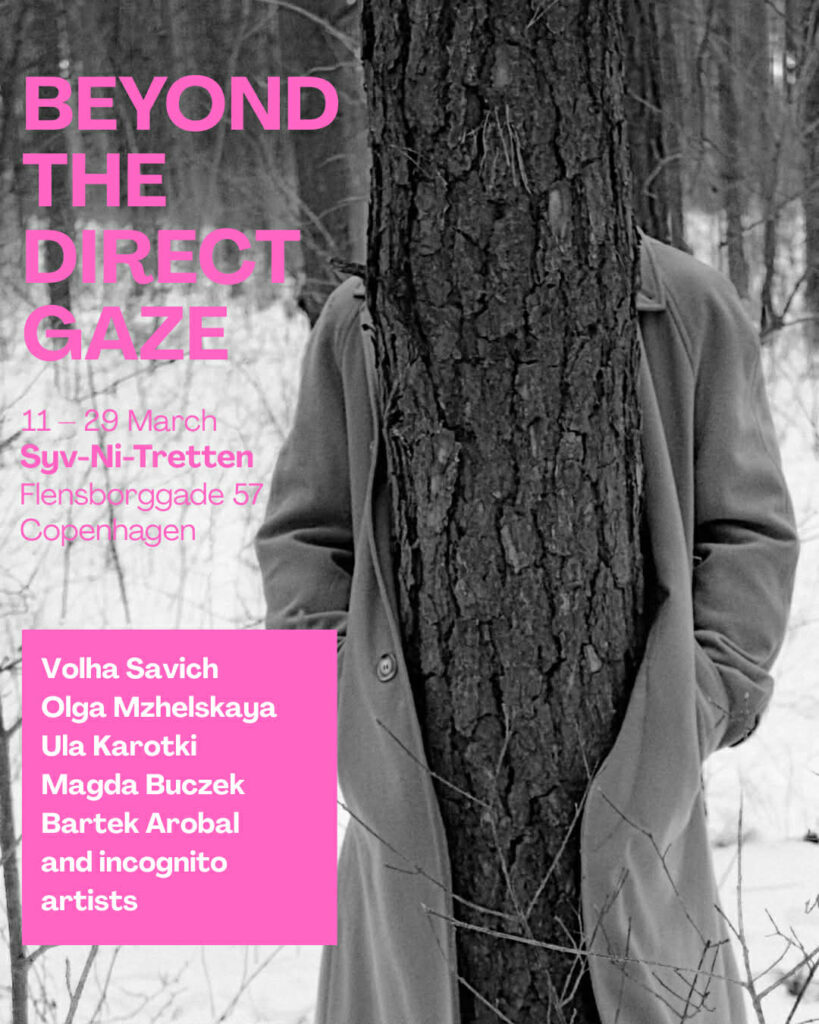
I am referring to the exhibition, “Beyond the Direct Gaze,” that runs until March 29 and may be of particular interest to many readers of Last Week in Denmark, especially internationals living in Copenhagen. The exhibition is organized by Vi Lever På Polsk (VLP), a small artist-run gallery currently operating from the community space Sharing is Caring in Vesterbro.
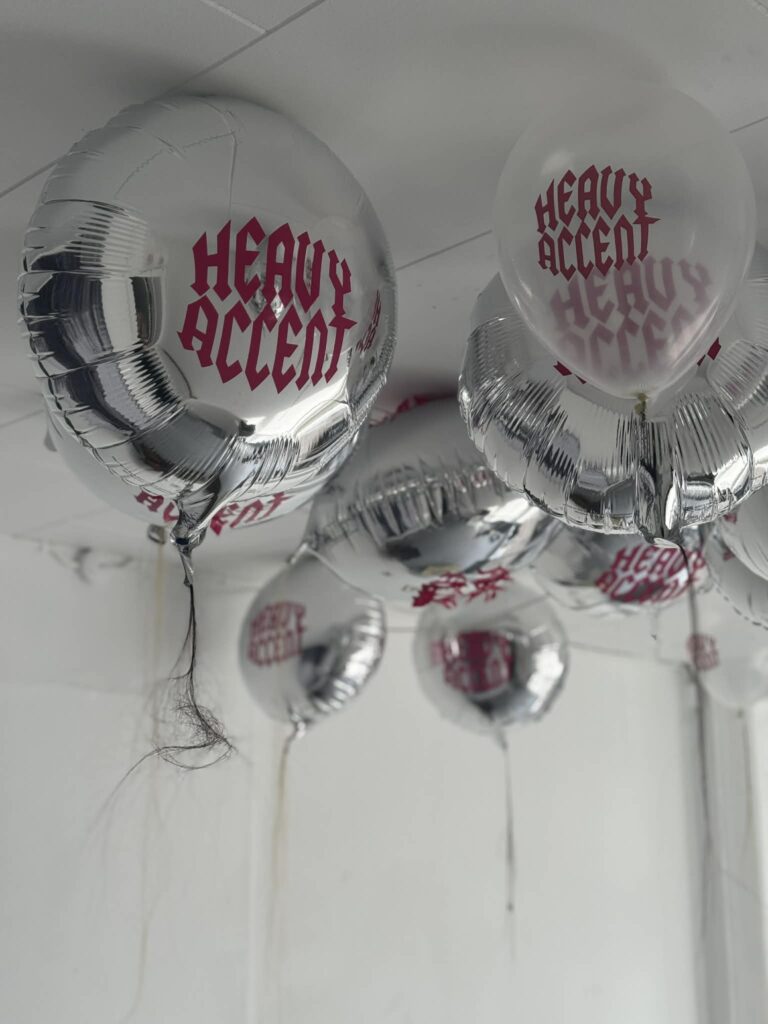
The first work that catches your attention when you walk into the gallery’s small room is Magda Buczek’s installation of 21 silver helium balloons floating overhead. Each balloon bears the inscription “Heavy Accent.” The piece balances lightness with a hint of discomfort. It touches on an experience familiar to most internationals: the way an accent can make someone immediately visible, even when everything else might blend in. Most internationals living in Denmark speak with an accent (especially when speaking Danish!), and Eastern European accents in particular still remain the punchline.
Another installation by Ula Karotki invites visitors to dig through soil inside a glass aquarium. Buried in the earth is an archival German photograph taken in her native Belarus during World War I. To see it, you have to excavate it yourself. Gloves are provided.
The gesture is simple but effective. Soil becomes both archive and metaphor: a place of belonging, but also a place where history is layered, hidden, and sometimes literally dug up again — and reinterpreted in the process.
The exhibition also includes works by Volha Savich, Olga Mzhelskaya, and Bartek Arobal Kociemba, as well as several anonymous contributors. Curated by Olga Mzhelskaya, the show brings together artists connected to Belarus and Eastern Europe and reflects on how memory and identity are shaped when history is fragmented or incomplete. But this exhibition speaks to experiences that resonate far beyond Eastern Europe. Many of the themes, such as displacement, memory, and belonging, acquire new meanings when they appear in cities like Copenhagen, where international communities are part of everyday life.
The gallery hosting the exhibition also reflects this international context.
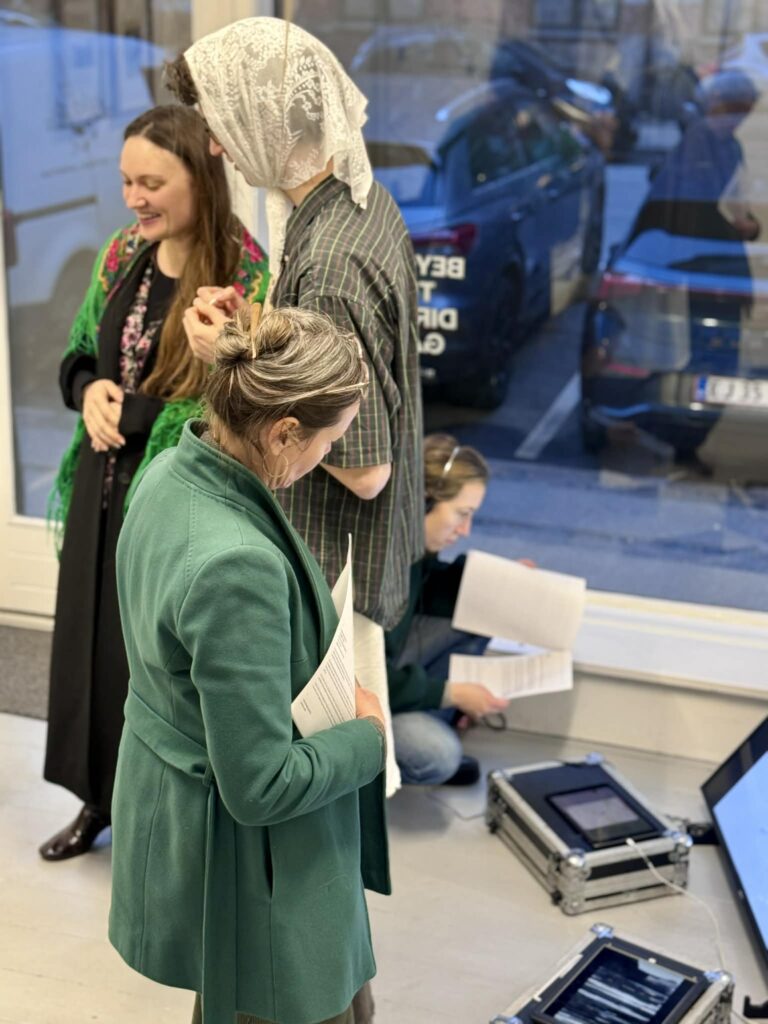
Vi Lever På Polsk was founded in 2020 by Polish visual artists Magda Buczek, Bartek Arobal Kociemba, and me. It now operates as an artist-run association and a platform bringing together a small but active community.
The name of the initiative refers to an old Danish phrase. In the nineteenth century, Polish migrant workers in Denmark were sometimes said to leve på polsk – “live the Polish way.” Because of religious differences, they could not legally marry in Denmark and therefore lived together outside official recognition.
VLP embraces this idea and interprets it more broadly as a space operating slightly outside established structures. Its program focuses on artists who often remain outside the mainstream art scene for practical reasons: migration, parenthood, illness, language barriers, or simply a lack of local networks.
Spaces like this are easy to overlook in a city with strong cultural institutions. Yet they play an important role in the cultural ecosystem. They allow experiences such as migration and hybrid identities to appear in public without being simplified into a single narrative.
In that sense, this particular exhibition and others like it connect to something larger. Democracies depend not only on political institutions but also on cultural spaces where different perspectives can be expressed and shared.
The exhibition runs until March 29 at Sharing is Caring, Flensborggade 57, and is open by appointment. Visitors may contact the gallery via Instagram or email (vileverpapolsk@gmail.com) to arrange a visit.