
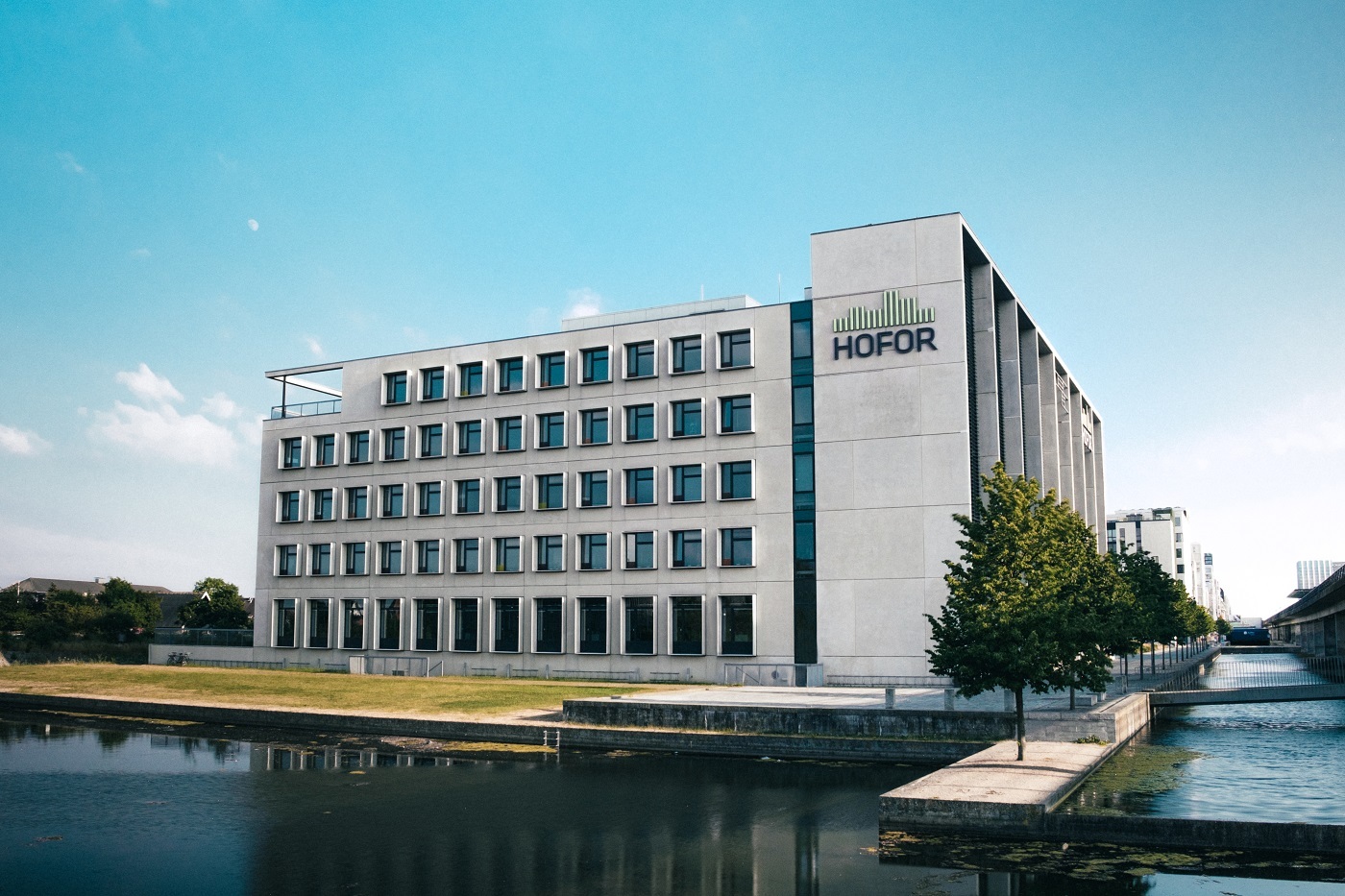
Denmark’s capital city may be short of up to 12 million cubic metres of water per year if no action is taken, a new study by utility company Hofor has found. This is equal to the entire annual water consumption of Odense Municipality.
This could look like low water pressure or no water at all when you turn on the tap, and restrictions on water consumption. The problem could be particularly acute for those living in high rise buildings. In Copenhagen, this adds up to over 25% of the population.
Martin Rygaard is a senior specialist and expert in drinking water at Hofor, which supplies more than a million customers in eight municipalities of the capital city. The company also exports water to some neighbouring municipalities. His calculations show the water shortage corresponds to 33 litres per person in the Hofor area per day. This is around a third of the water an average Dane uses each day. In total, Hofor predicts a shortage of 12 million cubic metres of water per year by 2040.
What is causing the shortage?
There are a number of reasons for the predicted shortage, Rygaard told Last Week In Denmark: “Over the past fifteen years we have seen more and more pollution of our groundwater. We have also seen drier and hotter weather in the summertime. We have had difficulties repairing the water pipes in the city. They are leaking more and more water. The final factor is the population increase. There has been an influx of people to the Greater Copenhagen area – more than 200,000 people over the past 10-15 years and that will continue.”
“Individually, each of these factors has not really been a concern for us,” Rygaard says, “But a few years ago we realised that because all are happening at the same time, we need to do something differently.”
Last year, a study by Danske Regioner found that more than half of Denmark’s drinking water supplies were contaminated by pesticides and other toxins, with more and more waterworks being forced to purify groundwater to make it fit for drinking. “We have reached a point where something must be done right now if there is also to be clean groundwater and drinking water for the next generations – and for ourselves, said Mads Duedahl on the report’s publication.
Pollution from agriculture is one factor but old industrial sites have also contributed to the contamination of our water, as well as routine house maintenance jobs such as painting.
And climate change is causing growing issues. “The summer is the period of the year we are most worried about,” says Hofor’s Martin Rygaard. Over the past century, average temperatures in Denmark during the summer months have risen steadily by 1.25 degrees celsius. According to Hofor, people use between 10-20% more water during the summer. Last week, Hofor urged Copenhagen residents to conserve water due to the lack of rain recently. Farmers have also had to irrigate their fields, putting further pressure on groundwater supplies. In the area covered by Hofor, this is happening a great deal.
The ageing, leaky water pipes in the capital city are a “tricky issue”, says Rygaard. “The older a pipe is, the less money can be spent on repairing it, according to the regulations we have. We would like to spend a lot more money on repairs and we are actively asking to be allowed to do this. Otherwise all we’re doing is shifting the bill onto future generations.”
An issue that affects everyone
“There’s no doubt that the Greater Copenhagen area is being hit harder than other areas of the country in terms of our ability to make enough clean water,” says Hofor’s Martin Rygaard. But other areas are facing their own issues. “Maybe they don’t have the same problems right now, but I’m sure they are still concerned.”
Dorthe Skræm, a project manager at DANVA, the Danish Water and Wastewater Association, told Last Week in Denmark, “Water shortage is a risk that, in the long term if no action is taken, can affect other bigger cities in Denmark as well as remote areas with no alternative water supply, for example smaller islands. But the Copenhagen situation is more acute, as there are a lot of people living there, combined with a relatively low formation of groundwater, so the water formation and consumption is not balanced for future needs.”
In many areas of the country, more water is used than there are groundwater supplies, Dansk Regioner reported. 20% of the country is currently overexploiting supplies of groundwater. This is particularly true of areas that use a lot of water for industrial production.
How is water shortage being tackled?
It’s vital that we tackle the issue, says Martin Rygaard from Hofor. “If it’s not tackled, it may affect the growth of Copenhagen as a city. And who wants to settle in a city where you can’t guarantee there will be water when you turn on the tap?”
Dorthe Skræm from DANVA agrees: “It will be serious if action is not taken,” she says. “It is important to take water resources into account when planning new areas or inviting new water-consuming industries to the area.”
Hofor is currently focused on raising public awareness of the water shortage issue and working collaboratively with the government, other municipalities and other water utilities on potential solutions. “We have ongoing collaboration already,” says Martin Rygaard, “But we really want to increase that collaboration and also make it focused on securing water for Greater Copenhagen in the future.”
As a trade water association, DANVA is collaborating in several ways to address the water issue. This includes the long-term protection of groundwater resources, the development of necessary technologies to treat contaminated water to make it safe, if needed, and the devising of a legal framework so that sources other than groundwater can be used if necessary.
The government has heeded Dansk Regioner’s call last year for a comprehensive overview of groundwater to assess the size of the issue. Environment Minister Magnus Heunicke of the Social Democratic Party acknowledged that the country has taken clean water for granted for too long and more should have been done to protect water supplies.
The government is currently mapping where groundwater is formed across the country and which areas need to be protected. The exercise is due to be completed by next year. “Drinking water means everything to us in Denmark, and it must be clean, and it must be safe, and there must be enough of it. And this will not be the case in the future if we do not act,” says Heunicke. “That is why we have launched a study that will be followed up by concrete protection of drinking water. It is my most important effort to ensure that we complete the study and introduce the real protection of these areas from pesticides.”
“We want to primarily base our drinking water production on groundwater in the future, but what are the alternatives if that’s not possible?” says Martin Rygaard. “So we are also looking at that in our discussions.”
Dansk Regioner has also called for a coordinated effort by the authorities to tackle pollution, and a stronger concentration of expertise in this area. The green tripartite agreement signed by parliament in June 2024 focuses on future water planning and tackling pollution caused by agriculture. Under the agreement, by 2029 at the latest, Denmark’s water plans must comply with the common EU environmental targets in open waters. The agreement states resources will then be focused on reducing nitrogen emissions in the more enclosed fjords which are particularly impacting clean water supply.
What can we do at home?
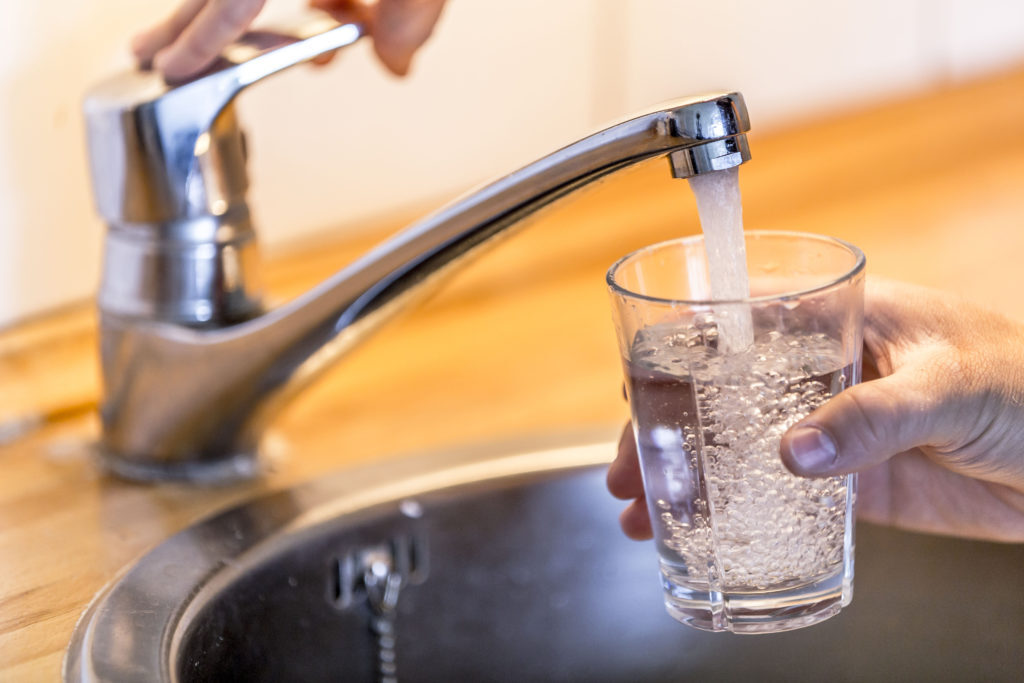
On average, we each use 98 litres of water per day, equivalent to 195 standard water bottles. “Danes are actually pretty good at conserving water,” says Martin Rygaard from Hofor. “The average water use in the Greater Copenhagen area is less than 100 litres per person per day, which is super low when we compare it internationally. But we would like it to be reduced further if possible.”
“In Denmark the water that comes from our taps is very high quality,” Rygaard says. “Anyone living here should be really happy that they have ready access to that. And that also means we all need to be aware of that and use that water wisely.”
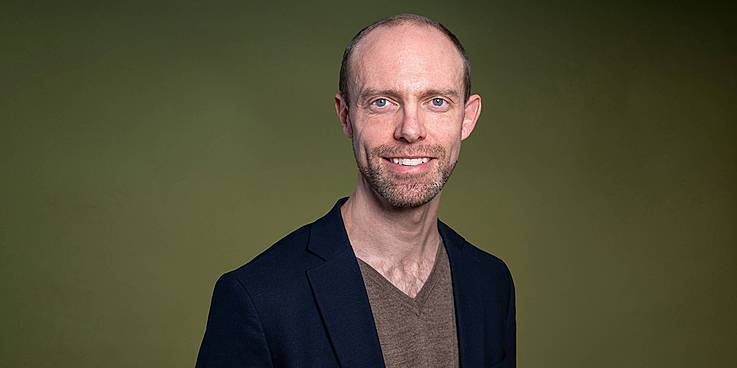
Image credit: Hofor
Hofor say we can all reduce our water consumption year round by:
- Turning off the tap while brushing teeth
- Watering plants with a watering can rather than a water hose and watering when the sun is low, so less water evaporates in the heat. According to Hofor, watering gardens during the summer months is the main reason for extra water consumption
- Collecting rainwater and using that to water plants instead of using drinking water from the tap
- Avoiding watering the lawn – Hofor says this is unnecessary. If it turns yellow it will recover itself in time
- Taking a shorter shower – reducing by just one minute per day saves 10 liters of water. If a million people across the country do this, that adds up to a lot, say Hofor
- Using the saver function on the washing machine and dishwasher
- Fixing dripping taps and running toilets
And if we have a hot summer, we should also
- Avoid filling large garden pools with water and swim in the sea instead
- Using water savings programmes on washing machines and dishwashers
- If we have a bath, try to take shorter baths
Saving water – the numbers
5L – turning off the tap while brushing teeth or soaping hands
10L – running the bath for one minute less
20L – using the water saving programme on your washing machine or dishwasher
200L – fixing a continuously running toilet
Read the full Dansk Regioner report here: Drikkevand