
For some, election posters are simply ugly — but for many, they’re a reminder that an election is happening.
On the last Saturday of October, all the candidates and party volunteers were out putting up election posters, and within just a few hours, Copenhagen — where I live — was completely covered with candidates’ faces and political messages in every colour and from almost every political persuasion. Lamp posts, fences, and even trees were decorated with posters. It’s almost like Christmas, when stars and hearts hang in shop windows and garlands stretch across the streets. You could say the city has been decorated for the election.
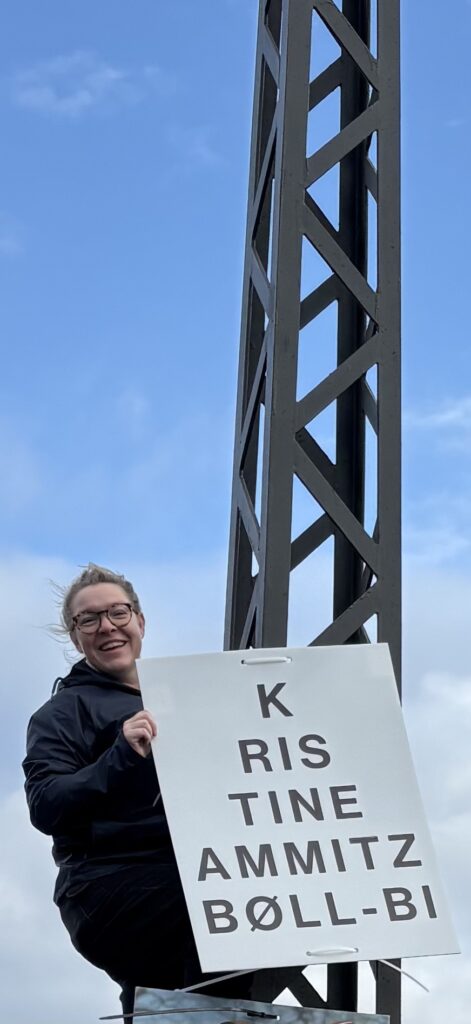
It’s always a bit of fun to see your own face on a lamp post, and for many of the party volunteers, this day marks the real start of the campaign. The exact time we’re allowed to hang up posters is strictly regulated by election law — right down to the minute when the first zip ties can be tightened on the back of a poster!
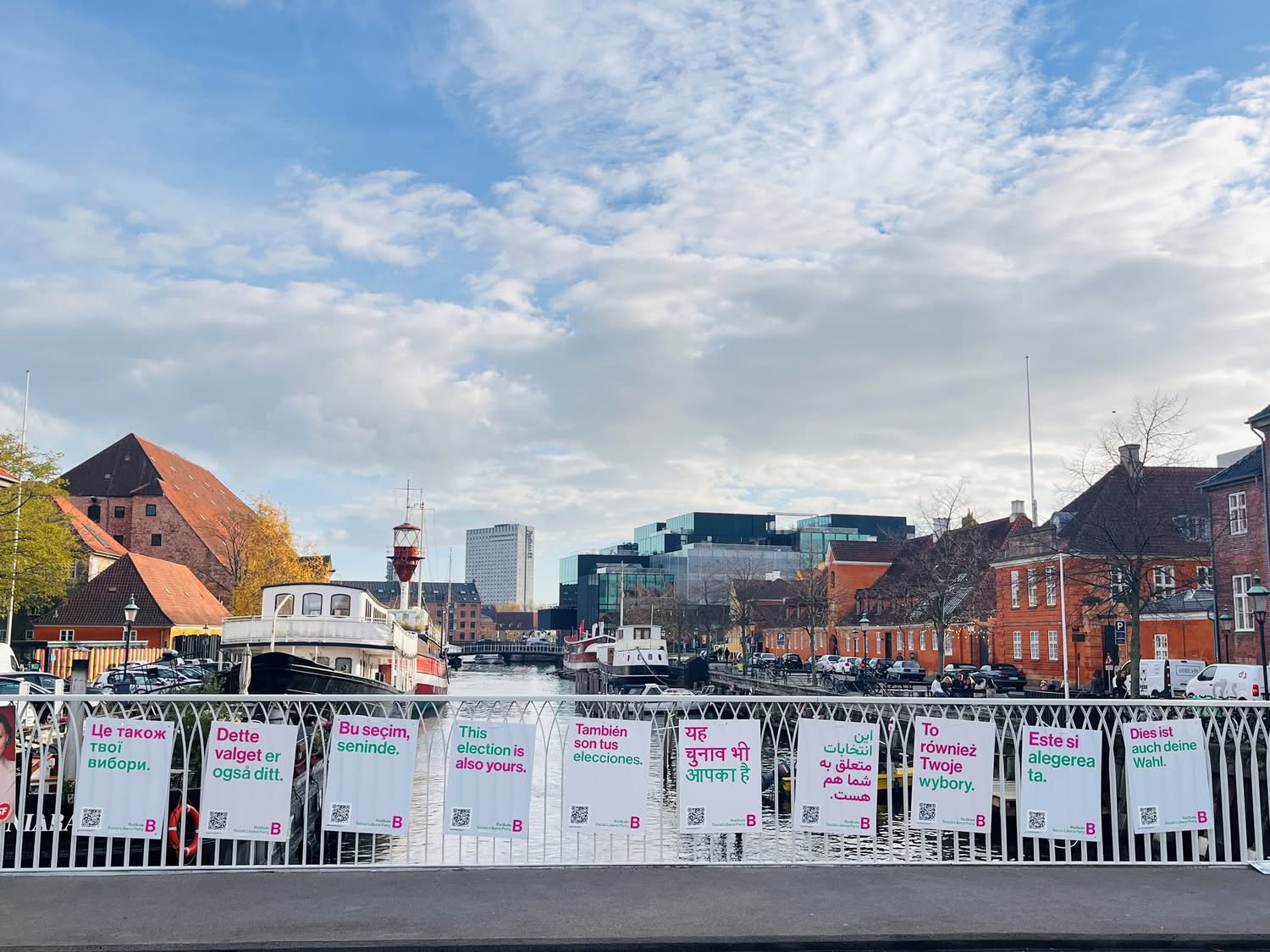
My own party, Radikale Venstre (the Danish Social Liberal Party), has launched a poster with the slogan “It’s your election too” in the ten most widely spoken languages in Denmark besides Danish. Many people are happy about that, but a few get upset because they disagree with international residents being allowed to vote in local and regional elections. I honestly don’t understand that. When you help pay for the party by paying taxes, it’s only fair that you also have a say in choosing the people who decide how that money is spent in our municipalities and regions.
Election posters serve two main purposes. First, they remind voters that the election is approaching — it’s time to make up their minds. In fact, fewer than half of voters have decided who to vote for a month before election day. Second, posters make sure voters know who is running. Very few people vote for someone whose name they’ve never heard.
Some people can’t stand election posters — just like some people don’t like Christmas decorations. Personally, I think it’s wonderful to be reminded that we live in a democracy, where we all have an equal say in who makes decisions on our behalf. Those who dislike posters often ask, “Why do you even put them up?”
The answer is simple: because it works. Research shows* that candidates whose faces hang from lamp posts attract voters they wouldn’t otherwise reach. And I can feel it myself — both when I’m out campaigning and when I’m just walking down the street. People notice the poster!
One day, while I was handing out flyers, a woman who had just walked past me suddenly turned around and called out: “Aren’t you Kristine?” I confirmed that I was.
“My mother loves your glasses! I promised her I’d ask where you bought them if I ever met you.” And there she was — at Enghave Plads, right by the metro exit. I’ve actually had these glasses for a few years, even though I normally change them often. But with work, three small children, and politics, I haven’t had much time for new ones. So I couldn’t immediately remember where they were from. But she was allowed to take a picture of the inside of the frame so she and her mother could go hunting for the brand and model—or maybe something similar.
Back to the posters. Most of them show the candidate’s name, photo, and party, but Danish media always find it interesting when someone stands out — with funny photos, unusual layouts, or message-based posters like the ones I mentioned earlier. Some of the newer parties even include a smaller image of their party leader behind the candidate, so people know what the party stands for. The older parties don’t need to do that.
Our message posters — reminding international residents that “It’s your election too” — caught the attention of the Danish media as well. When I was preparing with my campaign volunteers, both TV and radio dropped by to ask why we chose to print those posters. The reason is simple: we want to remind everyone that there’s an election — especially in a city like Copenhagen, where more than one in five eligible voters doesn’t hold Danish citizenship.
This has also sparked debate in the opinion pages, where some claim that we’re “buttering up” to foreign voters. Buttering up is probably too strong a word, but of course, we want to reach everyone who has the right to vote. I actually believe it’s the duty of political parties to engage in dialogue with voters — all voters.
And there’s an additional — perhaps even more important — function of election posters: now everyone knows that there’s an election coming, and that they should get ready to vote. It’s simply impossible not to notice. The important thing is to make sure that everyone who has the right to vote also knows they do.
Now the posters are up, and the campaign is in full swing. The only thing left is to save a bit of energy for after election day on November 18th, because that’s when the posters have to come down again. It’s not nearly as fun as putting them up, especially for those who don’t get the results they hoped for. But if the posters aren’t taken down before the deadline, candidates and parties face fines. And none of us can afford that — we’ve already spent our money on the campaign.