
I recently experienced an authentic moment of Danish confusion (also known as “huh??-gge”), as I struggled to recall which city my friend told me he had relocated to. Was it Viborg? Silkeborg? Skanderborg??
Instead of risking an awkward mistake (and potentially triggering a centuries-old Viking rivalry), I decided to do my own research. This led me to develop a new spin-off miniseries: Jeg Tog To Tog til en Borg, where I’ll explore Denmark’s many -borg towns – one at a time – and hopefully help you avoid similar geographical blunders.
Whether we journey in order of popularity or alphabetization, Aalborg is the borg to begin with. Depending on who you ask, it is either the third or fourth largest city in Denmark (Odense has a more highly populated urban center; Aalborg’s numbers increase by including its suburbs). My family visited there in the summer of 2020, roaming freely due to the COVID-era tourist drought. It was the first -borg we explored, and yet, I never questioned its name until now.
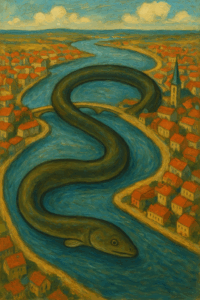
Technically, the official Danish spelling is Ålborg, featuring the most adorable of the Danish vowels. If you’ve ever seen a Danish alphabet poster, you’ve probably spotted the word “Ål” next to a drawing of an eel.
The suffix “-borg” translates roughly to “castle,” “fortification,” or “fortress.” That’s right, folks: My family spent a delightful long holiday weekend in the summer of 2020, happily cycling along an eel fortress.
The historic etymology of Ålborg is a little more complicated than that, but let’s just go with “Eel Fortress,” because it sounds compelling and cool, like the city itself. If you can imagine how surprised you would be to stumble upon an Eel Fortress, you can begin to imagine what my family’s experience was like: Equal parts magical and unexpected.
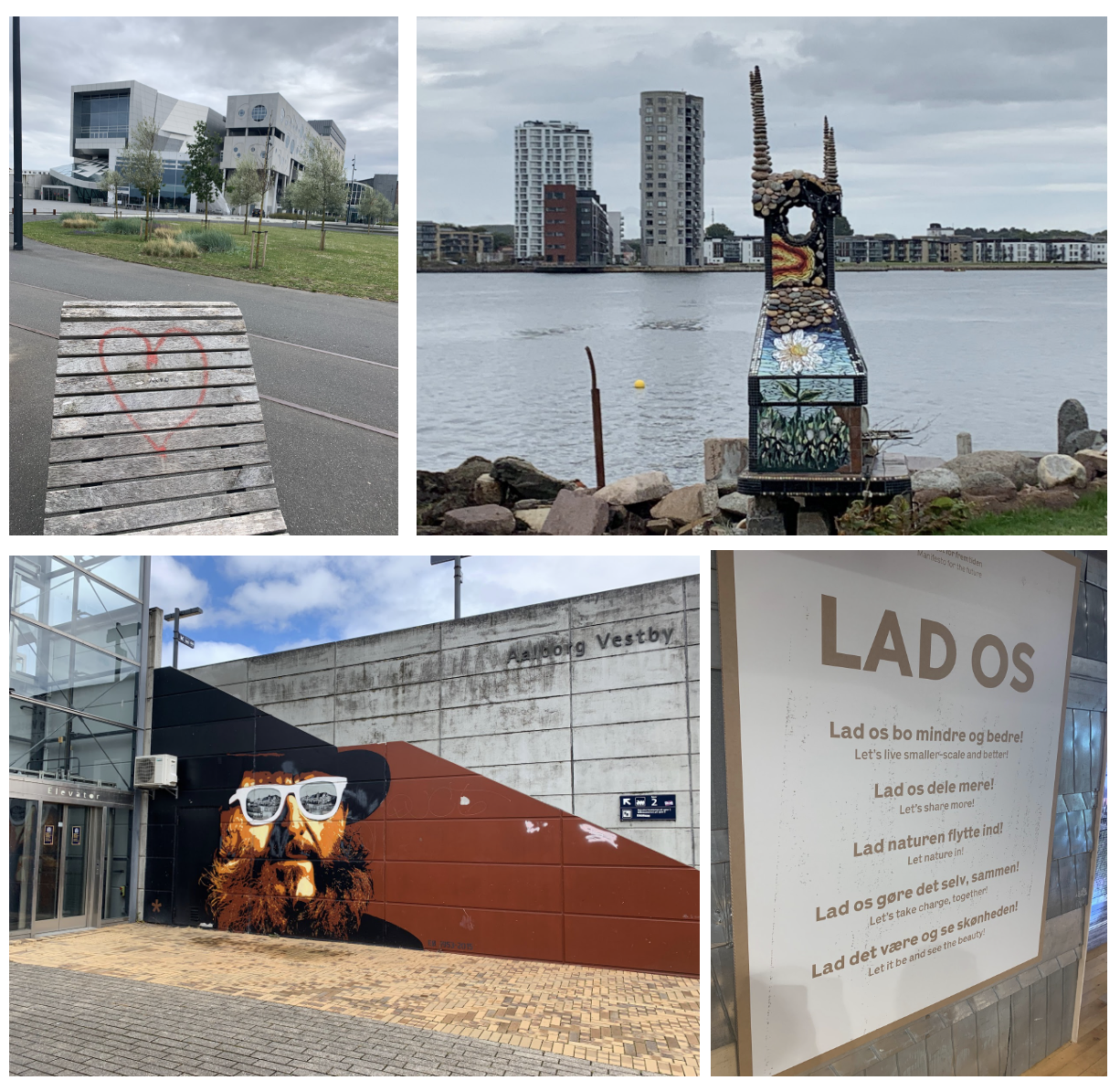
What we remember about our holiday in Aalborg is that it was particularly pleasant to explore via bicycle. The city sprawls across the coast of a waterway called Limfjord, and we were able to cycle along the length of the harbor, stopping at any time to satisfy our curiosity. Carting our young child around in a bike trailer, we discovered a sweet little modern art museum, aptly named KUNSTEN. They have an awesome outdoor sculpture park, and a highly engaging interactive children’s exhibit. At the time of our visit, they offered playful conversation starter cards to facilitate a dialogue about the artwork. Nearby is the Aalborg Zoo, renowned for its commitment to preserving endangered species. They don’t have any eels on display, but they do have red pandas, sloths, mini pigs, and dwarf otters.
Aalborg University is regarded as one of the best in the world, for its contributions to UN sustainability efforts, and for its extraordinary architecture. The crown jewel of the campus is the magnificent Utzon Center, named in honor of its designer, Jørn Utzon. Born in Copenhagen, Utzon is most famous for designing the Sydney Opera House. The Center in Aalborg was his last project; he died a few months after it was completed. Calling it a museum doesn’t quite do it justice. It’s a building that showcases and celebrates the intersections between art, architecture, and design, just like Aalborg incorporates these into its own infrastructure.
This commitment to environmental creativity is even on display at Aalborg Street Food. Housed in a converted former furniture factory, the industrial vibe feels unique and very Danish. Outdoor seating gets you a waterside view of the harbor, which always makes food taste better. My wife and I are street food fanatics, and this is one of our favorites. We have even made special detours – on the way further north to Skagen, for example – just to dine there.
Next to Street Food is where we made our biggest discovery: a hidden gem in the form of a residential enclave known as Fjordbyen (no research needed for this translation – “fjord city”!). Originally formed in the 1930s as a collection of storage sheds for fishermen to house their equipment, it expanded and evolved into a proper neighborhood, made up of more than one hundred customized tiny homes, colorfully decorated with found objects and creative flair. Each inhabitant is given a 90 m² plot of land to develop, and the house they build can only fill half the space. The neighborhood is privately owned, but open to the public for exploring and admiring, which we did: weaving around the eel-like narrow passageways that separated each domestic masterpiece, our mouths agape at the individuality and charm. For a moment, we even considered what it might be like to have a summer house in such a creative oasis. And by ‘considered,’ I obviously mean we did a full-blown investigation.
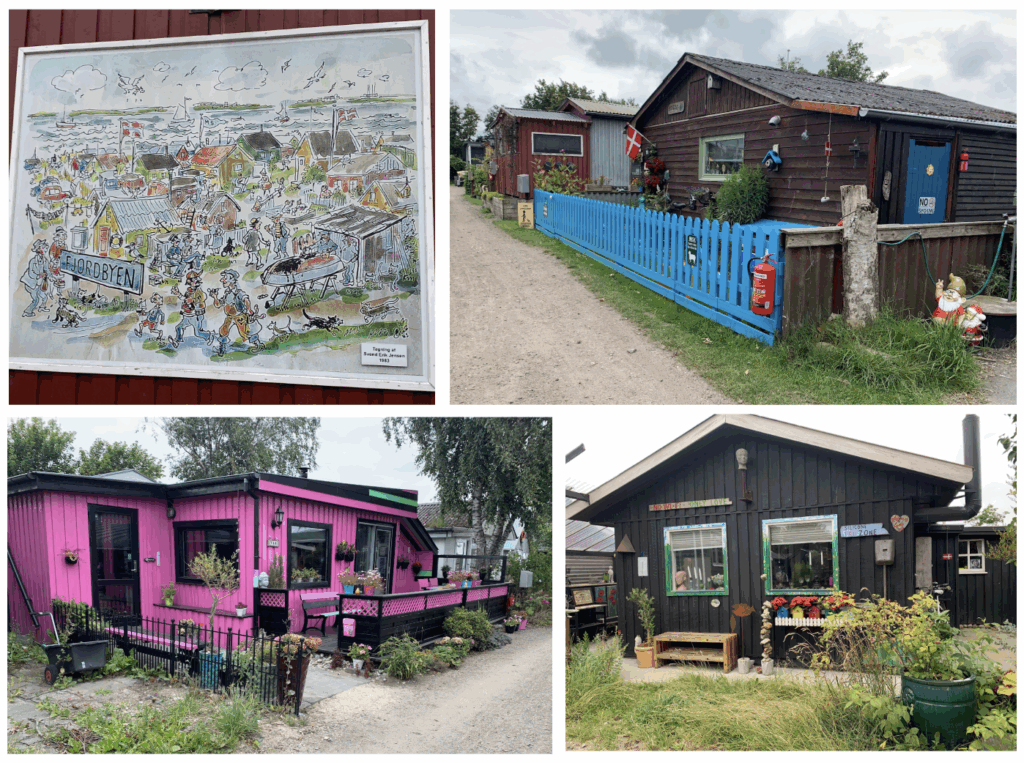
There is no formal application process to obtain a plot or home in Fjordbyen; exchanges are made privately in a direct purchase from the previous owner. The only regulation is that new owners must already be full-time residents in Aalborg. Which we are not… and since everyone in my family is very happy where we currently live, Fjordbyen – and the majestic charm of Aalborg – will have to remain a destination for weekends and holidays.
Luckily, we don’t have to wait long until our next visit. Next weekend, Last Week in Denmark is celebrating its five-year anniversary by hosting a Gala at Aalborg 📚 . Coincidentally, it is also the five-year anniversary of my family’s first trip to the city. We are looking forward to returning, discovering how it has changed over the years, and possibly even forming a heavy metal band, so that we can call ourselves Eel Fortress.