

Moving to Denmark is expensive. Between the apartment deposit and 50-kroner coffees, the first few months are hard on a bank account. Newcomers usually head straight to IKEA or download the DBA app for used furniture. But there’s a better option. It’s totally free, and a lot of people don’t even know it exists.
It’s the local recycling center, or Genbrugsstation.
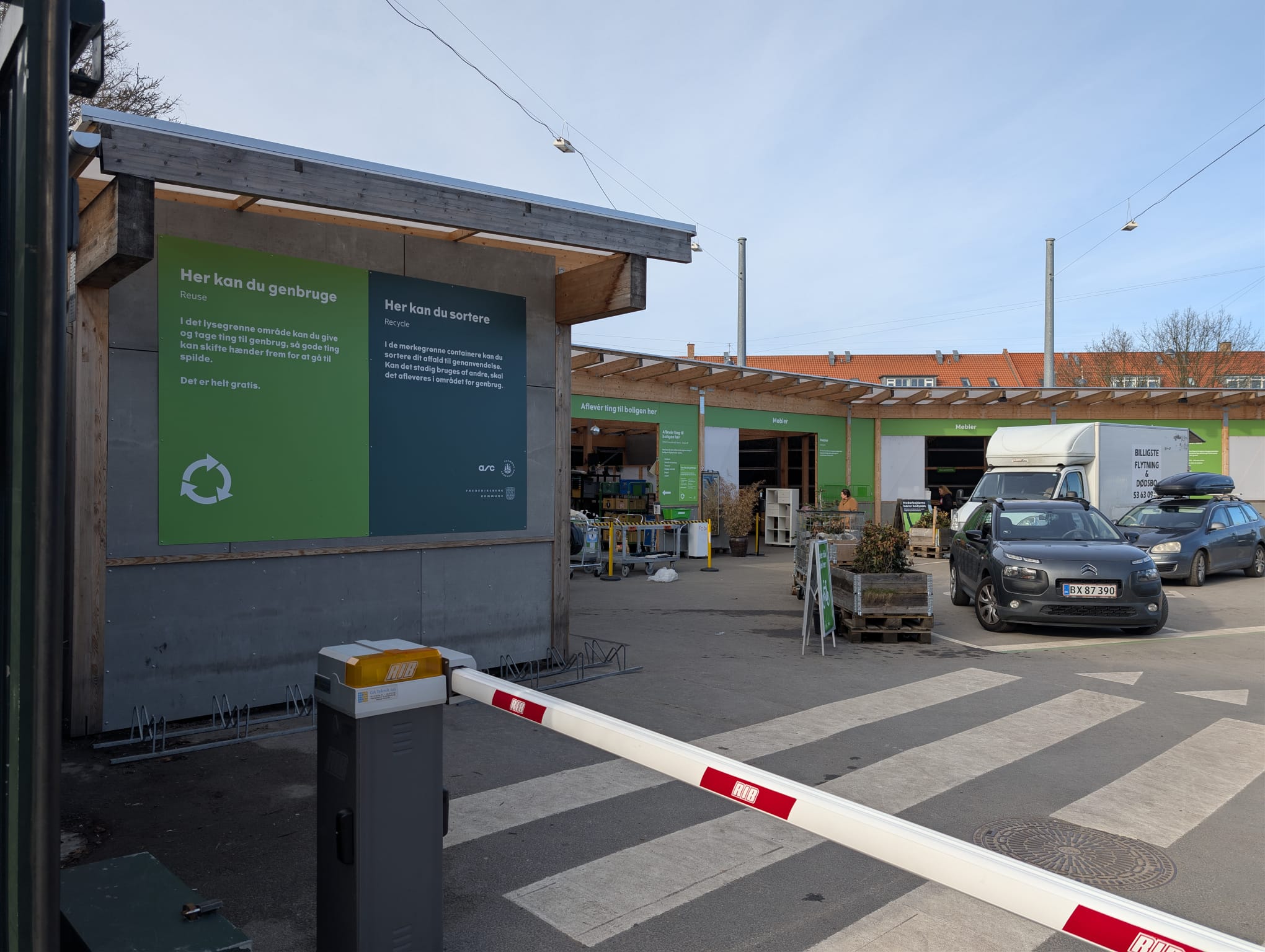
What it is
Danes buy a lot of things, and they get rid of a lot of perfectly good things. To stop this stuff from going to the trash, the city set up places where people can swap items.
There are two main types. The large Genbrugsstation usually requires a car for big items like sofas and dining tables. Then there’s the Nærgenbrugsstation. These are smaller, local spots right in the neighborhoods. They’re strictly for walkers and cyclists. No cars allowed. In Copenhagen, a public company called ARC runs them.
Copenhagen’s official “Resource and Waste Management Plan” set a clear mandate to triple the level of reuse by 2024. The former Mayor of Technical and Environmental Affairs, Ninna Hedeager Olsen, put it bluntly: “The circular economy is not just a buzzword. It is the way forward to a really sustainable society where we keep materials and resources in the loop. This is common sense.”
The Swap Room
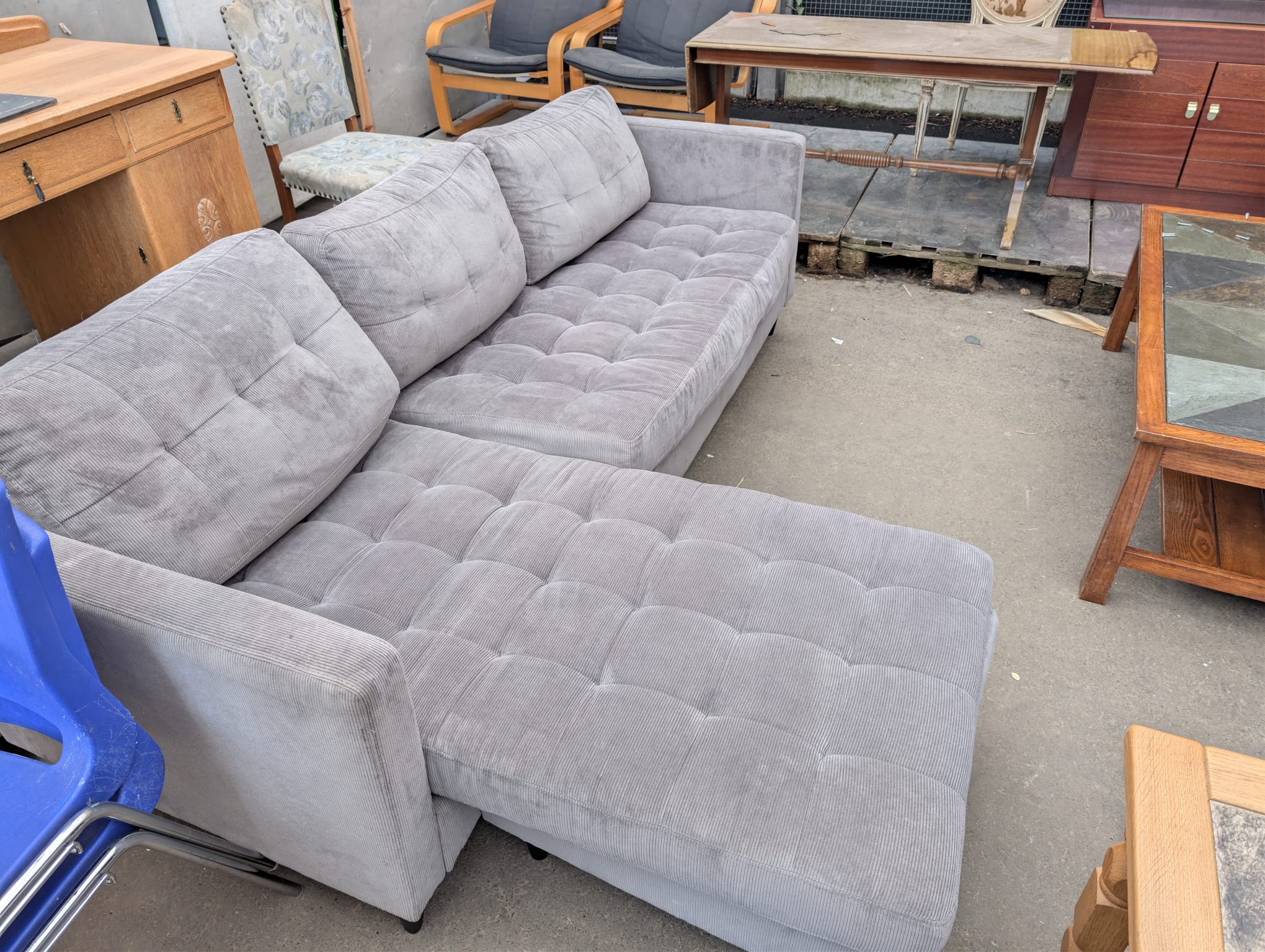
The best part is the Bytterum, or swap room. The concept is simple. People drop off things that are too good to throw away. Anyone else can walk in and take what they need.
ARC, which runs many of these sites in Copenhagen, focuses on keeping as many usable items as possible out of incineration, even if that sometimes comes with trade-offs.
It costs nothing. Nobody asks any questions. You don’t even have to bring an item to take an item. These rooms are packed. You can find clothes, chairs, shelves, books, and plates. Someone setting up a new apartment can walk out with dishes and a pan without spending a kroner.
A culture of replacing and recycling
Danes buy nice things. They also like to change how their homes look. A lot. It is common to see someone drop off an expensive chair just because they bought a new one in a different color. They prefer to get rid of things quickly to save space.
But they rarely throw these things in the trash. The swap room keeps these goods circulating. A dining table might get used for ten years by three different people instead of going to a landfill. This is actual sustainability. It is a practical way to help the planet because it reduces the need to manufacture new items and cuts down on heavy waste.
This shift toward direct reuse is a heavy hitter for the environment. Mette Hoffgaard Ranfelt from the Danish Society for Nature Conservation explains that reuse is significantly better than traditional recycling. “Recycling still requires energy, transport, and processing, while reuse keeps the product intact and avoids producing a new one altogether,” Ranfelt says. “In circular economy terms, reuse sits higher in the waste hierarchy and delivers larger climate and resource savings.”
When a newcomer takes a used dining table instead of buying a new one, they avoid the emissions from raw material extraction, manufacturing, transport, and packaging. Ranfelt notes that for furniture, production is typically the most climate-intensive phase: “Reusing a solid wood table can save a lot of CO2 and reduce pressure on forests and global supply chains.”
To understand the scale of this, look at the numbers. A 2021 report by COWI found that for electronics, the gap is massive. Reusing one tonne of desktop PCs saves 20,154 kg of CO2, whereas recycling that same tonne for raw materials only saves 1,335 kg. That is a 15x better return for the planet just by keeping the item in its original form.
A 2025 study from the University of Southern Denmark (SDU) investigated the “rebound effect” of second-hand shopping. While they found that buying used furniture saves about 1.8 kg of CO2 per kilogram, they also found a catch: because people save so much money by getting things for free or cheap, they often spend that extra cash on other high-carbon items (like travel or new electronics).
As Associate Professor Ciprian Cimpan points out, reuse only works if it actually leads to “Absolute Sustainability”, meaning we don’t just use the savings to buy more stuff elsewhere. It’s a reminder that true sustainability is as much about our bank account behavior as it is about the items we own.
The unwritten rules
The swap room has no official police. But there is a clear etiquette. If someone brings a box of clothes, they shouldn’t just dump it on the floor. People fold the shirts. They line up the shoes. If a plate is cracked, it belongs in the ceramic trash bin outside, not on the swap shelf. The system works because people treat the room like a shared space. When someone makes a mess, it ruins the experience for the next person. Keeping it tidy is just part of the deal.
While the etiquette is generally high, the staff does face hurdles. Tina Berg Jensen, Operations manager at Amager Ressourcecenter, says the biggest daily challenge isn’t messy shelves, but “electronics thieves.” Because electronics are covered by producer responsibility laws, they aren’t meant for the swap room. “Especially at our large recycling centers, we face many challenges with foreign electronics thieves,” Jensen says. “At one of the sites, the problem is so severe that we have two guards present during all opening hours.”
There is also the issue of “pro” hunters. ARC is aware that resellers often take free items to sell online. “We encourage moderation so that professional buyers do not take everything,” Jensen says. “We try to regulate this through rules that refer to one visit per day and that visitors only take what they can carry out in two hands. But we are also interested in making as much as possible go to reuse, so it is a balancing act.”
Why this is rare
You might wonder why every city doesn’t do this. It comes down to trust and local infrastructure. The government has to pay for the space and the staff to run it. But the system also relies on people playing by the rules. If people dump actual garbage in the swap room, the whole system breaks. It only works because most people respect the space.\
Making systems like this work at scale requires more than infrastructure. “We need to make reuse visible, convenient, and socially attractive,” Ranfelt explains, pointing to better design of swap spaces and public awareness as key drivers.
Beyond the social trust, there is a logistical backbone. The system relies on “skilled and dedicated recycling advisors” to maintain the atmosphere. And if an item sits in the swap room and nobody wants it? It doesn’t just go to a landfill. According to Jensen, “Almost everything is recycled, otherwise it is recycled in the fractions it belongs to, e.g., damaged clothes go into the textile waste container and books into paper.”
The main lesson
There is a simple lesson here. People do not need to hold onto things forever. If an item is no longer useful, let someone else have it. It is better to pass a winter coat to a neighbor than to let it sit in a closet for five years. The Danish system shows that sharing resources makes a city much easier to live in.
Moving to a new country usually means buying everything from scratch. The default reaction is to go to a big retail store. The swap room changes that habit. Before buying a new lamp or a set of glasses, people start checking the recycling center first. It becomes a weekend routine. You might not find exactly what you want on the first try. But a week later, a perfect coffee table might just be sitting there. It forces a slower, more deliberate way of setting up a home. It saves money and reduces panic buying.
This shift is already mainstream in Denmark. Recent figures show that 72% of Danes bought second-hand clothing last year, and over 80% have visited a Red Cross shop..The goal is to move from a “throw-away” culture to one where, as the city’s plan suggests, waste is treated as a resource that can “promote growth and innovation.”
How to use the system
Here is how to get started if you need things for your apartment.
- Find a spot: Search for “Nærgenbrugsstation” on Google Maps. Good central spots in Copenhagen include Møllegade in Nørrebro, Gartnergade, and Enghave.
- Check the hours: Local stations are closed on Wednesdays. Weekdays run from noon to 6 PM. Weekends are 10 AM to 4 PM.
- Borrow a cart: If you find a heavy table but walked there, ask the staff for help. Many stations let you borrow a pull cart (trækvogn) or a cargo bike to get it home.
- Give back: When it’s time to upgrade your apartment later, bring your clean, working items back to the room.
The swap room is just one small part of the recycling center. The rest of the area is for actual waste, and the sorting is very specific. There are different massive containers for hard plastic, soft plastic, painted wood, and raw wood. There are separate spots for old cables, batteries, and chemicals. It looks a bit overwhelming at first. But the staff walking around wear bright vests and are always ready to point to the right container. They want the sorting done correctly. If there is ever any confusion about where an old frying pan goes, just ask them.
Other resources
If going to the physical recycling center is not an option, there is a digital version. It is a Facebook group called Free Your Stuff Copenhagen. The rules are basically the same. People post photos of things they do not want anymore, and anyone can claim them for free.
There is just one catch. The person who claims the item has to go pick it up. Usually, this means coordinating a time and going to someone’s apartment. This setup works perfectly for heavy things like beds, desks, or big wardrobes. People do not want to carry heavy furniture down the stairs, so they just give it away to whoever is willing to do the heavy lifting.
Things move quickly in this group. A nice couch will get claimed in two minutes. It takes some patience and a lot of refreshing the page. The transport is also entirely on the person picking it up, which might mean renting a cargo bike or a van. But it is another great way to fill an apartment without spending a single krone.
Ranfelt, Chief Environmental Policy Advisor at the Danish Society for Nature Conservation points out that furniture, electronics, and textiles are the most resource-intensive everyday items because they require massive amounts of energy and complex global supply chains. Making reuse “visible, convenient, and socially attractive” is the first step in convincing people to ditch ultra-cheap disposable goods. While swap rooms aren’t a fix for global overconsumption, Ranfelt insists they “absolutely protect natural resources, every reused item reduces demand for new extraction.”
The bottom line
The local recycling center is more than just a place to leave trash. It shows how a city can actually practice sustainability. It is not about buying expensive green products. It is about using what is already there. For someone new to Denmark, it is the best way to furnish an apartment without spending money. But it is also a great introduction to the local culture. It proves that sharing resources makes life easier for everyone. Go check out the local station, ignore the resellers and find what you need.