

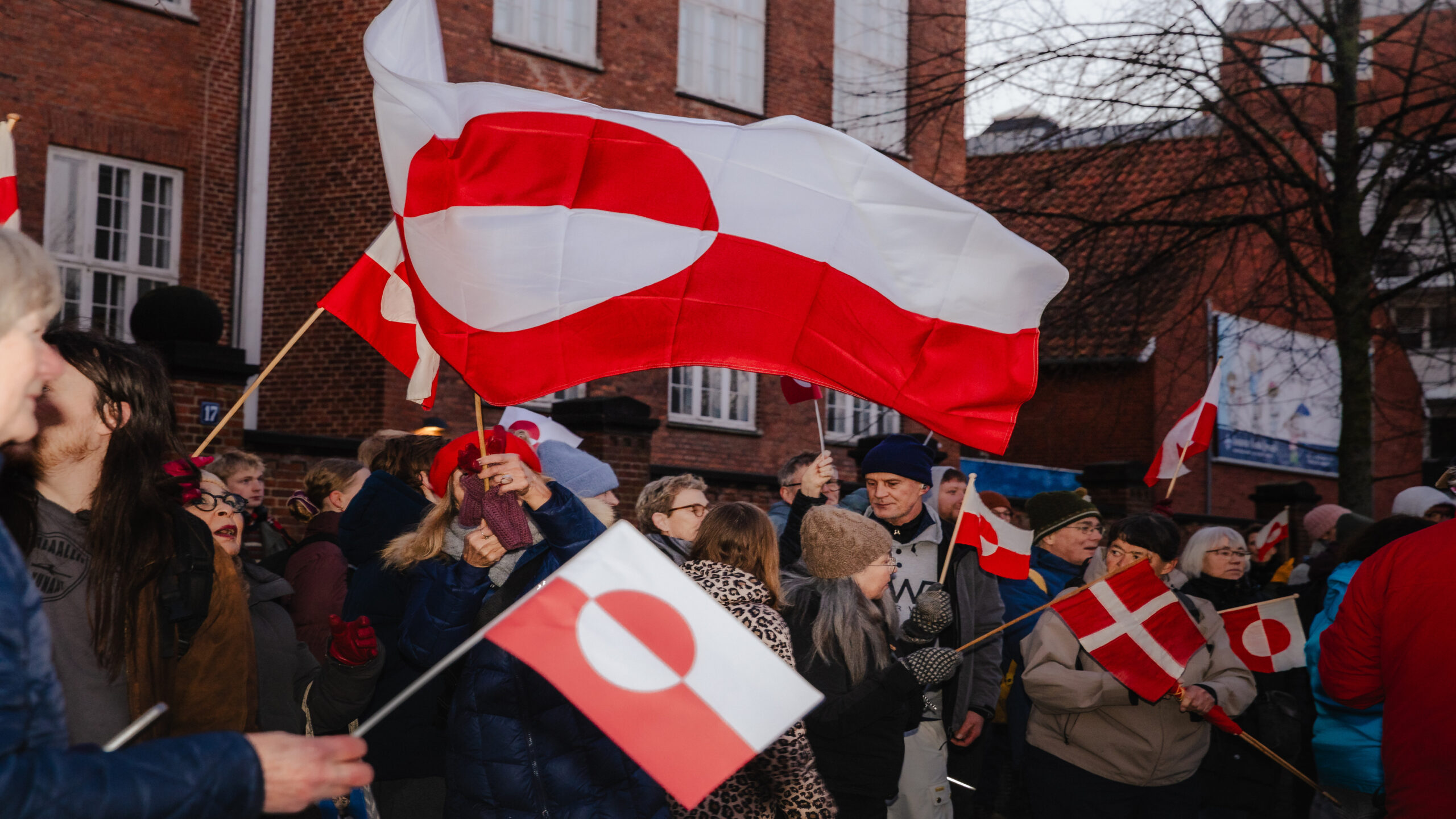
The past weeks have featured a flurry of headlines as the political drama between Greenland, Denmark, and the United States reached new heights, culminating in a meeting between representatives from all three countries on Wednesday.
While this current moment is particularly high-tension due to the Trump administration’s refusal to rule out military force against NATO allies, it is not the first time the United States has shown a keen interest in acquiring Greenland. Nor is it the first time the U.S. has pressured Copenhagen and frustrated Danish politicians.
This is, however, the first time that Greenland has had the power and authority to represent itself and its own interests at press conferences and negotiations.
If you want a bigger picture of the history between these countries, this timeline takes you from Denmark’s initial colonization of the island, through America’s long interest in acquiring it, to an overview of the past month’s escalation.
Colonial Beginnings (1721–1814)
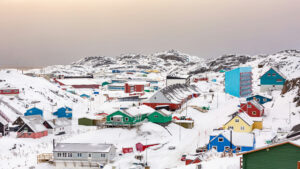
Image credit: Filip Gielda – Visit Greenland on Unsplash
Various Inuit cultures have inhabited Greenland for thousands of years, arriving from Canada to the west.
Vikings, under the leadership of Erik the Red, sailed from Iceland to Greenland and settled southern portions of the island in the 10th century, before eventually disappearing.
Modern Danish-Greenlandic relations began in 1721 with the arrival of missionary Hans Egede, who was sent to search for the lost Vikings, but instead found the indigenous Inuit inhabitants and established a colony in an attempt to convert them to Christianity.
- 1721: Danish-Norwegian missionary Hans Egede arrives in Greenland, marking the start of the modern colonial era.
- He establishes a colony near what is now the capital, Nuuk.
- 1775: Greenland is officially proclaimed as a colony by Denmark-Norway.
- Denmark monopolizes trade and restricts foreign access to the island.
- 1814: The union between Denmark and Norway dissolves. As part of the Treaty of Kiel, Denmark retains control of Greenland (along with the Faroe Islands and Iceland), cementing it as a Danish colony.
Early U.S. Interest (1823–1917)
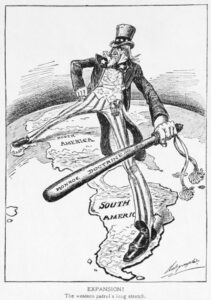
Image credit: Louis Dalrymple via Wikimedia Commons
Spurred by Manifest Destiny and the Monroe Doctrine, America spent much of the 19th century asserting itself as the dominant power in the Western Hemisphere.
As the U.S. exercised its geopolitical strength to broaden its sphere of influence, the Danish territories of Greenland and the Danish West Indies became targets of acquisition for the American government.
After several decades of interest and subtle challenges to Denmark’s rule over the island, the United States eventually bought the Danish West Indies (now the U.S. Virgin Islands) while officially recognizing that Denmark held the sole claim over all of Greenland.
- 1823: American president James Monroe articulates what becomes known as the Monroe Doctrine.
- Inspired by European colonial interests in Central and South America, as well as recent Russian settlements in what would become Alaska, the doctrine established an American foreign policy position that European powers should stay out of the Western Hemisphere, leaving it under the United States’ sphere of influence.
- 1867: Just after the purchase of Alaska from Russia, U.S. Secretary of State William H. Seward commissions a report on the potential purchase of Greenland and Iceland, which was also a Danish territory at the time. However, perhaps because the recent Alaska deal was ridiculed by many as foolish at the time, no formal offer was made.
- Seward actually got much closer to purchasing the Danish West Indies at this time. The Danish government approved a treaty to sell the islands, but the United States senate refused, as the islands had recently been hit by a wave of natural disasters which made them seem like a poor investment.
- 1891-92: American Arctic explorer Robert Peary plants a U.S. flag at the northern tip of Greenland and wrongly claims he has discovered “Peary Land,” a portion of land separated from the Danish colony by a channel of water.
- The United States hoped that explorers would find some geographical excuse to lay claim to a portion of Greenland. While the United States never made a specific claim based on Peary’s maps, the “discovery” offered some uncertainty to Denmark’s sovereignty over all of Greenland until 1916.
- 1916/1917: After decades of off-and-on negotiations, the Danish government agrees to sell the Danish West Indies, now known as the U.S. Virgin islands, to the Americans, who had long desired the islands for their strategic military position in the Caribbean.
- The Lansing Declaration: During negotiations, Denmark got the U.S. Secretary of State Robert Lansing to include a declaration in the treaty which states “the Government of the United States of America will not object to the Danish Government extending their political and economic interests to the whole of Greenland.”
World War II and The Kauffmann Treaty (1940–1945)
Image credit: U.S. Coast Guard via Wikimedia Commons
The Second World War fundamentally changed Greenland’s geopolitical situation.
Cut off from an occupied Danish government, the Greenlanders experienced a small degree of self-governance, as well as their first encounter with the United States.
The island of just under 20,000 inhabitants quickly filled with thousands of American troops. With them came increased infrastructure, new cultural influences, and the opportunity for new trade relationships.
- 1940: Nazi Germany invades and occupies Denmark. Greenland, now cut off from Copenhagen, declares itself a self-governing territory.
- 1941: Henrik Kauffmann, the Danish Ambassador in Washington D.C., acts independently of the occupied Danish government and signs a treaty which allows the U.S. to build military bases in Greenland.
- 1941-1945: The U.S. builds military bases throughout Greenland to defend the island from Nazi invasion and to serve as a refueling station for aircraft headed to Europe.
- 1944: Nearby Iceland, also cut off from occupied Copenhagen, votes to fully sever all ties with Denmark and become an independent republic.
A New Defense Treaty and Growing Autonomy (1946–2009)
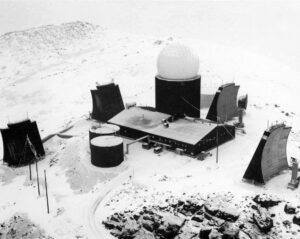
Image credit: U.S. National Archives via National Security Archive.
Following World War II, Greenland’s previous colonial status quo was untenable.
With the United States firmly planted in the nation and the Cold War escalating, Denmark attempted to decolonize Greenland and integrate the islanders.
This resulted in a population boom and a growing economy, but the “Danglicization” of Greenland also resulted in serious human rights abuses and the persecution of Greenlandic language and culture which pushed Greenland to fight for increasing self-governance.
- 1946: President Harry Truman offers Denmark $100 million in gold to buy Greenland. Denmark declines the offer, hoping the U.S. will terminate the 1941 defense treaty and leave the island.
- The U.S. points to the budding Cold War as its rationale for keeping and expanding military forces. The Danish Foreign Minister at the time, Gustav Rasmussen, said “while we owe the US a great deal, I do not think we owe them the whole island of Greenland.”
- 1951: The Greenland Defense Agreement is signed, allowing the U.S. to build military bases as it deems necessary. Construction begins on the large base now known as Pituffik Space Base.
- 1951: 22 Greenlandic children are taken to Denmark as part of the “Little Danes” experiment which stripped children from their families and their native language.
- 1953: Denmark changes its constitution, officially ending Greenland’s status as a colony and incorporating it as a “county” of Denmark with two seats in the Danish parliament.
- 1960s-1970s: Thousands of Greenlandic women are given intrauterine birth control devices, in some cases without their consent, in what has become known as “The Spiral Case.”
-
- 1979: Greenland is granted Home Rule status, taking on additional control.
- 1985: Using it’s new Home Rule status, Greenland withdraws from the EU to protect fishing and seal trade.
- 2004: The 1951 Greenland Defense Agreement is updated to reflect that Greenland is an “equal part of the Kingdom of Denmark” and should be consulted prior to any significant changes made by the U.S.
- 2009: The Self-Government Act grants Greenlanders additional autonomy, including a legal path towards declaring full independence.
The Trump Era (2016–2026)

Image credit: Christian Green
The U.S. significantly drew down military presence following the end of the Cold War, leaving only the Pituffik base staffed by several hundred personnel.
But after years of relative neglect during the 1990’s and 2000’s, increasing geopolitical tensions have drawn worldwide attention back to the Arctic.
China, Russia, and the U.S. have all begun bolstering their Arctic strategy as warming temperatures melt the polar ice, opening up the region to become an increasingly important realm for trade and security.
-
- 2017-2019: U.S. president Donald Trump reportedly discussed the purchase of Greenland with close advisors during the first years of his first administration.
- 2019: Newspapers report President Trump’s interest in buying Greenland. Danish PM Mette Frederiksen calls the idea “absurd,” leading Trump to cancel a planned visit to Denmark.
- 2020: The U.S. reopens a consulate in Nuuk for the first time since 1953, allowing for more direct conversation with local leaders.
- 2023: A 49-page draft constitution is presented in Greenlandic parliament.
- Sept 2024: The Greenlandic parliament establishes a commission to explore potential processes towards full independence. It is expected to complete its investigation and submit proposals by early 2027.
-
- Dec 2024: Following his re-election, Trump returns to the issue, calling U.S. control of Greenland “essential” for national security and the protection of the Arctic’s rare earth minerals.
- Jan 2025: Donald Trump Jr. visits Nuuk. Though described as a “personal trip,” the visit is widely viewed as a scouting mission for the White House.
- Mar 2025: Jens-Frederik Nielsen (Demokraatit) is elected as the new Prime Minister of Greenland.
- The Demokraatit party has historically leaned more towards Danish-Greenlandic unionism, though it has recently shifted more towards a goal of eventual independence. They defeated a previous government led by the Inuit Ataqatigiit party, which is associated with a push for independence in the near-term.
-
- Mar 2025: Vice President JD Vance visits Pituffik Space Base.
- Dec 2025: Trump appoints Louisiana Governor Jeff Landry as a “Special Envoy to Greenland.”,
- Jan 6, 2026: The White House confirms “all options” are on the table to acquire Greenland
- The statement comes just days after the military operation to arrest Venezuelan president Nicolas Maduro.
- Jan 9, 2026: All 5 Greenlandic parties release a joint statement stating “We do not want to be Americans, we do not want to be Danes, we want to be Greenlanders.”
- Jan 13, 2026: Greenlandic PM Jens-Frederik Nielsen, in a joint press conference with Danish PM Mette Frederiksen, says “If we have to choose between the United States and Denmark here and now, we choose Denmark.”
- Jan 14, 2026: Greenlandic and Danish Foreign Ministers Vivian Motzfeldt and Lars Løkke Rasmussen meet with U.S. Secretary of State Marco Rubio and Vice President JD Vance.
-
- The meeting ends without any major outcome, only an agreement that “we agree to disagree” and for continued dialogue, according to Lars Løkke Rasmussen.