Let me tell you about Denmark’s most practical school holiday – and why we still call it “potato vacation”.
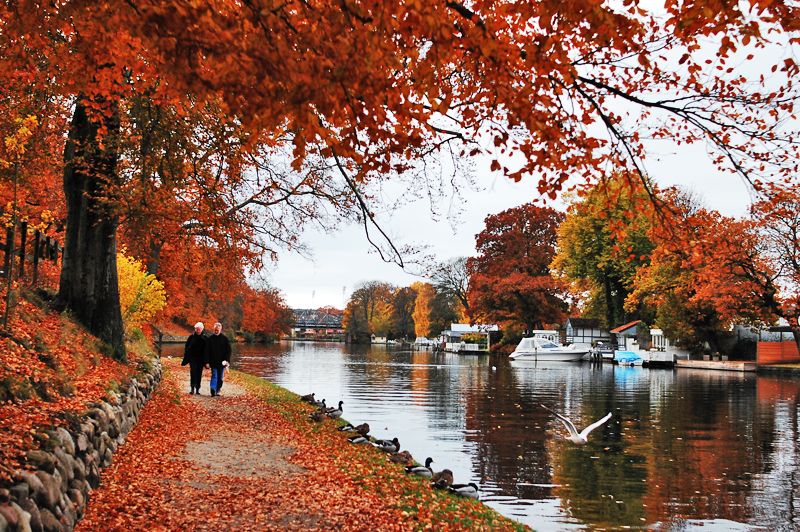
Every October, as I watch the leaves outside my window turn those spectacular shades of orange and red, I know what’s coming: the gentle panic of Danish parents everywhere as autumn break approaches. Week 42 is here again, and with it comes one of our most cherished school holidays. But here’s what might surprise you – this isn’t just any random week off. This is “kartoffelferie” (potato holiday), and yes, you can still hear people use this name, even though most of us buy our potatoes at the supermarket these days.
Let me tell you the story behind this uniquely Danish tradition, because it says quite a lot about who we are as a country.
When school had to wait for the harvest
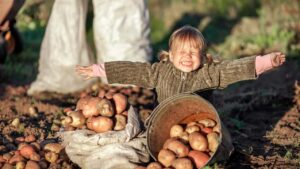
Picture Denmark in the 1800s; a country where most families lived off the land, and children weren’t just students but essential farm workers. I often think about my grandmother, who grew up on a farm and who were without doubt one of those children heading out to the potato fields instead of sitting in a classroom come October.
Back then, the timing made perfect sense. Potatoes had become a cornerstone of Danish agriculture (we’d embraced them wholeheartedly after their introduction in the 1700s), and the harvest couldn’t wait. Those small hands were perfect for the delicate work of gathering potatoes without damaging them, and every family member was needed.
So the schools simply adapted. There was no point in holding classes when half your students were out in the fields anyway. It was pragmatic; something we Danes are still famous for to this day. The autumn break was born out of necessity, but it created something that would outlast the agricultural society that spawned it.
What I find fascinating is how this wasn’t just about potatoes. Sugar beets, grain, and other crops all needed harvesting, making October the most crucial month for rural families. It was all hands on deck time, from the youngest child to the oldest grandparent.
How “Potato Holiday” survived the modern world
Here’s where the story gets interesting. Denmark transformed dramatically during the 20th century as we went from being primarily agricultural to becoming the modern, tech-savvy society you see today. Yet somehow, autumn break stuck around. And more remarkably, we kept calling it “kartoffelferie.”
I love how this name has persisted. When I tell my friends abroad that Danish kids get a “potato holiday,” they look at me like I’m making it up. But there it is, still marked in our calendars, still part of our cultural DNA. It’s become one of those charming anachronisms that connect us to our roots.
These days, the holiday is officially just called “efterårsferie” (autumn break) in school documents, but ask any Danish parent and they’ll know exactly what you mean when you say “kartoffelferie.” My own son rolls his eyes when I use the term, but I suspect he’ll use it with his children, too.
What we actually do during the Potato Holiday now
So what does a modern Danish family do during autumn break? Well, I can tell you from experience – it’s evolved into something quite different but equally meaningful.
The great family getaway
Many families I know use autumn break for what we call a “mini-vacation.” It might be a long weekend at the summer house (if you’re lucky enough to have one), a quick trip across the bridge to Sweden for some shopping and cheaper groceries, or perhaps a cozy few days in Berlin or Hamburg.
Two years ago, we actually took the plane to Berlin during autumn break to visit my husband’s nephew and celebrate his graduation. There was something magical about experiencing the city in autumn and that special feeling of combining a family celebration with travel. Our son loved the adventure of the journey, and we all came home with memories that had nothing to do with traditional tourist attractions and everything to do with family connections.
Becoming nature detectives
But honestly, some of my favorite autumn break memories happen right here in Denmark. October is when our forests put on their most spectacular show, and Danish families take full advantage. I’ve spent countless autumn break mornings wandering through local woods, discovering the magic of mushroom hunting.
And then there’s the great Danish tradition of kastanje-hunting (conker collecting). Every park in the country fills with families searching for the shiniest, most perfect chestnuts. Soon my kitchen table will be covered with the results of this year’s expedition, along with glue, pipe cleaners, and ambitious plans for craft projects that may or may not actually get finished.
The art of staying home
Not every family travels during autumn break, and that’s perfectly fine, too. Some of my most cherished memories from the holiday involve staying put and embracing what we call “hjemmehygge” – home coziness.
This might mean finally tackling that pile of board games that’s been gathering dust, or embarking on ambitious baking projects (homemade apple cake is an autumn break staple in our house). It’s a time when screens get less attention and families rediscover the pleasure of being together without an agenda.
These days, many families also use autumn break to prepare for Halloween – a tradition that’s really taken off in Denmark over the past decade. Many houses in my neighborhood get draped in fake cobwebs, and I’ve already heard excited discussions about costume plans.

Not everyone’s autumn break looks the same
What I love about Denmark is how this holiday reflects our regional differences, too. Living in Copenhagen, I know families who spend autumn break museum-hopping or exploring their own city like tourists. But when I visit friends in Jutland, I see how some families still maintain connections to agricultural traditions – helping out at local farms or attending harvest festivals.
These regional variations remind me that Denmark, for all our talk of being a small, homogeneous country, actually has quite a bit of local character. Autumn break becomes a lens through which you can see these differences play out.
Why this holiday matters more than you might think
Let me tell you why I think autumn break has survived and thrived: it represents something fundamentally Danish about how we approach time and family life. In a world that often feels rushed and overscheduled, this holiday gives us permission to slow down.
For children, there’s something beautifully low-pressure about autumn break. Unlike summer vacation with its weight of expectation (did we do enough? see enough? experience enough?), autumn break just… is. The weather might be rainy, and that’s fine. It’s a good excuse to stay inside with hot chocolate, a good book, and family Netflix.
For us parents, it’s a chance to exhale between the chaos of getting back into school routines and the intensity of the Christmas season. It’s a reset button for family life.
A window into the Danish soul
Autumn break is a good place to start if you’re new to Denmark or trying to understand what makes us tick. It shows how we honor our past while adapting to the present. It demonstrates our belief that family time isn’t a luxury but a necessity. And it reveals our deep connection to the natural world, even as most of us live increasingly urban lives.
When I explain autumn break to international friends, I always tell them it’s not just about the holiday itself – it’s about what the holiday represents. It’s Denmark saying: yes, productivity matters, but so does taking time to watch the leaves change. Yes, we’re a modern society, but we remember where we came from. Yes, we’re busy, but not too busy to spend a week focusing on what really matters.
So next time you hear about Danish kids getting a “potato holiday,” remember, it’s not really about potatoes anymore. It’s about something much more valuable: the Danish commitment to balance, family, and taking time to appreciate the simple beauty of autumn. And honestly, I think the world could use a bit more of that.