

Livable cities, work-life balance, and a constant need for new workers. These are some of the reasons internationals are flocking to Denmark, and many even decide to establish roots. Yet, understanding the intricacies of Danish property ownership as a foreigner can feel daunting. Whether you’re an EU or non-EU citizen, considering a city apartment, a charming summer house, or a quaint colony allotment, navigating Denmark’s rules requires clarity. This brief guide breaks it down, ensuring you have a broad idea before what could be your life’s biggest investments.
👤 First Things First: Your Residency and Citizenship Matter
When it comes to buying property in Denmark, two critical factors stand out: your nationality (EU/EEA vs. non-EU) and how long you’ve lived in Denmark. Let’s unpack these distinctions:
🇪🇺 EU/EEA Citizens
Good news if you’re from the European Union or the European Economic Area! As an EU/EEA citizen, you’re largely treated similarly to Danish nationals regarding property ownership.
- Primary Residence: You can purchase property freely, provided you intend to use it as your primary home.
- Secondary Residence (like Summer Houses): Rules tighten significantly. You must have resided in Denmark continuously for at least five years to buy a summer house without special permission.
🌍 Non-EU Citizens
The path to property ownership is more complex but manageable with preparation:
- Primary Residence: You must either have lived continuously in Denmark for at least five years or obtain special permission from the Ministry of Justice. Applications are assessed based on your ties to Denmark, such as employment, family, or community involvement.
- Secondary Residence (like Summer Houses): Similar to EU citizens, you need to fulfil the five-year residency requirement or obtain special permission, which can be quite challenging without significant connections to Denmark.
🔑 Permission to waiver the 5 year rule
Lawyer Janne Thane Mikkelsen from Penta Advokater in South Denmark, told Last Week in Denmark:
“If you have not lived in Denmark for more than five years at some point in your life, when buying a house in Denmark, then you either need to get a permission from the Civil Affairs Authority to buy the house or if you’re an EU citizen, then it is usually possible to only put a declaration in the deed. It is a requirement that you live in the house, when you have not lived in Denmark for more than five years”
Real Estate lawyers like Janne can help internationals receive this permission, as well as help with the purchase of property. You can also reach out to Janne and her team at penta.dk. Have a chat and see if this is possibility for you, and your lawyer should take care of the rest.
🏠 Property Types and Their Specific Rules
The different types of properties in Denmark might be different from the ones in your country, so here’s a breakdown on the main types:
🏢 Ejerlejlighed (Owner-Occupied Apartments) & Villalejlighed
An ejerlejlighed is a privately owned apartment, generally within a larger building. A villalejlighed is similar, but as the name implies, within a villa. The rules are similar:
- Ownership Structure: You own your individual apartment and a share of the building’s common areas through the owners’ association (ejerforening). Keep in mind, these common areas are also counted as part of the apartment surface, so, for example the advertised 54m2 apartment might only have 47m2 you can actually use.
- Responsibilities: Owners are responsible for their unit’s maintenance and contribute to communal expenses like building upkeep, insurance, and shared utilities. Always check for previous, ongoing or future projects before buying.
- Rental Possibilities: Generally, you can rent out your apartment, but it’s essential to check the ejerforening‘s regulations, which may impose restrictions. Also, subrentals, or vacation rentals like AirBnB might have special rules.
- Financing: Danish banks typically offer mortgages for these properties, often requiring a down payment of 5-10% for EU citizens and up to 20-40% for non-EU nationals.
- ⚠️ Gotchas: If a deal seems too good to be true it usually is. If an apartment is unusually cheap, double check if it has a Hjemfaldspligt (right to buy back). This means the kommune can buy it back at a very low amount of money. There are ways to postpone or remove this, but make sure you talk to a lawyer first.
🏡 Villa (Detached or Semi-Detached Houses) and Rækkehuse
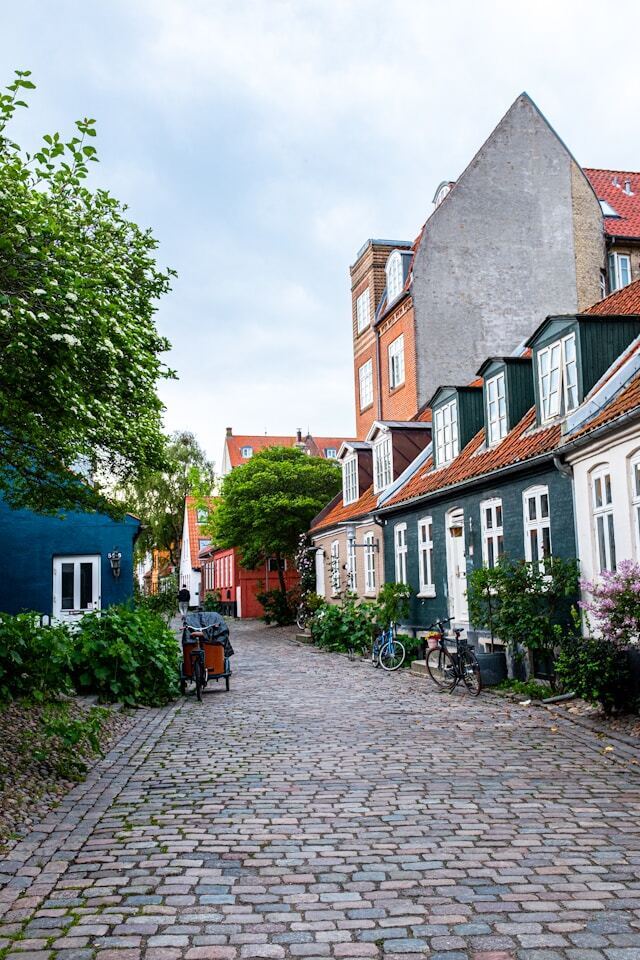
A villa refers to a standalone or semi-detached house, often with its own garden. A Rækkehuse is a rowhouse, offering a lot of the benefits of a house, but with fewer expenses, because some maintenance costs are shared among neighbours.
- Ownership Structure: You own both the building and the land it’s on.
- Responsibilities: Full responsibility for maintenance, property taxes, and any renovations.
- Rental Possibilities: You can rent out your property, but some municipalities may have regulations, especially if the property remains vacant for extended periods.
- Financing: Similar to apartments, financing is available, with requirements varying based on residency status and financial background.
🏘️ Andelsbolig (Cooperative Housing)
An andelsbolig is a cooperative housing model where residents purchase a share in a housing association, granting them the right to occupy a specific apartment.
- Ownership Structure: You own a share of the cooperative, not the apartment itself. This share gives you the right to live in a particular unit. Usually the only way to be allowed to buy an andelsbolig is by being on the “list” of the cooperative. Priority is given to people already owning properties, in case they want to “swap”, and after that, they can go out to external buyers.
- Pricing: Prices are regulated by the cooperative’s board, often below market value. Selling above this price is prohibited. You can get lucky and get into an association that has kept prices low for a long time, and then re-valued the property before you want to sell it.
- Monthly Fees: Residents pay fees covering maintenance, property taxes, and the cooperative’s loan repayments.
- Rental Restrictions: Subletting is typically restricted or prohibited.
- Financing: Mortgages can be more challenging to obtain, often treated as personal loans with higher interest rates.
- Due Diligence: It’s crucial to assess the cooperative’s financial health, as high debts can lead to increased monthly fees.

🏖️ Feriehus (Summer Houses)
Feriehuse are holiday homes located in designated recreational zones, often near the coast or in rural areas.
- Usage Restrictions: Primarily intended for seasonal use; year-round residence is generally prohibited.
- Ownership Eligibility: Both EU and non-EU citizens must have resided in Denmark for at least five years or obtain special permission to purchase.
- Rental Regulations: Owners can rent out their summer houses, but there are limits on the number of weeks per year, especially during the winter season.
- Tax Implications: Rental income is subject to taxation, with specific deductions available depending on whether you rent privately or through an agency. In 2025 there was a tax-free allowance of 32,300DKK (bundfradrag) if renting through a platform (AirBnB, Novasol etc.)
🌿 Kolonihave (Colony Allotments)
Kolonihaver are small garden plots, often with modest cottages, used primarily for leisure and gardening.
- Ownership Structure: Typically you own the building, but you rent the land it’s on, for which you pay a monthly/yearly fee.
- Ownership Eligibility: General ownership rules similar to summerhouses apply. Typically managed by associations; purchasing often requires membership approval, or waiting lists, which can be quite long. For example, a popular colony close to Christiania in Copenhagen called HF Kløvermarken, has not added any new people to their waiting list since 2002 due to the high demand. People already on the waiting list are expected to wait about 8-10 years for a new allotment to become available.
- Usage Restrictions: Not intended for permanent residence; overnight stays may be limited to certain months. Sometimes they might not have access to water, electricity or sewage.
- Construction Regulations: Buildings are subject to size and design limitations, often dictated by local planning laws and association rules.
🏦 Financing Your Danish Property
Securing financing can vary significantly based on your residency and financial background:
- Danish Banks: May offer up to 15% financing + assist with the remaining 80% from a Realkredit provider but usually require a robust Danish credit history or significant documentation of stable income.
- International Banks: Could provide financing based on your financial standing in your home country but watch for international transfer fees and currency exchange risks.
- Mortgage Types: Denmark offers various mortgage options, including fixed-rate, variable-rate, and in special cases interest-only loans. It’s essential to understand the implications of each and choose one that aligns with your financial situation.
- ⚠️ Gotchas: If you decided to be brave and want to go for a flexible or variable rate, hoping that it will follow the ups and downs of the market, make sure to check it also follows the decrease in interest rate not just the increase. My bank recently revealed that they only automatically follow increases in interest rates, and only selectively choose when and if the interest rate goes down on your loan!
🧾 Understanding Property Taxes in Denmark
Property ownership in Denmark comes with two primary taxes:
- Property Value Tax (Ejendomsværdiskat): This is a state tax levied on the assessed value of your property, including both land and buildings. As of 2025, the tax rates are:
- 0.51% on the portion of the property value up to DKK 9,200,000.
- 1.4% on the portion exceeding DKK 9,200,000.
- This tax applies to properties you reside in. Rental properties are exempt from this tax but are subject to income tax on rental earnings.
- 0.51% on the portion of the property value up to DKK 9,200,000.
- Land Tax (Grundskyld): A municipal tax on the value of the land in its undeveloped state.
- Calculation: Based on the latest public property assessment, 20% is deducted to determine the taxable base. This base is then multiplied by the municipal tax rate, which varies by municipality.
- Payment: Since 2024, this tax is included in your preliminary and annual tax statements.
- Applicability: Applies to owners of houses, condominiums, year-round residences, and summer houses. For cooperative housing (andelsboliger), the housing association pays the tax.
- Calculation: Based on the latest public property assessment, 20% is deducted to determine the taxable base. This base is then multiplied by the municipal tax rate, which varies by municipality.
- Changes to be aware: Some major changes and recalculations took place in 2024 related to these taxes, but as of 2025 these seem to still be the rules that apply:
-
- Tax Collection: Both taxes are now collected via your preliminary and annual tax statements.
- Tax Rebates: If your total property tax increases due to the new rules, you may be eligible for a tax rebate, ensuring you don’t pay more than under the previous system.
- Deferred Payment Option: You can choose to defer any tax increases as a loan, repayable upon selling your property.
🛡️ Property Insurance and Maintenance Costs
- Insurance: In Denmark, insurance is mandatory for property owners. Additionally, many opt for comprehensive home insurance (husforsikring) that covers damages from events like storms, water leaks, and theft. The property and casualty insurance market in Denmark is robust, with major players like Tryg, Topdanmark, and Alm. Brand offering various policies.
- Maintenance Costs: Regular maintenance is essential to preserve property value. Costs can vary based on property type and age. For instance, older villas might require more frequent upkeep compared to newer apartments. But just because it’s a new building doesn’t mean it’s smooth sailing. In some cases, new building contractors can be more interested in profit than quality, so they don’t build them like they used to. It’s advisable to set aside a maintenance budget, typically around 1-2% of the property’s value annually.
👥 Assembling Your Professional Team
Navigating the Danish property market is much smoother with the right professionals, even though it might cost you, in my opinion it’s well worth it:
- Real Estate Agents: They primarily represent sellers, but hiring a buyer’s agent can provide valuable insights and negotiation leverage, and sometimes with the savings they can pay for themselves.
- Property Lawyers (Boligadvokat): While not mandatory, legal assistance ensures clarity in contracts, compliance with laws, and assistance with permissions from the Ministry of Justice.
- Financial Advisors: These professionals guide mortgage choices and advise on managing the financial implications of property ownership.
🏘️ Denmark’s Housing Market in 2025: What to Expect
Entering 2025, the Danish housing market is getting hot again, with sellers being more reserved, and with high demand on the buyer side.
- Price Growth: Housing prices are slowly growing, with an anticipated 3.5-7.4% depending on region.
- Interest Rates and Affordability: Interest rates are going down for now, which is also contributing to a larger demand than supply.
- Urban vs. Rural Dynamics: Urban areas like Copenhagen and Aarhus remain popular, though some buyers seek rural alternatives due to remote working trends, affecting regional price dynamics.
✅ Quick Checklist: Before You Start Your Property Search
- Residency: Confirm your residency and how long you have been in Denmark.
- Property Type: Dig deeper into the specific rules and ownership structure for your chose property type.
- Financial Plan: Setup a spreadsheet with a realistic financial plan, considering your bank/mortgage payments, taxes, insurance, maintenance etc.
- Professional Advice: Have a list of contacts on hand, from real estate agents, lawyers, bank advisors, and feel free to change or shop around until you find the right one.
- Documents: Make sure you’re not missing any essential documents, like proof of residency, financial statements (about 6-12 months of payslips might be requested)
- Due diligence: Verify potential special ownership conditions, financial health of the housing association, potential urban projects in the area and rental regulations.
My final advice, is to be prepared to walk away from what seems to be your dream home if any red flags pop up. Don’t worry, the right one will come along eventually, it always does.