There are certain words you don’t arrive at all at once. You circle them. Try them on in private before letting them land in conversation. “Witch” is one of them — charged with centuries of projection, distortion, fear, and power. To say it out loud, even now, can feel like stepping into something both ancient and newly reclaimed. I remember being eight years old, dressing up as a witch for Halloween — my first in America — and then later searching the local library’s shelves for anything I could find on witchcraft. I was fascinated: who were these women? So often misunderstood, yet deeply connected to nature, healing, and knowledge. It wasn’t a phase so much as an early recognition that took time to grow into.
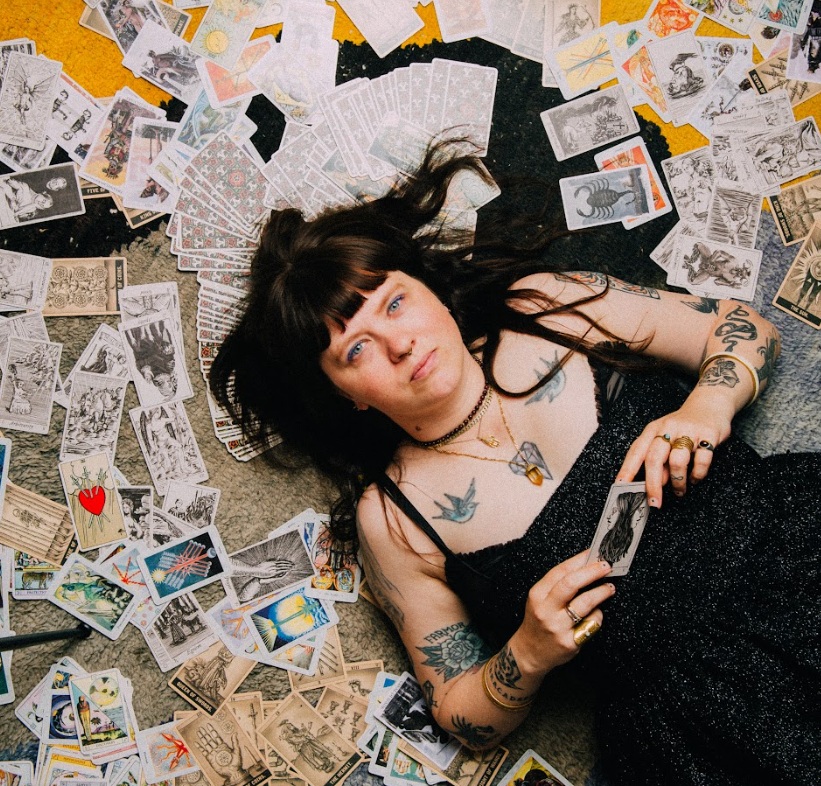
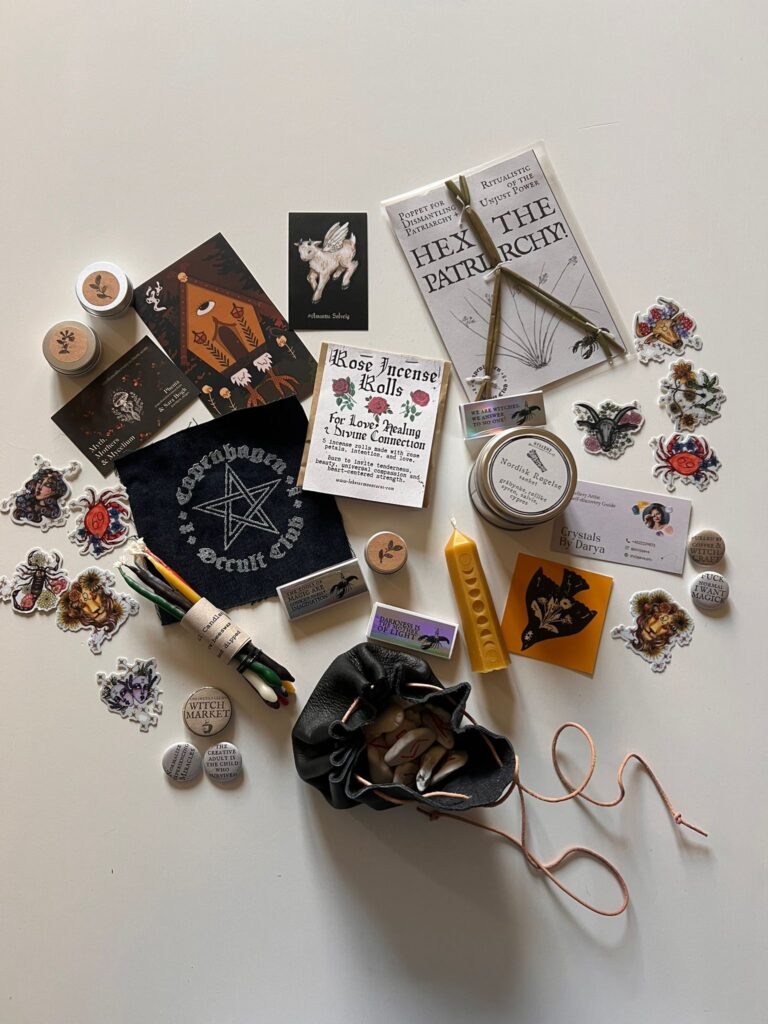
For Mariia Snebjørk Damkjær — founder and creative force behind Copenhagen Occult Club — that step isn’t about adopting a label so much as shaping it based on your own journey. Founded in 2022, what began as a small gathering has grown into a series of workshops, rituals, and markets across Denmark — spaces that sit somewhere between spirituality, art, and open, come-as-you-are events. Her own work moves between tarot, writing, design, and community-building, creating workshops where intuition and creativity intersect in ways that feel both grounded and exploratory.
“For me, the word ‘witch’ is less about a personal identity and more about a collective reclamation,” Mariia says. “It’s a word that has been used to control, exclude, and silence, and now we’re choosing to wear it with intention.” What emerges in her framing is not a fixed definition, but something expansive, “In the realm of Copenhagen Occult Club, I see ‘witch’ as an umbrella. It holds artists, intuitives, skeptics, healers, and curious minds.”
In a time where identity often feels like something that must be defined and defended, here it becomes something else entirely — an entry point rather than a boundary. “What it unlocks isn’t just spirituality; it unlocks permission,” Mariia explains. “Permission to trust your intuition, to question systems, to create your own rituals, and to exist outside of rigid structures.” The shift is subtle but profound. “So it’s less about becoming something, and more about remembering that you’re allowed to define your own way of engaging with the unseen.”
That sense of permission can feel both liberating and deeply vulnerable. The first time I described myself as a “witch” out loud — at a small gathering at London’s Treadwell’s bookshop — it felt like something had viscerally shifted. There was hesitation, even fear, but also a new beginning; a reclamation of a feeling that has always been there. Even now, there is a pause before I use the word. Stepping out of the broom closet is not a one-time event; each time carries a quiet question about how it might be received. Over time, I have grown to embrace that moment, and beautiful relationships have blossomed from that honesty. The responses range from surprise and curiosity to understanding — often, people will share their own stories about how they connect with their spirituality.
Turning inward as a radical act
Intuition and self-trust sit at the core of how Mariia describes witchcraft itself: “It is an inner activism because it starts in the places we’re taught to ignore: the subconscious, the emotional body, the shadow.” In a world that consistently rewards speed, visibility, and output, this contemplative act begins to take on a different kind of weight. Choosing to turn inward is actually quite radical.
“Rituals, workshops, markets, they’re not just aesthetic experiences. They’re invitations to slow down, reflect, and reconnect,” Mariia explains. “Magick can be healing, resistance, and self-knowledge all at once. When you become more self-aware, more grounded, more in tune with your intuition — you also become harder to manipulate, and more capable of shaping your own life.”
Across her broader work, including the writing and practices shared across her platforms, that inward focus shows up as an invitation. For me, that has often been about cultivating mindfulness — noticing the rhythm of the seasons, the subtle shifts in nature, and the symbolism that emerges when you take the time to pay attention. Living in Denmark has only deepened that awareness. Winter invites reflection; spring feels like intention; summer expands outward; autumn asks for a quiet kind of release.
Between solitude and shared experience
For all the emphasis on introspection, the Copenhagen Occult Club is collaborative by design. “I see inner work and community as deeply intertwined,” she says. “You can’t build a meaningful community without people who are willing to look at themselves, and at the same time, you can’t do deep inner work in complete isolation. We need mirrors.” That interplay — between solitude and connection — feels familiar. Much of my own practice has unfolded privately, slowly, over time. And yet, when shared, it takes on a different dimension. There is a vulnerability in speaking about something so personal, but also a sense of recognition — of seeing your own experience echoed in someone else’s.
“What I aim to create is a space where both can exist. Where people can explore shadow work, intuition, and creativity while also feeling held in a shared experience. The vision was to create a space that didn’t exist yet — at least not in the way I was longing for it,” she continues. “A space that felt inclusive, a little weird, a little raw, and not overly polished or dogmatic… somewhere between ritual, art, and community.”
It’s perhaps unsurprising, then, that the people it draws are equally varied, “We have experienced practitioners, professional readers, artists, and people who have never pulled a tarot card before. Even skeptics.” The common thread is curiosity – and a desire for something more meaningful than what everyday structures offer.
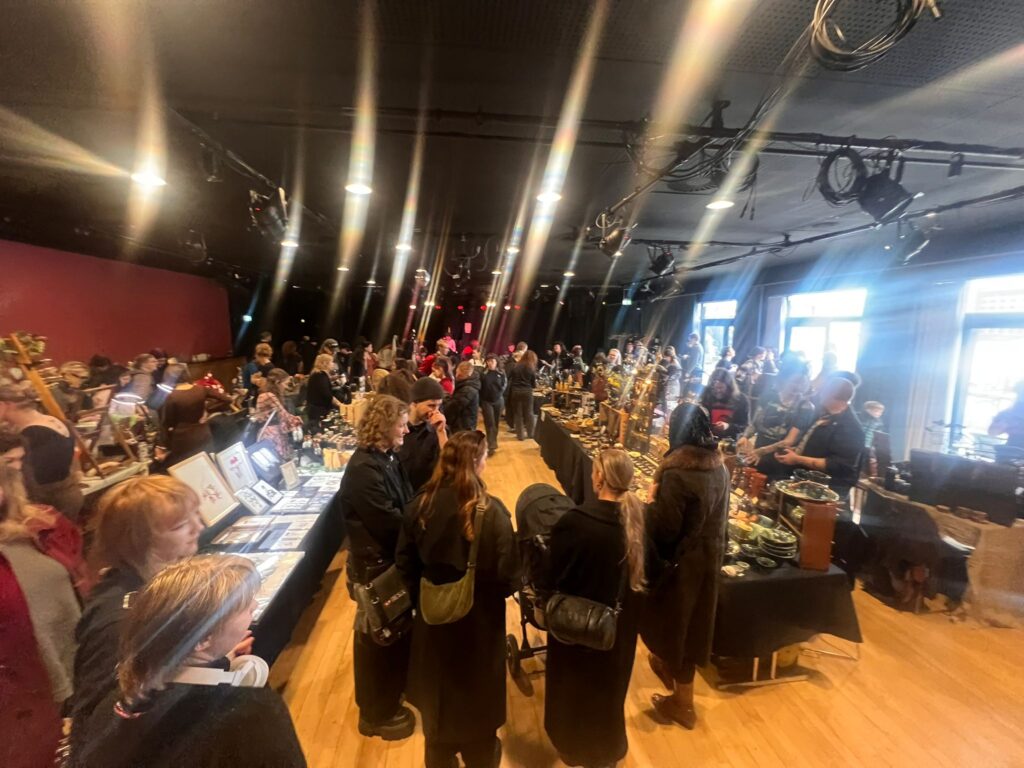
Image credit: Paulina Stachnik
Intuition, aesthetics, and what lies beneath
There is also something distinctly Nordic shaping this way of engaging with spirituality — grounded and closely tied to the natural environment. “The landscape has a huge influence, even if it’s subtle,” Mariia says. “In Denmark, nature isn’t dramatic in the same way as mountains or jungles, but it’s deeply present… it creates a quiet kind of magick.” That stillness carries through into the practice itself — less performative, more reflective. It offers a counterpoint to the more polished, aesthetic versions of witchcraft often seen elsewhere. Though Mariia doesn’t reject that visual layer entirely, “I think aesthetics can be a gateway; they draw people in. There’s nothing wrong with beauty, symbolism, or visual storytelling.” But what ultimately shapes it is something less visible, “For me, the line is intention.”
“Another misconception is that you need to follow a specific path or have special abilities,” she says. “All people already have intuition; many have just been taught not to trust it.” Looking ahead, she sees that shift already taking place, “People are moving away from rigid systems and looking for more personal, intuitive ways of engaging with spirituality.” What she hopes for is not a single direction, but an opening: “More spaces that are inclusive, experimental, and community-driven.”
And perhaps that’s where the word “witch” lands now — not as something that needs to be claimed definitively, but a practice that can be approached gradually, shaped over time, and defined on your own terms.
As Mariia puts it, “You don’t need permission or a label to be curious.”
Explore the Copenhagen Occult Club
To learn more about Copenhagen Occult Club and upcoming gatherings, you can explore their work through Lobster Moon Tarot or follow along via the Copenhagen Occult Club Instagram. New events, workshops, and markets are announced regularly — offering different ways to step into the space, whether as a participant or simply as an observer.