
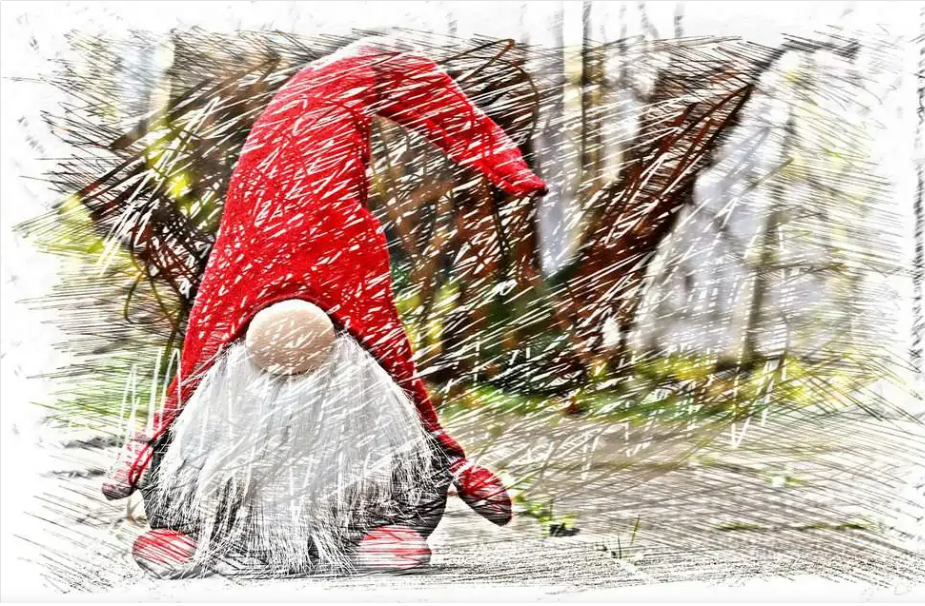
Every December, a curious phenomenon sweeps across Denmark. Tiny doors appear on baseboards. Blue food shows up in school lunchboxes. Toothbrushes lose their bristles overnight. Children wake to find their underwear frozen solid or their shoes tied together with festive ribbons. The culprit? Denmark’s beloved drillenisse – the mischievous Christmas elf who has become as integral to Danish December as æbleskiver and Christmas markets.
For outsiders, the Danish relationship with nisser might seem puzzling. These aren’t quite the industrious workshop elves of American Christmas lore, nor are they the gift-bearing Santa figures of other traditions. Instead, the Danish nisse occupies a delightfully ambiguous space in the cultural imagination: part household protector, part impish troublemaker, entirely Danish.
From farm guardian to holiday prankster
The nisse’s roots stretch back centuries into Scandinavian folklore. Originally known as the gårdnisse (farm elf), this supernatural being was believed to live in barns and attics, acting as a protective household spirit. Farmers would leave out bowls of Christmas porridge – risengrød topped with butter – to keep the nisse content. A well-fed, happy nisse meant good fortune and bountiful harvests. An angry or neglected nisse? Expect soured milk, tangled horse manes, and mysteriously broken tools.
This folkloric figure bore little resemblance to today’s jolly Christmas character. The traditional nisse was capricious and temperamental, demanding respect and proper offerings. He was small, gray-bearded, and wore simple peasant clothes with his signature red hat – the nissehue – which held magical properties and should never be removed.
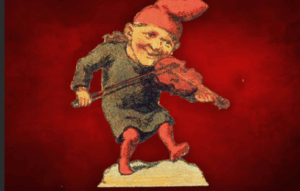
The transformation from serious household deity to playful Christmas character began in the 19th century, accelerated by the romantic nationalism that swept Scandinavia. Writers and artists reimagined folk traditions for a modern audience, softening the nisse’s rougher edges while preserving his mischievous streak. By the 20th century, the nisse had become firmly associated with Christmas, helping Julemanden (Santa Claus) in his workshop and spreading holiday cheer.
Today’s drillenisse – literally “teasing elf” or “pranking elf” – represents the latest evolution. This version maintains the mischievous spirit of the original while becoming an active participant in family holiday traditions, particularly the practice known as nisseleg (nisse play or elf games).
The nissedør revolution
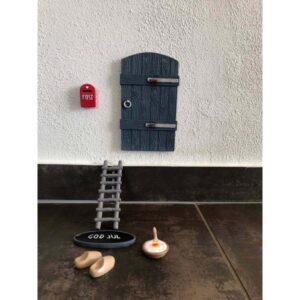
No discussion of modern Danish nisse culture would be complete without mentioning nissedøre – the tiny decorative doors that have revolutionized how families engage with Christmas magic. These miniature doors, typically installed at baseboard level, serve as the physical gateway between the human world and the nisse’s realm.
The concept is brilliantly simple: place a small door on your wall, and suddenly your home has a resident nisse. When children go to bed, the nisse “emerges” through the door to create mischief, leave small gifts, or rearrange household items. The door becomes a focal point for imagination and wonder, a tangible connection to the invisible magical world existing alongside everyday life.
What makes nissedøre particularly Danish is how they’ve spawned an entire miniature universe. You can purchase tiny ladders, mailboxes, furniture sets, and even complete nisse households to arrange around the door. Some families build elaborate scenes that evolve throughout December, with the nisse’s belongings and activities changing daily. Others keep it simple – just the door and whatever small traces the nisse leaves behind during nocturnal visits.
The nissedør phenomenon speaks to something deeply embedded in Danish culture: the love of hygge combined with creative play. Setting up these elaborate scenes requires time and effort, but it creates those cozy, magical moments that define Danish Christmas. It’s participatory theater where parents are both stagehands and audience, watching their children’s delight as they discover each new twist in the nisse’s ongoing adventures.
The art of controlled chaos
What makes the drillenisse tradition uniquely Danish is its embrace of benign disorder. Unlike many Christmas traditions that emphasize perfection and good behavior, nisseleg celebrates mild chaos and harmless rule-breaking. The nisse turns milk blue with food coloring, wraps all the books in gift paper, ties shoes together, draws on mirrors with lipstick, and generally creates the kind of mess that would ordinarily earn a scolding.
But because it’s the nisse – not the children – responsible for these transgressions, everyone can enjoy the disruption guilt-free. Children get to experience the thrill of broken rules without actual consequences. Parents get permission to be silly and spontaneous. The whole family shares in the conspiracy of pretending that, yes, a magical creature really did put confetti in the bedtime storybook.
Danish health professionals recognize the developmental value in this play. Nisseleg creates space for children to explore different roles and behaviors through safe fantasy. A child who would never dump flour on the kitchen counter can delight in finding the nisse did exactly that. The magical excuse allows exploration of boundaries and consequences without real-world risks. Fantasy gives children the opportunity to play and relate to the world in new ways.

The Drillenisse Playbook
The specific pranks vary by family, but certain classics have emerged. Some favorites from Danish households include:
Food mischief: Blue pasta in lunchboxes, salt swapped for sugar, carrots substituted for candles, milk and juice containers switched.
Clothing chaos: Underwear in the freezer, socks with cut-off toes, all family members’ clothes mixed between rooms, shoes tied together with elaborate bows.
Bathroom humor: Tiny nisse toilet paper rolls, drawings on regular toilet paper, toothbrushes with trimmed bristles (extra toothbrush at the ready, of course).
Nighttime surprises: Nail polish applied to sleeping children’s fingers, ribbons tied on sleeping toes, mustaches drawn on sleeping parents’ faces.
General mayhem: Pictures hung upside-down, stuffed animals wearing children’s clothes, contents of boxes switched, small footprints in flour leading to and from the nissedør, etc., etc.!
The key to successful nisseleg is calibration. The pranks should surprise and amuse without genuinely distressing. Swapping sugar and salt becomes a problem if a child takes a huge spoonful expecting sweetness and instead gets pure salt. Frozen underwear is funny if you have backup clothes ready; it’s stressful if you don’t. The best drillenisse moments toe the line between “that’s so silly!” and “that’s so annoying!” without crossing into genuinely upsetting territory.
The language of Nisser
The Danish language has naturally absorbed and generated nisse-related vocabulary. Beyond the obvious drillenisse, nissehue, and nissegrød, December conversations fill with nisse references. “Det må være nissen” (“It must be the nisse”) becomes the default explanation for any small household mystery.
This linguistic embedding reflects how thoroughly the nisse has integrated into Danish culture. The nisse isn’t just a Christmas decoration or a story character – he’s a framework for understanding a particular kind of social interaction and seasonal behavior.
Conclusion: Magic with a wink
The Danish folk tradition drillenisse has thus successfully adapted to modern life while retaining authentic cultural meaning. The nissedør might be a 21st-century innovation, and Instagram-worthy nisse scenes might reflect contemporary aesthetics, but the underlying impulse – to create magic, foster imagination, and share joy through playful chaos – connects directly to those medieval farmers leaving porridge in their barns.
For Danes, the drillenisse is more than holiday entertainment. It’s an annual reminder that rules can bend, that mess can be fun, that imagination matters, and that community forms around shared pretenses and collective play. It’s hygge and ballade (= mischief) perfectly balanced, tradition and whimsy hand in hand.
Every December, as tiny doors appear on Danish baseboards and the first blue milk shows up in breakfast bowls, Danes, young and old, enter into a conspiracy of delight. Yes, we all know there’s no actual nisse. But for one month, we agree to believe anyway – and in that shared belief, we create something genuinely magical.