
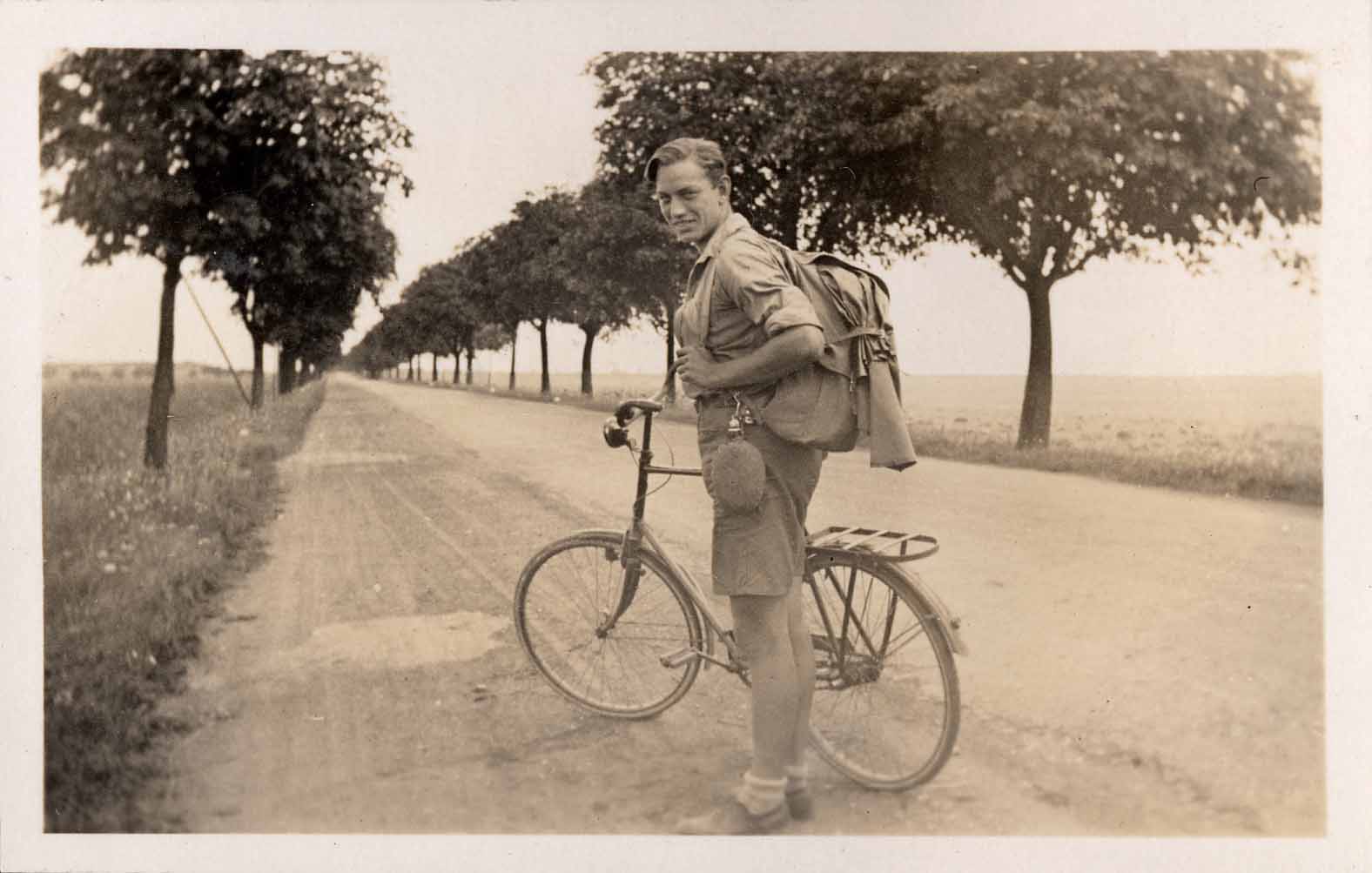
Early in the morning, around 1 am, in 1949, Max Sørensen, 36 years old, newly appointed professor of law, biked home from his office at Aarhus University, his worn-down brown briefcase dangling from the frame. Being Danish, one might think he was on his way home from a Friday bar that started at 2 pm. But no. He did not smoke, rarely consumed alcohol, and lived so modestly that some years prior, he had bought his house in cash.
It was not the beers that had kept him that long. It was the briefcase that bulged even more than it used to. It contained an article he had just finished for a Norwegian publication. An article that ended up being the reason why most of you reading this are currently residing in Denmark.
The 41-page article written by Max Sørensen that night in Aarhus formed the foundation for one of the most progressive and innovative sections of the current Danish Constitution and Danish law in general, Section 20, with the following wording:
“Powers vested in the authorities of the realm under this Constitutional Act may, to such extent as shall be provided by statute, be delegated to international authorities set up by mutual agreement with other states for the promotion of international rules of law and co-operation.”
In plain words: Section 20 rocks the legal boat by opening up for authorities other than the Danish parliament, courts and government to set and enforce rules applicable for everyday life. If you start to think about the European Union, yes, you are on the right track.
Despite its now-obvious significance, Section 20 was not the only change in the 1953 revision. In fact, it was not even part of the first drafts, and Max Sørensen was not invited to join the revision committee, which was politically appointed in 1946.
The household names of Danish constitutional law, Alf Ross and Poul Andersen, had focused on a variety of topics that changed the outlook of Danish politics in other ways; Denmark went from a two-chamber system to one, ‘Folketinget’ (the Parliament), Greenland was changed from being a colony to being a part of the kingdom, and the negative parliamentary principle (the government does not need a majority backing it, but it cannot have a majority against it) was codified. The latter, especially, is significant, as it allows minority governments to form.
None of them had considered Max Sørensen’s thoughts expressed in the Norwegian article. Maybe because Max Sørensen was asked to write about another topic; how the government could act as a representative in foreign affairs. In other words, to what extent could the government enter into legally binding obligations without a majority vote from the parliament (remember, Danish governments do not have to have the majority).
But Max Sørensen could not let go of the thought of what if Denmark, at some point in time, would like to engage in international cooperation? In 1949, Max Sørensen strongly believed international cooperation was the way forward to ensure peace and prosperity across Europe and globally. NATO (1949) and the European Coal and Steel Community (1951) were the first signs of institutionally integrated associations across borders. Globalism had arrived in the aftermath of World War II, and for Denmark to jump on the moving train before it was too late, the legal route had to be eased, according to Max Sørensen. Otherwise, a change to the constitution was required to participate, and, in short, such a change is cumbersome to say the least. Hence, he fulfilled the Norwegian publisher’s inquiry by writing about what later became section 19, but he took it upon himself to propose section 20, which can be labeled a light version of a change to the constitution.
In 1952, six years into the work of revising the constitution, Bertel Dahlgaard, an experienced politician and former minister, sat on one of the advisory boards forming the constitutional policy committee, reading suggestions to the almost-finished draft of the new constitution. It had already been a long day when the head of department at the Prime Minister’s office arrived with 41 new pages.
Having read the first noted paragraphs of the article, Bertel Dahlgaard became well awake. Things started moving. The Prime Minister, Erik Eriksen, was notified, and three years after finishing his article, Max Sørensen was called in to write a legal response elaborating on his idea of allowing other institutions to rule Danish citizens.
Section 20 sparked severe political debate, and, by reading the first subsection quoted above, rightly so. Should someone rule us from far, far away? Max Sørensen countered this argument in the second subsection; to delegate powers vested in the public authorities, either 5/6 of the members of parliament had to vote in favor, or, if only a simple majority voted in favor, a public referendum was required to pass the specific delegation act. Thus, any delegation would be done with substantial democratic legitimacy.
On 28 May 1953, the new Constitutional Act was passed by the voters. And what did people discuss after the referendum on 28 May 1953? Judged by the then newspapers, mainly the change of the Act of Succession to accommodate that King Frederik 9th only had daughters. Everyone was very excited about the prospect of little Princess Margrethe II becoming a queen someday. Few knew that they had just participated in a revolution of the Danish legal system and, thereby, the political structures of Danish society. All because of an article in a Norwegian magazine that was written by a man who followed his intuition and was found in the revision’s overtime. European regulation accounts for more than 50% of the regulations applicable in Denmark, and Max Sørensen’s thinking created the pathway to it.
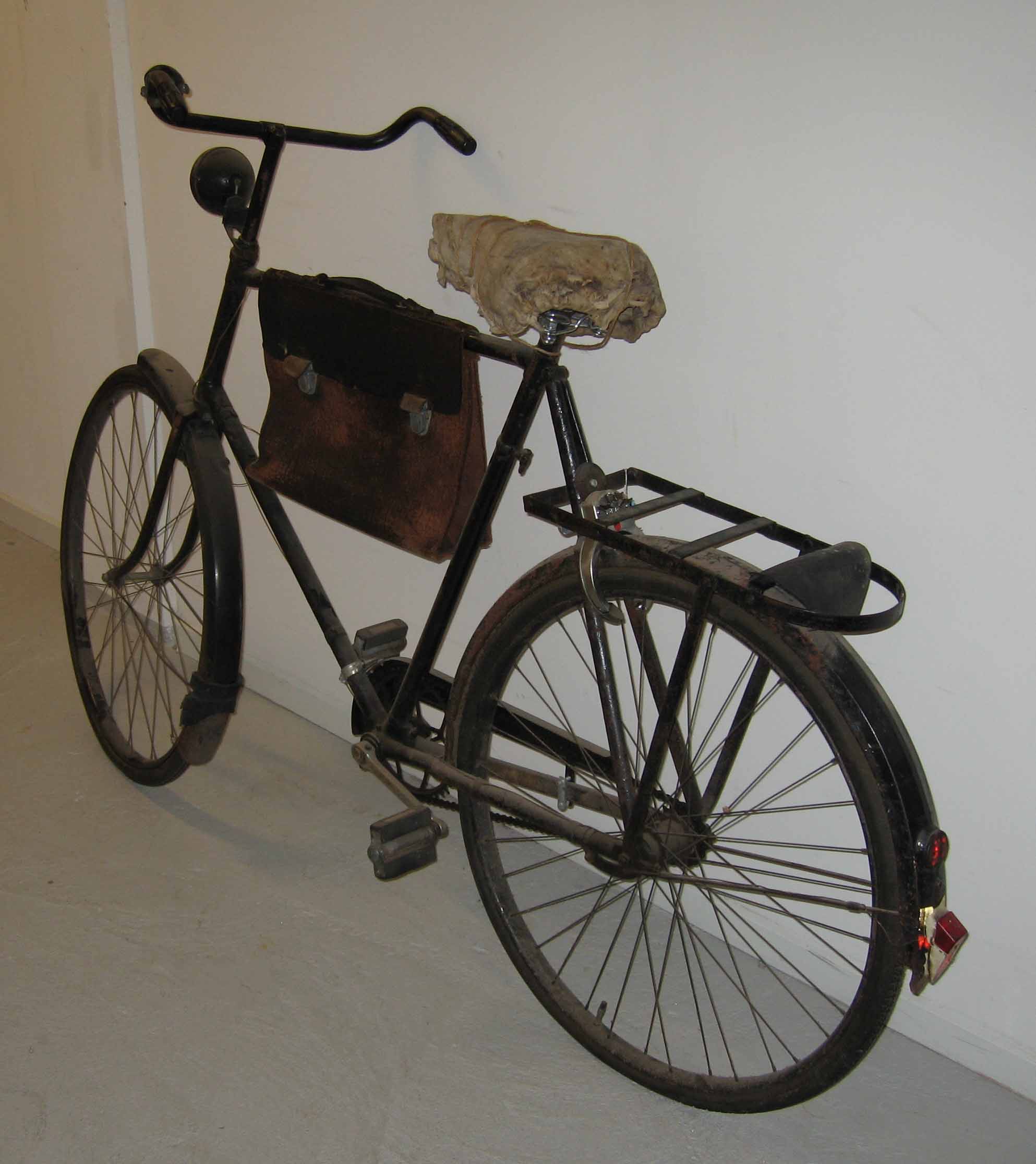
(insert image: The Vessel of Change – Sørensen’s bike and briefcase on display, photo credit: Universitetshistorisk Udvalg, Aarhus University, Hans Buhl)
Did his peers’ praise go to his head? No, overly modest, Max Sørensen rejected several honors, established a fund (Max Sørensens Mindefond – in Danish only) that to this day offers scholarships to young legal scholars seeking to study constitutional law abroad, and insisted on biking to work every day, even when he served as the first Danish judge at the European Court of Justice from 1973 – 1979. He simply ignored his colleagues’ claim that biking was beneath the position. I guess one could say he was progressive in all relations. His bike is now on display at Aarhus University, which seems like a fitting way to remind the origins of Denmark’s membership of the European Union.