


As winter doubles down on its arctic chill, I’m doubling down on number 7 of my tips for getting through the Danish winter. Yes, I’m doing my damndest to get strangers to smile back at me.
Smiling at or greeting unknown people isn’t typical in Denmark, a major contrast to Switzerland and Canada, and parts of the UK (particularly in pubs!). While the Swiss are known for being reserved (some might say snooty), politely saying ‘Grüezti’ to strangers is fundamental. It’s Swiss German for hello (and has no agreed upon spelling — don’t get me started on the weirdnesses of that language) and echoes across hiking trails, in medical waiting rooms and gondolas, upon entering shops, and when encountering neighbors.
I know people who’ve lived in the same Copenhagen-area apartment for years and have yet to be greeted by several people in the building. That would never happen in Zurich.
Such friendliness with strangers is also common in Canada. I remember feeling bombarded on my first visit to my home country after several months of living in Denmark. Fellow shoppers sharing good-natured grumbles while standing in line, people proffered commentary on the weather, and offers of assistance in stores overwhelmed me. I yearned for the silent reserve of the Nordics.
Canadian friendliness can be superficial, though. I’m from the West Coast, and Vancouverites are known for being polite and helpful, but not particularly warm. They’ll unhesitatingly let you know if your yoga mat is spilling out of its carry bag, then ghost you at any suggestion of getting together outside the yoga studio. Pleasantness is one thing, but making friends with newcomers is taking it too far. These concerns echo for many internationals living in Denmark — and in Switzerland and the UK, too.
Over four years in Zurich, we only managed to befriend other internationals. The sole Swiss passport holder in our circle of friends had a Dutch family and was married to an Australian. In our two years in England, my partner and I mostly solidified friendships with people we already knew in Canada who had moved to the UK. Pub culture brought plenty of acquaintances and it was perfectly normal to nod hello to strangers, but that didn’t translate to developing close relationships.
During our first stint living in Denmark, I forged connections through language lessons (with other internationals and their Danish-raised partners), teaching and practicing yoga (with Danish-born and international yogis), and work. Many of those friendships persisted through our six years outside of Denmark.
Having also lived in Germany and the USA, I’d rate those countries at opposite ends of the spectrum from each other. Americans tend to be energetically friendly and glad to be of assistance to strangers (say by offering to help carry a stroller up stairs). Germans more often keep to themselves (although those in the southern part of the country can be as serious about ‘Gruss Gott’ or ‘Servus’ as the Swiss are about ‘Grüezti’) and I’ve witnessed them simply avoiding eye contact rather than holding an elevator or a door. (There are helpful people in Germany; I’ve met many. But the trend is detachedly minding your own business. It’s the same in Switzerland.)
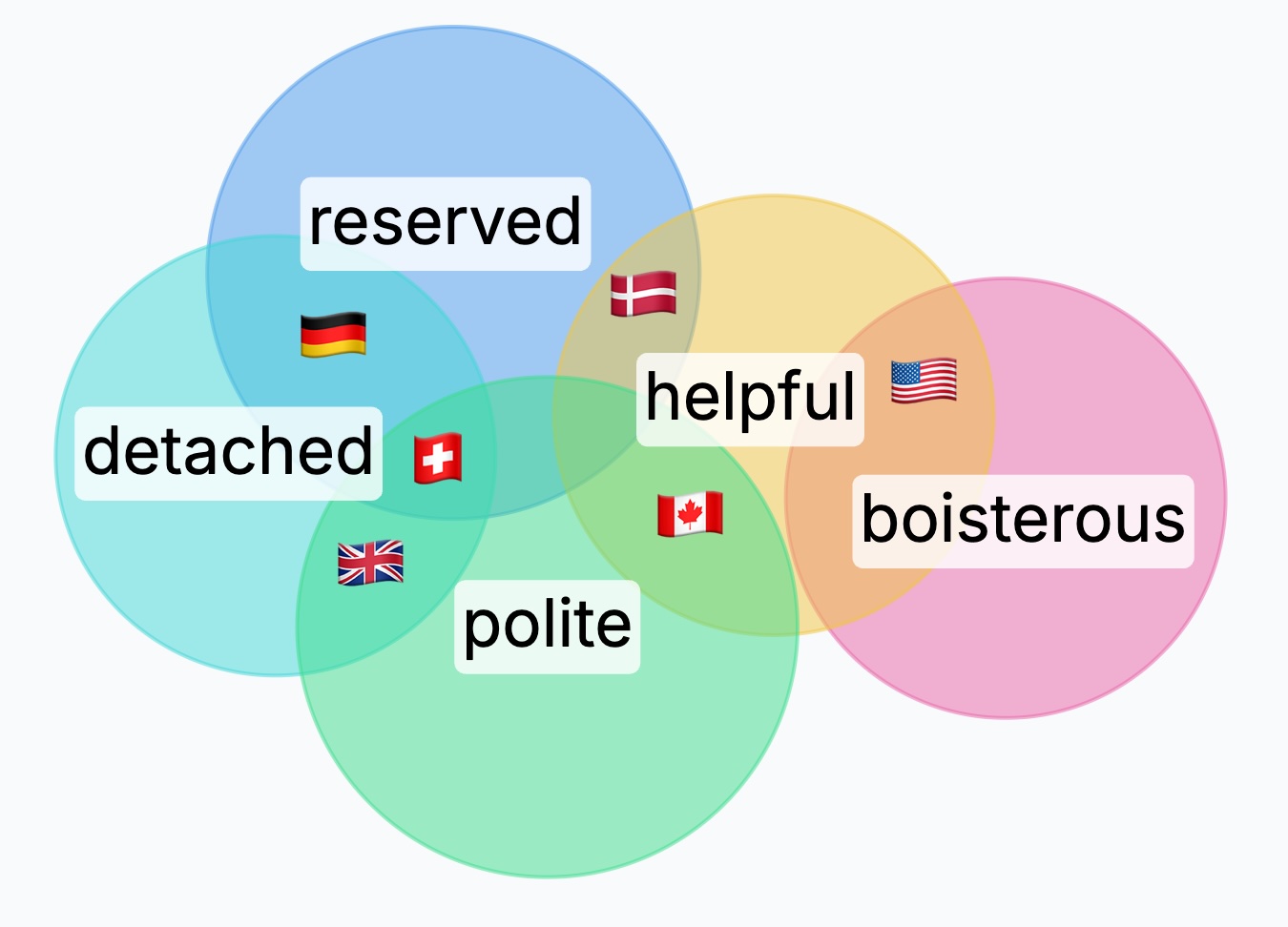
While people in Denmark may not be overtly friendly with strangers, I’ve found them to be remarkably helpful when I’ve let them know I’m in a pickle.
As I mentioned in the first episode of Tur-retur, Denmark was gripped by storm Bodil when my husband and I visited in 2013. At the end of our vacation, we intended to take the train from Copenhagen to Hamburg, then on to Berlin, our home base at the time. The train would board a ferry at Rødby, then land on German soil at Puttgarden. (Yes. The train itself went on a boat. Sadly, that route shut down in December 2019 and the train between Hamburg and Copenhagen now goes over the Storebælt Bridge.)
Bodil’s ferocious winds caused delays and schedule shifts with all kinds of transport. Having been told by DSB staff there was a 50/50 chance of making the ferry crossing, we decided to play the odds and board at Copenhagen Central Station. On the way to Rødby, DSB staff made rapidfire announcements in Danish over the speaker — we understood absolutely nothing.
If this had been in Canada or the US, other passengers probably would have noticed our confusion and explained what was going on. Not so on a Danish train. After several broadcasts and increasing bewilderment, we summoned up the courage to ask fellow passengers what the heck was happening. They were happy to translate and kept us apprised as the DSB announcements continued.
I’ve noticed that Danes won’t offer unsolicited aid, like Americans and Canadians might. But they are often helpful if a stranger asks for something specific, especially if it’s transit-related. It’s reassuring to feel as though the people around me have my back — even if they don’t always return my smile.