

Raising a child in Denmark when you’re Indian is like mixing cinnamon with saffron: unexpected, but surprisingly harmonious.
I gave birth to my son here, and Denmark is the only home he’s really known. He’s been to India just twice, mostly to meet his grandparents. So while I carry the full weight of Indian parenting values, he’s growing up in a world shaped by Danish ones.
Danish parenting is built on trust, independence, and emotional openness. Kids are encouraged to explore, play freely, and spend a lot of time outdoors, even napping outdoors in prams all year round. The encouragement to be outside starts really early – my almost two-year-old spends an average of four hours at outdoor playgrounds or on his balance bike every day. Practices in nurseries (vuggestuer) and kindergartens (bornehave) also promote lots of outdoor activity and play, no matter the weather. Parents trust their children – or rather, trust that they will learn from their mistakes and respect boundaries when it comes to dangerous play. On the other hand, outdoor playgrounds are also designed to be child-friendly and mostly hazard-proof.
Parents also trust the community — they trust that someone will step in if a child is in danger and a parent happens to be not looking. More importantly, parents and childcare staff work on building a relationship built on trust and open communication. After all, the child is going to spend the majority of their day at childcare, and parents want someone to identify and raise issues. It also amazes me how much autonomy is given to children in public places. It is completely okay for them to go up to and interact with strangers. I remember this one time at the public swimming pool, when a little girl of around 7 just walked over to me with her bathing suit and asked me to help her put it on. She was probably there with her dad (who was in the men’s changing area) and had been instructed to find an adult to help her out. On a daily basis, I see toddlers biking to kindergarten alone while their parents wave from the doorstep.
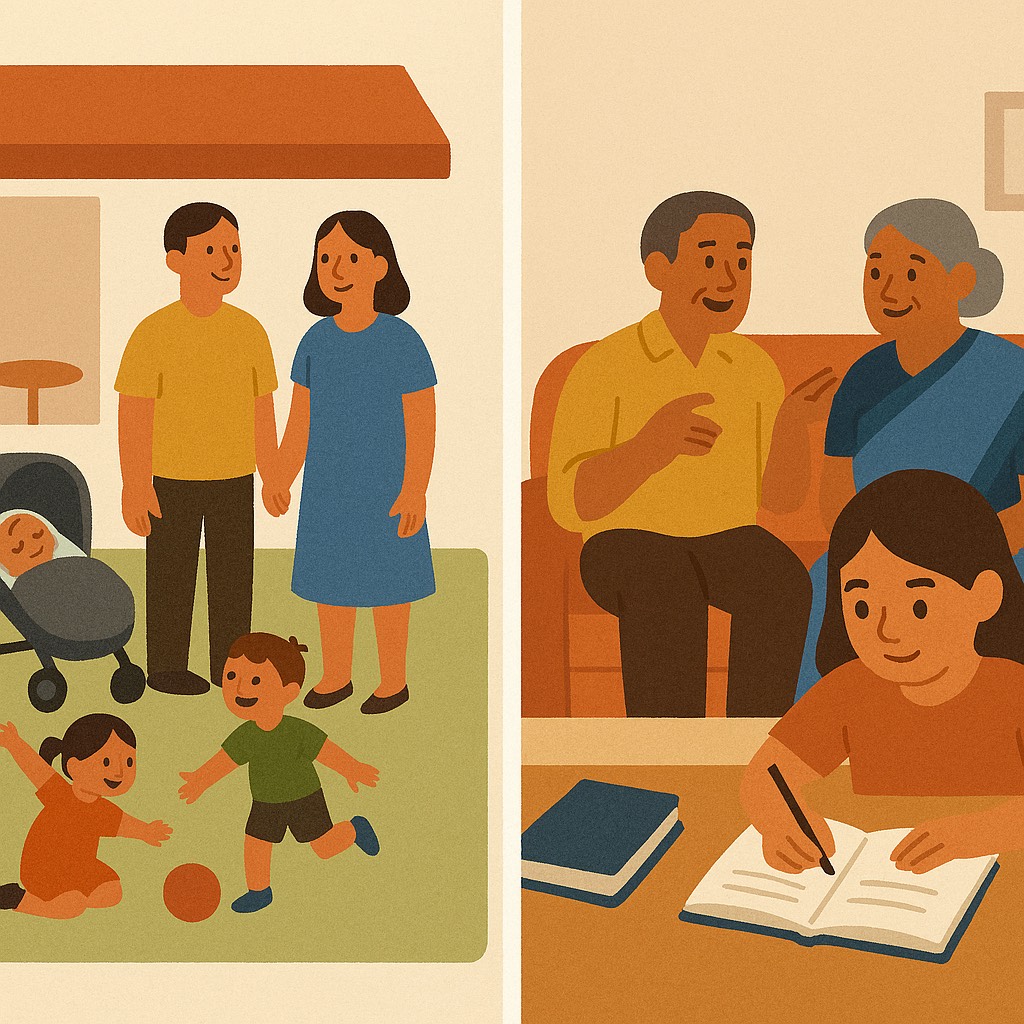
In contrast, Indian parenting—especially the kind I grew up with—is all about family involvement, discipline, and academic focus. Back home, children are often raised by a village: grandparents, uncles, aunties, and neighbors all pitch in. There’s a strong emphasis on respect, routine, and doing well in school. I’m not saying that we did not grow up playing outside all the time, but there was certainly an emphasis on ‘doing your homework’ in the evening, and play was mostly seen as a reward. But here’s the thing: while Danish parenting promotes freedom and emotional intelligence, Indian parenting emphasizes structure and cultural grounding. In Denmark, kids are taught to express their feelings openly. In India, we were taught to respect authority and keep emotions in check—unless it was joy, which we expressed through food and fireworks.
Another big difference I’ve noticed is childcare. In Denmark, daycare is the norm—even for babies. It’s affordable, high-quality, and designed to foster independence. In India, working parents often rely on grandparents for childcare, which creates a beautiful intergenerational bond. But I also appreciate how Danish daycare encourages social skills, emotional regulation, and self-reliance from an early age. It’s a different kind of nurturing—less hands-on, but deeply intentional.
So what do I do? I blend. We promote autonomy by practicing baby-led weaning, but it is parathas and chicken curry being served on the table. Bedtime rituals involve tunes from Arne the alligator and stories from the Panchtantra. Fastelavn and Holi tend to go hand-in-hand (at least something sweet can be offered when celebrating either). Parenting abroad isn’t about choosing one culture over another—it’s about creating a rhythm that feels right for your family. And honestly, watching my child grow up with hygge and haldi doodh (turmeric powder mixed in milk)? That’s the kind of fusion I can get behind.