

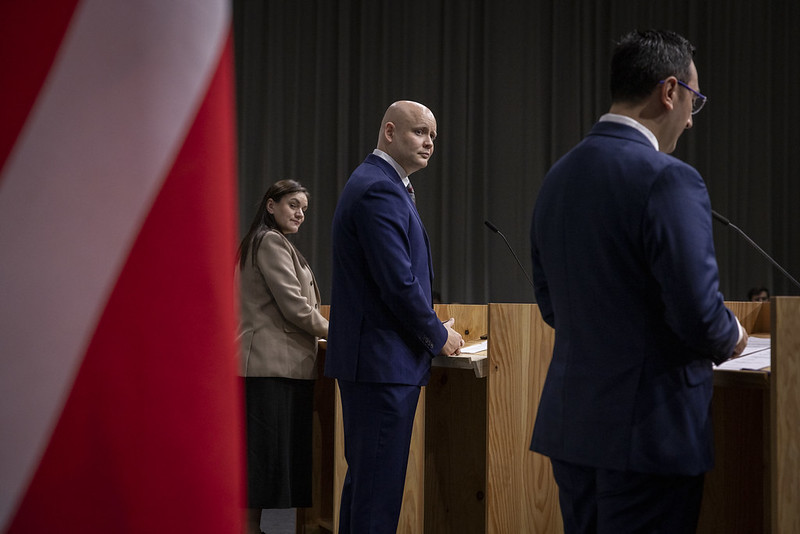
Beyond the military conflict, Russia’s war in Ukraine is also a systematic culture war, with the destruction of over a thousand libraries, theaters, and museums aimed at erasing national identity. As the world focuses on the front lines, Denmark is leading a crucial European effort, pledging millions to a new Cultural Heritage Fund to protect Ukraine’s history and ensure its national spirit survives.
Danes Lead a European Collaboration to Aid Ukraine
As the war in Ukraine rages on it has brought casualties, famine and devastation to the region. And that has also included the destruction of hundreds of culture sites: Ukrainian libraries, theaters, museums… It has been no secret that Denmark has been a big supporter of the Ukranian people; with the passing of the Ukranian Act and the referendum for co-operation in EU Defence back in 2022, as well as extensive military aid and frequently hosting Ukranian president Volodymyr Zelenskyy. What might be a surprise to you is that Denmark is also leading the way in the creation of a Cultural Heritage Fund to rebuild the cultural destruction in Ukraine.
Denmark has pledged 1.3 Million Euros (about 10 Million DKK) to support the restoration of Ukrainian cultural buildings such as monuments, and museums. To that end a new Ukrainian Cultural Heritage Fund has been created. At the time of my writing, the total contributions are valued around 4 Million Euros with contributions from Denmark, the Netherlands, the UK, Poland and Spain.
The mission to preserve Ukrainian culture
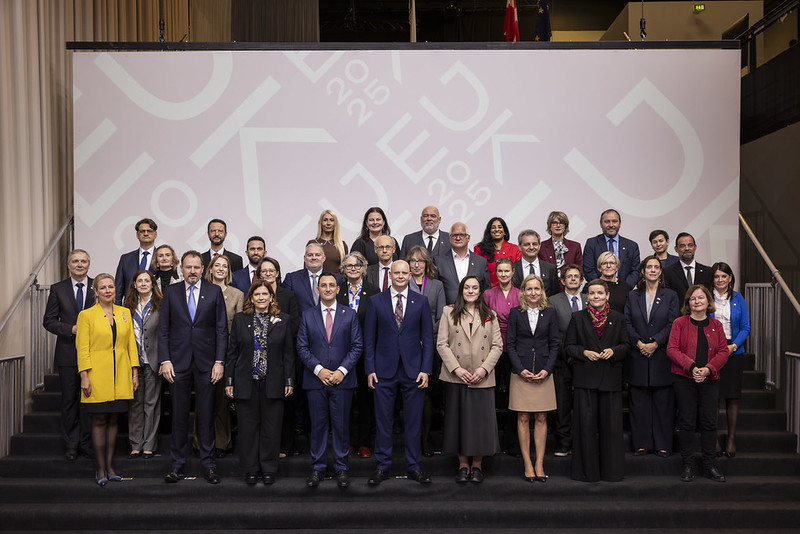
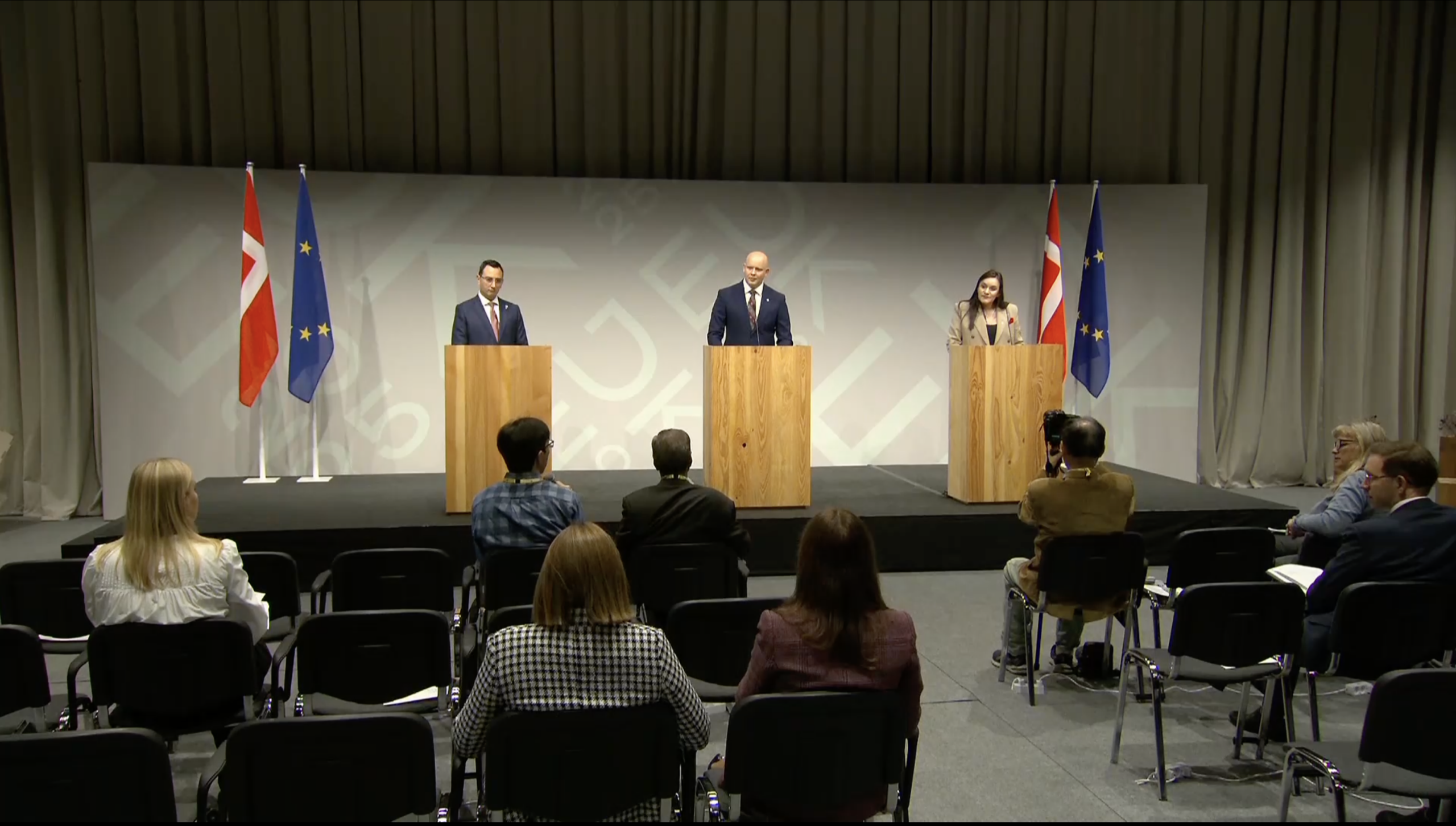
The Ukranian Cultural Heritage Fund was revealed during the Informal meeting of Culture and Media Ministers in Copenhagen on November 3-4. This was among several events held in Copenhagen in honor of Denmark’s current Presidency of the Council of the European Union. Thus all culture ministers across Europe were gathered that day, to discuss the Culture Fund- as well as issues such as misinformation and AI- including Jakob Engel-Schmidt, Culture Minister for Denmark; Tetyana Berezhna, Ukranian Culture Minister and Vice PM;
and finally Glenn Micallef, EU Comissioner for Intergenerational Fairness, Youth, Culture and Sport.
Danish Minister Engel-Schmidt set the mood by emphasizing how there is indeed a culture front to the war between Ukraine and Russia, and that must it be defended. The Minister has been very outspoken on this for some time: in 2024 he campaigned to have Russians barred from e-sports competitions, just as many sports organizations have sanctioned Russia for their role as aggressor in the war.
Ukrainian Minister Berezhna’s speech focussed on how the destruction of cultural centers in Ukraine was a very deliberate attack on national identity and the legitimacy of Ukraine. Even today, many Ukranian students have been forced into makeshift underground schools, sheltering them from the bombardments. Berezhna also emphasized the need to keep cultural industries running through the war.
Commissioner Micallef’s sentiment was that culture truly is the first line of defense. Once again vowing that the EU is an ally of Ukraine, Micallef denounced the War as a war on not only on a people but on democracy and shared values. Commissioner Micallef claimed that through culture, understanding and trust can be built against the spread of misinformation and disinformation. Building upon the Ukraine Conference in Rome, the Comissioner once again affirmed that the European Commision will do all in their power to protect the resilience of Ukranian Culture.
Mightier than the Sword
Denmark’s move is not without its critics. Skeptical reporters asked whether it made any sense to allocate funds for culture at all while there is still an active conflict. Ukrainian Minister Berezhna responded saying that because Russia is systematically damaging culture centers (almost as if destroying energy infrastructure) that has made rebuilding for resilience a national security objective. She later added that should the war stop, then Ukraine would call on its diaspora to rebuild the nation’s culture together. She was backed up by her counterparts.
Another question was on whether the estimates of destroyed sites had been exaggerated. Minister Berezhna once again clarified that ~500 was an estimate by UNESCO for damaged sites and that the Ukrainian figures included ‘cultural infrastructure’ outside of the list as well as intangible cultural heritage. The estimated damage to Ukraine is in fact in the billions, as such the Cultural Heritage Fund is seen as a basis for a reconstruction mechanism, that should be grown over time.
What about Outside of Ukraine?
Then is rebuilding Ukrainian culture a process only within Ukraine? Or perhaps does it extend outside, seeing as there is a big Ukranian diaspora throughout Europe and the rest of the world? We put this question to Tetyana Berezhna.
Berezhna remarked that although the Cultural Heritage Fund was funded from outside of Ukraine, its activities will be in Ukraine. That being said, there the Cultural Resilience Heritage Alliance whose scope covers international collaboration and cultural exchange.
“We see the role of the Ukranian Diaspora as huge,” Berezhna told us “We understand that after the full scale [Russian] invasion, or even before, Ukrainians left the country. And we understand that we need to keep the connections with them. And one of the connections would be that they become the ambassadors, the people who raise awareness about the Fund and will help us, Ukrainians in Ukraine to engage yet more partners and resources with it.”
These are words to reflect on. We, as internationals in Denmark, represent a wider network that can help. By raising awareness, engaging in cultural exchange, or supporting humanitarian efforts, we keep the conversation going. Whether you are Ukranian or not, your mere presence and perspective can help Ukrainian culture endure not only under fire but beyond borders.
More about the Fund
Our LWID lead for the Ukranian edition, Yelyzaveta Honcharenko, has also been involved in the cultural preservation of Ukraine. I spoke with Yelyzaveta to offer her perspective on the fund:
“It’s really moving to see so many volunteers working so hard to support our culture, Ukrainian culture. Just recently I found out about a cool reconstruction project in Odesa: Called 1000doors, where they repair historical doors.”
“The Cultural Heritage Fund is a new institution. The idea of establishing this institution arose during the strategizing of a group of experts in the Res-pol project. I was actually responsible for the results of the coordination. We submitted this idea to the recommendations block and it was supported by the Ministry of Culture. The Aliph Foundation took on the role of the organizer of the new institution at the first stages of construction.”
“The office will be located in Brussels in the heart of Europe, so the fund has closer contact with diplomats and other international institutions that may wish to contribute. In the future, the fund may expand to include Ukrainian contributions, as well as private donations. But at this time our readers can support the fund through word-of-mouth, by getting the message out there.”