

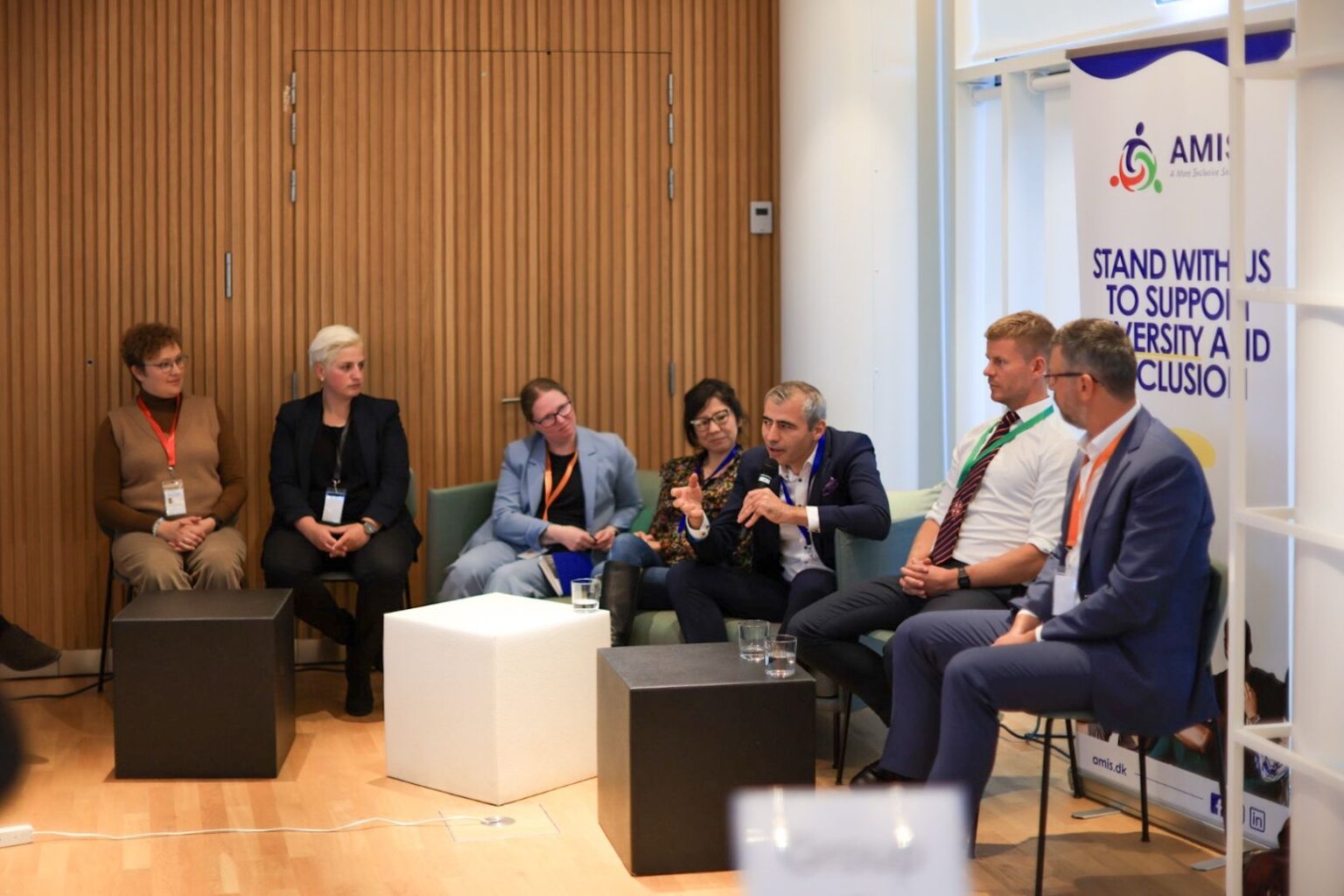
A few weeks ago, I sat on a panel hosted by AMIS – A More Inclusive Society and The Ukrainian European Hub in Copenhagen.
Even though it was a rainy Saturday morning, the room was buzzing. A mix of international founders, local entrepreneurs, and professionals trying to start or grow a business.
One of the top questions they had was: “How do you actually build a meaningful network in Denmark?”
This question reveals two things internationals deal with:
- When you relocate to a new city or a new country, you often start from scratch. You don’t speak the language and know no one.
- You are reminded of the importance of having a network..
I know I’ve been through this both when first relocating to Sweden and now to Denmark. So, before stepping onto that panel, I did something I often ask my coaching clients to do: I stopped and looked back at my own experience.
I revisited my own model of achievement. What was the approach that helped me grow my network, not through luck or charm, but through intentional connection?
And that reflection turned into the framework I shared with the audience that day and with you today: a 7-step networking blueprint for internationals in Denmark.
Spoiler alert: It’s not about collecting business cards or LinkedIn contacts. It’s about building credibility, trust, and relationships that can open doors long after the handshake fades.
Step 1: Clarify Your Why
Before attending any event or reaching out to anyone, I always ask myself: Why am I doing this? To what purpose am I attending? If your goal is just to “meet people,” you’ll blend into the crowd. But if your purpose is to learn, collaborate, or contribute, you’ll stand out immediately.
When I first arrived in Scandinavia, I made the mistake of asking too much too soon. I realized that I was too focused on trying to sell my services.
Things changed when I started focusing on understanding what leaders here cared about. Instead of trying to push what I knew worked in the US, where most of the leadership principles I use come from, I was curious to understand how people here see leadership and where I can add the most value. This mindset shifted everything.
People can sense when you’re genuinely curious rather than opportunistic. People like to buy, but no one wants to be sold to.
Let’s say you know you have something of value. You can help someone solve a problem they have, but they don’t know you can.
If you jump right into your pitch, you’ll probably meet with resistance. But if you act as a likable expert guiding them to see the value you can bring, they’ll ask for your help. This opens the door for your pitch, making them feel in control.
So, start with a clear why. Networking without it is like driving without a map. Your wheels are spinning, but you’re not getting anywhere.

Step 2: Show Up Intentionally
In Denmark, showing up is half the battle. But showing up intentionally. That’s the game-changer.
When I prepared for the panel in Copenhagen, I didn’t just plan what I wanted to say. I also thought about who might be in the room and what they needed to hear.
It is called empathy – being able to put yourself in other people’s shoes.
People in Denmark appreciate thoughtfulness. Whether it’s a casual meetup or a formal conference, don’t wing it. Be prepared. Be focused. Read the guest list. Follow the organizers on LinkedIn. Share a post about attending. Engage in the comments. Know who’s behind the event and what they care about.
What I have found is that the more prepared I am, the more confident I am. When you walk into a room prepared, with your homework done, you’ll project quiet confidence. The kind that earns respect faster than any elevator pitch.
Step 3: Lead with Value, Not with an Ask
Here’s the truth: no one likes being “networked to.”
During the conversations after the panel, I shared a story about one of my early business lunches in Gothenburg. I came prepared to talk about collaboration, but I didn’t pitch anything.
Instead, I asked questions:
“What are you excited about right now?”
“What’s one challenge sitting your way this quarter?”
“Who do I know that you should know?”
By the end of that lunch, I had offered an idea, introduced them to a contact, and gained a new friend, not just a follower. Add value first with zero expectation in return.
That’s how you build bridges that last.

Step 4: Understand the Cultural Code
This is where many internationals struggle. Denmark has a distinct cultural rhythm: quiet confidence, equality, and trust. Aggressive self-promotion doesn’t work here. Neither does excessive modesty. The sweet spot lies in bottled enthusiasm and authentic competence.
Instead of bragging about your accolades, let them be revealed from the stories you share. By the passion you show and the quality of questions you’re asking, you paint a picture of how much you really know about a topic.
So, how do you strike the balance?
Be proud of what you’ve done – show enthusiasm without overselling it and being humble enough to listen –without diminishing your own value.
In Sweden, there’s a word, lagom, to describe this. It means “the right amount”, “not too much, not too little”. I am not sure if there’s a direct translation in Danish, but the closest could be “tilpasselig,” meaning “suitable,” or “lige tilpass,” meaning “just right.”
Networking in Denmark isn’t about performing. It’s about genuine conversations.The moment you stop trying to impress and start trying to understand, you’ll feel the shift. Conversations become real. Doors start to open.
Step 5: Ask for Advice, Not Feedback
This was one of the biggest takeaways from my work on principles of influence and persuasion with Dr. Robert Cialdini. Cialdini is a renowned social psychologist and author widely regarded as the foundational expert on the science of ethical influence.
He is a Regents’ Professor Emeritus of Psychology and Marketing at Arizona State University, where he spent his career researching the factors that lead people to say “yes”. He is best known for his international best-selling book, Influence: The Psychology of Persuasion, which outlines his six universal principles of influence.
His research has shown that when you ask someone for feedback, they tend to step back and evaluate. When you ask for advice, they step forward and engage.That one linguistic shift transforms how people respond to you.
Instead of saying, “What do you think of my idea?” try, “If you were in my position, what would you do next?” Advice invites collaboration. Feedback invites judgment.
In a trust-based culture like Denmark, this approach creates connections faster than any formal introduction ever could. And you’ll be surprised by how many people actually want to help when you ask.
Step 6: Follow Up – The Smart Way
After any event, I take ten minutes to write a few personal follow-ups.
Not mass messages. Not “great to meet you” notes. Personal, specific, and genuine.
Something like:
“I really appreciated what you shared about your work with sustainability. It made me think about how leadership and impact are connected. Let’s continue that conversation.”
People remember the details you notice. And when you follow up thoughtfully, you move from acquaintance to ally. Remember: the key to networking is not what happens at events. It’s what happens after them.
Step 7: Play the Long Game
This is where leadership comes in. Networking in Denmark is not transactional, it’s relational. Trust takes time.
The best opportunities I’ve had came from people I met years earlier. Sometimes we didn’t even talk about business back then. We just connected as humans. So, stay visible. Stay generous. Share content. Celebrate others. Send an encouraging note when someone achieves something.
Relationships compound – just like investments – if you take care of them. You don’t only build a network; you grow it. Long-lasting relationships take time and effort.
Final Reflection
As I looked around that room in Copenhagen, watching entrepreneurs from different backgrounds exchange ideas alongside laughter, I felt something powerful. The internationals who thrive here aren’t the ones who talk the most. They’re the ones who listen, who give, and who stay the course.
If you remember just one thing from this 7-step blueprint, let it be this:
Networking isn’t about who you meet. It’s about who remembers you, and more importantly, why. Be curious. Be consistent.
And lead with value every single time.
Florin