
“We are very concerned about Noah.”
A feeling of dread washed over me. I shifted uncomfortably in my chair, glancing warily over at my husband, Lasse, who took a long sip of coffee from a white Ikea mug. He didn’t meet my eyes.
I clutched the evaluation papers tighter in my hands, giving the results a double take, yet not fully comprehending what I was seeing. Suddenly, the room felt entirely too warm and cramped, as though all the air had been sucked out of it.
It was the spring of 2017, and this was just supposed to be a routine check-in at our son’s børnehave (kindergarten).
Each year, parents are asked to fill out a survey ranking their children’s communication abilities, language skills, and social interactions to determine how they are developing. The leaders of the school fill out the same survey. Then, we meet to compare notes.
Leading up to our check-in, Lasse and I filled out our survey together and were on the same page about everything. We were confident we knew precisely how this meeting would go.
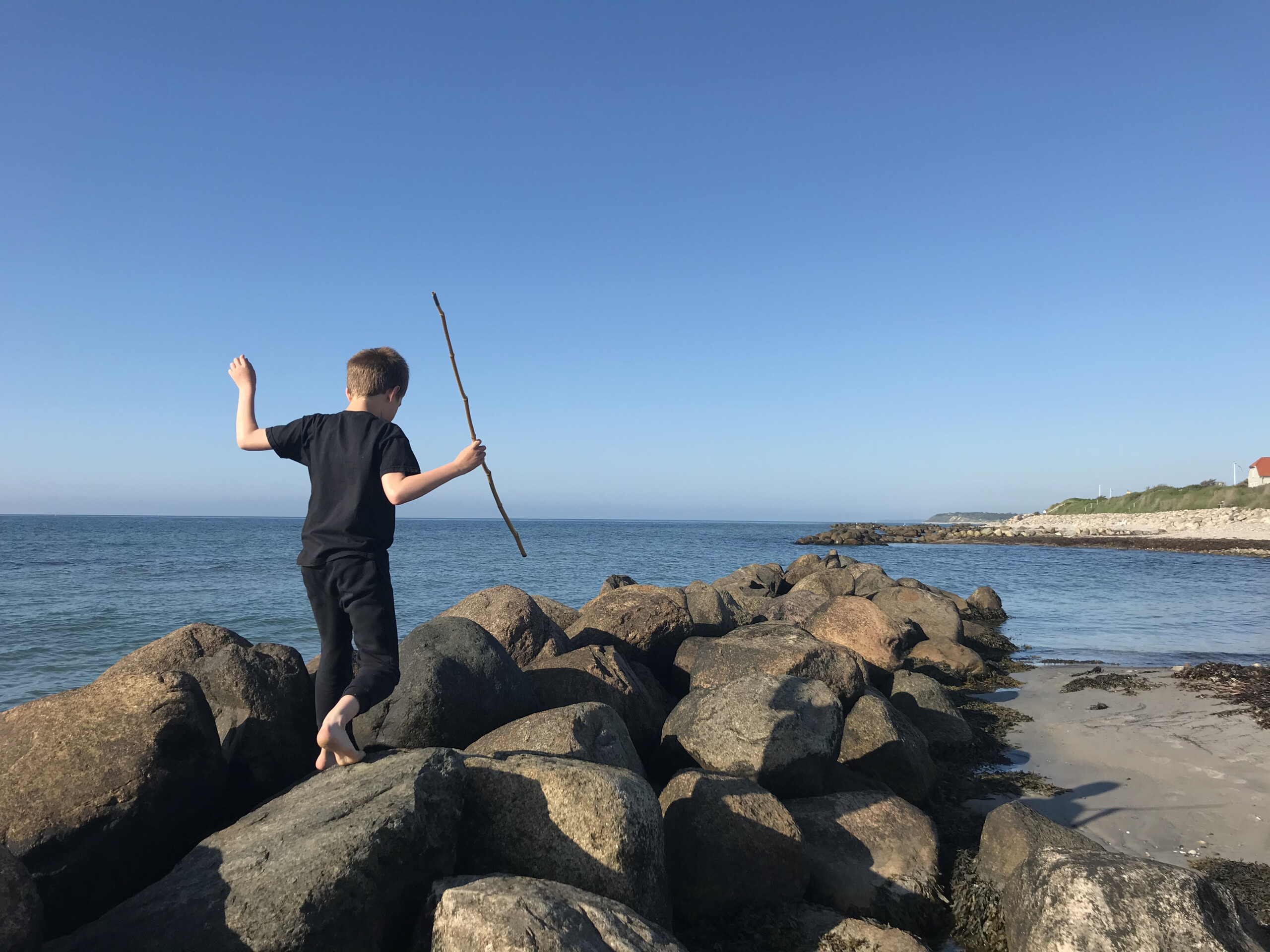
Our 4-year-old son, Noah, had a rough start in Denmark. We moved three times in our first year and, every single time, he’d become physically ill and vomit. Early on, he’d have fits of rage and some nights would stand in his bedroom doorway screaming — for no apparent reason — for up to 45 minutes at a time. It was exhausting and wore us down to our last nerve.
But recently, he was doing much better.
True, sometimes he still got worked up and frustrated if he felt misunderstood. And he was often overstimulated.
But since moving to his new, smaller kindergarten, Noah had finally started to become calmer in general. He was happier. He was speaking more Danish. He would talk about his ‘friends’ at school.
As far as we were concerned, Noah was thriving.
Yet, when we sat down with the headmaster of the school — a formidable, no-nonsense woman named Majbritt — and reviewed the survey results together, we were shocked to discover that our answers were completely at odds.
Where we saw improvement, they saw issues.
Where we saw growth, they saw struggle.
The phrase on repeat throughout that meeting was: “We are very concerned about Noah.”
Then, they began to use words like Autism. They suggested that perhaps Noah had a diagnosis.
I couldn’t believe what I was hearing. That couldn’t be right. They must be mistaken.
Several times during our conversation, Majbrit leaned in close to me, locked eyes, and asked, “Are you okay?”
Returning her gaze unflinchingly, I responded confidently, “Yes, I’m fine.”
I wondered why she kept asking me that. Why wouldn’t I be okay? My son did not have autism. I would know. I’m his mother!
Besides, how could he have autism? He didn’t display the classic symptoms (according to my limited knowledge at the time). Noah could empathize and make eye contact, for goodness’ sake! Surely, Majbrit was mistaken.
Lasse and I left the meeting that morning feeling deeply unsettled. We loved the leaders at the børnehave. They had worked wonders with Noah. But how could they be so…wrong?
We wondered if it could simply be culture shock.
Surely that was it—a difference between our American culture and their Danish culture! One of their observations was that Noah wouldn’t participate in group activities and was often found wandering off by himself. I explained that away as his American individualism clashing with their Danish collectivism. That made perfect sense, didn’t it?
Maybe.
Though we tried to dismiss the idea of a diagnosis entirely, a small doubt began to plant itself over the following weeks and months: what if they were onto something, after all? Had we somehow missed the signs in our son?
The thought continued to haunt us: What if they were right?
Because, come to think of it, it might actually explain a few things…
Like the time Noah got so overwhelmed at his second birthday party — the one when the whole family chipped in to buy him a train set, and gathered in his little bedroom, cheering as he opened it — that he frantically looked around and began yelling, “NO! NO! NO!”
…Or the fact that when he was stressed or overstimulated, he would pace around in a circle, doing a little ritual that involved skipping, clapping, and humming.
…Or that he didn’t really seem to learn from his mistakes. For example, he fell into the lake by our apartment on three separate occasions. Three!
It made us wonder: Could there be an explanation other than Noah just being an overly energetic boy?
Finally, several months after that meeting, we agreed to have Noah evaluated, if only just to rule out a diagnosis. We still thought they were wrong, but if there was indeed something there, we wanted to catch it early.
Since this process was initiated by our kindergarten, once we gave our consent, there was a clear path forward. In fact, we were impressed by how thorough and holistic the process was in our municipality (Rudersdal). Our caseworkers observed Noah in school and at home. He was interviewed and tested by multiple psychologists and nurses. And since it was a referral from our børnehave in the public system, we didn’t have to pay for any of it out of pocket.
After several months of evaluation and lots of paperwork, we got our answer. Noah was formally diagnosed with Moderate Infantile Autism, a neurodevelopmental condition characterized by challenges in social interactions and restricted, repetitive patterns of behavior. It uniquely shapes the way he experiences and processes the world. During this time, our child psychologist also wrote a referral for Noah to attend an elementary school for children with special needs.
By the time Noah received his diagnosis, we were ready to accept it, though we still went through a complex grieving process. At times, we felt relief and hope. Other times, we were consumed by sadness and anger.
We found ourselves replaying Noah’s entire life, trying to figure out how we missed so many clues early on. We mourned the future that Noah would never have.
Would he ever have any close friends? Work a job? Live on his own?
As internationals without a lot of close family nearby, it was especially lonely and isolating. We had to reframe our identity as a family. We went from being internationals just trying to be a little bit more Danish (and occasionally succeeding) to internationals with a special needs child. We had to accept that we would always be a little more different.
Over time, through numerous sessions with psychologists, social advisors, and teachers — and reading countless books on the subject — autism slowly became our new normal.
We learned how our son’s brain works and how he experiences the world. We had to modify our expectations for him, be patient, and be intentional about how we approached him on difficult days. We had to learn how to “speak Noah.”
Nine years later, we can see how those investments paid off. Noah has grown tremendously. He can regulate his emotions and avoid major meltdowns. He’s kind, curious, and witty. He enjoys engaging in deep conversations and likes to know what other people think. He also has an incredible knack for memorizing facts and is becoming quite an enthusiastic film critic. Noah is happy, and most importantly, he’s actually thriving!
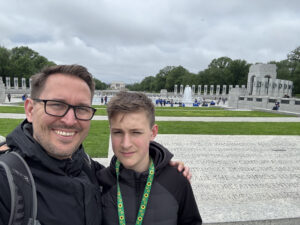
When I think back to that conversation with Majbritt at the Børnehave, I was terrified that autism would be the end — that it would be a journey into hopelessness. However, it turns out, it was a journey to an unexpected destination. One filled with beauty and triumphs. Also, frustrations and sadness. But it has given me a more enriched view of the world, and it’s taught me to cherish all the little things. The small victories along the way, like…
Noah learning to tie his own shoes.
Noah discovering that he loves to travel.
Noah finishing his first novel and realizing what a good reader he actually is.
When I look back over this decade, and remember the feelings of dread and uncertainty about a diagnosis, I am now thankful for that diagnosis. It’s not that everything is perfect. But I have hope, and even more importantly, joy.

For anyone interested in deepening their understanding of autism, below are my top reading recommendations:
- Neurotribes: The Legacy of Autism and the Future of Neurodiversity by Steve Silberman
-
- The Reason I Jump: One Boy’s Voice from the Silence of Autism by Naoki Higashida
- In a Different Key: The Story of Autism by John Donvan and Caren Zucker
- Aspergirls: Strength and Empowerment for Women and Girls with Asperger’s Syndrome and Autism by Rudy Simone