
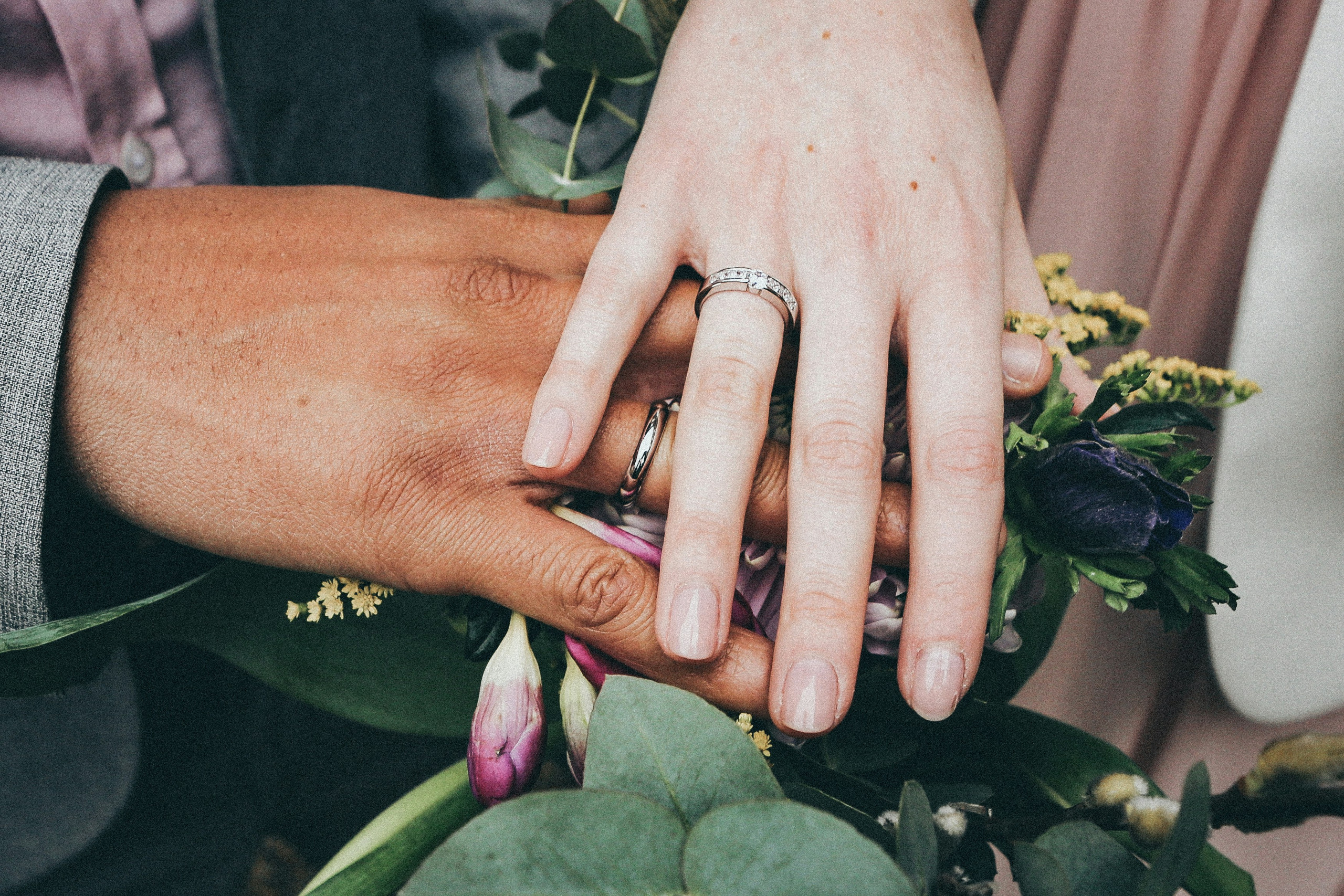
Copenhagen has long been dubbed “Europe’s Las Vegas”, with thousands of internationals tying the knot in the city every year. But experts think the moniker is outdated, as the phrase used to refer to the capital appeared in 2016, when couples could marry quickly in Denmark with just passports and no checks to see whether the relationship was real or not.
Significant changes
Wedding consultant Leanne Hindle (Marry Abroad Simply) has worked in the industry for the past 13 years and has seen it evolve significantly. She has worked with the Danish authorities since before the Agency of Family Law was established, and has also trained a number of other wedding agencies. Hindle notes that international couples do not simply arrive and get married on impulse anymore.
The Danish Agency of Family Law was founded in 2019 to centralize the process and implement safeguards intended to detect and prevent marriages entered into for fraudulent motives, as worries about the potential for pro forma or sham marriages grew. Nowadays, if caseworkers have concerns about a couple’s connection, they may reject their application or call them in for an interview. Couples must present significant proof of their relationship’s duration and history, including contact records.
Who comes to Denmark–and why?
Couples who arrive in Copenhagen to tie the knot represent a wide variety of people, all with different motives. Some opt for Denmark solely because they consider it a dream wedding location, particularly Americans and Australians, among many international couples. Others arrive due to legal challenges in their own nations, which is particularly relevant for same-sex couples from regions where their union lacks legal recognition. For couples in long-distance relationships, when partners reside in different nations, coordinating the essential documentation in either country can be quite complex, whereas Denmark offers a more straightforward alternative.
But what truly makes Denmark’s marriage process so much easier than in many other European countries? Firstly, it has a centralized government application system and standardized documents. There is no need for marital status or birth certificates. Secondly, marriage certificates are issued the same day and in 5 different languages on the same certificate. Thirdly, the country is also very good at adapting and putting in exemptions for documents, such as legalizations on Ukrainian divorces or other exemptions where there is a current political issue going on. No other European country does that.
The Culture, Leisure, and Citizen Services Administration notes that many international couples find the application process and ensuing wedding arrangements to be very efficient and swift. Denmark has digitized the application process, which sets it apart from many other countries. The first part of the application process takes place with the state authority, the Agency of Family Law. Once the couple has been approved for marriage by the Agency of Family Law, they must contact the municipality where they wish to be married.
Easy does not mean instant
A common misconception is that couples go to Copenhagen and think they could marry next week. Some venues are actually booked up to 3 months in advance, so even though it is faster than many other countries, there is still a process that couples need to adhere to and plan for.
Another one is that international couples are taking wedding slots away from Copenhagen residents. In reality, this is not the case. Copenhagen residents have access to a separate booking system, so international weddings are not competing directly for the same appointments.
As with wedding planning anywhere in the world, availability depends largely on planning ahead. If a couple is hoping to arrange a wedding at very short notice—whether they are residents or international couples—they are likely to find that the most popular dates and times have already been booked. The demand reflects Copenhagen’s popularity as a wedding destination rather than international couples displacing local ones.
According to The Culture, Leisure, and Citizen Services Administration, in the first seven months of 2026, the City of Copenhagen married approximately 2,600 couples where both parties were foreign nationals, and just under 500 couples where one party was a foreign national. Put together, these account for 70 per cent of the year’s weddings.
Last year, the City of Copenhagen’s Culture, Leisure, and Citizen Services Committee decided to increase the number of weddings offered by 25 per cent to 10,000 weddings a year, partly to accommodate more international couples, but also to ensure that Copenhagen residents can get married at the city’s town hall.
A real-life example
Bastien is French, and Shella is Indonesian, who lived and met in Bali during the pandemic. The husband recalls that the island was pretty quiet during that period, and that there were probably only about five people left on Tinder, but they still found each other on the dating app.
Getting married in France would have taken a year longer just to get a date. In Indonesia, it would have required a different process, such as having Bastien convert to a religion first. Transcribing a non-European wedding into the French system would also have been challenging.
The couple wanted the most efficient way to reduce friction and paperwork, so they chose Denmark, since friends in the same situation had done it, and the process went very smoothly for them. Bastien and Shella did not know much about it at the time, but they quickly discovered that Denmark facilitates weddings regardless of the couple’s background. Since it is in Europe, transcribing the marriage into the French system was also very easy.
They contacted a wedding agency (Getting Married in Denmark) first, and from there, the process was extremely easy. The couple said they have rarely encountered a service as efficient and friendly as theirs.
There were various documents to submit, of course, as well as proof that they were a genuine couple. Once it was confirmed that the partners were indeed a real couple, however, it was very straightforward.
“You mostly need to provide a few photos of yourselves together. Once all the documents were sorted out, we could choose a location from several available options. Copenhagen is naturally in high demand, so couples choosing it should expect a slightly longer wait,” Bastien notes.
“We wanted a quick and efficient process, so we did not mind going to Dragør, a small town nearby. We did not regret our choice—it was by the sea and very charming. They were expecting us and brought us into a room where the short ceremony took place. It probably lasted less than ten minutes,” he adds.
When asked to describe the process in three words, he recalls it as efficient, smooth, and friendly.
International weddings have a huge economic impact on Denmark as well. As stated by Leanne Hindle, it is a massive industry, with couples booking hotels and restaurants, hair and makeup artists, florists, photographers, and of course, local taxi drivers and shops. These entrepreneurs are all Danish taxpayers, so international weddings are a massive source of income for the locals.
“We had a lovely one-week vacation there, and Denmark is a country we would love to explore again,” Bastien says.