




A new semester has begun, and so has the hunt for jobs. A lot of new students are moving to the big cities and are in need of part-time jobs to cover their rent. They have to compete with the many young Danish graduates, who are saving up money in their gap years. But if you are new in Denmark and are in need of a job, there is no reason to give up on the hunt.
This article will provide tips on how to increase your chances of finding work, partly by giving inside in the structure of the Danish job market, and partly by learning from the experience of a young aspiring handball player from Slovakia, who has to make a living here, if he wants to progress in his sport.

I am meeting Martin Tabačko on a bench outside his dorm room in Risskov, the northern part of Aarhus. He is wearing a baseball cap and his height could allow him to be a decent basketball player, but there’s a reason why he isn’t in the United States. The Danish sport handball has captured his heart. But although the second division of the handball league is advantageous for young foreigners here in Denmark, it has turned out to be expensive to live here and challenging to navigate the Danish job market for non-Danish speakers.

- KEEP AN EYE OUT FOR YOUR SALARY AND RIGHTS
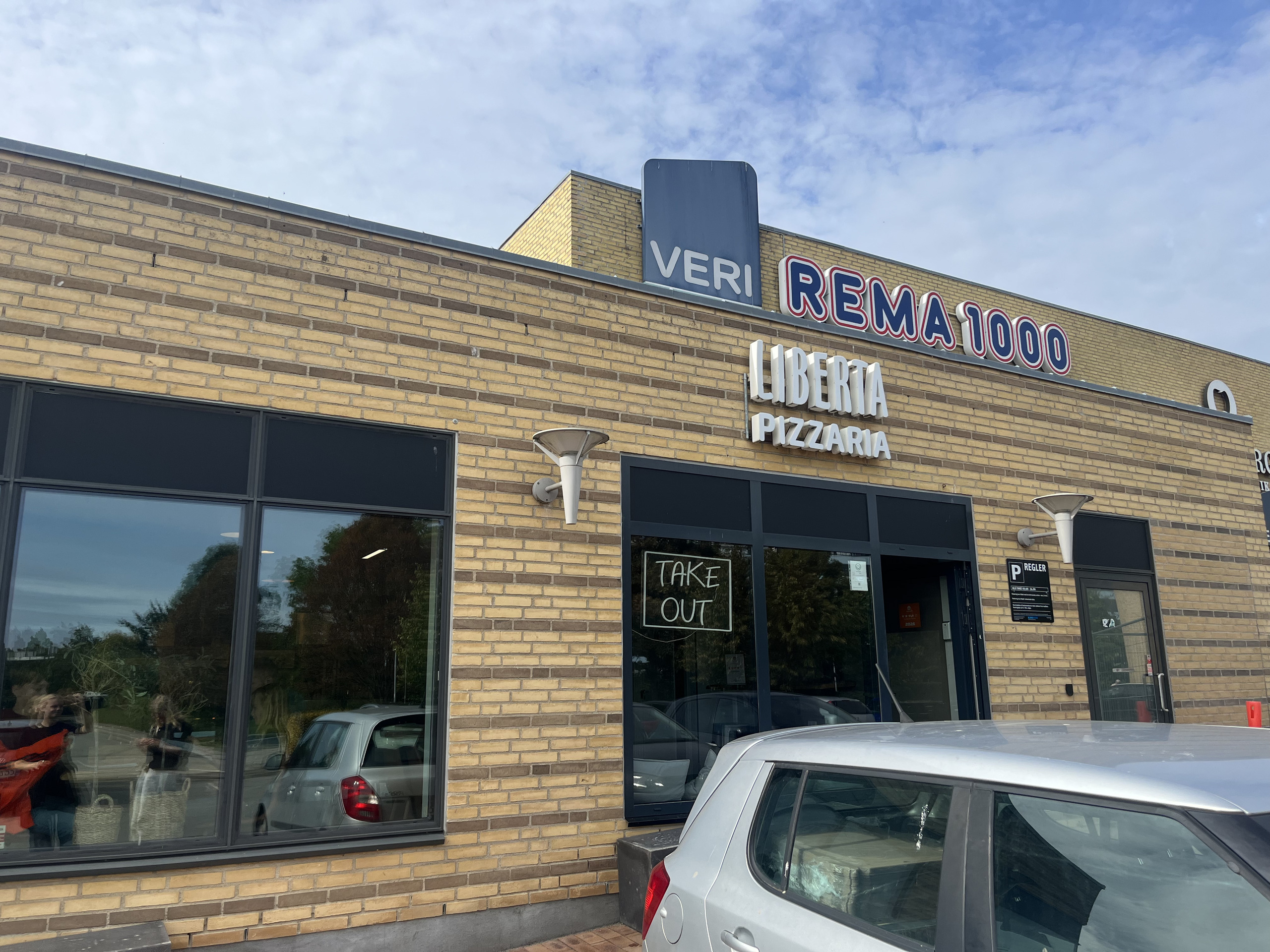
Currently, Martin is employed at the local pizzeria. I ask about his salary, and he smiles: “It’s very low, […], it is 110 kr (per hour), yeah it’s very very low, but it was my only option in the beginning, so I just took it as an opportunity, so I have some income in my bank account, because it is very expensive to live in Denmark.”
It’s not surprising that the young Slovak found a job in the food industry with a low salary. It is well-known that many foreigners work in this field. In 2024, the Danish media Berlingske concluded that half the workforce in the hotel and food industry were foreigners, after looking at numbers from Dansk Industri and Det Regionale Arbejdsråd. It’s often not required to speak Danish in the food industry, and these jobs are quite accessible because Danish speakers often have better-paying jobs, where the unions secure the salary and rights. To understand this tendency, it’s important to know the structure of the labour market in Denmark.
The Danish system is essentially built around the worker unions. The state makes as few laws as possible for regulation of the labour market, and leaves the unions with the responsibility for negotiating salaries and rights for its workers. As a result of this model, workers employed outside a union have no official minimum wage and only a few standard rights, besides the ones they sign for on their personal contracts. This means that you have to be aware of the premises of your work, since the Danish law is not protecting you very well. You need to consider whether you find the salary, hours and conditions fair and worthy of your time, and if not, you might need to negotiate or look for another job.
I ask Martin if he is dissatisfied with other parts of his job besides the salary: ”I think the work time is the worst, I have to work from 5pm-10pm, sometimes 10.30 if it’s busy and they can’t close before.” Luckily, the colleagues and ambiance at the pizzeria makes up for it at the moment: “My co-workers are pretty nice, they are pretty fun to work with, and they are very nice people.” Therefore he sticks with it, at least until something better comes along…
- TAKE WHAT YOU CAN GET, AND MOVE ON FROM THERE
This brings us to Martin’s plans for future employment in Denmark. When asked about whether he seeks other work, he answers immediately: “Of course, I do search for another job!” He elaborates: “Right now I am searching for a full time job, so I can work from the morning until early evening at 2pm-3pm, so then I can have my evenings free. I can play handball, train and hang out with my friends.”
Hopefully, he will soon find a job that meets these requirements. In theory, it should be relatively easy to switch jobs in the Danish system, compared to other European countries. The Danish job market is built around the thesis that it should be easy for companies to regulate changes in the job market, by quickly increasing or decreasing the number of employees. To explain it with a catchy phrase, it is easy for the employer to fire and hire. Putting it like that, it sounds like it gives a big advantage to the employer and only uncertainty for the employees. But luckily, it works both ways, and gives the workers the freedom of changing jobs as they like. No one will raise an eyebrow if you quit after a couple of months in a restaurant if you tell them it’s because you found something better.
So if you are searching for the right job, and a semi-bareable comes along, you might as well take it, and make the most of it, whilst applying to alternatives on the side!
- BE PATIENT, SEEK OUT YOUR LUCK, AND MAYBE TURN UP IN PERSON?
Being hired for an unskilled job is often about being at the right place at the right time, and for Martin, it was also about being at the right place for a long time. He tells me the quite impressive story of how he landed the low paying job at the pizzeria: “I came there at like 5, and I sat there three hours, because it was very busy at the time when I came, and they said “wait”, and I think it took three hours for him to come talk to me.” He emphasizes that he was very lucky, but also gives some credit for his personal approach, and I ask if he would recommend it for others: “Yes, I think that is the best option. Because if you go in person, I think you look more serious about it, and you look like you really need it.”
Maybe it is worth giving this method a try, but it is very common in Denmark to spread out the search and try multiple methods at once. So do it all, or pick the one that appeals to you the most!
- DO IT NOW TAKE ADVANTAGE OF THE HIGH SEASON
Regardless of the method, there are no excuses for postponing the job hunt. The demand is high for unskilled work, but especially during the current period from August to October, when many companies are rehiring employees. There are websites such as www.workindenmark.dk and Jobindex.dk, where you can have a look at the active job ads at any moment.
I say goodbye to Martin, who has to work shortly after the interview. I wish him the best of luck with finding a job, and he smiles optimistically whilst politely thanking me. I guess I would have hired him too, if it was a job interview…

Regardless of whether you are applying left and right or cherry picking the job ads worth your consideration I also wish you the best of luck, and I hope this article has improved your knowledge of the Danish job market and encouraged you to find the right place in it.



The practical tips make the Danish job market easier to understand for foreigners, especially the advice on checking salary and working conditions, being open to temporary opportunities, and using different approaches when applying. Martin’s experience also shows how persistence and taking initiative can help international students find work while adapting to life in Denmark
The practical tips make the Danish job market easier to understand for foreigners, especially the advice on checking salary and working conditions, being open to temporary opportunities, and using different approaches when applying. Martin’s experience also shows how persistence and taking initiative can help international students find work while adapting to life in Denmark.