

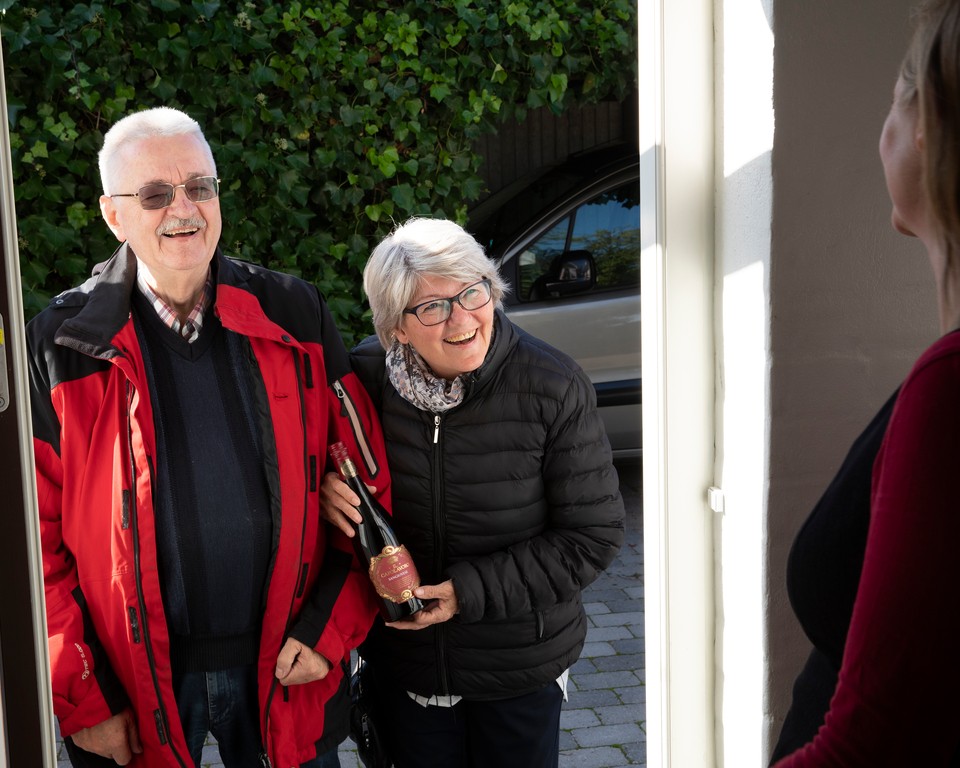
In Denmark, Christmas is often called hjerternes fest (the celebration of hearts). It’s a season tied to traditions, closeness, and spending time with the people you love. Everywhere you look, in store windows, television, school activities, and workplaces, the message is the same: Christmas is something we celebrate together.
But what happens when you don’t have anyone to celebrate with? Or when you just cannot afford to?
For some, December isn’t a celebration of hearts, but a reminder of what’s missing. While some gather with family, exchange gifts, and enjoy festive traditions, others find themselves facing the season alone, or with limited means to participate.
Those without close family, distant relationships, or who live far from loved ones, often become more aware of the gap between their reality and what others seem to have. While many move between julefrokoster, Christmas markets, and play silly games like pakkeleg, others go through December with little social interaction, often feeling isolated instead of embraced by the warmth and joy of the season.
Christmas is meant to bring us together, but for many, it also puts a spotlight on who is left out. This time of year is a moment to recognize those who may be struggling with loneliness or difficulties, and to remember that the spirit of Christmas isn’t just about receiving, but also about extending care, love, and inclusion to those who might otherwise be overlooked.
When hjerternes fest becomes ensomhedens fest
In 2023, Minister of the Elderly Mette Kierkegaard said that while Christmas has traditionally been called hjerternes fest it has also become ensomhedens fest (the celebration of loneliness). Her point reflects a broader reality that far too many people in Denmark struggle with loneliness all year, but the holidays make it harder to ignore.
Loneliness is not new in Denmark, but it has become more visible in recent years, especially during holiday seasons. Christmas traditions are built around repetition: the same meals, the same songs, with the same people, in the same places. When those people are gone, through conflict, distance, divorce, death, or circumstance, the traditions do not disappear with them.
As Kierkegaard points out, many of the rituals of December, such as baking cookies, decorating the tree, visiting family, can turn into reminders of what’s missing. Even conversations between colleagues talking about their Christmas plans can be enough to make someone feel even more alone.
During the holidays, loneliness often grows stronger when you realize that nobody is expecting you. That no one has written your name on a gift tag or invited you for glögg and æbleskiver. Answering the question “who will you spend Christmas with?” can require preparation, explanation, or avoidance. For many, December doesn’t feel magical. It feels like something difficult to get through.
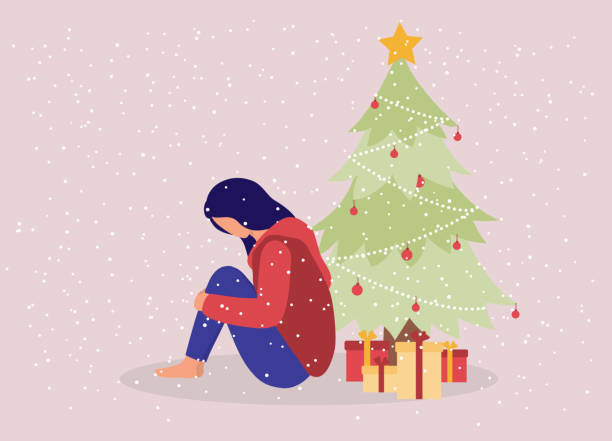
We often imagine loneliness as something that only affects the most vulnerable in society: the elderly, the socially isolated, people on the margins. In reality, it cuts across age groups, social backgrounds and life situations. It can affect everyone in society:
It affects young people who’ve moved away from home, international students and newcomers whose families live in other countries, refugees who cannot travel home, widowers, newly divorced, single parents whose children spend the holidays elsewhere, people with mental health challenges, and those without a strong social network.
According to the yearly Christmas survey from YouGov, around 160.000 people in Denmark celebrate Christmas alone every year, and the number is only increasing.
Loneliness in Denmark is not an exception, it’s actually quite widespread. Recent studies suggest that more than half a million people struggle with it to some degree, and figures from 2021 show that around every eighth person in Denmark feels lonely. DR has even described loneliness as a spreading pandemic and in 2023 the government launched a national strategy to fight loneliness aimed at halving the number of people who feel lonely by 2040.
December is often when this reality becomes most noticeable. The difference between those who have people around them and those who don’t becomes harder to ignore. Invitations, family dinners, and office events underline what’s missing for those who spend the month alone, and the feeling of loneliness often grows stronger.
The pressure of the “perfect” Christmas

Image credit: Instagram
Alongside loneliness, Christmas can also feel like a performance, where every meal, gift and decoration has to be perfect.
Historically, Christmas was a modest celebration with simple food and few gifts. The focus was on religious traditions, faith, and spending time together. Over time, this has changed. Christmas has increasingly become tied to consumption, performance, and expectations about how the holiday should be.
Today, the unspoken standard includes fancy meals, expensive gifts, perfectly decorated homes and a calendar filled with social events. Social media, advertising, and television all contribute to the idea that Christmas must be carefully planned and appear picture-perfect.
Our wallets empty while our calendars fill up. December is full of obligations at work, school, volunteer organisations, and within families. What is meant to be a time of closeness often turns into a month of logistics. Many people feel overwhelmed and exhausted long before Christmas Eve arrives.
According to a recent study by Epinion, every fourth child feels that their parents are too busy during Christmas. Many children notice that December is full of stress and packed schedules, leaving less time for shared moments as a family.
The pressure isn’t only about money. It’s also about time, energy, and expectations. People worry about buying the right gifts, preparing food, attending julefrokoster, decorating the home, wrapping presents, and hosting family gatherings.
Many aim for a “perfect” Christmas where traditions are followed exactly as they have always been. But for some, these expectations leave little room for enjoyment, flexibility or difference.
“Julen varer længe, koster mange penge”
Most Danes grew up singing the line, “Julen varer længe, koster mange penge” (Christmas lasts long, costs much) from the 1847 Christmas song Højt fra træets grønne top. It was originally just a comment on the cost of Christmas, but nearly 200 years later, it still feels relevant.
Even in wealthy Denmark, the cost of Christmas adds up quickly. Food, gifts, decorations, travel, and hosting can place a significant strain on household budgets. For many families, planning Christmas involves careful budgeting and compromises rather than enjoyment.
Some families need to cut back on traditions, skip certain celebrations or look for cheaper alternatives. For parents, the pressure to provide a “perfect” Christmas for their children can be heavy. Not being able to afford gifts or traditional meals can bring disappointment, shame and stress.
A long tradition of Christmas aid
Denmark is often described as a strong welfare society, but economic and social vulnerabilities have always existed. Christmas has long been a time when these inequalities become more noticeable.
Christmas aid in Denmark dates back more than a century. As early as 1900, Frelsens Hær began distributing Christmas packages to families in need and introduced Christmas donation pots to collect support. Over time, other organizations followed, making Christmas aid a permanent part of Danish civil society.
The need for aid has fluctuated with economic conditions, increasing during periods of crisis, such as the 1930s and 1980s. In recent years, the demand has grown again. Inflation and rising living costs have placed new pressure on families.
Every year, organizations such as Mødrehjælpen, Julehjælpen, Frelsens Hær, and Røde Kors report record numbers of applications.
In 2025 alone, more than 65.000 families have applied for Christmas aid across multiple organizations. In Copenhagen, the number has nearly tripled in just five years, with Blå Kors Denmark reporting the highest demand for julehjælp ever.
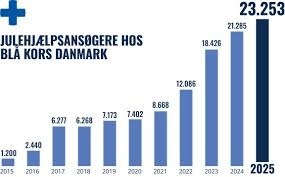
Image credit: tvSyd
When the problem is not only financial
The financial burden of Christmas receives significant media attention every year, and with good reason. But money is not the only challenge December brings. Alongside economic pressure, the social burden of Christmas has grown.
Loneliness, as described earlier, affects an increasing number of people. For many, Christmas aid alone is not enough. A food package doesn’t solve the problem of spending Christmas Eve alone.
This has led to new initiatives focusing not only on financial support, but also on social connection, reflecting a broader understanding of what people lack during the holidays.
Julevenner: creating space for togetherness
One such initiative is Julevenner. Since 2012, the Red Cross, in collaboration with Boblberg, has run the initiative with a simple aim: to connect people who would otherwise spend Christmas Eve alone with people who are willing to open their homes.
Through Julevenner.dk, people can either offer to host Christmas Eve or sign up as guests.
Hosts will often open their homes because they have space around the table, want to try a different type of Christmas or they know how isolating Christmas can feel for some people and they want to offer their help and support.
Guests join for different reasons: living far from family, having lost loved ones, wanting to experience a traditional Danish Christmas, or simply needing company. There are no requirements related to income, and no expectations beyond participating in the evening.
Many assume that people who sign up as guests are financially vulnerable. In my experience, this is often not the case. Many guests are socially vulnerable instead. They may have stable finances but lack a social network.
For the second year in a row, I’ve volunteered to match hosts and guests. I first discovered the initiative while looking for ways to support people during a season that can be challenging, especially for those facing it alone, as many people in Denmark do. Through this work, I’ve spoken with people from all over Denmark, each with a different life story, yet all sharing the same wish: to be part of a community at Christmas rather than spend it alone.
In 2024, Julevenner matched more than 3,200 people who might otherwise have spent Christmas on their own. Small connections that, for many, made a real difference during the holidays.
Julevenner doesn’t replace traditional Christmas aid, and it’s not meant to. Food packages and financial support are still crucial for many families. But initiatives like this point to a different kind of need, one that cannot be solved with money alone. Sometimes, what makes the difference is simply being invited somewhere.
Help isn’t just about filling a shopping bag. It’s about making sure someone has a seat at the table too.
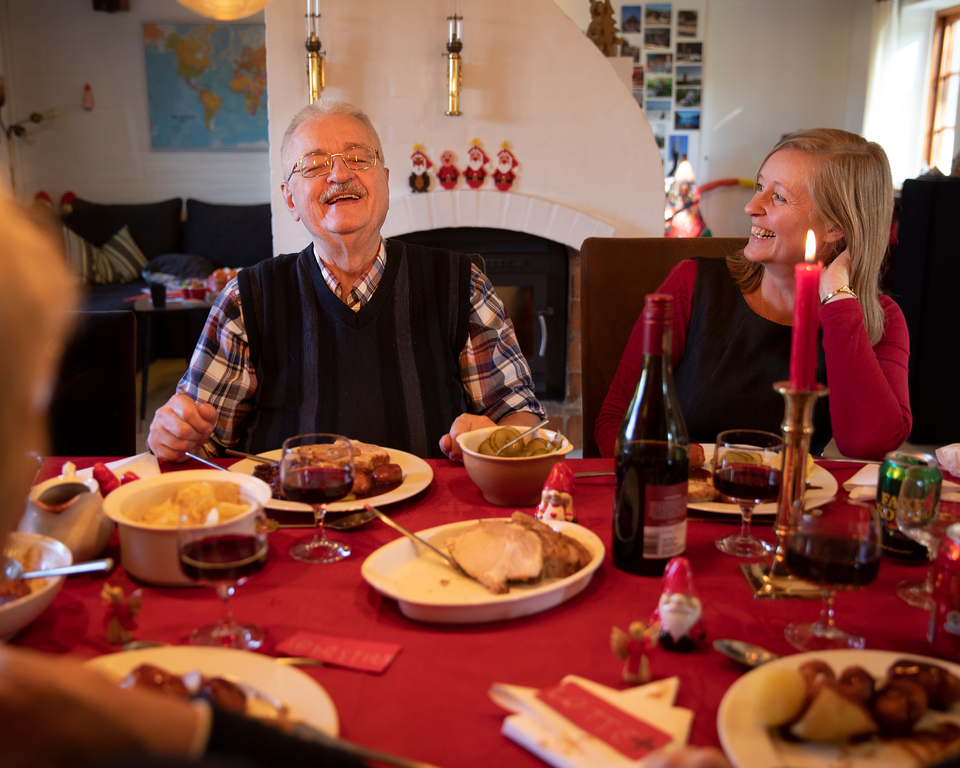
Image credit: Julevenner, Røde Kors
What Christmas could be
Christmas has always been about more than food and gifts. It’s about closeness, love and belonging to a community.
In Denmark, there is a long tradition of helping those who struggle during the holidays. Historically, this help focused mostly on money. That need still exists, and for many it has become even more urgent as living costs rise.
But today, financial hardship is no longer the only problem Christmas exposes. Loneliness has become just as central. For a growing number of people, the challenge is not how to pay for Christmas, but whether there is anyone to spend it with.
If Christmas is hjerternes fest, then help must reflect both realities. It must address empty wallets, but also empty chairs. And sometimes, what matters most is not creating the perfect Christmas, but making sure no one is left out of it.