
Have you ever wondered what it really means to feel at home in a foreign country? Because I have wondered about it. Especially when I moved to Denmark, everything I saw made me feel unfamiliar and anxious. The Danish culture, the way people socialized, and even simple everyday things, such as using a bike to go everywhere! I often felt out of place. Struggles with identity, finding connection, and learning how to belong in a new culture became part of my everyday reality
Then one day, while scrolling through Facebook groups, I came across an event called The Foreigner’s Journey. It was the first time I had seen something that directly spoke to internationals and the emotional challenges we face. That’s how I discovered The Foreigner’s Journey and met Monica Matei, one of the co-creators of the project, alongside Adele. Both of them truly understand what it means to live between cultures.
Monica is an “experience designer” living in Copenhagen. It’s not a title you come across every day, but once you hear her speak about it, it makes perfect sense. An experience designer is someone who focuses on shaping how people feel and interact in a given moment. In her case, Ceremonica designs experiences for people who feel like outsiders—for those navigating life in a foreign place. “Experiences are what shape us,” she says. “And they can be created with care.”
Her experience didn’t come from books or theories. It came from her own life. Like many of us, Monica went through the ups and downs of living abroad. She paid attention to how it felt in herself and for others. And she realized that there weren’t many places where internationals could talk about the emotional side of migration.
So she created those spaces herself. That’s how The Foreigner’s Journey came to life. “You create the experiences you need yourself,” Monica says.
What Is ‘’The Foreigner’s Journey’’?
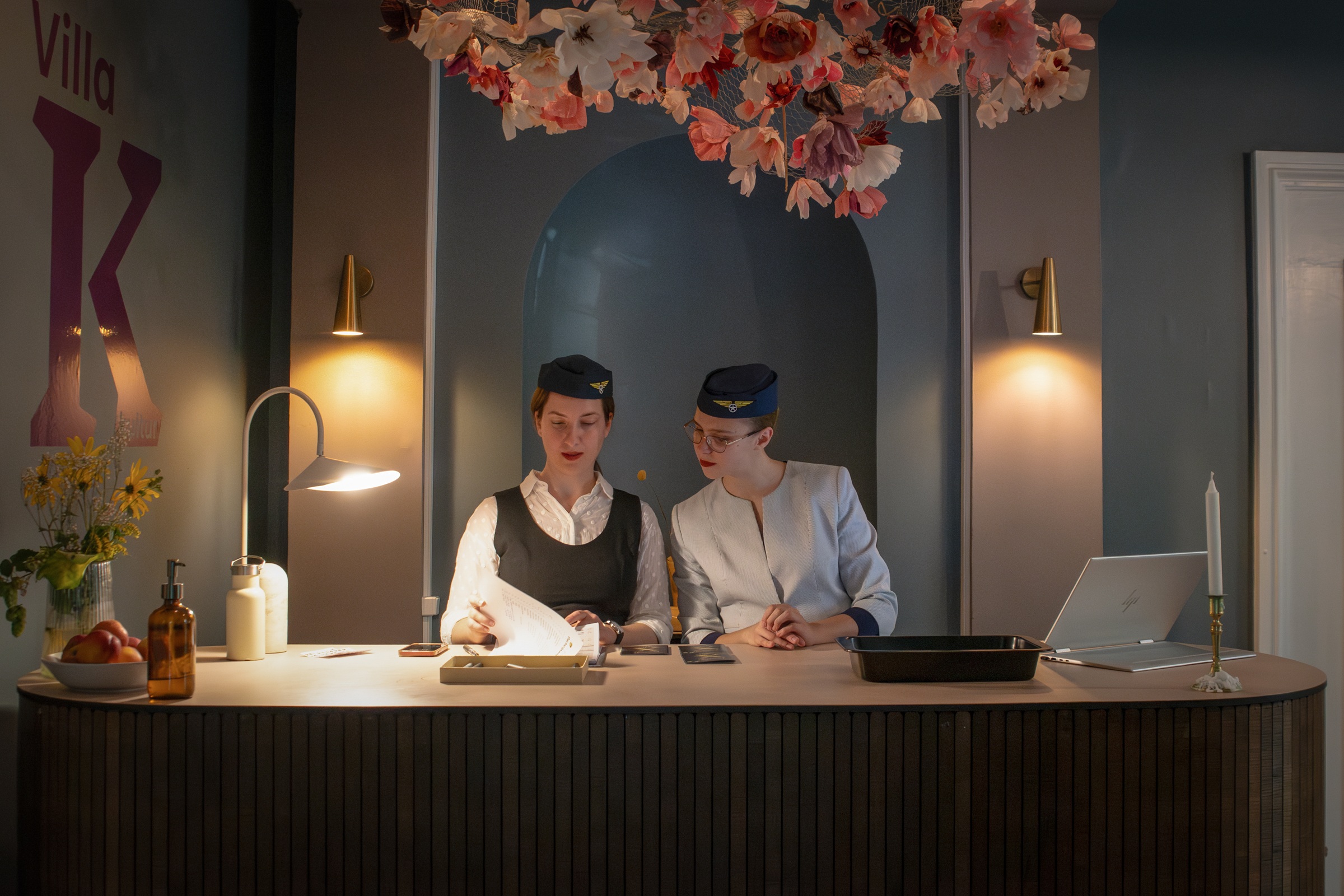
Monica co-created the experience with Adelė Šalkauskaitė, another international like her. Together, they spent months carefully shaping every element: props, characters, scripts, and rituals—all came to guide participants through themes like adaptation, identity, grief, and transformation.
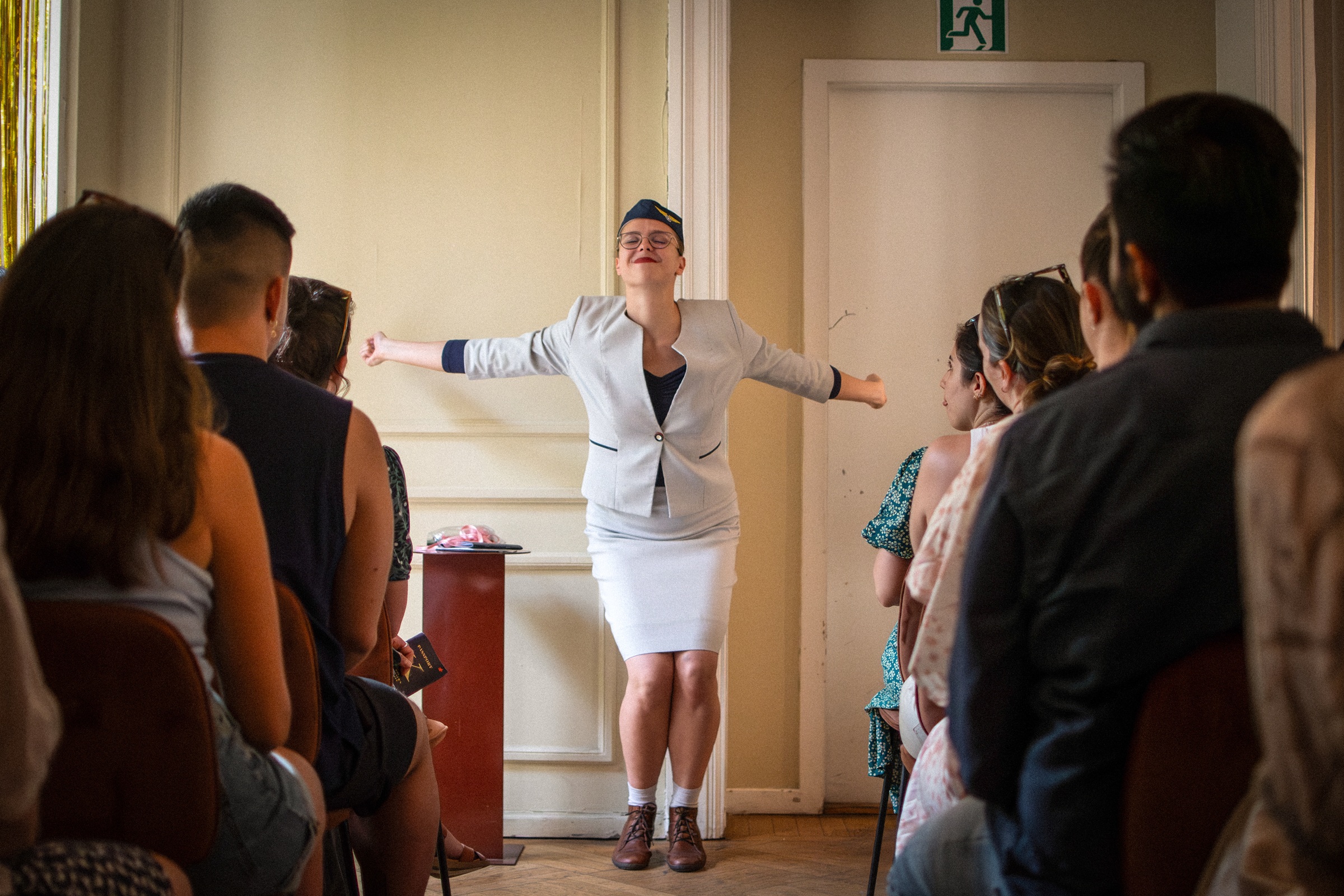
This event isn’t a workshop or a lecture. It’s a story you step into. When I joined, it felt like I was living a moment, not just attending an event—and yes, it was incredibly interactive.
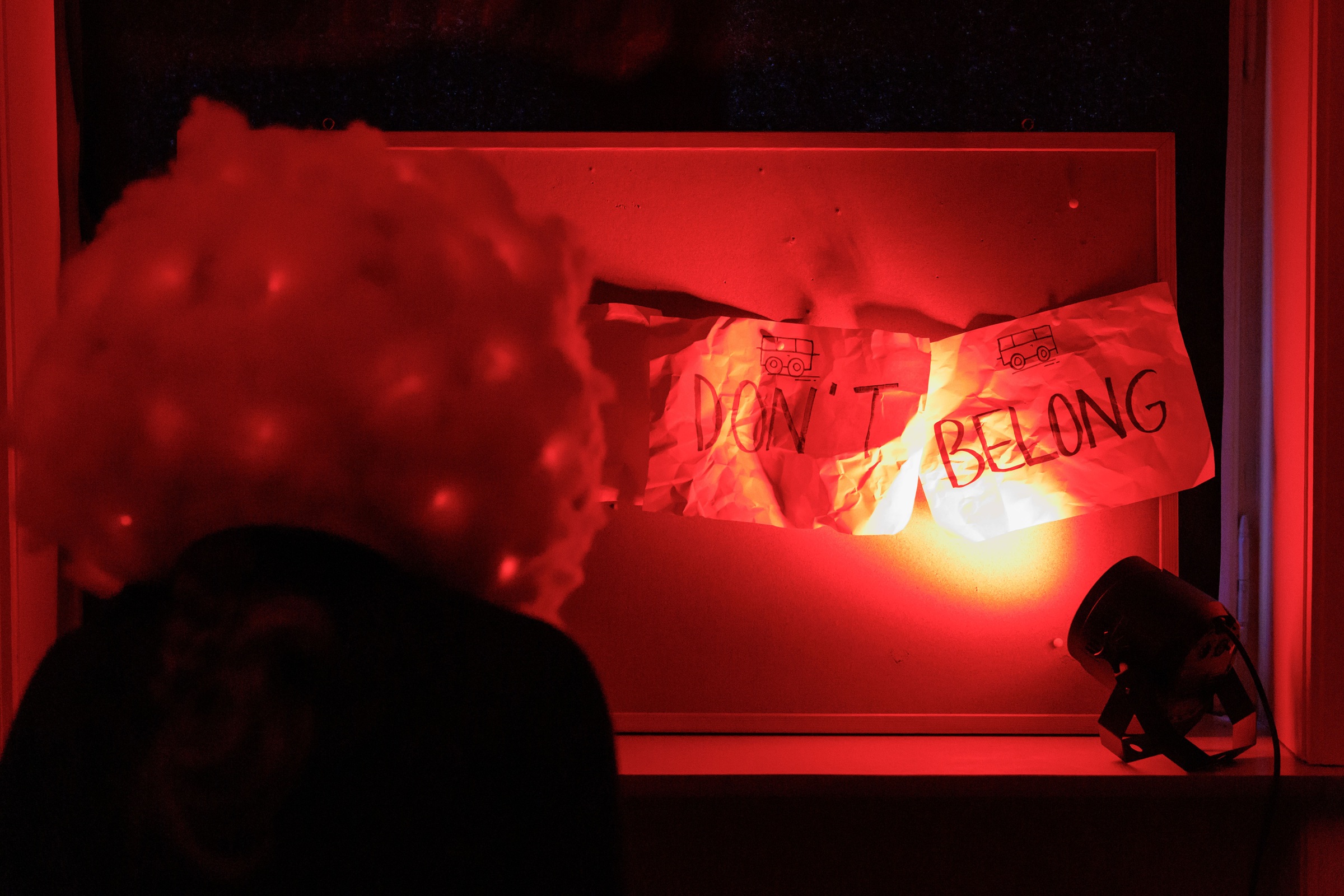
Each part of the journey is designed like a chapter in a story. You don’t just sit and listen to them—you also move through the space, interact with others, and engage in symbolic actions. One moment, you might be writing a letter to your past self, and the next, you’re going into a scene that mirrors the feeling of arrival, loss, or celebration. Everything is designed to help you connect emotionally with others and with yourself.
There’s often a mix of silence and dialogue, stillness and movement. And even though no one is forced to share, many people come up and talk naturally. That’s part of the magic Monica and Adelė have created: a safe space that invites sharing without pressure.
I don’t want to explain everything that happened, because part of the magic is discovering it for yourself. But I will say this: it gave me the space to spend time with myself. To pause myself, to hear thoughts I hadn’t noticed before. It felt like diving into an ocean for me; it was surprising when you went deeper. While listening to others share their challenges, I start seeing parts of myself more clearly. My choices, my questions, even my unspoken emotions came into view. For me, words aren’t enough to explain what I felt during The Foreigner’s Journey. It was something deeper—something that stayed with me long after I left the room.
The experience is a mix of playfulness with emotional depth. “You laugh, you reflect, you maybe even cry a little,” Monica shares. “But the most important part is that you don’t feel alone.” And in that room, filled with many strangers who somehow felt familiar, I didn’t feel alone any more.
One important part of Ceremonica’s work is how they openly talk about the emotional impact of migration, and it is something that’s rarely discussed in everyday life. She even calls it migration grief.
“It’s the pain of leaving everything familiar behind and starting over in a place where you’re not always welcomed,” she says. “It’s the loss of language, culture, routines—your identity.”
In Denmark, these challenges can feel even sharper. “It’s a very homogeneous society,” Monica notes. “Being different isn’t always celebrated. And for foreigners, that can feel like entering a game you’re not meant to win.”
When Monica used the phrase migration grief, it really caught my attention. I think many of us expats feel this, but don’t always have the words for it. For me, Denmark has been one of the hardest places to migrate to—not just because of culture or food or people, but everything combined. The tax system, the language, the job search—it can all feel overwhelming.
I also agree with what she said about being different. Sometimes it feels like being different here makes things even harder. That’s why giving this feeling a name—migration grief—matters. It helped me realize that it’s okay to feel this way. It’s not just me. And that recognition, even by itself, can be comforting.
Beyond the Event: Building Ongoing Belonging
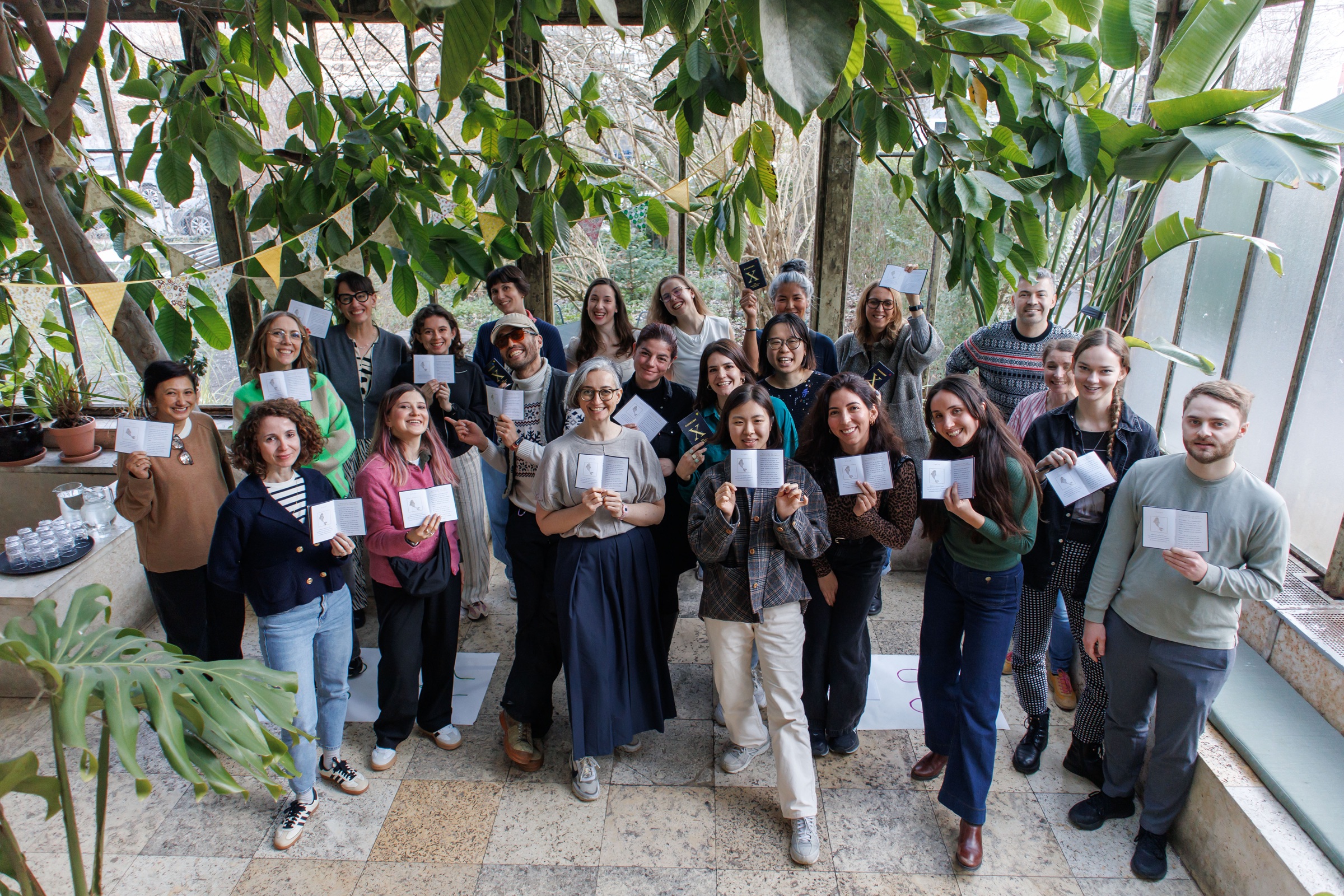
After The Foreigner’s Journey, many people didn’t want the connection they had created in this safe space to end.. Monica and Adelė noticed that participants wanted to meet again and stay connected, to keep talking, and to process what they had felt.
That is why they started something new: The Foreigners’ Collective. It’s a space for continued connection through dinners, conversations, and shared moments. Still in its early days, the Collective is all about creating a place for people who can return to familiar faces and keep sharing stories.
This community-building takes place through Ceremonica. She started it to bring experience design into different parts of life — events, organizations, and more. “Without emotion, there’s no memory. And without memory, there’s no change,” she says.
Ceremonica also brings her approach to workplaces. They work with teams that want more than just another fun day out. “Laser tag isn’t team-building,” she says with a smile. “It’s just entertainment.”
Instead, she helps teams connect in simple, creative ways. “It’s not therapy,” she explains. “It’s about using creative formats to help people see each other.” Through Ceremonica, the aim is to help teammates see one another with fresh eyes and build cultures of care, even in everyday work life.
What’s Next?
Monica and Adelė are now preparing the fourth edition of The Foreigner’s Journey, coming this autumn. Each one is better than the last one, experience is developing every time with feedback and creativity.
Monica is also exploring collaborations with city programs, companies, and networks that support newcomers. She wants to bring experience design into how we welcome people, not just in words, but in real, lived experiences. “There’s so much more we can do,” she says. “To truly meet people where they are.”
Somewhere in Between
Some people can find themselves comfortable very quickly anywhere, but not all of them. Monica understands that balance. “Some people adapt so fast, they blend into the culture,” she says. “Others hold tightly to their roots and never quite settle in.”
Her work is for the ones in between: who are still figuring it out and still navigating. Those who feel both here and there.
“We can’t just become locals overnight,” Monica says. “As foreigners, we often live in between — not fully belonging here, nor there. It’s an uncomfortable place to be. But we can reframe it. That in-between space can become a place of opportunity — where we offer unique perspectives, bridge cultures, and contribute in ways others can’t.”
Before I finish, I want to say a big thank you to Monica Matei and also to Adelė for sharing this beautiful experience. The Foreigner’s Journey was something truly special. I found it moving and meaningful, and I believe it can help others too, especially those who might feel lost or alone here in Denmark.
To learn more about Ceremonica’s work or join an event, visit her website: https://ceremonica.dk/