




Denmark’s Agricultural Transformation: From Soil to Sustainability
This summer, I deep dived into the agri-tech landscape and learned about the farmlands of Denmark. While Copenhagen is famous for its cycling culture and urban sustainability, the quieter revolution happening in the countryside is equally fascinating: the transformation of Danish agriculture through sustainable energy and climate-smart regenerative practices.
Denmark’s approach provides a real-world case study of whether farming can be climate-friendly, economically viable, and innovative, all at the same time.
🇩🇰 Denmark’s Ambitious Climate Goals
Denmark’s 2020 Climate Act sets an ambitious target: a 70% reduction in greenhouse gas (GHG) emissions by 2030, compared to 1990 levels, and climate neutrality by 2050. Agriculture, which accounts for more than a quarter of Denmark’s net emissions, is central to these goals.
In November 2024, the Danish government released the Green Tripartite Agreement, introducing policies designed to make farming both sustainable and profitable. Among its initiatives are:
- The world’s first livestock emissions tax, targeting methane emissions from pigs and cattle.
- Restoration of 150,000 hectares of carbon-rich lowlands.
- Measures to reduce emissions from nitrogen fertilization.
These strategies position Denmark as a global leader in climate-smart agriculture.
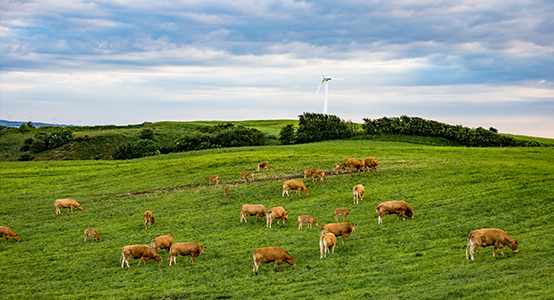
🐄 Tackling Livestock Emissions
Methane is the largest contributor to agricultural emissions in Denmark, responsible for roughly 80% of the sector’s climate impact. Its global warming potential (GWP) is particularly high in the short term (20 years), making mitigation a priority.
Starting in 2030, farmers exceeding reduction targets will pay about 300 kroner ($43 USD) per ton of CO2-equivalent emissions, increasing to 750 kroner ($109 USD) by 2035. Farmers initially receive a 60% tax break, lowering the effective cost to 120 kroner ($17 USD) per ton in 2030 — about 672 kroner ($96 USD) per cow annually.
Although designed to incentivize emission reductions, the tax has generated debate. Critics argue that EU subsidies for livestock production may counteract these incentives, making it harder for farmers to transition. Others worry that the cost could hinder green investments rather than encourage them.
⚡ Bioenergy: The Circular Solution
Denmark’s renewable energy sector plays a critical role in this agricultural transformation. In 2022, 42% of Denmark’s energy consumption came from renewables, with bioenergy representing over two-thirds of that mix.
Bioenergy includes biomass (solid organic materials like wood chips) and biogas, which converts agricultural waste, such as manure, into renewable energy. This process not only generates electricity and heat but also reduces agricultural emissions. Unlike in some countries, Danish biogas facilities supplement agricultural waste with energy crops to maximize productivity, while carefully regulating inputs to avoid conflicts with food production.
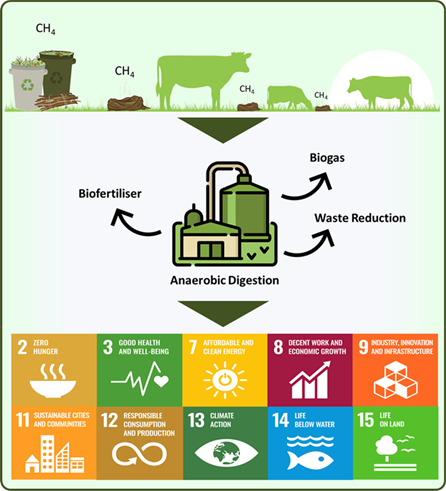
Biogas is projected to supply 70% of Denmark’s gas consumption by 2030, up from 15% of bioenergy production today. Since 2013, production has grown fivefold, demonstrating how Danish farmers can combine environmental responsibility with economic opportunity.
💰 Costs and Problems
Despite its promise, biogas remains relatively expensive. Reducing CO2 emissions via biogas costs around 151 EUR per ton ($163 USD), requiring subsidies to remain competitive. Denmark previously offered generous subsidies (2012–2018), fueling rapid industry growth, but new applications ended in 2018. The country now uses a competitive tender system, lowering subsidy levels while incentivizing efficiency.
Local opposition presents another challenge. Biogas plants can produce odor, noise, and land-use conflicts, and reliance on energy crops like corn and beets must be carefully managed to avoid competition with food production. Studies of 69 Danish biogas plants in 2023 found methane leakage rates between 0.3% and 40.6%, though mitigation efforts cut emissions nearly in half.
🌍 Why Denmark’s Model Works
Denmark’s success comes from policy, market incentives, and financial support working together:
The Særpuljer program provides direct funding for climate-friendly food production, innovative biosolutions, and food waste reduction, helping farmers transition without bearing all costs.
Emissions taxes, renewable energy investments, and biogas projects create new revenue streams for farmers.
The Strategy for Green Jobs in Agriculture invests in training and research, ensuring sustainability translates into long-term economic opportunities.
This circular approach proves that environmental responsibility and profitability can coexist. Farmers reduce emissions, lower energy costs, and gain additional income from renewable energy.
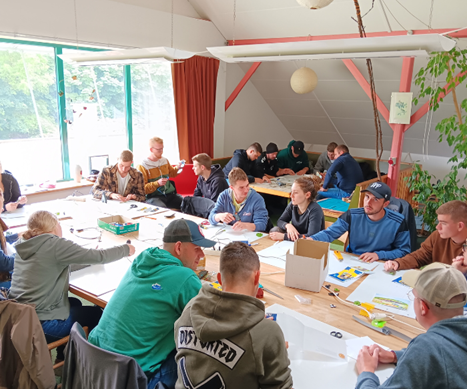
Source: Nordic Folkecenter for Renewable Energy
📈 Lessons for Europe and Beyond
While Denmark’s model may not be universally replicable, it offers valuable lessons:
- Countries with strong policy frameworks, like Germany and the Netherlands, can adopt similar approaches more quickly.
- Regions with fewer government resources may require phased transitions or private-sector investment to achieve similar outcomes.
- Integrating sustainability into farming can generate economic returns, creating a stronger case for climate action in agriculture globally.
Denmark demonstrates that climate-smart agriculture does not have to be a trade-off between profit and sustainability. The right combination of regulation, subsidies, and market-driven incentives can make green farming both feasible and economically viable.
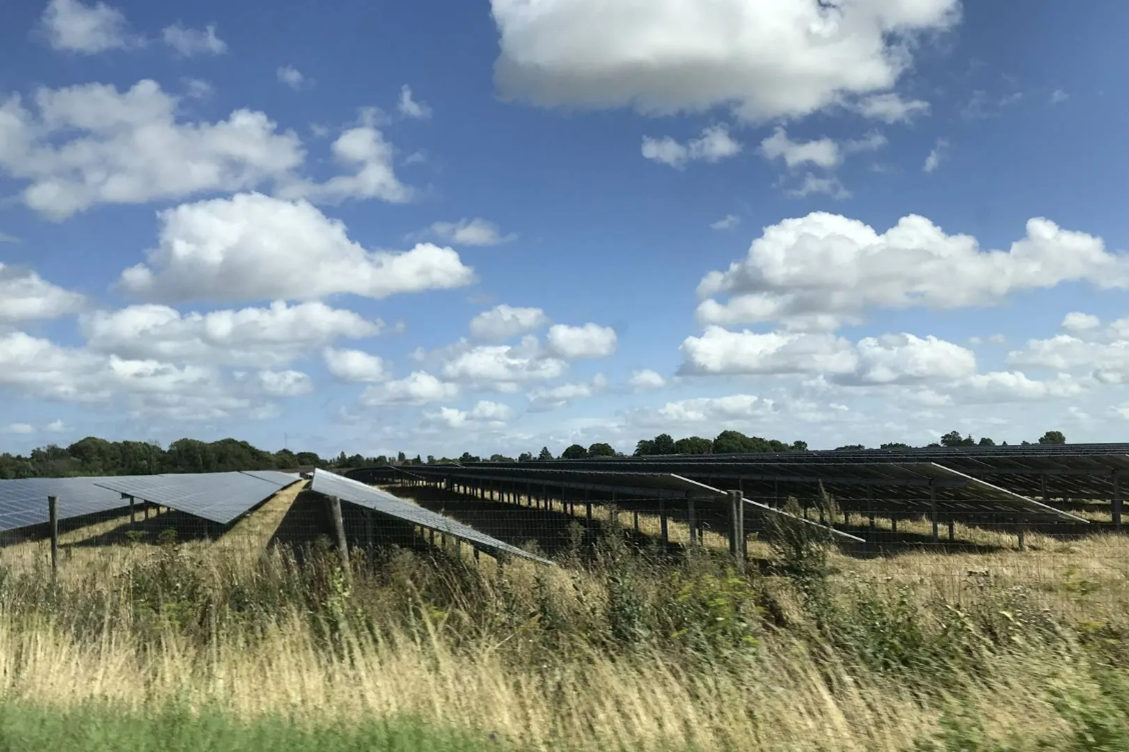
Source: EnergyWatch
Conclusion
Denmark’s agricultural landscape is quietly transforming. Through livestock emission taxes, biogas production, and circular farming models, the country is proving that sustainability can be profitable. Farmers are not just producing food; they are participating in a climate-smart revolution that balances tradition, innovation, and environmental responsibility.
For internationals living in Denmark, this means that every food — from a slice of rye bread to a glass of milk — reflects a broader story of climate innovation and responsible production. In a world searching for solutions to climate change, Denmark’s approach sends a loud, clear message: sustainability is not a sacrifice; it is an investment in the future.




I am sorry for all the efforts you laid down, when after the summer this comes up: politiken.dk/klima/art10514101/90-procent-af-dansk-landbrugsjord-er-blevet-fattig-og-usund
We have been exploiting the soil far too long. I am afraid, we need to change drastically and immediately to keep our reputation as a green country.