




But where did it come from and why?
Maybe you’ve heard of this version of the story:
One December night, a Swedish innkeeper had guests stuck in a snowstorm that left them freezing from head to toe. The fireplace couldn’t immediately thaw them out as fire takes time to warm a place. This was, after all the 1800s. So the innkeeper, took the leftover pot of wine, some spices that were reserved for holiday baking, in true Scandi style, added some raisins and almonds, and a splash of spirit (my guess is schnapps) to the mix. He heated the mixture over the fire until it glowed. The Swedish verb glödga, meaning to heat until glowing, is said to have inspired the name glögg.
The travelers were revived almost instantly. Word spread, and people began asking for the innkeeper’s glowing wine, especially around Christmas. Before long, it became a staple winter drink across the region.
The Danish version of this anecdote adds a final touch of hygge: one of the innkeeper’s children supposedly ran around offering cups to neighbors stuck indoors during the storm, turning the warming drink into a symbol of community and shared comfort.
The origin: From Roman Spiced Wine to Northern Europe
Mulled wine can be traced back over 2,000 years to the Roman Empire. This wine, heated with spices, sweeteners and sometimes spirits, was used for medicinal and culinary purposes, often adding honey and herbs. The culinary traditions expanded as the Roman Empire grew. Traders and travelers in those days brought the idea of spiced wine, warmed wine northward into medieval Europe, where cold climates made it particularly appealing. By the Middle Ages, variations on mulled wine had spread across northern Europe, including the Nordics.
Spiced wine has been popular for over 3,000 years. Even “The Iliad” mentions soldiers enjoying spiced wine with goats’ cheese.
Sources indicate that the Romans had a similar drink called “conditum paradoxum”, which could be translated as “surprising spices”. In a cookbook from the 300s, “De re coquinaria” (On the Art of Cooking), there is a recipe for the Roman “glögg”.
Another precursor to glögg was “Hypocras”, which was considered a health drink or medicine. In writings from Antiquity, there is a mention of healing spices and herbs added to heated wine.
Gløgg in Denmark
The Danish word gløgg is derived from the Swedish glögg (itself a shortened form of glödgat vin – glowed or ember-heated wine). While the modern form is strongly associated with the 19th century, the tradition of spiced, heated drinks in Denmark goes back many centuries.
1600s–1700s: Early Nordic mulled wines: According to The Museum of Spirits in Sweden (Swedish: Spritmuseum), the word glödgat vin first appeared 416 years ago on December 1st (coincidentally, the date I’m writing this).
Danish traders and aristocrats in those times consumed various punches and spiced wines, influenced by German Glühwein, Dutch punches, and English mulled wine, places where their travel often took them. Such drinks were an upper-class beverage since the recipe required spices such as cinnamon, cloves, and nutmeg, which were expensive luxury products imported to the Nordics by its trading companies docked in parts of Asia.
1800s: Gløgg became widely popular: The modern definition of Gløgg took shape in the 19th century with two possible influences – printed Cookbooks and Christmas markets. Swedish recipes in the 1800s standardized the recipe of red wine, sugar, cardamom, cinnamon, and almonds. Similarly, Gløgg became a popular feature at Christmas markets, gathering, winter markets and at communal hygge events, as its identity came to be tied to Christmas festivities, especially as Denmark, along with the rest of the Nordic nations, embraced more organized holiday customs.
1900s–Present: Diversification: After WWII, wine became affordable and a staple for all social classes. Danish Gløgg expanded into versions made of red wine, white wine, port and non-alcoholic berry juice (probably to include the kids). Raisins and slivered almonds are now a defining Scandinavian signature.
Mulled Wine Traditions in Scandinavia
Sweden – Glögg
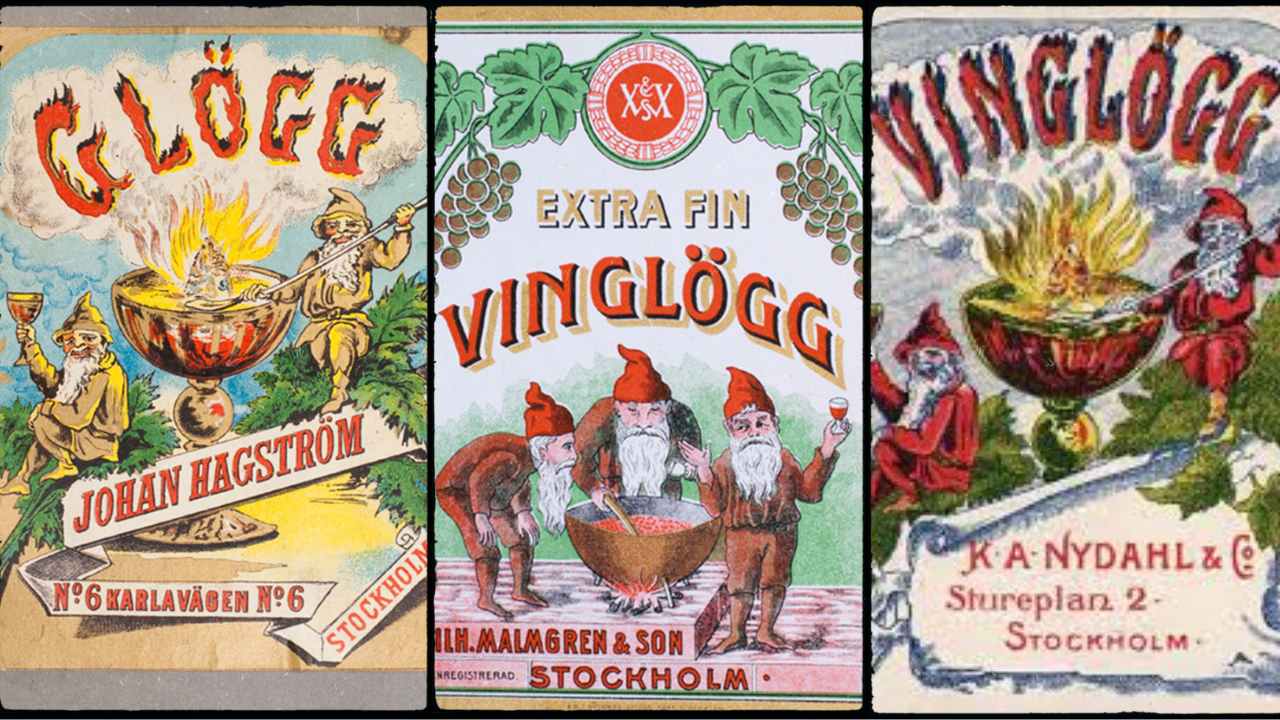
Sweden defined this tradition in Scandinavia. By the 19th century, Swedish alcohol producers began to produce and sell bottled glögg. It often uses red wine or aquavit as a base, in addition to a cardamom-heavy spiced blend. It is drunk by adding almonds and raisins to a cup and pouring warm glögg over. Sweden’s export of bottled glögg in the 20th century played a major role in popularizing Scandinavian mulled wine globally.
Norway – Gløgg
They make gløgg similar to how we make it in Denmark, with notable variations. It is common for Norwegian Gløgg to have aquavit or local spirits as a base. Some regions also use cloudberry or lingonberry flavours – berries common to the region. They also have Christmas gløgg gatherings (gløgglag), which are a cultural staple.
Finland – Glögi
As in many cases, Finland made its own adaptation in its own sweet, berry-forward form. The Glögi here is commonly made with berry juices such as blackcurrant and blueberry for non-alcoholic versions. The alcoholic Glögi often includes vodka, brandy, or spiced wines. It is also a familiar feature at December Christmas markets (Joulumarkkinat).
Iceland – Jólaglögg
Iceland’s mulled wine is highly influenced by Nordic and German traditions, often made with red wine or a mix of spices and fruit juices. It is, however, strongly tied to Advent and Christmas Eve traditions.
Gløgg’s global influence
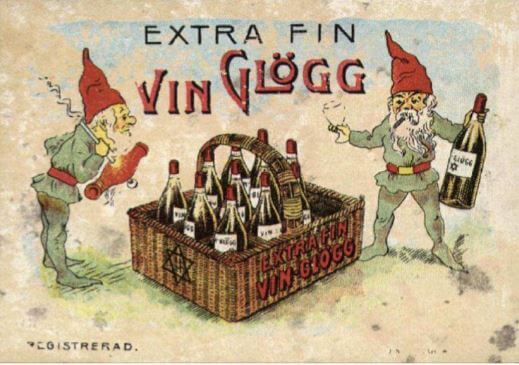
Scandinavian gløgg/glögg has gradually become internationally recognized thanks to social media and globalization. Nordic communities across the globe, especially in the USA, Canada, and Australia, carry the tradition forward during the holiday festivities. Easy to make anywhere in the world and adaptable to individual tastes, Gløgg is also a familiar feature in cookbooks, Scandinavian-inspired bakeries, and at design/lifestyle brands (e.g., hygge trends). And not to forget the commercialisation of Gløgg by Sweden and Denmark in their bottled versions exported to Europe, North America, and Asia.
As Scandinavian lifestyle, happiness, and culture are taking over global trends, mulled wine/ gløgg is not far behind. It has become a global winter culture; major cities such as Berlin, London, New York, and Tokyo host Scandinavian Christmas markets featuring ‘authentic’ gløgg. Modern variations include craft versions using cider, mead, non-alcoholic botanicals, or specialty spices, as food culture is also evolving drastically. What has stayed over the centuries is the high spirits and good times that roll with a cup or glass of Gløgg. Enjoy it wherever you like: a Christmas market, on a ski holiday, by the Christmas tree, or while cozying up with a good book or film.



This year I have been seeing Æblegløgg in stores. Which heavily reminds me of spiced apple cider in America, which is common around Thanksgiving and December holidays. I am greatly enjoying the Æblegløgg and it can be spiked with Rum, Tequila or any apple complimenting alcohol.