
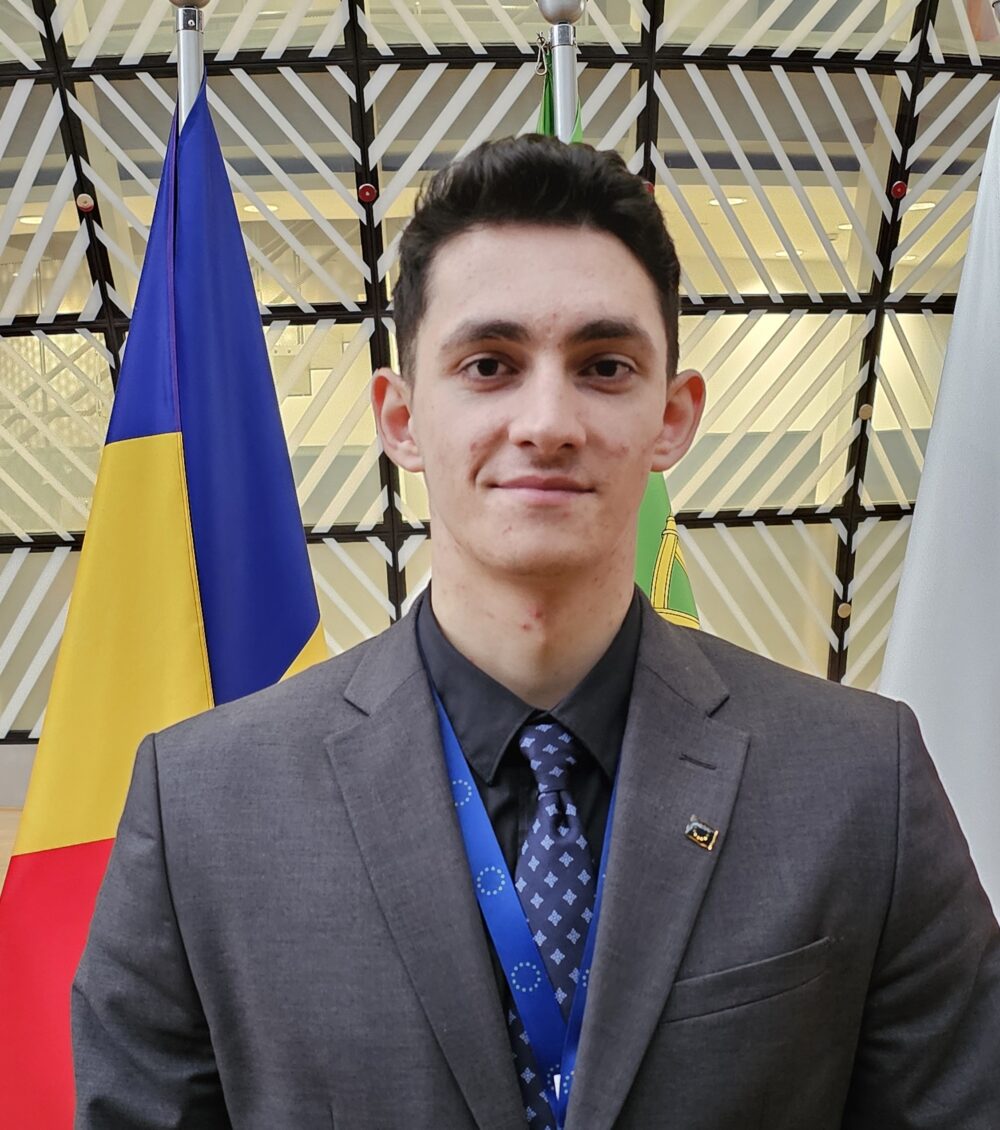
From grassroots action to European policy insight, Iulian Lucău looks to bring a pragmatic, people-first vision to Odense politics.
Party: Moderaterne
Candidate for: Odense Municipality
At 22, Iulian Lucău is clearly wise beyond his years. Running for Odense City Council, his message feels both hopeful and grounded: politics, he says, should make people’s lives tangibly better.
His story begins in northern Romania and weaves through founding a youth-led aid initiative during the pandemic, working night shifts in Denmark, and observing European policymaking up close in Brussels. What ties these experiences together is a conviction that compassion and community must coexist with discipline and pragmatism. His guiding light: “Identify the problem, look for solutions, make a plan, and act.”
From Northern Romania to Odense
Iulian grew up in one of Romania’s most under-resourced regions, where opportunity was scarce and inequality was visible. A high school friend’s stories about Denmark—its strong education system and the ability to work while studying—lit a spark. “I was inspired by the opportunity to balance work and studies, to become self-sufficient,” he recalls.
With two suitcases and enough money to last a month, he left home. He soon found work stocking supermarket shelves on night shifts. “It was one of the hardest psychological experiences I’ve ever had,” he says. “I’ve seen the hardships you go through as an international just to survive. Most of the people I worked with were students. There were also people working for their children, trying to give them a better future—a better life than the one they’d had.”
Those early challenges shaped the empathy that now defines his politics. “It made me look harder at how integration really works when time is scarce and networks don’t exist yet,” he says. “You can’t just tell people to integrate—you have to design for it.” Even while juggling work and study, he volunteered for student organizations and community projects. “I’m not great at free time,” he jokes.
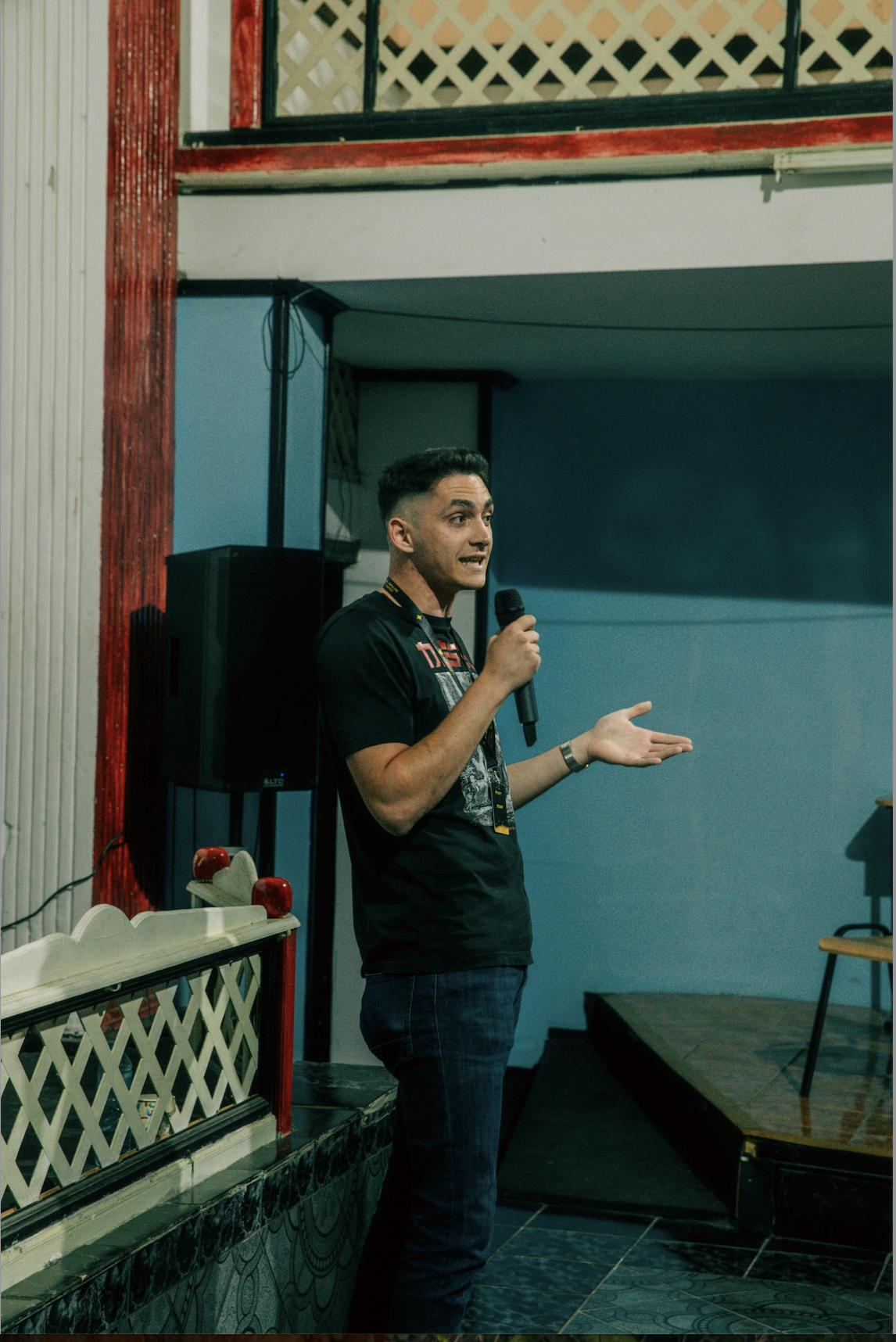
“I’ve been privileged to study in an interdisciplinary program that’s allowed me to look at different types of policies and to experience many different situations firsthand,” Iulian reflects on his degree in European Studies. “When we talk about international, cultural, and social dynamics, we often see that internationals tend to group together—Spanish people mostly spending time with Spanish people, Romanians with Romanians, and so on. This is especially true for students, but the complexity grows even more when we talk about workers. If you work full-time from nine to four, have a family or a relationship, there’s very little time left to integrate into the community—and that can easily lead to alienation.”
He goes on to reflect on the barriers to employment, “Another issue is that many internationals, even though they’re highly qualified, end up in low-skilled jobs that are far below what they could actually contribute to society. These complex dynamics require a comprehensive approach. Even at the local level, it’s crucial for policymakers to actively engage with and consult these stakeholders—to understand their real needs, not just assume them.”
“You Be Santa Claus”: Learning Compassion Through Action
Long before Denmark, Iulian had already learned how to organize for impact. During the pandemic, while still in high school, he co-founded a grassroots initiative called This Year, You Be Santa Claus. It started with a small team of 20 volunteers who coordinated deliveries of gifts and essential goods to around 200 vulnerable families.
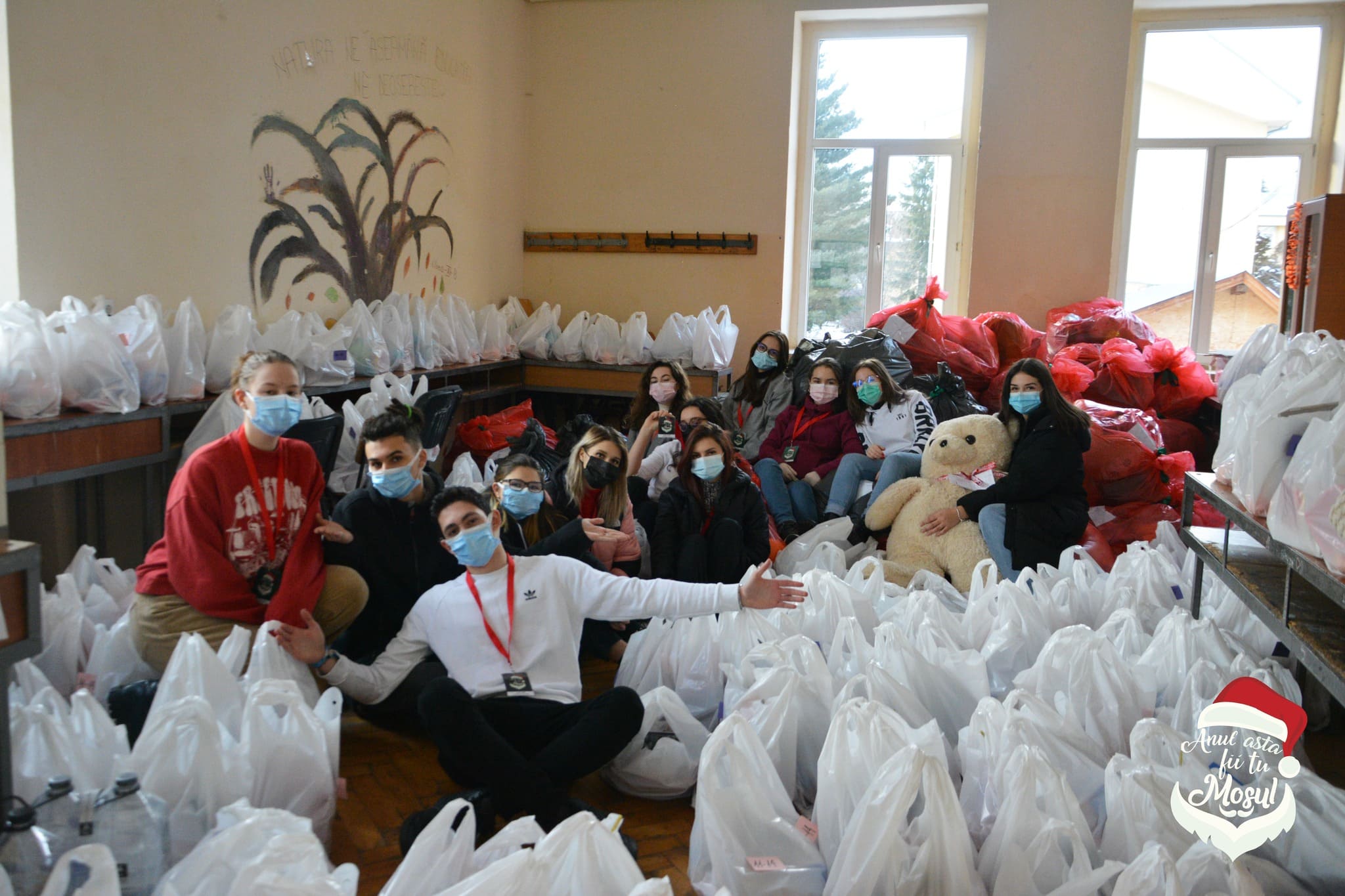
What began as a way to bring joy to children during lockdowns quickly became an education in empathy. Iulian recalls visiting a young boy living in a freezing house with his single father, who worked long hours. They brought him a Lego set; the little boy asked when they would return to play. The experience reinforced Iulian’s belief that understanding the roots of someone’s hardship is key. “People don’t choose to be in difficult situations. That was one of my main takeaways. Most vulnerable people—and even those whom society might label as having ‘deviant’ behavior—are shaped by their experiences and their past. It’s important to try to understand what they’ve been through and what motivates them, to see what led them to where they are today,” he explains.
The Challenge of Compassionate Politics
Translating empathy into policy, Iulian admits, is never easy. “Most political models, at least in theory, view politics through a rational lens. They assume that people act logically and that emotion plays only a minor role. But there’s a large body of literature showing the opposite—that people are deeply emotional, and that this emotional dimension must be considered not only during elections, but in everyday policymaking. One of the great complexities of democracy, and perhaps one of its weaknesses, is the constant balancing act between doing what genuinely benefits the community and doing what keeps you popular enough to be re-elected.”
He also acknowledges that resources are limited. You can’t fund everything, but you can be creative by building partnerships, tapping European funding opportunities, and structuring projects to remain financially sustainable. “It’s about making sure that you’re aware of all the tools you have at your disposal for funding and implementation.”
For Iulian, compassion and pragmatism reinforce each other. “It’s important for a municipality to help its people be happier. When you’re happy in the place you live, you naturally feel encouraged to stay and contribute. But if you’re unhappy—if daily life feels disconnected—there’s little incentive to remain, beyond family ties or the job that keeps you there.”
A Vision for Odense
When asked why he joined the Moderaterne party, Iulian doesn’t hesitate. “Because they care about results more than ideology,” he says. “Empirical, evidence-based policymaking—that’s how we make things work.”
He’s drawn to the party’s openness to data-driven experimentation and a leadership style that values collaboration over confrontation. He also credits Odense’s vice mayor, Andreas Møller, as an early mentor. “He was very keen to help me, to trust me,” Iulian shares and reflects on his deep appreciation for Andreas’s support.
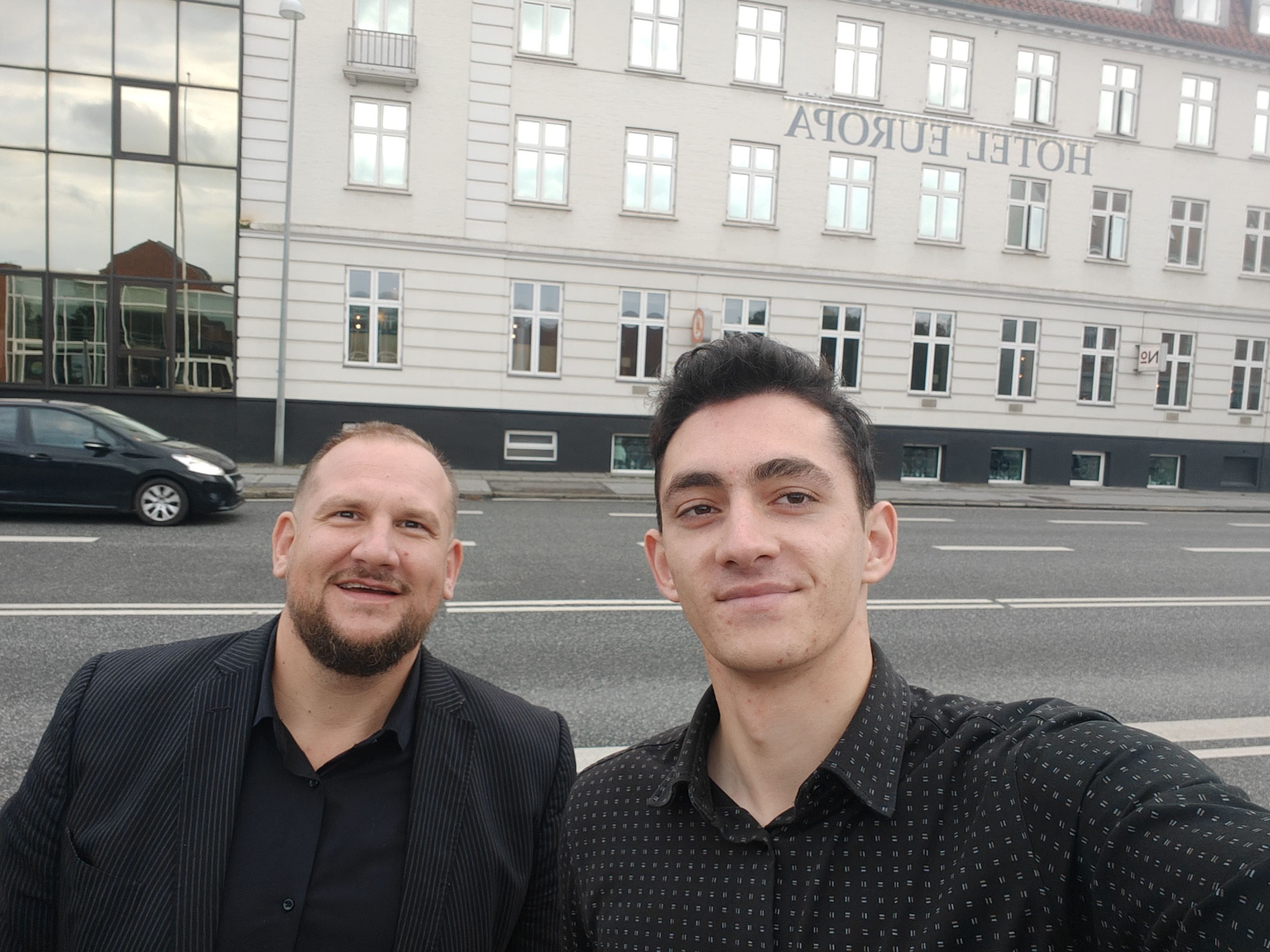
Iulian’s vision for Odense is ambitious: to make the city one of Denmark’s most dynamic, inclusive, and forward-looking. His plan rests on three pillars—education, technology, and belonging. “Odense could be the best student city in Denmark,” he says. Inspired by Sønderborg’s youth involvement model, he envisions a co-authored, multi-year youth culture strategy—designed with young people, funded transparently, and reviewed annually.
Technology is his second pillar. He says, “As the co-founder of GAIN, an AI literacy NGO, I think it’s essential for the municipality to develop a comprehensive AI strategy. This shouldn’t focus only on young people but should extend across the community—building critical AI skills and promoting digital literacy for everyone. Such a strategy could address not just education and workforce development, but also the integration of AI into the systems and partnerships the municipality already works with. It’s becoming an issue of real urgency.” His plan includes teaching critical AI skills in schools and workplaces, upskilling public employees, and partnering with Odense’s robotics and aerospace sectors.
The third pillar is community. “We’re more connected digitally than ever but lonelier in real life,” he says. His solution is to treat community building as a city’s inner infrastructure: fund cultural events and small local projects that create natural points of connection. “Internationals often live in parallel worlds,” he says. Though Iulian thinks it’s often not about unwillingness—it’s exhaustion, language barriers, and a lack of structure. He believes the solution begins with listening.
Policymakers must talk to internationals directly to understand their needs. From there, his ideas are practical: a buddy program pairing locals with newcomers for coffee, language practice, or community events. “For example,” he says, “in Sønderborg there’s a newcomers’ gathering where internationals meet once a month to share a meal and connect. Initiatives like that, along with language cafés, can work well. But it’s also essential to recognize how quickly social dynamics are changing and to explore how social media might be used to encourage and sustain participation – gamified incentives could help newcomers engage more easily.
Lessons from Brussels
Iulian’s time working at Romania’s Permanent Representation to the EU in Brussels gave him a front-row seat to policymaking. “Listening to the deliberation from 27 member states is something that completely changes your perspective because you see the very complex dynamic that comes to play and how all of these different member states,” he says, “They find consensus and they work towards the same goal of making the European Union a better place.”
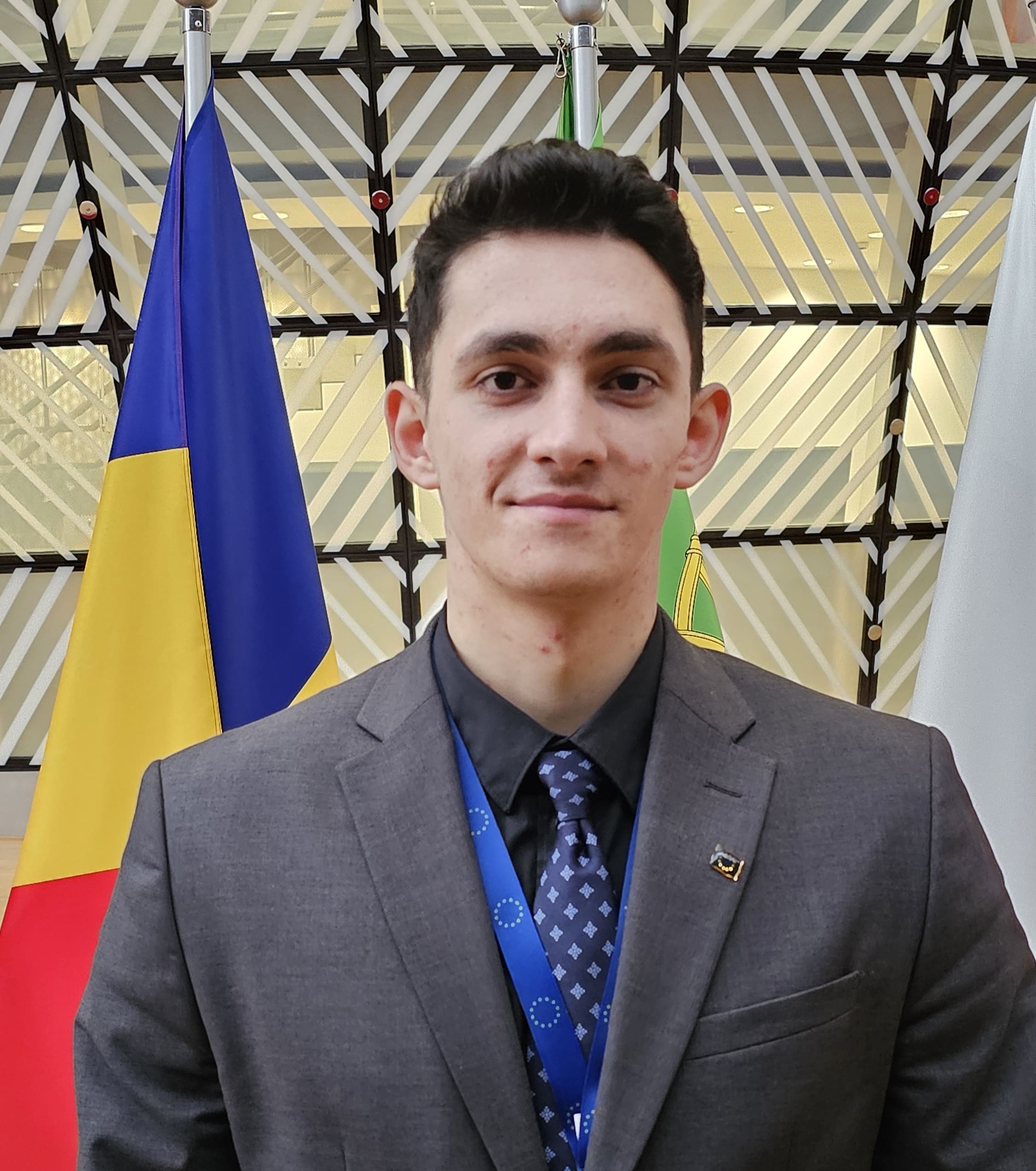
That experience underscored the importance of local readiness. “National and European policies work best if local actors are ready,” he explains. “Cities like Odense need to be proactive—anticipate opportunities, build relationships, and be ready to implement.”
He sees potential for Odense to play a greater role on the European stage. “During Denmark’s EU Council Presidency events, Odense wasn’t front and center,” he notes. “That’s a missed opportunity for a city with such strong technological credentials.” He imagines Odense hosting more high-level robotics, drone, and AI conferences and policy events, and collaborating more with international agencies in Copenhagen.
Perseverance and the Power of Perspective
Iulian’s story is one of perseverance, being proactive, and shaping the changes you want to see in your community. “While I’m still young, I’ve tried to gain as much experience as I can. I’ve always been motivated by the wish to make people feel better, because I know what it’s like to feel hopeless, helpless, or alone.” His advice to other young people is simple yet powerful: stay curious, talk to people, and remember how close change can be. “You’re always one interaction away from changing your life,” he says. His grandmother’s words also guide him: “What you do for yourself dies with you. What you do for others stays.”
A Call to Continue the Conversation
Iulian ends our conversation with an invitation. “Tell me what needs to change,” he says. “Representation means listening first, then doing the work.” He’s eager for residents to share ideas. It’s a fitting close for a young candidate who has turned his own story into a call for community and action. Odense, he believes, can write a new chapter of its own—one built on pragmatism, empathy, and the belief that progress is not accidental. It’s designed. You can get in touch with Iulian here.