




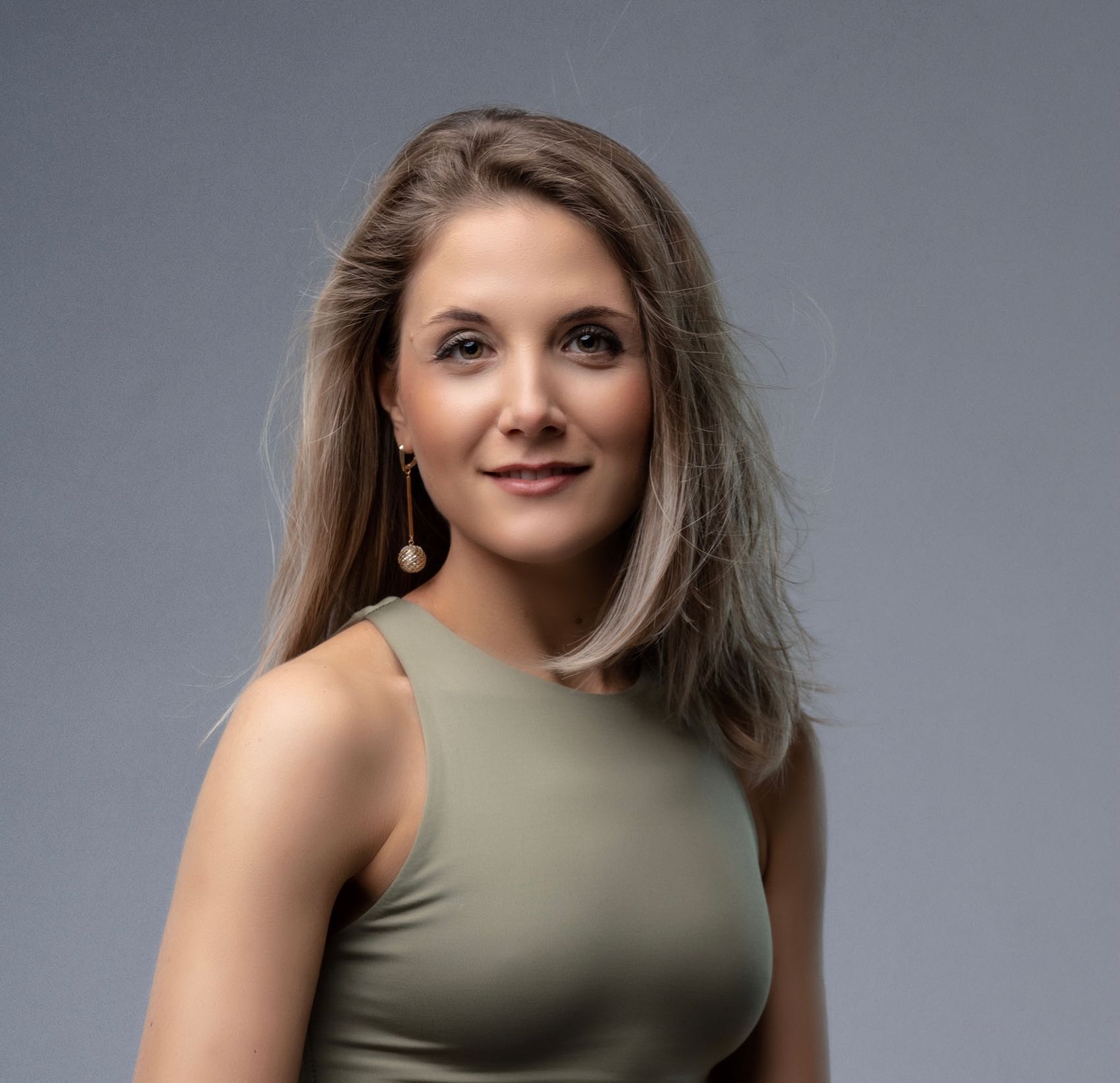
Diana is the CEO and Founder at mediaforgrowth, a data platform and advisory firm specialised in media capital fundraising HQ-ed in London, they support growth-stage founders raising media capital from some of the UK’s and Europe’s largest broadcasters. This funding option helps entrepreneurs finance marketing and advertising costs, preserve cash and amplify reach.
Forbes recognised Diana as one of Europe’s 30 Under 30 Media & Marketing professionals to watch in 2022. We had the opportunity to speak with Diana at TechBBQ 2023, held at Lokomotivvaerkstedet in Copenhagen on September 13th and 14th of September. Here is what happened:
Marketer turned (Media) Venture Capitalist
Diana was a successful marketer before entering the world of venture capital (VC). One of the reasons behind her success Diana believes is the way she could tell a story. The tone of voice, the narrative and your choice of words are all a reflection of one’s life experience according to Diana.
Diana grew up in Romania, but her work took her all over the world. She moved to London many years ago to pursue a degree in marketing. She completed her MSc in Entrepreneurship at University College London (UCL). She lived in Germany, Poland, the United States, and Qatar. Even during her high school days, she was eager to take opportunities that came her way to have diverse experiences for example with the European Commission projects. These were the crucial experiences that led Diana to believe in her entrepreneurial dream.
Media for growth (media for equity): Startups’ financing option to cover marketing costs, amplify reach and grow revenue
Diana spent the last decade working in venture capital. She led global marketing for early-stage investment firms and venture-building studios launching new brands to market. She interacted with over 100 founders every year. One of the most common challenges that founders face when scaling their business is their go-to-market strategy and having access to the right expertise and resources to market the business. On average a Series A/B startup spends 40% of their revenue on marketing.
She launched mediaforgrowth to optimise media capital fundraising for startups and the formation of new media funds. Media for Equity is a venture model where media companies invest advertising space in growth-stage startups in exchange for equity. This model originated in the late 90s/early 2000s. Aggregate Media in Sweden was one of the pioneering firms, as well as The Times of India Group. Representatives from both of these funds as well as the founder of a newly established fund – 8 media ventures – together with Diana took the stage at TechBBQ this year, to discuss their learnings of investing in over 1000 brands including Airbnb, Uber, and Coursera.
mediaforgrowth runs Media Capital Fundraising Programmes that are completely free of charge.
Targeted at late-seed to Series B consumer brands, their goal is to give founders the tools, know-how, and investor connections to raise their first media capital round effectively. They also partner with founders on a 1:1 bespoke approach helping with subsequent rounds. Rather than striking a deal with a single entity we try to build a media stack spanning multiple countries and media types. So if you are a company based in the UK and planning to scale marketing and ops in Germany, for example, we would have a local partner to activate for a potential media capital transaction, she adds.
The importance of cultural competence in today’s world
Cultural differences are something you are bound to encounter if you run an international business. The competence to accommodate those differences and to create a safe space is a social skill and responsibility Diana adds. The only way to do that is through emotional intelligence which you accumulate through working with people from diverse backgrounds. Diana quickly continues to say that such experiences have been crucial in understanding how to approach marketing campaigns to introduce international brands to different countries. This is where your cultural competence and understanding of the local market could make a difference.
The state of women in the Venture Capital world
Founding Partners, General Partners or managing partners are the ones with the authority to make final decisions on investments. According to a report published in May 2022 by the European Women in VC, this group is dominated by men. At least 85% is male and the rest of the 15% is female writes Marjut Falkstedt, Secretary General of the European Investment Bank.
We asked Diana about her experience and she quickly replied that these are simply facts. There are women in the positions of fund managers and analysts but when you go to the limited partners (LPs) and General Partners (GPs), the numbers are still in single digits.
When teams are gender-diverse, they are more likely to challenge traditional gender roles and stereotypes. Having more women LPs may drive more investments in female-led or diverse teams, she believes. She adds that women currently hold only 8.2% of CEO positions at S&P 500 companies. The 41 female-led companies in the S&P500 have outperformed the 459 male-led ones (a comparison of returns). The situation doesn’t look much better when we turn toward the media capital industry. Diana has over 30 media funds in her network, but there are only a couple of women in senior roles.
Female founders are asked very different questions than their male counterparts during interviews. Female entrepreneurs are asked about how will they handle the situation if the business fails or what kind of threats they see. The men on the other hand are asked more about the opportunities they can create.
She adds that more needs to be done in order to bring women into advisory teams and boardrooms. Having worked at all levels up to CxO and across multiple organisations, I’ve seen how a gender-diverse board could make a huge difference to the company’s overall performance, she adds.
I come from a humble background in Romania and it was not a linear journey to get here. It’s encouraging to see more initiatives and funds popping up on the market to support diverse and/or underrepresented founders entering the tech market and progressing through their careers, Diana concludes.




Always love your writing Pratik! Very interesting read.