

It will soon be that time of year.
Trucks roaring through the streets, blaring music, teenagers dancing in the back, arms in the air, red-cheeked and euphoric. They wear white caps, dance, and scream. Cars honk in solidarity, people cheer from bike lanes and balconies. Once, I saw a waiter run out of a restaurant in central Copenhagen with two bottles of champagne, spraying it over the passing students – a brief, bubbly blessing.
This is studenterkørsel, the annual tradition where newly graduated high schoolers ride through town in decorated trucks to celebrate the end of exams. At each stop, they visit their classmates’ homes, greeted by proud families offering snacks and drinks. It’s rowdy, ritualistic, and beloved by Danes.
It’s also one of the most striking public expressions of joy and youth I’ve ever seen — and a quietly radical one, too.

There’s something egalitarian about the whole thing. No private parties behind gates or velvet ropes. No VIP section. Just a moving, thumping celebration of collective achievement, parading through the public space we all share. This is a kind of democracy too: loud, messy, accessible.
The Danish director Thomas Vinterberg captured the spirit of studenterkørsel in the final scene of Druk (the Oscar-winning Another Round). Martin, played by Mads Mikkelsen, leaves his friend’s funeral and stumbles upon a celebrating group of students. Suddenly, he begins to dance—arms outstretched, legs soaring—as the students cheer him on. A man weighed down by adulthood joins the chorus of youth.
Of course, it can be jarring. As an international, I remember being taken aback the first summer I encountered the noise and the open display of drunkenness. But when I mentioned this to Danish friends, I was gently reminded that maybe my discomfort came from a mix of snobbery and shame — feelings I hadn’t fully unpacked. “Everyone was young once,” someone said with a shrug.
They were right. And perhaps that’s part of what makes this tradition so moving: it insists on the legitimacy of youthful joy, in public. In many cultures, alcohol and celebration go hand in hand — but here, the fact that it’s not hidden, not shameful, feels rare. It’s not something to be corrected or contained.
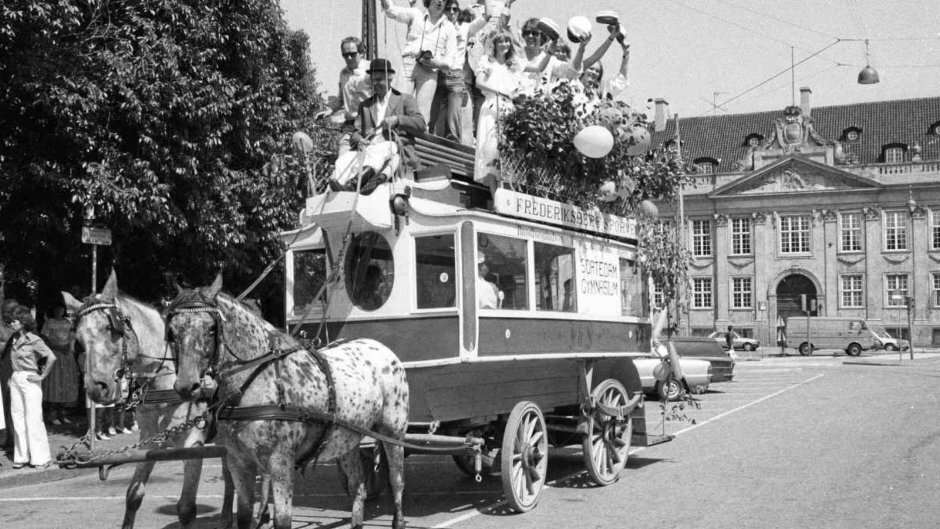
Of course, the reality is more complex. The joy is certainly real, but so is the pressure to conform to a certain mode of this joy. That’s why the tradition is also evolving. Some schools and student groups are working to create more flexible and inclusive versions of studenterkørsel—offering alcohol-free options, reducing sensory overload, and clearly communicating schedules so students can plan their participation with more ease. Quiet zones and designated rest spaces are also being introduced, making room for those who need a break from the chaos without missing out entirely.
What makes studenterkørsel democratic? It’s public, it’s collective, and – importantly – it’s being renegotiated. Like democracy itself, it isn’t perfect. But it belongs to everyone willing to take part, in their own way.
Written by Alicja Peszkowska, a Copenhagen-based researcher and participation strategist working at the intersection of technology, culture, and social change. She has led community and communications work for international initiatives and curated campaigns and exhibitions both online and offline (e.g., at the Vi lever på polsk gallery in Copenhagen). You can read more of her writing, e.g., for the Fix magazine and Statens Museum for Kunst here.