

In 2019, award winning photojournalist Marie Hald photographed and interviewed a group of Scandinavian body positive activists in I am Fat. Despite living in the progressive haven that Denmark is often believed to be, many of these women talked of being shunned and discriminated against because of their bodies. Almost seven years on, the landscape has completely changed, for better and for worse.
It’s not uncommon to see all kinds of naked bodies in Denmark, from the beach to the TV. In fact, outside of the saunas and the shorelines where nudity seems as casual as can be, the past decade has seen on-screen nudity used as a teaching tool for Denmark’s youngest. In DR’s Ultra Strips Down (2019 – 2020), five naked adults stand in front of a primary school class in order to teach them about how our bodies develop, in an effort to normalize the wide range of bodies we can grow into. John Dillermand (2021 – ), the stop-motion man with an extendable prehensile penis, is DR’s other solution for teaching younger kids about the human body.

Simultaneously, though, young people are learning how to assess their bodies from a new teacher: social media. Sex & Samfund found in a 2024 report that 60% of young people between 15 and 29 feel it’s hard to live up to the body ideals they find on social media. Many feel the pressure to change their own bodies as a result. As our world becomes increasingly digitized, it’s easy to worry about how young people’s self-confidence will be impacted.
This concern increases as weight loss drugs and thinness have come barreling back en vogue. Influencers share their dieting tips, celebrities lose weight dramatically but quietly and even world-class athletes become ambassadors for GLP-1s, which are now more well known as weight loss drugs than as life-changing treatments for people with type 2 diabetes.
In Denmark, body positivity becomes even more complicated as Novo Nordisk’s production of GLP-1s Ozempic and Wegovy continues to boost the company’s finances and the country’s economy. And how can a country relying on the desire for weight loss promote health at every size?
Building a body-neutral culture
The answer, for internationals at least, seems to lie in community and representation. Both Maria (26) and Charline (33) have started dance classes in Copenhagen years after moving from Ukraine and France, respectively. And both have noted that their classes have been more about fun than thinness, a mirror of the Danish society they have come to know.
Charline added that the diversity of body types in Copenhagen, which stands in contrast to France’s “pervasive culture of skinniness”, also translates to better treatment in healthcare:
“In France, the very first thing any doctor would tell me when I came with any type of issue would be to lose weight. In Denmark, my weight has not once been talked about […] and I’ve been feeling heard even as a plus-size person in medical spaces in the same way I would imagine straight-sized people are.”
Here, Charline was referring to medical fatphobia, which describes ‘fat’ people’s concerns and symptoms being dismissed as solely related to their weight, where a ‘straight-sized’ person — or a thinner person who fits into the standard sizes found in stores — with the same issues would receive immediate treatment. Medical fatphobia has been linked to worsened mental and physical health, and has even led to cancer going undiagnosed until it became inoperable.
That medical fatphobia seems less pervasive in Denmark than in other European countries is as encouraging as it is surprising: as GLP-1s gain notoriety and importance in Denmark, one might cynically expect doctors to overprescribe them to those who don’t fit stereotypical Danish thinness.
Kat (28) initially found these stereotypes — that Danes are tall and thin — intimidating. But in the end, she felt “that Danish society is on the whole welcoming and inclusive of different body shapes. It’s not something that’s felt like a big deal, so neutrality is definitely the term I would use over [body] positivity.”
The term ‘body neutrality’ was popularized by Anne Poirier, eating disorder specialist and author of The Body Joyful. It has since become a movement seeking to remove the impact of the body’s appearance on one’s mental health and life overall. Where body positivity aims to celebrate all bodies, body neutrality aims to eliminate value judgements made on the body.
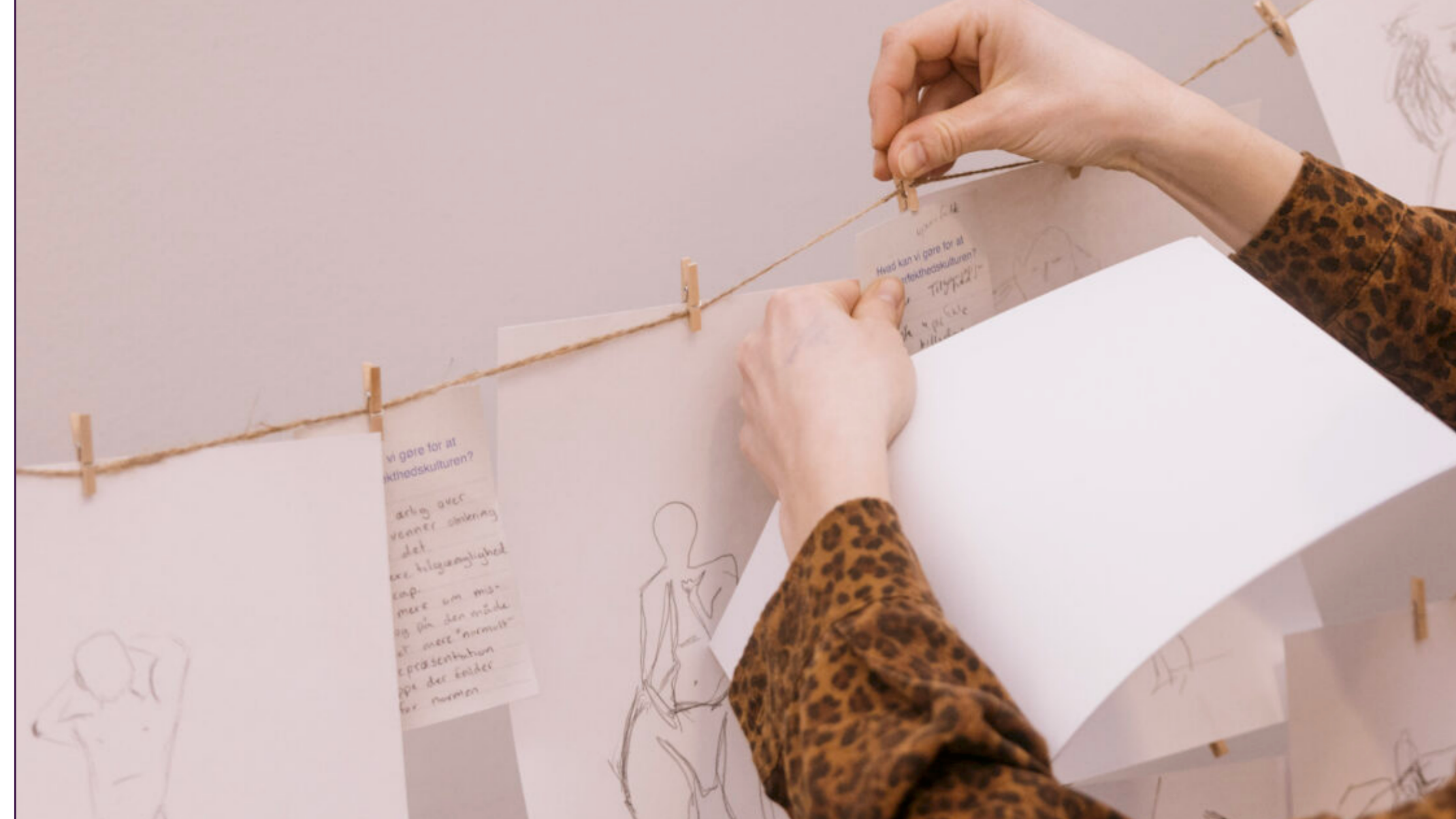
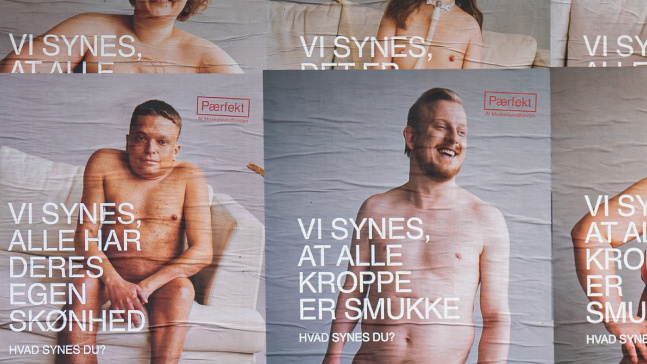
A new initiative from Muskelsvindfonden (lit. Muscular Dystrophy Foundation) is promoting exactly that in primary and secondary schools. Pærfekt has earned 17,5 million DKK from Nordea-fonden to combat perfectionist beauty ideals and prejudgements with croquis drawing workshops. There, students draw life models whose naked bodies show “scars, cuts, stretch marks and disabilities.” Then they discuss how to challenge the norms shaping the ideal body.
Within these workshops, no one’s body is labelled ‘good’ or ‘bad’. Instead, the bodies we tend to ignore or judge are given real representation. Young people’s eyes are shifted off their screens, where editing tools and GLP-1s are unavoidable, and towards the people around them, who might look more diverse than they expect.
Marie Hald’s I Am Fat came off the heels of the body positivity movement’s peak. As seemingly everybody on screen shrinks, and the rise of GLP-1s threatens to bolster the surge in eating disorders brought about by the COVID-19 pandemic, it’s easy to feel that we’ve only moved backwards since then. But the concern shown to young people’s falling confidence in their bodies, instead, points the way to a future in which no one’s body defines their confidence or their story, a future in which all bodies are accepted for their uniqueness, just like the individuals they represent.