
Last month, the country was given the chance to vote for which local practices, representations, expressions and skills best represent us. We’ve been taking a closer look at some of the list!
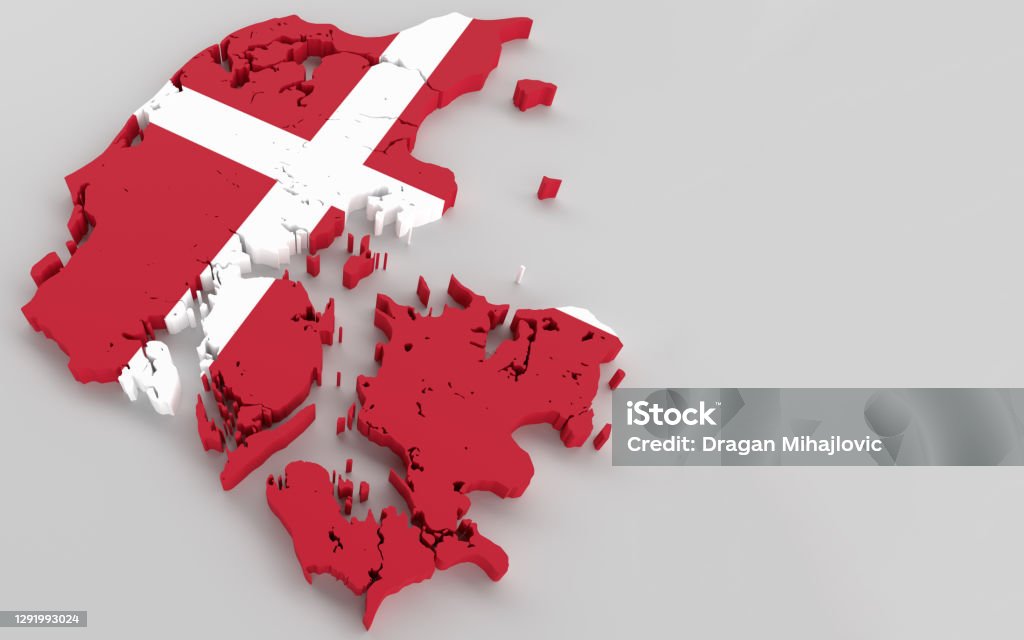
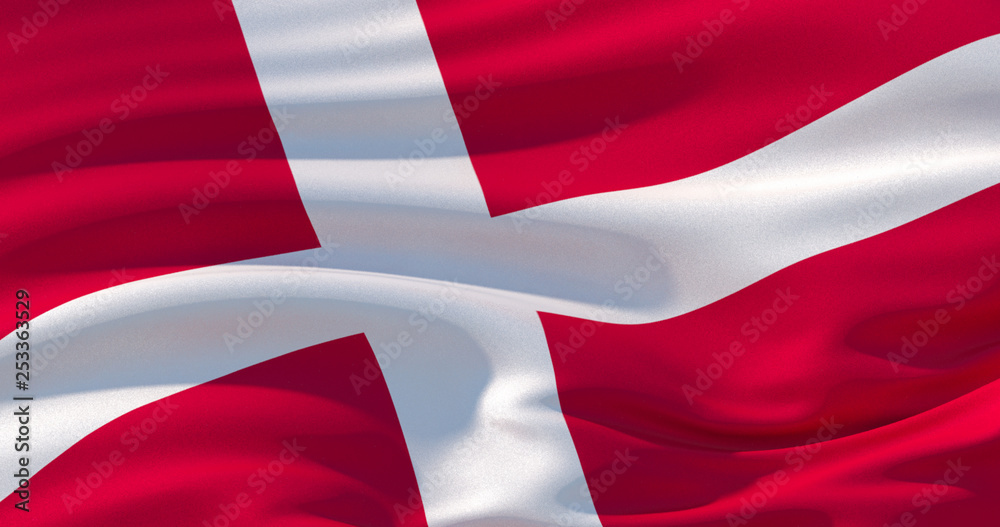
The Dannebrog, the national flag of Denmark, is not just a symbol of a country—it is a profound emblem of identity, unity, and tradition. Recognized as the oldest continuously used national flag in the world, the Dannebrog is more than a piece of cloth; it is a living representation of Danish heritage and pride. With its striking design of a white cross on a red field, it is instantly recognizable and deeply respected both within and beyond Denmark’s borders.
A Flag from the Heavens: The Legend of Lyndanisse
Perhaps the most captivating aspect of the Dannebrog is the legend surrounding its origin. According to Danish folklore, the flag descended from the sky on June 15, 1219, during the Battle of Lyndanisse near modern-day Tallinn, Estonia. At the time, King Valdemar II of Denmark was leading a crusade against pagan Estonian tribes.
As the Danish forces struggled, seemingly on the verge of defeat, a red banner bearing a white cross is said to have miraculously appeared in the sky and gently floated down to the earth. Interpreting this as a divine sign, the Danish troops rallied with renewed strength and ultimately claimed victory. While historians view the tale as symbolic rather than literal, the event is commemorated each year on Valdemarsdag (June 15), a national flag day in Denmark.
Historical Roots and Evolution
Despite the mythical origins, historical documentation places the use of the Dannebrog in Denmark as early as the 14th century, particularly in heraldry and royal insignias. By the late Middle Ages, the red flag with the white cross had become associated with the Danish monarchy and naval power.
The flag’s formal adoption as the national flag was a gradual process. It became widely used by merchant ships and later evolved into a symbol of the Danish state. During the 19th century, in the wake of rising nationalism across Europe, the Dannebrog gained even greater significance as a unifying national emblem, particularly during the Schleswig Wars and the country’s transition toward constitutional monarchy.
It was used by private people already as early as in the late eighteenth century. From 1834 until 1864 King Frederik VI prohibited the use of hoisting the flag. The reason was that a letter from foreign people living in Denmark was received in which they asked whether it would be possible for them to hoist the flags of their original home country. However, this law made it also impossible for Danes to hoist the Dannebrog. Flags were, in general, usually seen as a symbol or flag of monarchs, not necessarily of the country itself. In the late eighteenth century it was growing into a symbol and flag for the people, the country, and the monarchs. In 1848 until 1851, the first Schleswig War took place and it ended with German defeat.
June 5, 1849 marked the day, on paper, when Denmark officially became a democracy by the Constitutional Act entering into force. How did this happen? Well, a group of Copenhageners asked King Frederik VII whether it was possible to move on from absolutism to democracy and he agreed. This is the narrative which of course has to be taken with a grain of salt, since no one of us was present and it could be a bit sugarcoated.
In 1864, the Second Schleswig War took place and ended with Denmark losing a third of its territory and two fifths of the population. Thus, shortly after, the small state mentality kicked in.
Design and Symbolism
The design of the Dannebrog is deceptively simple but carries deep symbolism. The white cross represents Christianity, reflecting Denmark’s long-standing Christian heritage. The red background traditionally signifies courage, strength, and valor.
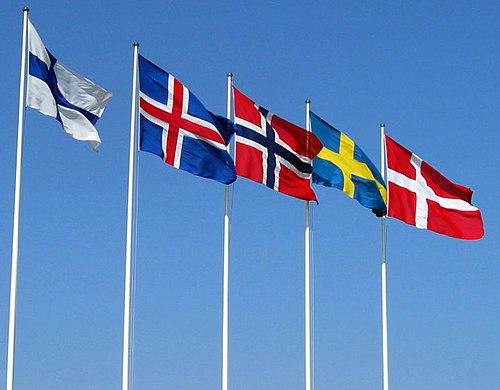
The Dannebrog’s influence extends far beyond Denmark. Its design served as the template for the so-called Nordic Cross flags used by other Scandinavian countries: Sweden, Norway, Finland, and Iceland. Each adapted the basic cross motif to their own national colors, creating a family of flags that visually reinforces the shared cultural and historical ties among the Nordic nations.
The Dannebrog in Daily Life
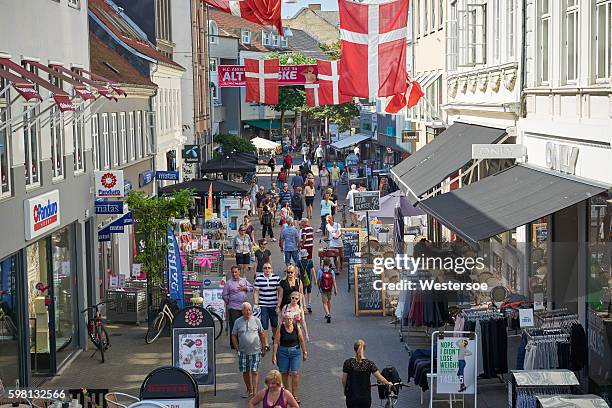
What sets the Dannebrog apart from many national flags is its deeply personal role in the daily lives of Danes. Unlike in many countries, where flags are reserved for official or patriotic events, the Dannebrog is frequently used in private celebrations. It is a common sight at birthday parties, anniversaries, weddings, and even funerals. Small versions are placed on cakes, gift tables, and flower arrangements—not as political statements, but as heartfelt symbols of celebration or remembrance. It can be bendable and be used for every purpose in life.
It is even used in commercials for groceries or to show that a shop is open. When historian at Aalborg University Torben Kjersgaard Nielsen did a lot of research for his book “Dannebrog”, he read that people actually protested against shops using the Dannebrog for commercial reasons since it would downscale the flag. In the area where Torben lives, there is a sex store. This very store uses 6 small Dannebrogs and the historian tells me it probably just shows that they are open. “It could also be that they refer to 1969 when pornography was completely legalized.” Danes can, in general, decode why the flag is hoisted in every situation.
Danes do not hoist or use their flag because of nationalistic causes, but because it is part of their identity and they are proud of their country. It has nothing to do with being the best or biggest – it is a relatively small country in size compared to most countries in Europe. However, the flag can be used in a nationalistic way which was done in the 70s when political parties and people were against the EU using the Danish flag, nonetheless.
This informal and affectionate use of the flag reflects the Danish concept of hygge—a sense of cozy, communal well-being. The Dannebrog is not just a state symbol; it is a cherished cultural artifact woven into the rhythm of Danish life.
Flag Etiquette and Respect
Despite its frequent and casual use, the Dannebrog is treated with great respect. Danish flag etiquette stipulates that the flag must be raised after sunrise and lowered before sunset unless properly illuminated. It should never touch the ground or be used inappropriately. These guidelines are widely followed, reflecting a national consensus that the flag deserves both reverence and care.
There are also specific days designated as official flag days, when government buildings are required to fly the Dannebrog, often in conjunction with royal birthdays, constitutional events, and religious holidays.
A Symbol of Unity in a Changing World
Over the centuries, the Dannebrog has stood witness to Denmark’s transformation—from a medieval kingdom and colonial power to a modern democratic state known for its high quality of life, strong social welfare system, and commitment to international cooperation. Through wars, political shifts, and societal changes, the flag has remained a consistent and unifying presence.
In a world where national symbols can sometimes divide as much as they unite, the Dannebrog retains a rare quality: it inspires pride without arrogance and belonging without exclusion. It is a quiet yet powerful testament to the enduring spirit of the Danish people.
| Flag Days 2025 | Event |
| January 1 | New Year’s Day |
| February 5 | Her Majesty Queen Mary |
| February 6 | Her Royal Highness Princess Marie |
| April 9 | Occupation of Denmark (half mast until 12:00) |
| April 16 | Her Majesty Queen Margrethe II |
| April 18 | Good Friday (half-staff all day) |
| April 20 | Easter Sunday |
| April 21 | Her Royal Highness Princess Isabella |
| April 29 | Her Royal Highness Princess Benedikte |
| May 5 | The liberation of Denmark 1945 |
| May 26 | His Royal Highness King Frederik 10. |
| May 29 | Ascension Day |
| June 5 | Constitution Day |
| June 7 | His Royal Highness Prince Joachim |
| June 8 | Pentecost |
| June 15 | Valdemar’s Day. Reunification Day 1920 |
| September 5 | Denmark’s emissaries |
| October 15 | His Royal Highness Crown Prince Christian |
| December 25 | Christmas Day |
| Flag days for Greenland and the Faroe Islands | Event |
| June 21 | Greenland National Day |
| July 29 | Faroe Islands National Day |
| Armed Forces Flag Days | Event |
| January 29 | Holmen’s Badge of Honor |
| February 2 | The Battle of Mysunde 1864 |
| February 11 | The Storm of Copenhagen 1659 |
| April 2 | The Battle of Reden 1801 |
| April 18 | Battle of Dybbøl 1864 |
| May 9 | The Battle of Heligoland 1864 |
| June 5 | The Battle of Dybbøl 1848 |
| July 1 | Battle of Køge Bay 1677 |
| July 6 | Battle of Fredericia 1849 |
| July 25 | Battle of Isted 1850 |
| October 4 | The storm at Frederiksstad 1850 |
| Church holidays | Event |
| April 13 | Palm Sunday |
| April 17 | Maundy Thursday |
| April 22 | 2. Easter Sunday |
| June 9 | 2. Pentecost |
| December 26 | 2. Christmas Day |
For Torben Kjersgaard Nielsen, the Dannebrog has a unique place in Danish history and culture.
“It is unregulated, we do not bow before our flag or have to do any special action. Some political parties want to regulate the flag though but past attempts were simply shut down by the commission,” he says. In the US, people swear an oath of allegiance to their flag and they use it to show how great their country is and their presence as one of the most important countries on the planet. Of course, it can also be used differently, but that is the main reason. The flag is freely usable which makes it accessible for the population and, thus, makes it a symbol rather than a state flag seen as the property of the government and Royal Family.
Just a few months ago, a new law entered into force prohibiting hoisting other flags than the Dannebrog on a pole higher than 4 meters. The origin of this law is interesting, the result of a Dane from Kolding, Jutland, hoisting the US flag in his garden. You can read the full story in our article from last year!
Torben Kjersgaard Nielsen believes the Danes use the Dannebrog in a very positive way and it should stay like that. “If there is one thing I want to say, it would be: Politicians, keep your hands off our flag!”, says Nielsen.
Conclusion
With its ancient roots, rich symbolism, and intimate role in everyday life, the Dannebrog is far more than a national flag. It is a beloved emblem of Denmark’s past, present, and future. Whether fluttering above royal castles, flying from fishing boats in the harbor, or decorating a birthday table in a Copenhagen apartment, the Dannebrog continues to inspire, comfort, and connect generations of Danes.
It remains, as it has for over 800 years, a symbol not just of a nation—but of its soul which will hopefully never be destroyed or touched by politicians.