

Author’s note: When this article refers to Danish-born people, we are referring to people who have been born and raised in Denmark by a Danish family, as well as having little to no international background. Special thanks to Elias for his insights.
For many international families moving to Denmark, one of the first difficult decisions is whether to place their child in the Danish public school system — hoping they adapt quickly — or in an international school, where the environment may feel more familiar but might distance them from Danish life. What is less often acknowledged is that this dilemma does not belong only to international families or children with multicultural backgrounds. Sometimes, it applies to Danish-born children too.
Elias, a 23-year-old school photographer, is one such example. Born and raised in Denmark, he spent his early school years feeling out of place in the very system meant for children like him. His story reveals something important: the question of “fitting in” is not only about nationality, language, or where your parents come from. It is also about culture, identity, and the increasing gap between traditional school environments and a global generation influenced by an ever-changing online world
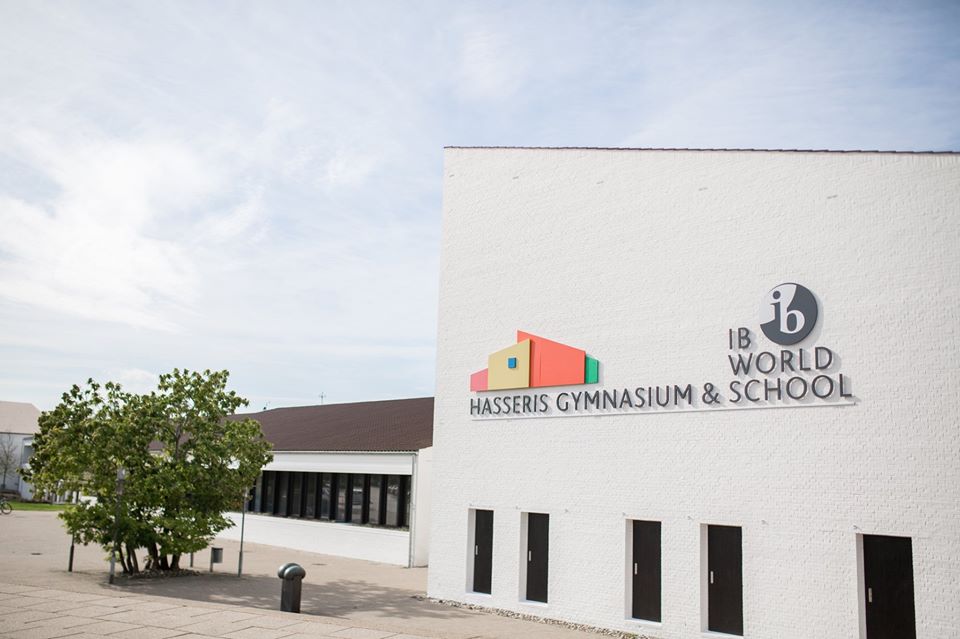
I have known Elias for more than ten years. From our IGCSE courses at Skipper Clement Skolen in Aalborg to the IB at Hasseris Gymnasium, we shared over six years in the same school systems. So it’s safe to say I know him well, but it was only through our recent conversation for this article that I could fully grasp how deeply out of place he had felt in the Danish public school system, long before discovering international education.
A Big Change
Growing up in Denmark, Elias never connected to the rigid categories that seemed to govern everyday school life, categories that he describes throughout the interview as “boxes.” He recalls: “Danish schools are very much in need of diversity, not just in terms of race and religion, but also just in terms of our culture, because it was very much like you fall into two blocks.” The boys wearing the same black puffer jackets, playing FIFA and sports, or the girls who followed make-up trends and liked One Direction. Elias didn’t see himself in either world.
Academically, it did not feel much better: “A lot of the subjects felt very dull for me… I enjoyed the English class the most, but it was also the one that lacked the most challenge to me because at that point, I had already been speaking fluent English with some of my best friends.”
Like nearly every Gen Z child, Elias grew up online, and while Danish institutions still assume cultural identity is built locally, his generation learned through shared digital cultures that were not limited to geography. As he told me: “Our generation, the Gen Z, future Gen Alpha, we’re completely sucked up to the internet and everybody knows what’s happening all over the world.” For him, English wasn’t a foreign language learned in school, it was the language of the world he actually inhabited.
By the time he reached seventh grade (7. klasse), his parents recognized that the traditional system no longer fit him and enrolled him in the international department of Skipper, the big appeal being that he would be taught exclusively in English. Skipper Clement Skolen is the largest private school in Aalborg, and the only primary school with an international branch in Northern Jutland, which focuses on multilingualism and cultural diversity.
Stepping inside his new classroom for the first time was transformative. “When I walked into the class I was going to be in, I looked around and thought, ‘This is going to be good,’” Elias remembers. For the first time, he was surrounded by people who were as different as he was: “In IB and Skipper, nobody fell into boxes. We were all unique, mainly because we all came from different backgrounds.”
A New Perspective
This new environment didn’t just change his academic life; it reshaped his worldview. It was in this environment, not in Danish political debates or newspapers, that he experienced something that changed him permanently: real proximity to international stories. Being friends with classmates from all corners of the world wasn’t an abstract concept but daily life. As he put it: “It opens up your eyes a lot when you are with immigrant kids every day, and you hear their experiences…. people literally escaping war and people seeking opportunities here in Denmark.”
What struck Elias most was how different these personal stories were from government narratives and what was reported in the national press. He felt a sharp disconnect between his own views and the government’s policy on migration. “The way Danish-born people talk about immigrants really opens up your eyes when you are with immigrant kids every day and hear their experiences,” Elias says.
He spoke about how his work as a school photographer, now being on the other side of the school experience, has really showcased that for him. “I get to experience different classes, teachers, and parents, and I notice the prejudice faced by immigrant families trying to integrate into our system. People immediately assume, ‘Oh, they can’t understand the Danish language, they can’t speak it, they don’t understand our system,’ and treat that as a negative. But instead of immediately thinking that, we should try to include internationals as much as possible.”
For Elias, the answer is obvious: “Racism comes from ignorance. It’s hard to have prejudices about people that you learn a lot about. We would talk to each other during breaks, and you’d hear family stories or just personal stories in general about how they came to Denmark.”
“It would amaze me if anybody was a secret racist for those six years I was at school,” Elias says. He is adamant that the international setting dissolved any foundations of prejudice and instead encouraged human understanding in everyday interactions.
The Divided “Integrated” Schools
However, this environment only existed in Elias’ classes, and not in the Danish branches in the same schools. Elias experienced this first hand in his extracurricular activities, particularly theatre:
“When I joined, I was one of the only kids from the international department. I spoke the language fluently, and you wouldn’t be able to tell from looking at me or hearing me talk that I was in the international department, but I could definitely feel a disconnect, because none of my friends were there. During sports days or other school activities, it quickly became clear that some of the Danish kids had prejudices toward us. We didn’t really interact with them during breaks or after school, so that feeling of being on the outside was obvious.”
He emphasizes: “I saw first hand the prejudices against a lot of the international kids, especially Black and Muslim students. For kids like me — white, fluent in Danish — it was different. We could walk by without anyone batting an eye.”
Flexibility vs. Rigidness
With both systems clearly having benefits and drawbacks, would Elias recommend the IB system for internationals.
“Absolutely, if it’s possible,” he says. “It’s not only a great entry point for many internationals, but it also prevents them being thrown into situations where Danish kids might refuse to pronounce their names or even interact with them. It’s a place to meet other internationals… as well as Danes who are interested in different cultures. It’s a system designed for learning that can be applied globally and provides a higher standard of education than might be available elsewhere.”
For Elias, it’s about the metaphor of pegs and round holes. International education is more flexible from his perspective. “It is very much like, let’s try to make a peg for you and find a way to make it work, instead of trying to force you into these little boxes,” he says.
But is this the case for Danish-born children? “Not for all,” he says. “If someone fits comfortably into the traditional Danish system, it’s perfectly fine for them to continue there. But if you feel that the Danish system doesn’t provide what you need, an international program will fit much better. The focus isn’t on forcing people into boxes, but rather on shaping the system to fit students’ needs, regardless of nationality or background. My experience in international departments has shown me that when the system adapts to the students rather than the other way around, it fosters a much richer learning experience.”
He concludes: “Ultimately, international education shouldn’t replace the Danish system entirely, but there’s a lot Denmark could learn from it.”
Integration as a Two-Way Street
Elias’ insights show how integration is not just about international students adapting, but also about how the local students respond. Even when someone fits in on the surface, like Elias does, the subtle divides and prejudices he observed made it clear that true inclusion requires effort from everyone.
“There are a lot of issues with immigration, but those issues stem from different factors. I’ve seen this slowly become apparent, especially considering how hard it’s been for many of my friends in private school and in the IB program to get into our country — or, in some cases, having to leave altogether — because of the way our policies work.”
“For me, it’s very much that if someone wants to come here and access our education and support systems, then go ahead. That’s what makes me proud to be Danish — the fact that we have such a robust system to support people in ways their own countries may not. They come here for better opportunities, and if that means they later leave, I see that as a success.”
Does he believe that integration should be a two-way street? Elias suggests that including more subjects focused on global studies and international relations in Danish schools would be a step in the right direction: “Introducing global studies and education about different cultures, without prejudice or fear, would benefit all students. Education should be about understanding the world, not reinforcing stereotypes or isolation.”
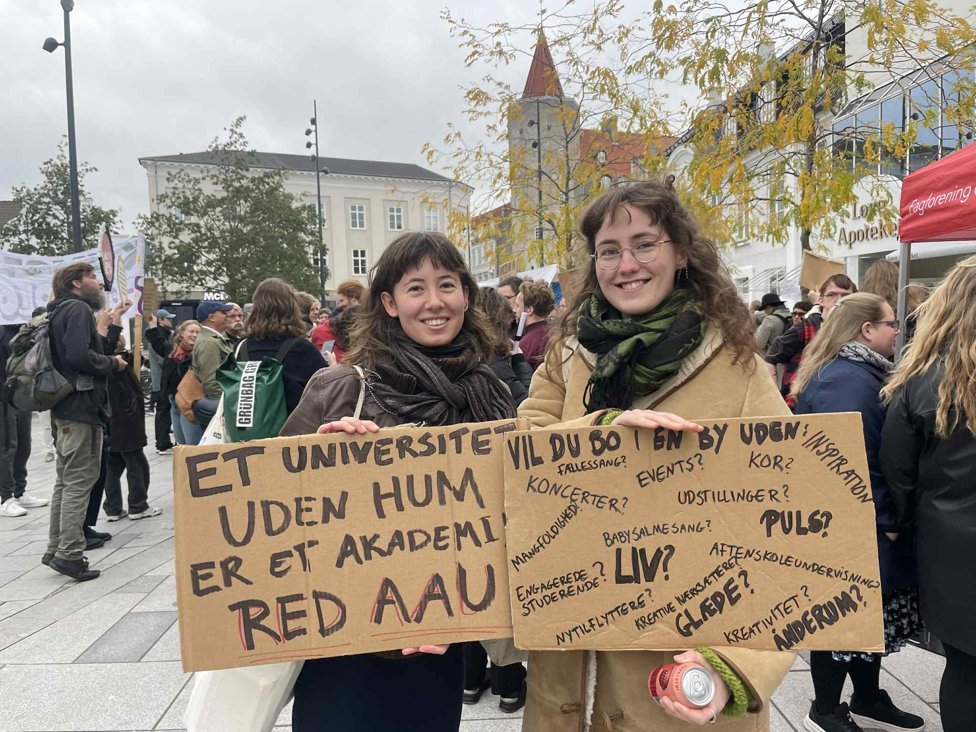
This unfortunately does not seem to be the way that Denmark is going, at least in terms of higher education, as showcased with the continuous crackdowns on humanities courses in universities, a troubling trend over the last few years. We are also observing the almost complete erasure of any English-spoken courses, as well as the near-national requirement to have Danish A when applying. This is something that must also be taken into consideration when deciding whether to go the international route over Danish systems, as individuals would need to learn Danish to a high degree in order to pursue a future education in a Danish university.
Reflection
To internationals, Elias’ story may feel both familiar and uniquely Danish. His experience highlights a tension that families around the world increasingly recognize: national school systems built on local identity are educating a generation that sees itself through global culture. In this sense, Denmark is not an exception but a reflection of a broader shift.
What stands out in Elias’ account is that he did not become “international” by crossing borders. He became international simply by growing up in a world where borders feel less relevant, where identity is shaped through language, stories, friendships, and online cultures that exist far beyond Denmark. His sense of belonging emerged not from a national alignment, but from a mix of cultural perspectives and day-to-day interactions with classmates from around the globe.
At the same time, his story carries an awareness of his own privilege. Elias is Danish on paper; many who come to Denmark are navigating far steeper challenges. With the narrowing of English-language university options, stricter Danish-language requirements, and reductions in humanities programs, international families and globally minded Danes face increasingly limited pathways in higher education. These trends reveal a paradox: Denmark, like many countries, is becoming more global in everyday life, yet more inward in its policies.
This leads to a crucial question: is integration only about learning Danish language and norms, or is it equally about Denmark adapting to a more interconnected world? Elias’ experiences suggest the latter. Meaningful inclusion is not achieved simply by placing international students beside Danish-born peers — it requires creating spaces that value and learn from cultural diversity.
In the end, the purpose of education should not be to fit children into predetermined boxes, but to prepare them for a world that refuses to be boxed in.