
I am an American father, currently living my seventh Christmas in Denmark. Five of those Christmases were also spent working as a primary school teacher. The first few were filled with confusion and surprise, as I learned to adapt to some cultural differences around this holiday. I am finally proud to share that I am an expert in the field. Here, I gift you – international parents of the present and future – with a sampling of alphabetized insights, to help you make the most of the most wonderful time of the year.
A is for Advent: the last four Sundays before Christmas. Also the term for daily surprise calendars; a lucrative national consumer market product. If you have less than four advent calendars in your house, you must have only recently moved to Denmark.
B is for Bank Holidays. There are three consecutive days in December when many/most places are closed in Denmark: the 24th (Christmas Eve), 25th (Christmas Day), and 26th (referred somewhat interchangeably as either Boxing Day or The 2nd Day of Christmas).
C is for Candles, the most important technology in the history of Danish winter. At Christmastime, many families will start the month by lighting daily or weekly advent candles, then forget for a few weeks until school ends.
D is for Dancing around the Tree, a charming tradition in Danish schools and homes. The most common song to sing while dancing around the tree is “Nu Er Det Jul Igen,” which is often sung igen og igen og igen og igen…
E is for Excused Absences. We do not endorse any child missing any days of school. But it’s Christmas, and travel can be expensive. The average child is excused from the last 1.5 days of school in December approximately three to seven times between Kindergarten and Efterskole.
F is for Frokost, which by itself means lunch – but when combined with the prefix Jule- it is the most important meal of the year for any person living in Denmark.
G is for Greenland. The Santa who comes to Denmark lives in Greenland. No further questions.
H is for Hygge, probably the most famous and undefinable Danish word. It is so undefinable, in fact, that at least 58 books have been written to describe it.
I is for Indendørs (“indoors”), where you will want to spend most of your time this month in Denmark. Teachers may also justify this choice, with indoor recess and other hyggelig activities.
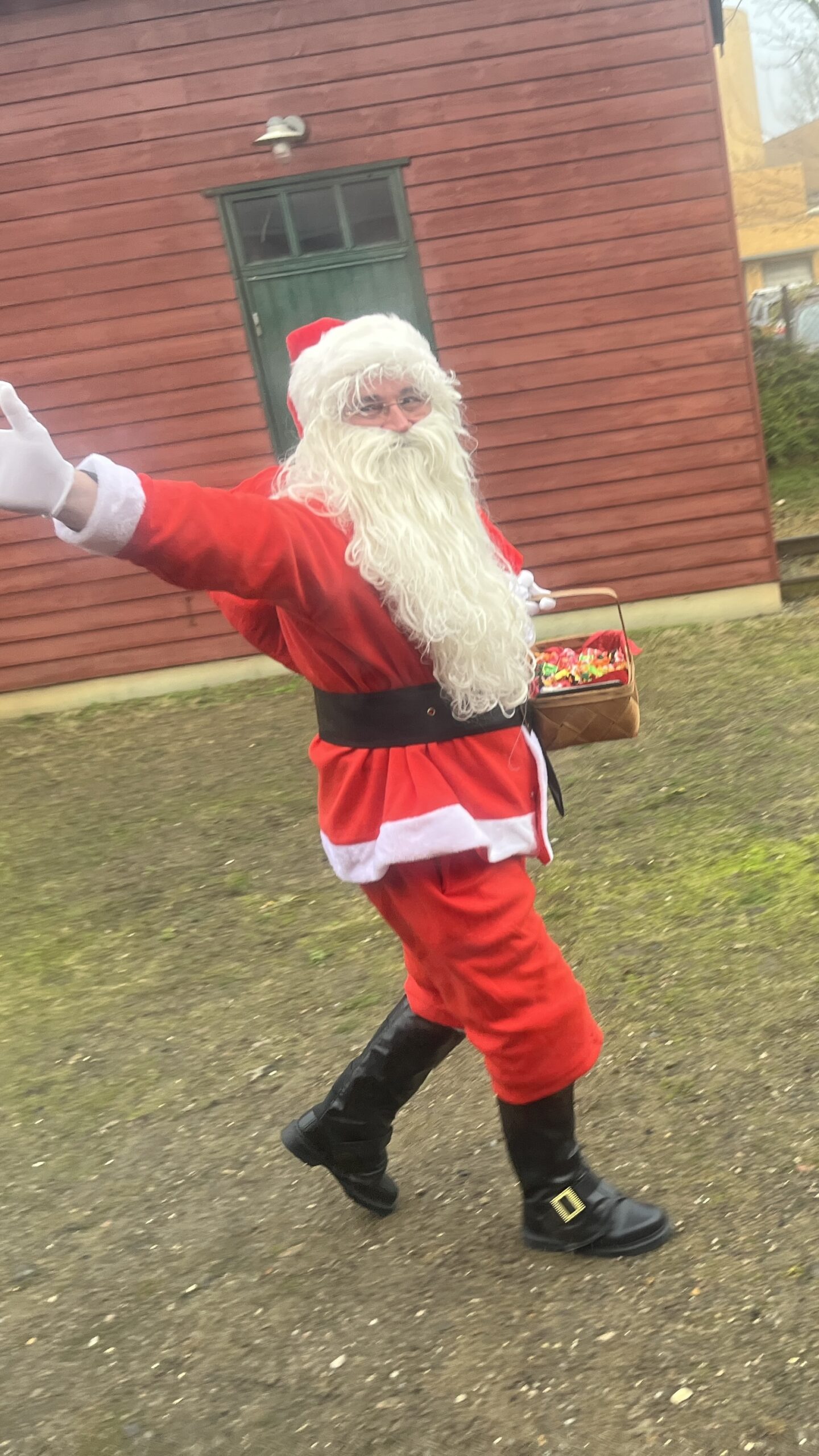
J is for Julemand, the adorable Danish name for Santa Claus. Around the world he is St. Nicholas, Kris Kringle, Sinterklass, etc. Here, he is “Christmas Man.”
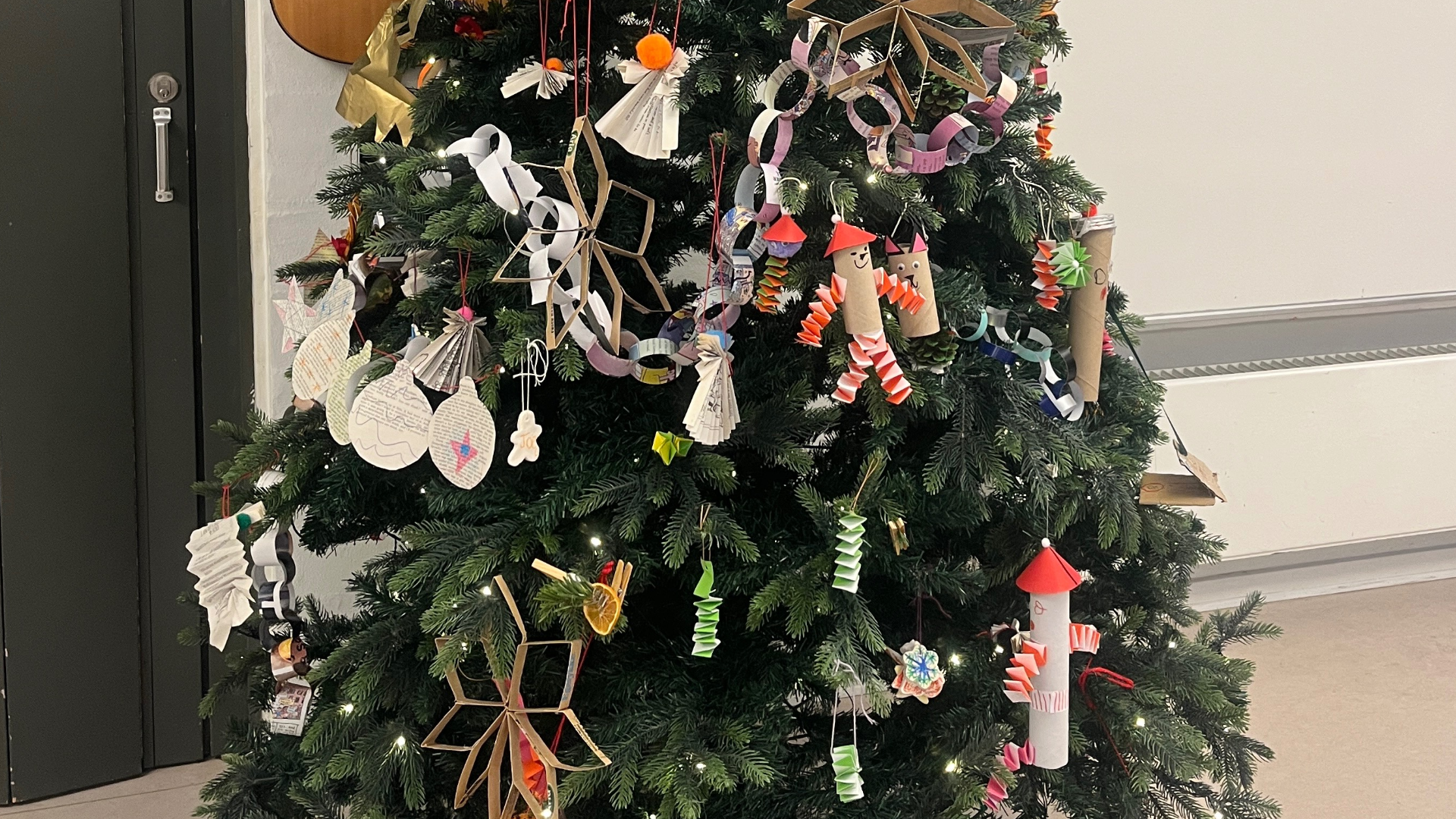
K is for Klippedag, a unique and lovely tradition in many Danish schools. Family members are invited to come into the classroom and cut paper decorations to adorn the school for the month.
L is for Last Christmas. This is one of the most popular Christmas songs in Denmark. If your child attends school in Denmark for multiple Christmases, they will memorize it.
M is for Market, a special weekend experience where you can expect cute couture crafts, hot gløgg, and frozen hands.
N is for Nisser, the mischievous Danish elves known for playing silly pranks at home and inspiring creative family bonding projects.
O is for Ornaments. There might or might not be such a thing as too many ornaments.
P is for Pebernødder, an irresistible cookie that is conveniently bite-sized, so you won’t notice when you eat 163 of them.
Q is for the Queen. Traditionally, the Queen of Denmark gives a speech every New Year’s Eve; Danes tune in almost religiously. In 2023, Queen Margrethe used her televised platform to publicly abdicate from the throne, passing on the annual speech to her son Prince Frederik.
R is for Risengrød, and also Risalamande. The former is a subject of the popular Danish Christmas song På Loftet Sidder Nissen; the latter a more sophisticated cousin who makes a special appearance at your Julefrokost.
S is for Santa Lucia. There is a story behind this celebration, but most Danes don’t know it. Please just be quiet and enjoy the peaceful children singing with candles in their hair.
T is for Tinka, which has become the annual juleeventyr. Local supermarkets may give away packets of trading cards from the series; beware (or welcome!) a likely collector’s obsession.
U is for Udendørs (“outdoors”), where your children will only want to go this month if it snows.
V is for Vintertøj, an essential category at any Danish clothing store. You will have to replace your children’s gloves, mittens, hats, on a nearly Advent-ly basis each winter.
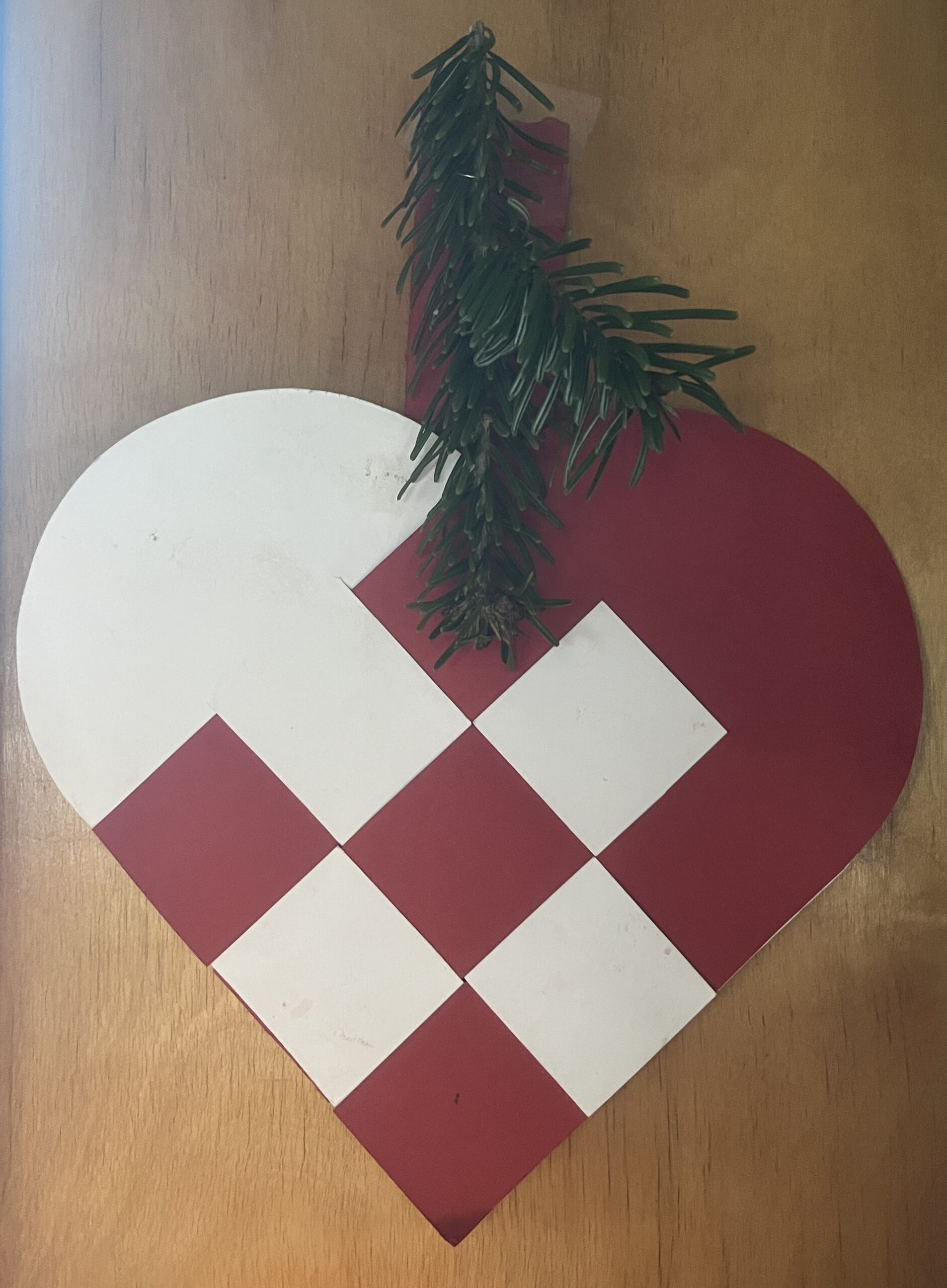
W is for Woven Paper Hearts. The tradition here is that if you are not a native Dane, every Christmas for the rest of your life will feel like you are learning this craft for the first time.
X is for X, the cross you make on each day of your handmade Julekalendar, counting down the days until you can stop shopping temporarily.
Y is for Yndling, one of my favorite Danish words. See what I did there?
Z is for Zzzzz. It’s the 26th letter of the alphabet; the 26th of December is a bank holiday. Coincidence? Or is it Denmark’s way of giving you permission to hibernate after a month of shopping, decorating, shivering, and feasting?
Æ is for Æbleskiver. Love ‘em or not, you are required to eat three of them, at least once a year.
Ø is for Øl, one example of a timeless gift for your child’s teacher. Cookies and coffee will also be appreciated and enjoyed. Although not a cultural expectation, no pedagogue will refuse any expression of gratitude for taking care of your children.
Å is for Årsskifte, the time when one calendar year ends and a new one begins. In addition to a speech from a member of the royal family, a Danish New Years Eve tradition is a viewing of the annually televised 1963 British-German short film, Dinner for One. Enjoy eighteen minutes of dry, dated comedy, the last moments of calm before four and a half hours of restrained chaos that is Danish New Years Fireworks.
Glædelig Jul til jer, og god nytår!