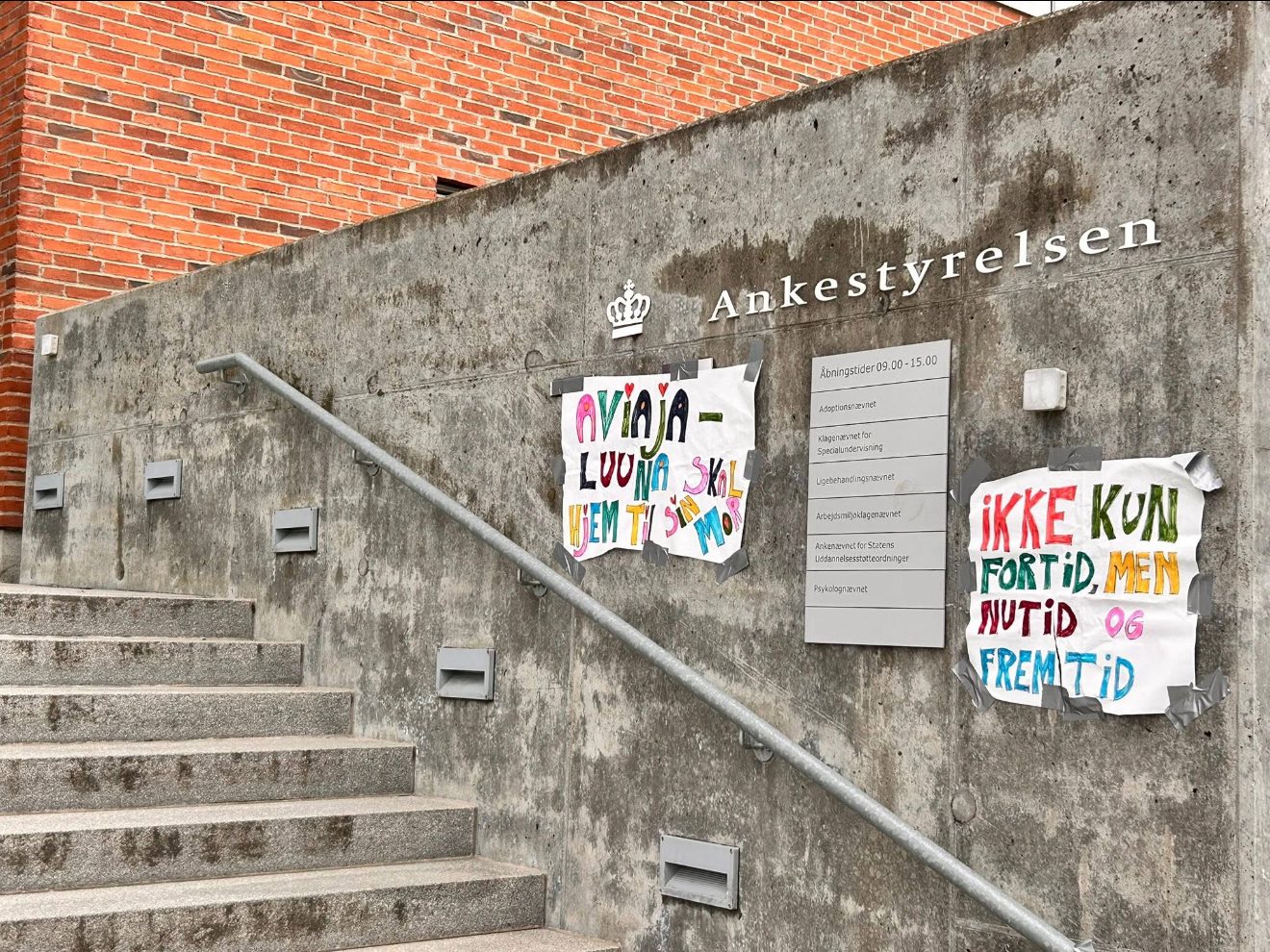

In a closely-watched decision, the Danish national appeals board ruled on September 22 that the daughter of Ivana Brønlund, a Greenlandic woman living in Høje Taastrup municipality whose daughter was forcibly removed from her by local officials just one hour after birth, must be returned to her.
The decision comes after a months-long dispute surrounding the municipality’s improper use of a standardized parental competency test known as a forœldrekompetenceundersøgelse, or an FKU.
In January, the Danish and Greenlandic governments agreed to amend the Children’s Act in order to abolish the use of standardized tests like the FKU in child service cases involving children of Greenlandic background.
This change came after years of criticism that FKUs – which can involve a range of exams, including IQ tests, psychological questionnaires, observations of staged caregiving exercises such as caring for a doll, and facial-emotion recognition tasks – are culturally biased against indigenous peoples as they are not adapted to account for the Greenlandic culture or language.
The amendment called for VISO, a special government advisory unit for complex social cases, to establish a new unit with expertise in Greenlandic linguistic and cultural conditions. Instead of using a standardized FKU, municipalities were instructed to reach out to VISO for assistance in all cases involving children with Greenlandic backgrounds.
In a public statement, Høje Taastrup municipality said that officials had contacted VISO in January before the law had been formally adopted, but they failed to reach out again after the new law came into effect in May. Instead of adopting the new framework, the FKU was allowed to continue as part of the evidence, which eventually led the municipality to decide in July that Ivana’s baby would be taken from her one hour after birth.
In the subsequent weeks after Ivana’s daughter was placed in foster care on August 11, her case stirred international media attention.
The Danish Minister of Social Affairs and Housing, Sophie Hæstorp Andersen, criticized local officials for not correctly following the new law. The municipality has since apologized to Ivana, acknowledged that it should have contacted VISO after the law came into effect, and that it was reviewing its processes to ensure the same mistake is not made again.
Despite the public acknowledgement of a systematic failure, when the appeals board made their ruling to overturn the municipality’s decision and return Ivana’s daughter to her, close watchers of the case were still surprised by the outcome.
“We were hoping for Ivana to win, but we expected the worst,” said Tina Naamansen, chairman of SILA 360, a non-governmental organization that monitors the rule of law and human rights as it relates to Greenlandic people in Greenland and Denmark.
“Up until today, if the municipality had made a mistake, the board of appeals would usually just reduce the time for reassessment, meaning a case would be sent back to the municipality, which would be given roughly a year for them to review the case while the child remains outside of the home,” Naamansen told Last Week in Denmark. “Until this week, they were always making decisions in the municipality’s favor, so a full reversal like this, it came as a very happy surprise.”
In an Instagram post, Ivana wrote, “I am at a loss for words… my heart is whole again.”

VISO Reassessments
While the board’s decision is a victory for Ivana and her family, Caroline Adolphsen, a professor of law at Aarhus University, believes that this case will not have any legal significance for the hundreds of other Greenlandic children currently living outside the home in Denmark.
“Ivana’s case is very unique because the law came into effect while her case was examined,” Adolphsen wrote to Last Week in Denmark in an email. “In a case where the child was taken into care before the new rules entered into force, it was correct to use the FKU at the time of and therefore it is not the same.”
Adolphsen further explained that the appeals board has not published an explanation of their ruling so we cannot say for certain why they overturned the removal, “but it is my assessment that it should be overturned on the procedural errors,” she wrote.
For the remaining families whose children were removed prior to the new law, they must wait for a review of their case to be conducted by VISO.
When the amendment to the Children’s Act came into effect in May, it not only banned the use of standard FKUs in new cases involving families with Greenlandic backgrounds, but also tasked VISO with the role of reviewing ongoing cases to identify whether a lack of cultural knowledge has led to the incorrect removal of a child.
When the legislation was proposed, the government referred to December 2023 national data, which estimated that a total of around 460 children or young people with Greenlandic background living in Denmark had been placed in foster care.
In an email to Last Week in Denmark, Randi Lykou, a chief consultant at VISO, said that the organization knows that not all placement cases involve an FKU, but it is still uncertain exactly how many cases qualify for reassessment.
“It is currently our expectation that we will review some 300 cases over the next year and a half,” Lykou wrote to Last Week in Denmark. “However, it is a figure which is uncertain, as we do not know in how many cases there are studies using standardized tests.”
According to Lykou, the organization is conducting reviews on an ongoing basis as municipalities flag cases for review, and all reviews must be completed by the end of 2026.
While the opportunity for reassessment is a second chance for many families, the process is also met with much skepticism from Greenlandic parents and advocates.
“It all depends on how seriously VISO is going to reassess these cases,” Naamansen of SILA 360, told Last Week in Denmark.
It is up to a municipality to begin any review, as the responsibility for placements lies at the municipal level; they have the most knowledge of which cases involve children of Greenlandic backgrounds.
Once a case is identified for review, the municipality shares all of the case documents with VISO, including how significant the FKU assessment was in making the decision to remove the child. VISO then compares the case documents with the municipality’s conclusion and delivers an assessment to the municipality on whether there are indications that an FKU may have resulted in a misinterpretation on the basis of culture or language.
If it is determined that an FKU may have led to an improper result, VISO will recommend that the municipality re-examine the case.
Ultimately, VISO serves only as an advisor in the process. The municipality creates a final recommendation, which is then decided on by the municipality’s Children and Youth Committee.
For advocates like Naamansen, VISO’s mandate does not do enough to ensure a placement has been made with absolute certainty.
“They take only the original case files and, without speaking to the family, they are supposed to determine if the municipality has taken their Greenlandic heritage into context,” Naamansen told Last Week in Denmark. “How can you get that full picture by only reading files?”
In addition to a lack of context, Naamansen, who has also reviewed case files as part of SILA 360’s work, claims that some files contain errors made by the municipality which could not be uncovered without a detailed legal review or conversation with the parents.
Another Potential Legal Case
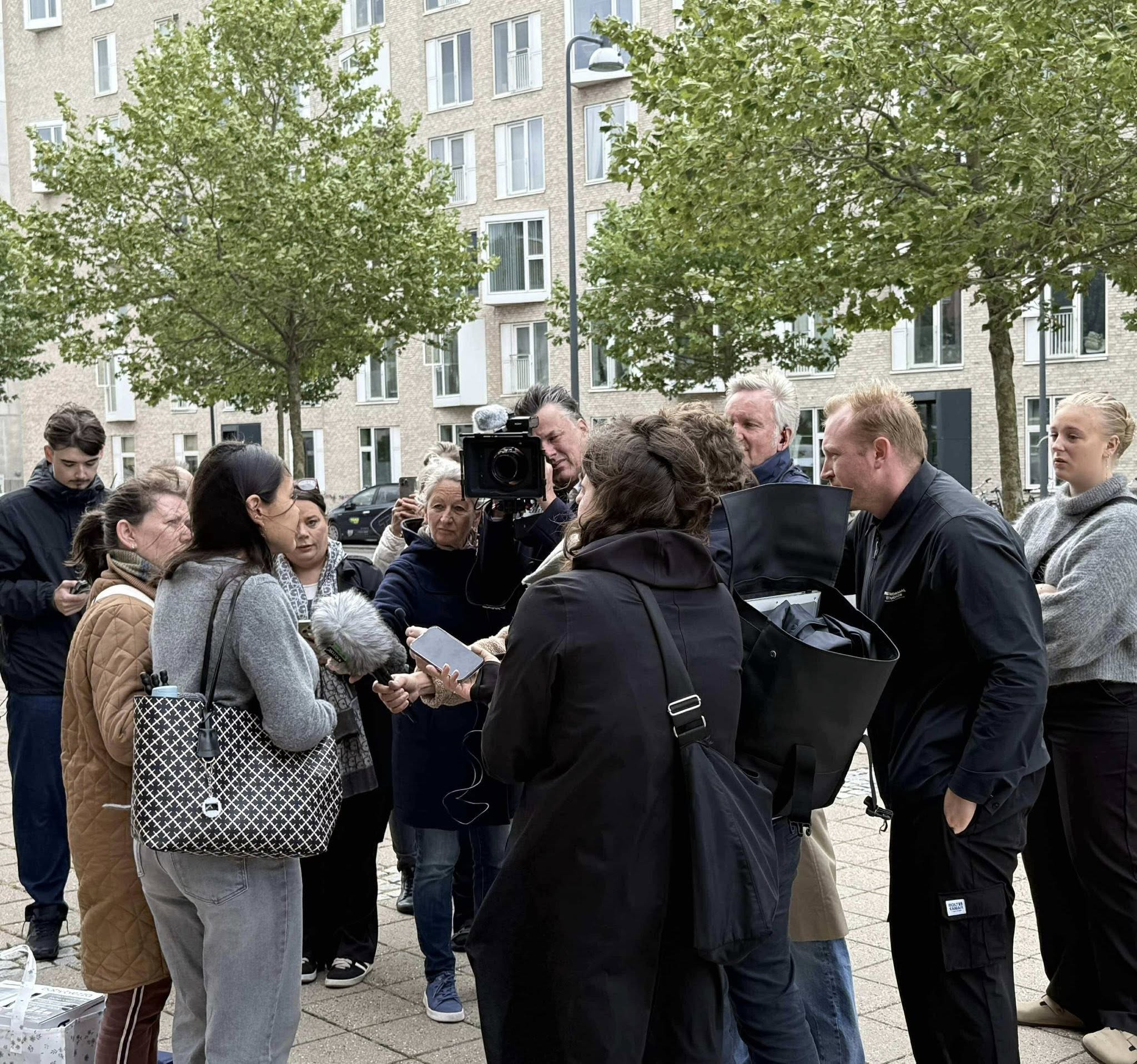
“I hope I can get her home as soon as possible,” Keira Kronvold, whose daughter was removed by Thisted municipality in November 2024, told DR last month. “But I don’t know if I trust it. To be honest.”
Before Ivana’s case gained international attention this August, Keira’s was the most highly publicized case involving the use of an FKU to remove a Greenlandic child without the parents’ consent.
Thisted used an FKU, legally at the time, as part of its determination that Keira lacked sufficient parenting capabilities and carried emotional difficulties of her own that would prevent her from properly raising her child.
Her case drew international media attention, protests, and public pressure, which, in part, led to the January agreement to amend the Children’s Act.
Keira’s two older children had already been forcibly placed a decade earlier through a process that also included an FKU.
Just as in Ivana’s case, it was determined that Keira’s third child be taken from her before the baby was born, and Keira was only given a few hours with her daughter before she was placed in foster care.
Keira’s case is one of the 300+ cases now under review.
She was invited to a reassessment meeting including both Thisted municipality and VISO in August and is expecting a decision by November, according to statements to Greenlandic news outlet Sermitsiaq.
In an email to Last Week in Denmark, Caroline Adolphsen of Aarhus University, said that all cases involving the involuntary removal of a child in Denmark include a mandatory reassessment roughly one year after the removal, meaning this meeting was not necessarily triggered by a VISO review of her case.
Jeanette Gjørret, a lawyer who specializes in forced-removal cases involving Greenlandic families and who represents both Keira and Ivana, told DR that she did not expect many of the placements to be overturned through the reassessment process.
However, a new path has recently opened for Keira, which could have much greater significance for other similar cases.
In April, the Danish national appeals board, which just overturned Ivana’s case, also heard Keira’s appeal against Thisted municipality. At that time, the board ruled against Keira and upheld her child’s placement.
Now, her case has been granted permission to proceed to the Danish High Court, Landsretten, under the provision that her case has “principled significance,” meaning it could have legal ramifications beyond her individual case.
There is currently no date set for when Keira’s case will appear before the High Court, but she and her lawyer hope to use this opportunity to set a precedent that, unlike Ivana’s decision, can be applied to all cases involving child removals before the FKU was banned.
Nassmasen of SILA 360 also remains skeptical that VISO reassessments will lead to many changes, but the appeal board’s decision last week gives her more hope for future legal victories.
“If you examine Keira’s and Ivana’s cases together, they were assessed on exactly the same grounds,” Naamansen told Last Week in Denmark. “So when the FKU is deemed invalid in Ivana’s case and her child is returned, the same should apply to all the others who are in the same situation.”