
Author Keri Bloomfield on the importance of being authentic and creating community through writing
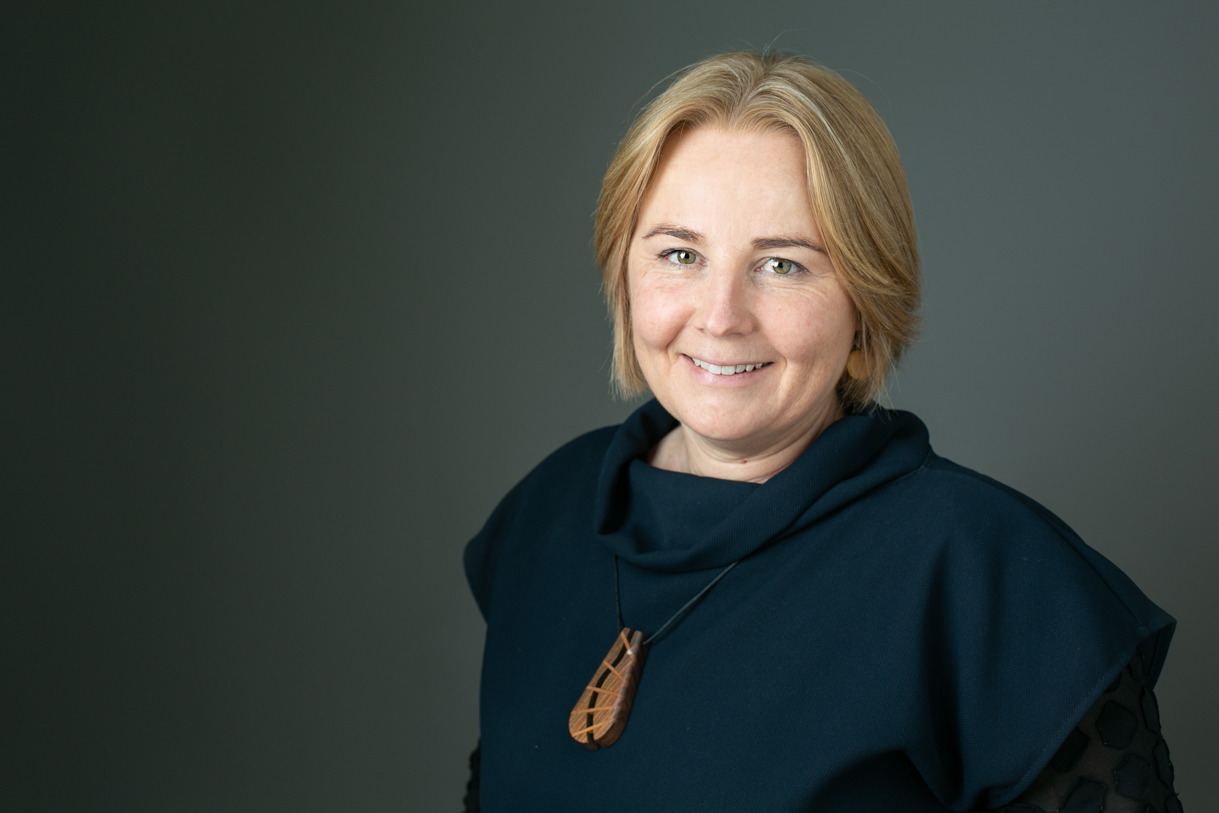
Every international faces lots of challenges when they move to another country, but it’s fair to say New Zealander Keri Bloomfield had to shoulder more than most. The opening chapters of her book Nothing Like A Dane are a rollercoaster of experiences and emotions, taking in birth, death and emigration in just a few months. She’s typically matter-of-fact about it all: “It’s just how it was,” she says.
Bloomfield moved to Copenhagen in 2016, after falling in love with a Dane she met by chance in a New Zealand bar. They bonded over a pizza, moved in together and some years later took the decision to move to Denmark. They packed up and sold everything and Bloomfield’s partner left New Zealand, expecting to see her in Denmark the following month.
And then Bloomfield discovered she was pregnant. Having experienced the tragic loss of their first daughter, she decided to stay in New Zealand where she knew the healthcare system and the language and had a support network around her. Also, her father was also facing several health issues.
“Writing and connecting with people online was a very important way for me to find some meaning and joy.”
Over a year later, after travelling nearly 18,000 kilometres over 32 hours, Bloomfield and her newborn daughter finally arrived in Denmark, where her partner met his child for the first time. Besides being exhausted by the gruelling travel, dealing with the normal range of emotions experienced by anyone moving country and adjusting to new parenthood, Bloomfield was also grieving the recent death of her father. It was, by anyone’s estimation, a lot.
Writing offered a much-needed outlet. “It gave a purpose to my daily existence,” she says. “I didn’t have the same freedom as other people might have when they emigrate. I had a newborn baby so I wasn’t able to just leave the house or go to networking events or really put myself out there. Writing and connecting with people online was a very important way for me to find some meaning and hold a little bit of joy in those early months that can otherwise feel a bit like a dark tunnel. It was a little bit of therapy too.”
Bloomfield started documenting her early experiences in Denmark in a blog that she named Bilingual Backpack Baby. Initially she saw it mainly as a way of connecting with people back in New Zealand and keeping them updated on her new life. From the beginning, being authentic and connecting with others was important for her. “I like to think these are the trademarks people recognise me for,” she says. Bloomfield didn’t want to shy away from the difficulties she was experiencing, from the challenges of learning Danish to being told by a healthcare professional that she couldn’t join local mum and baby groups because “they won’t want to speak English to you”, to her “deeply unpleasant experience” at the job centre that her residence permit required her to attend. “I didn’t feel like the reality I was living was talked about or seen in the media really,” Bloomfield recalls. “The world seems to be obsessed by Denmark but other internationals’ experiences I read never really seemed to match mine. I wanted to write a story that showed my reality because I knew I wasn’t the only one. I want people to know that they’re not alone. It can be a rough journey.”
“It’s not easy but it’s not impossible either to integrate.”
Bloomfield wasn’t wholly unprepared for life in Denmark. Besides having a Danish partner, she had lived in the UK previously. Still, she found integrating into Danish society very challenging. “In the UK my experience was one of open arms. There was general interest in who I was and what I could do and it felt much more welcoming,” she says. “Arriving in Denmark was a very different experience. You’re entering a society built on a lot of tight, close social connections. Lots of people are still friends with their børnehave (kindergarten) friends, which doesn’t leave much room in their calendar to welcome in new friends. In New Zealand, you can get talking to a stranger and five minutes later you’ve invited them round to your house for a cup of tea! It’s not to say either way is right or wrong but it is a very big difference. You really have to fight your way in to establish yourself and find your place here, and it’s not easy but it’s not impossible either to integrate.”
Bloomfield discovered she really enjoyed writing and after a year reached out to the Danish magazine The International. She started to publish a regular column, then found readers were beginning to contact her, telling her how much they appreciated her perspective and her humor. “My sense of humor is a really important part of who I am,” Bloomfield says. “Not everyone gets it though, so it was great to get those messages from readers that did.”
Still, she resisted people’s suggestions that she write a book. “I said, are you crazy?” she laughs. But a seed had been planted. At the beginning of 2019, she returned to New Zealand for the first time in two years. “I had these lovely few weeks where I felt like I put on this other, very comfortable, familiar skin,” she remembers. “But the hard bit is those trips can only happen every few years because it’s so far and so expensive. At the end of the trip, when I’m sitting on the plane waiting for takeoff, that’s when I’m at my lowest. I think about what might happen over the next few years before I come back. Quite often there will be one fewer person sitting round the dining table because they’ve passed away. It’s this very deep time for reflection and sadness. I was thinking about all of this and the words ‘Make it count’ jumped into my head and kept repeating themselves. I decided I needed to turn all these challenges into my unique opportunity and for me that was writing. That was the beginning of the book.”
We are all unique in how we land and that does affect how we find our place as well.
Never one to shy away from a challenge, Bloomfield told her growing number of social media followers that she was working on the book. “They became my cheerleaders,” she says. The process of writing Nothing Like A Dane took several years but from the beginning the idea of documenting authentic experiences that readers could connect with guided her. One of the big conversations she had with her editor was about how honest to be. “When I was writing the book I did think a lot about whether those moments of grief before I arrived in Denmark fitted into the story,” she says. “Because I use humor a lot, including my experiences from New Zealand felt like taking people on a really big rollercoaster that maybe wasn’t what they were expecting. But my editor said, ‘You’re writing a true story not fiction. This did happen to you and it did affect your starting point in Denmark.’ We all land in different situations and whilst we can share a similar journey, we are all unique in how we land and that does affect how we find our place as well.”
Besides authenticity, exploring what integration to Denmark really means became an important touchstone in the book. “I do remember this feeling that people in Denmark weren’t that interested in who I was before I came here,” Bloomfield says. “I felt very much swept into this sense of ‘You’re here now and you have to do things the Danish way.’ I felt a lot of pressure to be Danish in those early years, almost like my past was being whitewashed. Even though I’m a very confident person, it did shake me a little bit to try and work out who I was in this new environment. Of course I want to adapt. Of course I want to live my best life here, but can I do that if I have to switch my entire cultural compass point?”
Bloomfield wanted to get across the message to readers that she had needed herself as a new international: “I’m a New Zealander living in Denmark and I always will be, even after successfully integrating, learning the language, being part of a Danish family and part of a Danish workplace,” she says. “Even living my most Danish life, I will always be a New Zealander living in Denmark, and that is completely ok! Being ‘nothing like a dane’ is not a failure and that’s why I called the book that. If I’m not my authentic self, Denmark won’t get the best out of me. I know that now but it took me a long time to have confidence in that.”
“One of the surprises for me is the way the book has kept snowballing.”
For the same reason, Bloomfield always calls herself an international, not a foreigner or an expat. “The Danish word for a foreigner is ‘udlænding’, which literally means someone who doesn’t belong to the country!” she laughs. “And I’d quite like to belong! So I say I’m an international living here.”
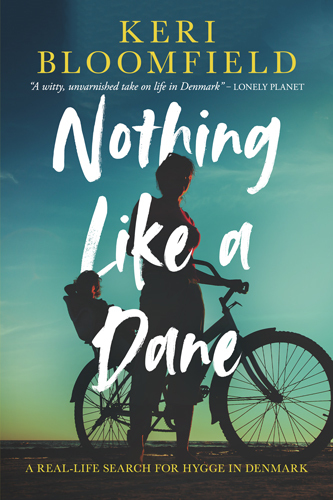
The book – Nothing Like A Dane: A real-life search for hygge in Denmark – finally hit bookshops in 2022. “Pressing publish is a very nervous feeling of wondering how your words will land,” Bloomfield laughs. “I want to say I don’t read reviews, but of course I read them!” She needn’t have worried: the book was quickly successful. “One of the surprises for me has been the way it’s kept snowballing,” she reflects. “That’s not typical: usually you’re hot for three months then the publisher’s not so interested in you as they have a hundred other books to market. Your time in the spotlight can be very small and I was expecting that. But the interest has kept growing.”
She’s been surprised too at the positive reaction from Danish readers. “They’ve been really supportive. People have told me they enjoyed it and can see a perspective they never thought of before,” she says. “I never felt that understanding when I arrived here and that is one thing I hope Danes can take away from the book – just to stop and think what it might be like to be a new international here.”
As for her international readers, the connection Bloomfield’s readers feel with her story is undoubtedly the magic ingredient to the book’s success. “It is a little bit of magic,” she laughs. “Every week I never know who’s going to find it or what email I might get from a reader, or what lovely review someone might have written. Someone who lived in Denmark fifty years ago emailed me and said she resonated so much with the book, right down to the naked swimming pool changing rooms!” Bloomfield finds this aspect the most rewarding thing: “Writing has become a tool for connecting to other like-minded souls. Both me connecting to them and them connecting to me as well. I’m still very active in that space.”
“It feels very natural to continue the conversation beyond the page.”
Bloomfield is unusual as a writer in actively inviting that connection from readers: the book ends with an encouragement to reach out to her with your stories and thoughts. Still, she’s found that hard to manage over time, particularly as she has a full time career aside from her writing. “The number of emails and messages I was getting – as much as I love it, I can’t meet individually with everyone and I hate saying no,” she says. Bloomfield decided to set up monthly dinners and invite the readers who contacted her. “I’ve always been a connector,” she says. “My background is in event and people management so by default I link other people. Writing the book is just a natural extension of that. It feels very natural to continue the conversation beyond the page. I also recognize there’s a lot of value in the people who write to me connecting with each other. I know that these people need someone in their corner and those of us who have been here a few years have such a role in that.”
The dinners, called the “Nothing Like a Dane Chinwaggers”, are hosted monthly in Copenhagen by Bloomfield and her friend Gina who she originally met at The International. They take place at a restaurant run by an Australian Danish family. “People are lovely,” Bloomfield enthuses. “Every month the dinner is different but every month it’s magical. I love being able to have these free conversations with other people about everything!”
Inevitably, Bloomfield’s readers are desperate for a sequel to Nothing Like a Dane. She is working on it, she says, though she wishes she had more time to write. “I’m entering my Something Like a Dane phase,” she laughs. Something Like a Dane will be about “recognising the phase you go through when you’ve been here ten years and you aren’t as New Zealander, or whatever your nationality is, as you once were. Your way of life has changed, intentionally or unintentionally, whether you like it or not. It’s a journey that you ride.” She laughs about some of the changes she recognises in herself: “When I go back to New Zealand now my senses are challenged by how many strangers want to talk to you in the street! I’m not used to it any more!”
While authenticity is central to Bloomfield’s writing, she wants to stress the positives too. “I’d say to new internationals, Don’t lose yourself in the process of integration,” she says. “Be proud of who you are and bring that to Denmark. Think of that as a gift that brings a new perspective or new skills to the country. You can only give your best to Denmark if you are at your best yourself. Finding your place here can be a rocky road with some tough, character- building moments along the way. But lean into it, learn the language, learn what makes Danes different, and keep putting one foot in front of each other and you’ll carve out your own place of belonging, your own little bit of hygge. And remember to laugh. If nothing else it’ll lighten the load!”
Read the introduction of Nothing Like a Dane:
I walked naked across the changing room pretending it was the most natural thing in the world. It wasn’t, of course: in 36 years, my New Zealand birthday suit had never been seen in public. I was completely out of my depth and hadn’t even made it to the swimming pool yet.
As I reached the showers, I froze like a deer in the headlights. (I was aware my own headlights were on full-beam too, though I didn’t look down to check.) In front of me lay a sea of bums and boobs. A communal shower full of women evidently more liberated with their bodies than me, were scrubbing their underarms and groins with remarkable vigour. Meanwhile my own DNA from another land recoiled in horror. I’m the first to admit that growing up on a remote South Pacific island has left me, paradoxically, a little sheltered in my views to nudity.
My significant other – ‘The Dane’ as I liked to refer to him, partly because it was easier to pronounce than his Danish name – had told me I’d need a shower before swimming. An innocuous suggestion I’d dismissed until I was staring straight down an aisle of bare-skinned butts of every shape, with mine about to join them. I was every inch a stunned prude.
We have the same logic in New Zealand, of course: one should be clean before swimming. But our execution of this theory is worlds apart. Showers in New Zealand have curtains and are rarely communal. Always, there are individual changing cubicles available for those who’ve not yet mastered yanking off a wet swimsuit beneath an oversized towel before pulling their undies up over damp legs. Showering is also, in most cases, done in togs (swimsuit to the rest of the world). Groins are not heartily scrubbed in public.
Staring at my showering companions I was thankful of having a minute social circle in Denmark. The odds were in my favour that I was unlikely to run into someone I knew while starkers.
Those 20 minutes became the longest of my Danish life. To reach the showers, I first had to navigate a terrifying one-way maze in a bare-arsed state. My shoes came off first (and to be fair, that bit was quite easy) before I found a locker to hover in front of while calculating my escape through the overwhelming nakedness around me. Women were blow drying their hair au naturel while making casual chit chat. A swimming attendant circled, wearing a bright red and yellow shirt and shorts combo (grossly overdressed given the environment). She patrolled the changing rooms ensuring everyone was appropriately cleaning themselves – I watched in horror as she sent another woman back for not washing her hair. After many
moments of indecision, I had no choice but to drop my pants and stuff them in my locker. Clutching my swimsuit and towel hard, I strode disrobed towards the showers.
If there was an illustration to sum up my vulnerability and awkwardness in this new land among Danes, this was it. Standing without a stitch on, 18,000km from New Zealand, in a room full of equally bare-arsed women, I knew I was different to the Danes. Even if they weren’t giving my four white cheeks a second glance.
If you’ve lived with anyone from another culture, you’ll understand. Square pegs don’t fit in round holes.
Reprinted with permission from Nothing Like a Dane, by Keri Bloomfield. Copyright © Keri Bloomfield 2022
Keri Bloomfield’s website: Keri Bloomfield 🇳🇿 🇩🇰
Follow Keri on Instagram: Kiwi Author in Denmark (@keri.bloomfield) • Instagram photos and videos