
As Vinterjazz 2026 unfolds, stories of Reed Peggram, Sahib Shihab and a metalhead’s fascination ask how this form of Black music came to belong in the Nordic imagination.
It’s my first column of the year. And if 2026 has already felt overwhelming, you’re not alone. I, too, had one of those starts to the year that demands humility. I turn to music on those days. I am hooked not just by the sound, but also by the story behind it. The main characters, the subplots, the migrations, the love stories, the risks. Is music my narrative? Yes. But it is also memories, a movement, something that reminds me that I am rarely the first to feel lost and have to find my way back.
This story took shape with my desire to introduce you to Vinterjazz by following through the detours, the footness, the love stories, and the shelves in second-hand stores that make up how I encounter music in this city.
When Jazz Moves Through the City
Vinterjazz 2026, is a nationwide music festival that takes place in February each year, spanning three weeks with 600+ concerts across roughly 150 venues and a wide network of independent organisers all over Denmark. It is coordinated by Copenhagen Jazz Festival Fonden (the foundation behind both Copenhagen Jazz Festival and Vinterjazz), but the energy is distinctly local. It is a national collaboration that happens venue by venue, city by city, from Copenhagen to Aarhus, Odense, Aalborg and far beyond. Living in Copenhagen means that around this time of year, Jazz begins to move through the city much like the snowplows this year.
Which leads me to a question that has been sitting with me: how did this form of music that is undeniably Black music, born of African American creativity, come to find such public acceptance and celebration in a country like Denmark? Before I attempt to touch upon that, I should also admit something else. My fascination with Jazz may seem unexpected. I am, at heart, a metalhead. My musical instincts were shaped by distortion, blast beats and sonic extremity. Perhaps that, too, says something about the reach of this music.
My own relationship with Jazz is more intuitive, more emotional than technical. It is about what the music carries. A couple of summers ago, while browsing through one of the many second-hand markets that bloom across the city, I stumbled upon a pictorial book titled ‘Jazz: Fra New Orleans Til Moderne Jazz’. Its title alone traced a journey in my mind, and even in my desire to trace that journey, I know I am not alone. In fact, I am so far back in the line of those who have tried to understand, document, and carry this music forward that the line is a dot to me.
In the Name of Love
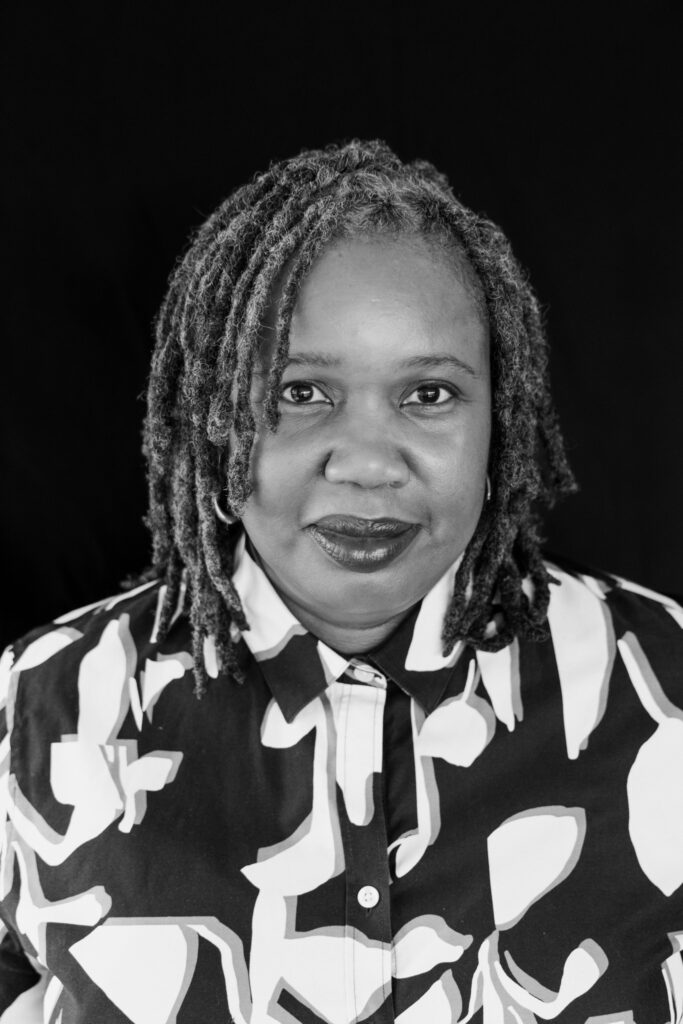
Image courtesy of Ethelene Whitmire
I have been following the work of Ethelene Whitmire, a writer and professor of African American studies, for a while now. It struck me recently that the subject of her latest book, ‘The Remarkable Life of Reed Peggram: The Man Who Stared Down World War II in the Name of Love’, embodies the very essence of what this column has been circling: love, music, culture and migration.

Image courtesy of Ethelene Whitmire
Whitmire’s connection to Denmark is not abstract. She first arrived in Copenhagen in 2010 on a whim, spending two months in the city during a year-long sabbatical from her job. At the time, she says, she had been watching a great deal of Danish cinema and chose Denmark almost instinctively – without really knowing a single person in the country. That has to feel familiar to several of LWID’s readership. She has since returned nearly every year (excluding 2020), making more than 20 trips in total with multiple visits during some years. When she decided to write a book about African Americans in Denmark, she applied for a Fulbright, which allowed her to live in Copenhagen from 2016 to 2017.
“I have made it my mission to do recovery work about African Americans, rescuing them from obscurity”, she writes in the prologue of her new book. I share the sentiment with a slight adjustment. My sole mission with this column is to tell stories of internationals in Denmark and their contributions to music, culture, and everything indie. So, I went back to the picture book, and as I flipped through its pages, the faces of those African American Jazz musicians seemed to tell me a different story, one of movement, liberation, courage and longing.
Reed Peggram never wrote the book he once dreamed of writing. He never fully documented what it meant to fall deeply in love with a Danish man named Arne, in a Europe shadowed by war. But, Ethelene has done it for him. And as I looked at those musicians who travelled across oceans in search of like-minded communities at a time when racism was not an exception but the norm, I could not help but hope that their journeys, too, continue to be remembered, not just in sound, but in story.
An Invitation to Listen
One such opportunity to remember these stories arose when I spoke with Chicago-native singer and performer Alo Wala, who now lives in Denmark. Her partner, Jamil, a visual artist, cultural architect, Hip Hop historian and illustrious photographer, grew up between Denmark and the United States, navigating the same transatlantic currents that shaped the earlier generation of Jazz migrants. Follow his journey here.
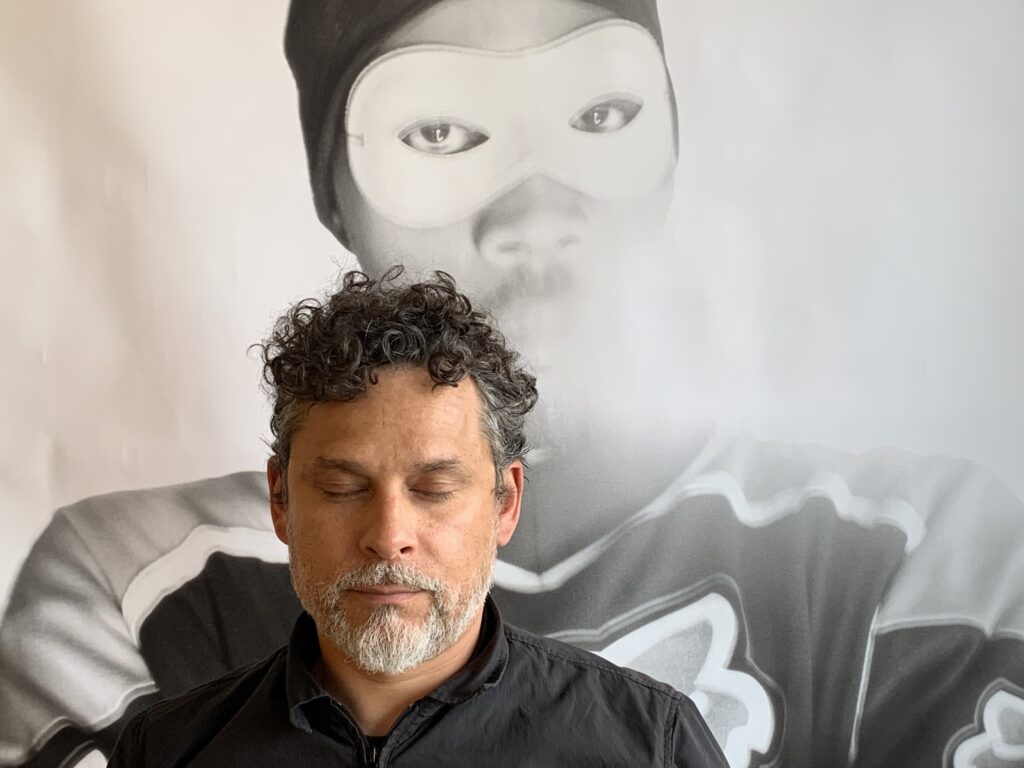
Image Courtesy of © Jamil GS.
If I wasn’t already slightly nervous about speaking to this artistically accomplished power couple, what Jamil shared next shifted the ground beneath the conversation.“My father, Sahib Shihab, first arrived in Europe in 1954 on tour with Illinois Jacquet, Coleman Hawkins, and Sarah Vaughan. He returned in 1959–60 with the big band led by Quincy Jones. And later chose to make Europe his home, living primarily in Copenhagen until 1986.” In that instant, the history I had been reading about for the past four years stopped feeling archival.
Illinois Jacquet, Coleman Hawkins, and Sarah Vaughan were all Jazz icons and Quincy Jones (1933–2024) could be best described as a musical titan, visionary producer, and towering figure in 20th-century popular culture and beyond. Blue Note Records describes Sahib (1925-1989) as one of the early architects of ‘BeBop’. As a distinctive multi-instrumentalist whose sound helped shape the language of modern Jazz. Among the first boppers to embrace the flute, equally fluent on alto and baritone saxophone, he recorded landmark sessions with Thelonious Monk and performed alongside Art Blakey, Dizzy Gillespie and the Clarke-Boland Big Band. There is even rare archival footage from Copenhagen’s legendary Jazzhus Montmartre in 1962, capturing him in performance with the iconic Jazz tenor saxophonist Dexter Gordon (1923-1990).
There is a new documentary, Legacy – The Children of Jazz (2025), directed by Manal Masri, which tells the story of how Scandinavia in the 1950s, 60s, and 70s became a creative haven for Black American Jazz artists seeking relief from the racism that haunted them in the United States. It is their children, including Jamil Shihab, who tell the story. A story not only of artistic freedom, but of its cost. Of what the next generation carries.
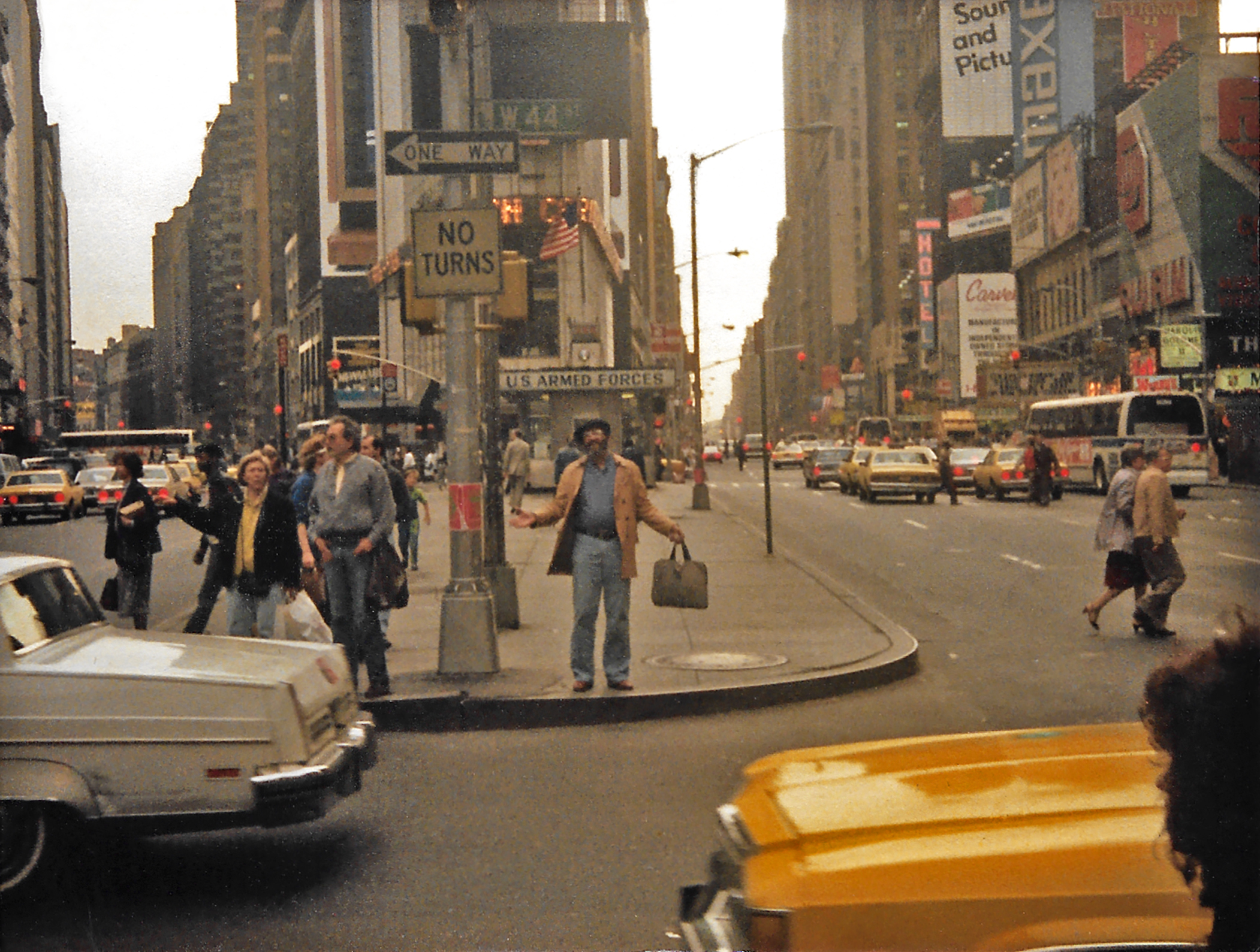
Listening to Jamil, I began to see the lineage more clearly. Just as Jazz inspired everything that followed, including Hip Hop, his own work documenting Hip Hop culture feels like an echo of his father’s migration through sound. He once photographed his father in Times Square in a stance I had previously only associated with Shah Rukh Khan growing up in India — arms open, claiming space. Years later, he returned to the same spot in Times Square and photographed emerging Hip Hop artists in the same pose.
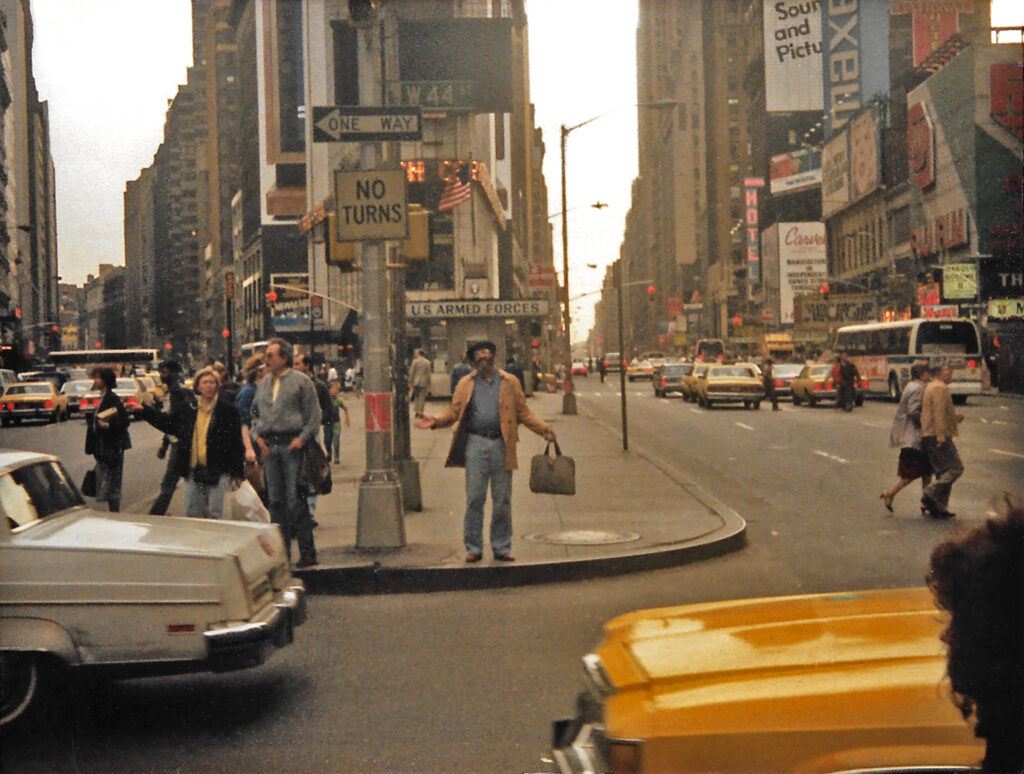
Image Courtesy of © Jamil GS.
“The vibrations of music can adjust the space it’s played in,” Jamil’s voice notes in the documentary. I felt the past and the present folding into each other. The line I once imagined — the one where I am only a dot feels shorter now. Jazz in Denmark is not an abstract heritage. It lives in families, in migrations, in inherited memory, in conversations across kitchen tables and continents.
If you are still reading, consider this my invitation. If you are in Copenhagen, step into a Vinterjazz venue. You may very well be walking in the footsteps of Sahib Shihab, who moved through these same streets in 1962, as seen in this Danish music program titled ‘Tema i mol’ (Theme in Minor).
The film, scored to the sound of Shihab’s own playing, follows him as he walks through a worn Vesterbro, past the industrial harbor, through the Inner City and the Glyptoteket, before ending at Café Montmartre in Store Regnegade. There, he rehearsed with his orchestra: Niels-Henning Ørsted Pedersen on bass, Bent Axen on piano, William Schiøpffe and Bjarne Rostvold on drums. Imagine that! An international in Denmark, with the whole city becoming a moving stage for his sound.
What is different now? There is no camera crew following you through Vesterbro, I hope. The point is that this is the lineage we are moving through as internationals in Denmark today. It is not an abstract history, but a lived one that continues to breathe. Jazz in Denmark did not arrive quietly; it arrived on foot, in rehearsal rooms, in smoke-filled clubs, in broadcasts that turned city streets into cinema. I say this not as someone observing from a distance, but as someone from among you who is still figuring it all out one winter walk at a time.
If you are elsewhere in Denmark, make the journey. Listen not just for the notes, but for the lives behind them, for the lovers, for those who came before us, the risk‑takers who crossed borders so that the music could, too. I wish you all a wonderful new year.
You can download the official Vinterjazz app with the complete programme from the Apple Store here.