

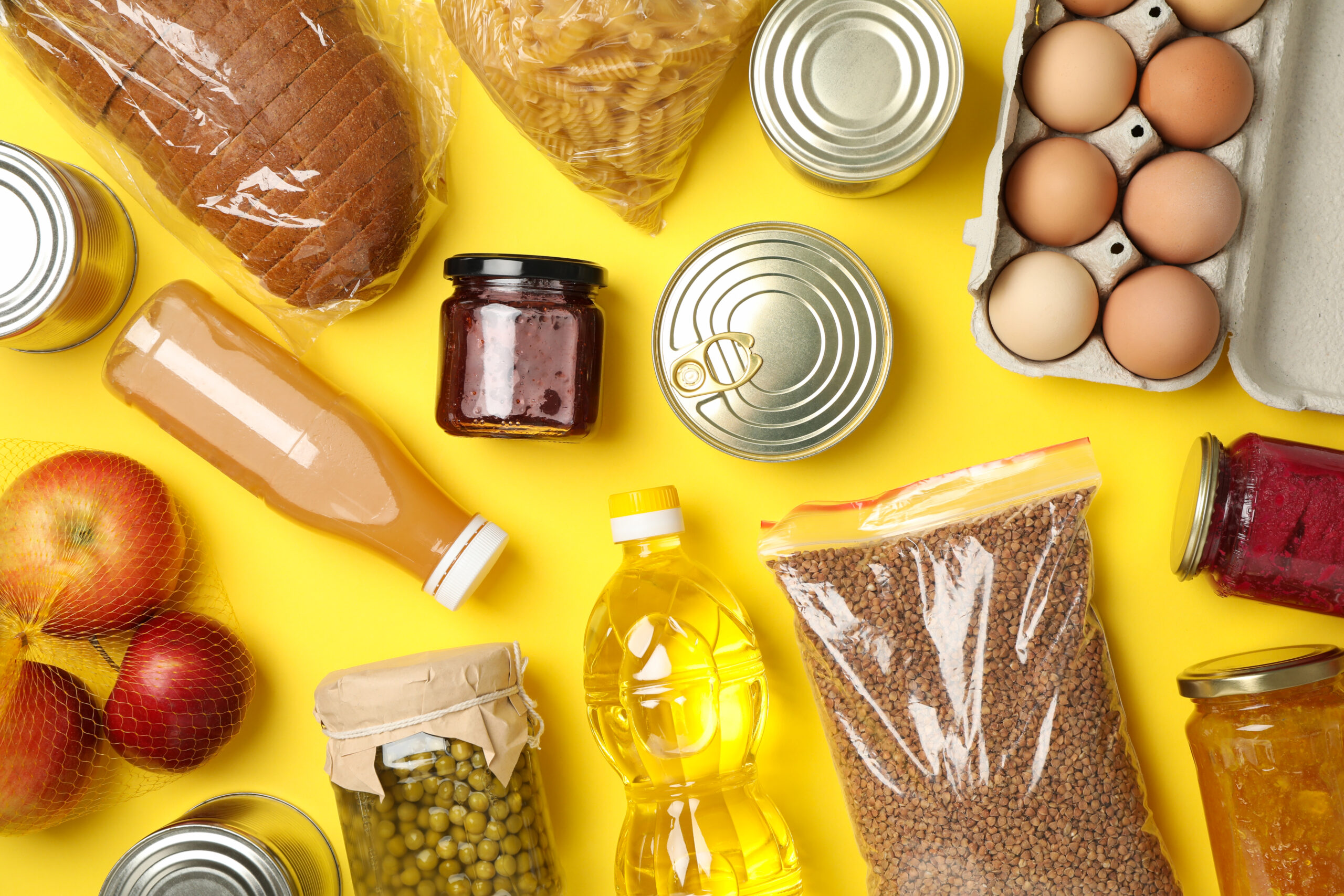
Over the last couple of years the prices of groceries have been climbing so fast in Denmark, that walking into a supermarket can feel like a guessing game. Is that yellow sticker actually a good deal? Or was the price just hiked up last week to make the discount look better today?
Research from the Danish Competition and Consumer Authority has previously shown that a huge amount of grocery sales here happen on special offer, far more than in neighboring countries like Germany or Sweden. But the hunt has become more difficult. According to Statistics Denmark, food prices saw record-breaking jumps in 2022 and 2023, and while inflation has settled, prices haven’t exactly returned to normal.
This is exactly the problem Nikolaj Englmayer Münster set out to solve. He is the founder of Goma.gg, a new platform designed to bring transparency to the Danish grocery market. We spoke to him about why he is tracking the price history of your milk, how to stop throwing away food, and what happened when national TV crashed his hobby project.

The inspiration behind the app
For Nikolaj, the idea started out of personal curiosity. As inflation peaked, he wanted to see exactly which categories were increasing the fastest. He started collecting price data on a daily basis to follow the development.
But he realized the data could do more than just track inflation. He often looked for dinner inspiration in the weekly offer catalogues, the “tilbudsaviser” that flooded Danish mailboxes. He figured that if he could build a system that collected all grocery items and their historical prices, he could suggest recipes based on what was actually on sale right now. It was basically automating a process many Danes do manually every Sunday morning.
This evolved into a broader mission for the platform, about creating transparency in an oversaturated market and giving people more time in their everyday lives. By doing the math for you, the goal is to benefit both your wallet and the shared environment.
How it works
To make this work, the app includes a broad range of supermarkets. Currently, Goma tracks prices and offers from a comprehensive list of major chains including REMA 1000, Netto, Bilka, Meny, and Spar, as well as Kvickly, SuperBrugsen, Løvbjerg, ABC Lavpris, and the online-only supermarket Nemlig.com.
The technology runs on a three-step cycle. First, every single night, the system retrieves the latest prices from all these supermarkets, ensuring the data is live. Second, it performs a mass calculation: the cost for every recipe in the database is automatically recalculated based on those specific daily prices. Finally, this allows you to search for recipes based on the discounts available that day. It effectively rethinks the shopping process, instead of picking a meal and checking the price, you pick the price and find the meal.
Is that offer really a bargain?
One of the main features of Goma is that it lets users search through the entire catalogue of groceries across different stores, including items that are not currently promoted in the flyers. This allows you to compare the total price of your shopping list before you even leave the house. By collecting historical price data, the app helps users see through the marketing. It reveals whether a discount is genuine or if you can find the same item cheaper at a competitor like Rema 1000, Netto, or Føtex.
During this process, Nikolaj found something that backs up suspicions often raised by consumer watchdogs like Forbrugerrådet Tænk. He noticed that sometimes the items featured in the offer catalogues are not actually the cheapest option. This touches on a known issue in the Danish market where the Consumer Ombudsman has had to tighten rules on when stores can legally use a ‘before price,’ requiring them to reference the lowest price of the last 30 days. Yet, for the average shopper standing in Netto at 5 PM, it is almost impossible to remember that history.
Using what you already have
Saving money is one half of the equation. The other half is actually eating the food you buy. In Denmark, food waste is a massive issue. According to the organization Stop Spild Af Mad, the country generates roughly 814,000 tons of food waste annually. While supermarkets play a role, private households are actually the biggest culprits, accounting for a large chunk of that waste. Nikolaj explains that saving money and reducing waste go hand in hand. The best way to cut your grocery bill is simply to use what you already have in the fridge.
Currently, the app has a hidden feature that allows users to search for recipes based on specific ingredients they have at home. But the vision goes further. Nikolaj wants to introduce pre-defined meal plans that calculate ingredient usage to ensure zero waste. Users can filter by categories like ‘Main courses’ or ‘Quick weekday dishes’ and see the calculated discount on the ingredients in real-time. For instance, you might find ‘Entrecote on the grill’ showing a 47% discount, or ‘Caramelized potatoes’ at 62% off, simply because the specific butter, potatoes, and meat required happen to be on sale at the same time.
The logic is simple. If a recipe calls for two carrots, but you have to buy a bag of ten, you are usually left with eight carrots that sit in the drawer until they go soft. Nikolaj wants the app to suggest subsequent meals for the week that use up those remaining eight carrots. This scenario is what behavioral economists often call the sunk cost of bulk buying; we buy more to save per unit, but lose money when we throw the excess away. It is a practical approach to a problem that costs Danish families thousands of kroner a year.
The missing link in the ecosystem
In many ways, Goma fills a gap that other Danish tech success stories have left open. Most people are familiar with Too Good To Go, the Copenhagen-founded app that became a global phenomenon by letting users buy leftover food from restaurants and bakeries. But while Too Good To Go helps rescue food that has already been produced and is minutes away from the bin, Goma acts as the fence at the top. It attempts to stop the waste before it even enters your home.
This shift from “rescue” to “prevention” aligns with recent trends in consumer science. Researchers often talk about decision fatigue, the idea that the more choices we make, the worse those choices become. By the time the average Dane finishes a workday and stands in the supermarket aisle, their brain is tired. They default to buying the same things or grabbing impulse “deals” that they don’t have a plan for. By moving the decision-making process to the couch before the shopping trip, apps like Goma try to remove that fatigue from the equation.
Despite the ambitious features, Goma is still very much a one-man project. All the servers and development costs come out of Nikolaj’s own pocket. He describes it primarily as a hobby, though he admits it takes up a lot of his time. There are challenges to running a service like this solo. Nikolaj recently appeared on national TV in Denmark to talk about the project. The response was immediate. It drove so much traffic to the site that his small server could not keep up and crashed. He had to quickly pull out his credit card and upgrade the hosting just to get the site back online. He calls it a “fun challenge” because it came from a place of genuine interest from the public.
Plans for the future
For the international community in Denmark, there is one big question: will it be available in English?
According to Nikolaj, this is a frequent request. He has received emails from people who want to use the site but do not speak Danish, as well as requests from users in Greenland and the Faroe Islands who want the service expanded to their regions. Translating the site and expanding its reach is on his list of 117 ideas for future development. For the past few months, he has been focused on the foundational layer of data quality. It is unglamorous work, but essential for the app to be reliable. Now that the foundation is solid, he hopes to shift his focus back to the user experience, improving how people find inspiration and plan their meals.
This focus on user experience is timely. As digital grocery shopping in Denmark matures, consumers are becoming what analysts call ‘hybrid shoppers’, using digital tools to plan physical trips with precision. For now, Goma remains a free tool for anyone tired of guessing if their grocery run was actually a bargain.