
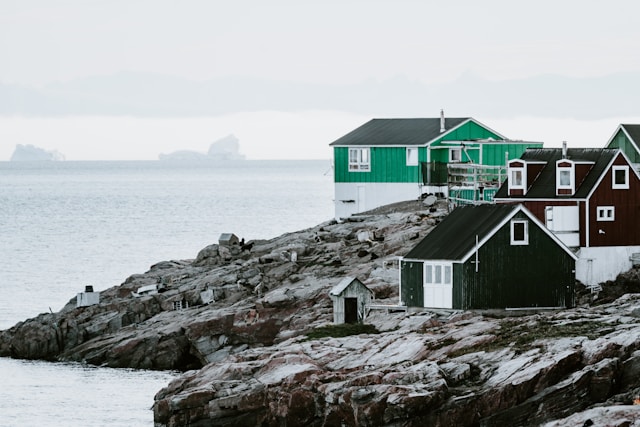
Greenland and Denmark have been connected for centuries, and their relationship has been ever changing. From early villages to modern cities, it has been a story of collaboration and cultural exchange. The Nordic presence on the island began in 985 AD when Erik the Red and his men sailed from Iceland and settled in Greenland. Though the Inuit in Iceland and Norsemen traded for centuries, those settlements are thought to have declined around the 15th century. The situation took a turn in 1721, when a Danish-Norwegian missionary named Hans Egede was fascinated by the sagas of the island. He would embark on an exploration to preach Lutheran Christianity to the people of Greenland, kicking off Denmark’s deeper involvement with the local Inuits. By 1814, with the Treaty of Kiel, Greenland was officially recognized as part of the Kingdom of Denmark.
Regrettably, the Treaty of Kiel also shifted Greenland’s role in the relationship to a Danish colony. From 1814 to 1953, Denmark controlled the Greenlandic economy and put effort into modernising Greenland’s way of life. While colonisation did bring amenities and a better standard of living, many of the native Inuit people began to view the Danish rule as oppressive. In 1953, Greenlanders won more representation through being recognized as an integral part of Denmark, even receiving a place in the Danish Parliament. Ever since, Greenlanders have pursued increased autonomy.
In 1979, Greenland moved forward, taking control of its own affairs with the Home Rule Act, giving it control over many local decisions.In 1985, Greenland then chose to leave the European Economic Community to protect its fishing rights, which are integral to their economy. Then, in 2009, the Self-Government Act gave Greenland even more power, most notably over its natural resources.
Today, Greenland’s natural resources and location make it important in the Arctic Area, where maritime routes are increasingly shifting due to the melting ice masses. Global powers are making bigger claims over the Arctic, putting Greenland in a rough spot. As for Denmark, it still provides financial and bureaucratic support as Greenland is working hard to balance modernity with Inuit traditions, while pursuing self-determination. Today, the bond between Greenland and Denmark is built on respect and cooperation and in the current political climate it is imperative to demonstrate those aspects more than ever.