

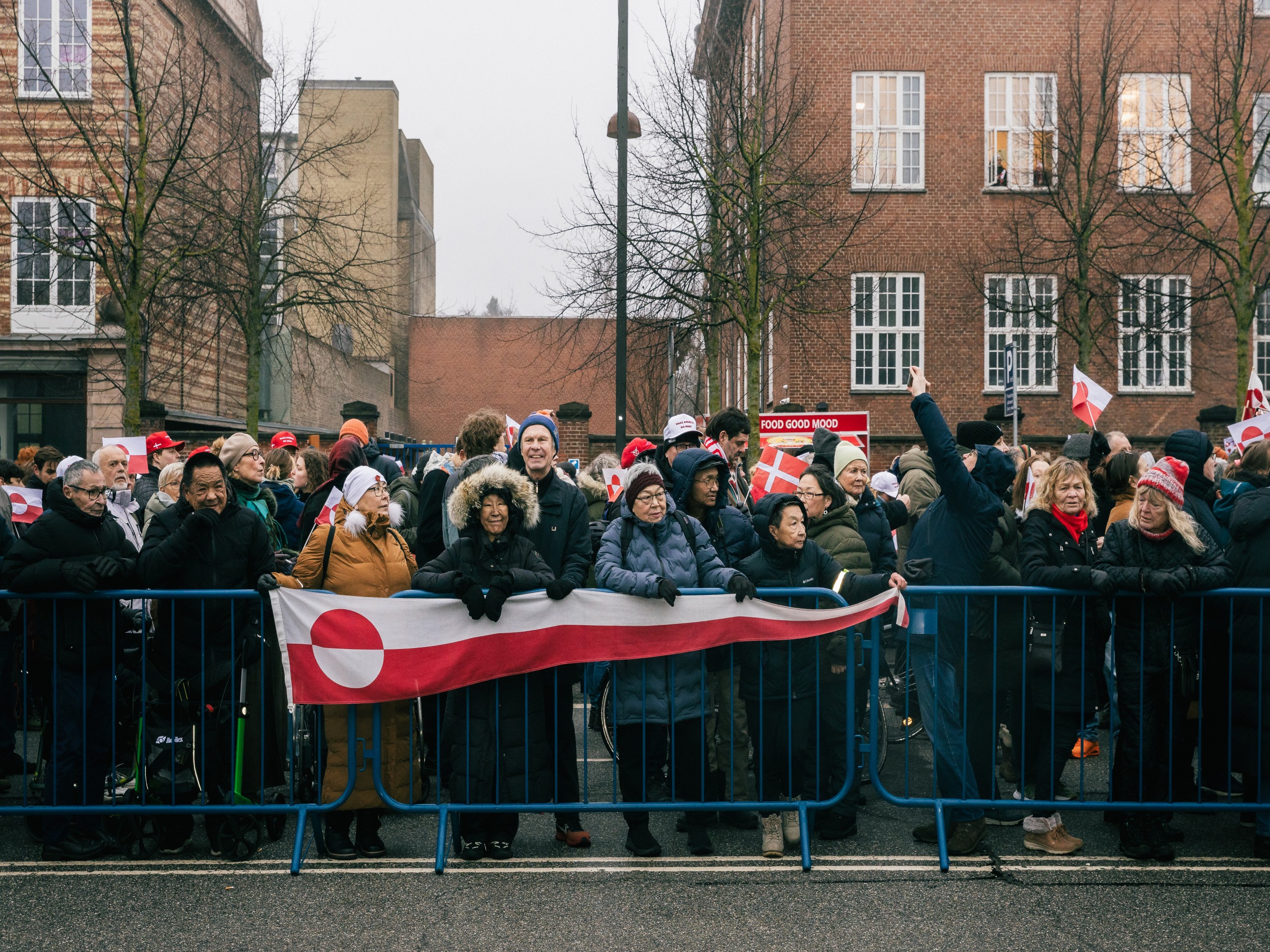
“It’s hard for me to explain how I am feeling, because I have so many emotions at once. I’m concerned for my family in Greenland, I’m proud, and I’m also just angry.”
Naja Kalsdrup, who is half Greenlandic and half Danish, stood in the middle of Dag Hammarskjölds Allé in Østerbro with her husband and friends. From a distance, they watched last Saturday’s protest in front of the American embassy in Copenhagen.
Naja said that she has been in contact daily with her family in Greenland as U.S. President Donald Trump escalated rhetoric about acquiring the island, even refusing to rule out the use of military force against a NATO ally.
It was only after the Danish and Greenlandic Foreign Ministers met with the U.S. Secretary of State Marco Rubio and Vice President J.D. Vance, that Naja felt a sense of relief.
“I’m a little bit less nervous today,” she said. Despite the differing claims that came after the meeting, it seemed that continued negotiations were more likely than an invasion.
“At least now I can sleep at night,” she said.
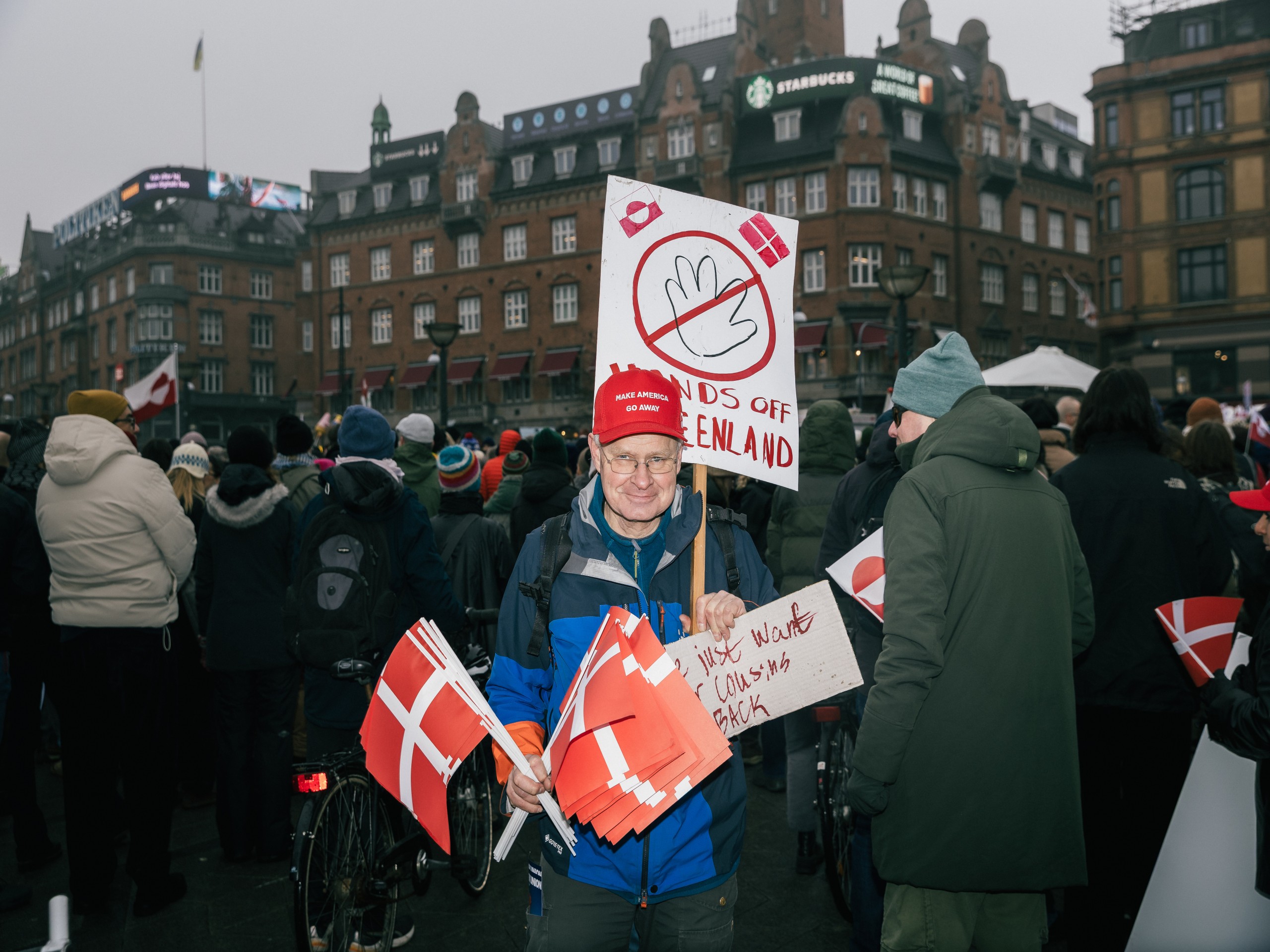
Earlier in the day, as protestors gathered at Copenhagen’s Town Hall Square, Lene Klamer also expressed worries for her family in Greenland, though she said they have not been in contact as much lately.
“I guess because it’s just so emotional, it’s been hard to talk about,” she told Last Week in Denmark.
Klamer, who was born in the town of Nanortalik, Greenland before moving to Denmark as a child, works as a podiatrist. She said that she has had to tell her patients she does not want to discuss the issue.
“Every patient that comes in the door wants to talk about what’s happening, and then I am talking about it from nine in the morning to five in the afternoon,” she said. “It’s too much.”
Over the past week, several people living in Greenland, or with strong connections to Greenland, shared their feelings with Last Week in Denmark.
After the initial shock and fear when President Trump refused to rule out military force, interviewees reported a mixture of emotions ranging from pride and anger to uncertainty and a sense of powerlessness. All shared a sense that this moment could be an important moment for the relationship between Denmark and Greenland.
A view from Greenland
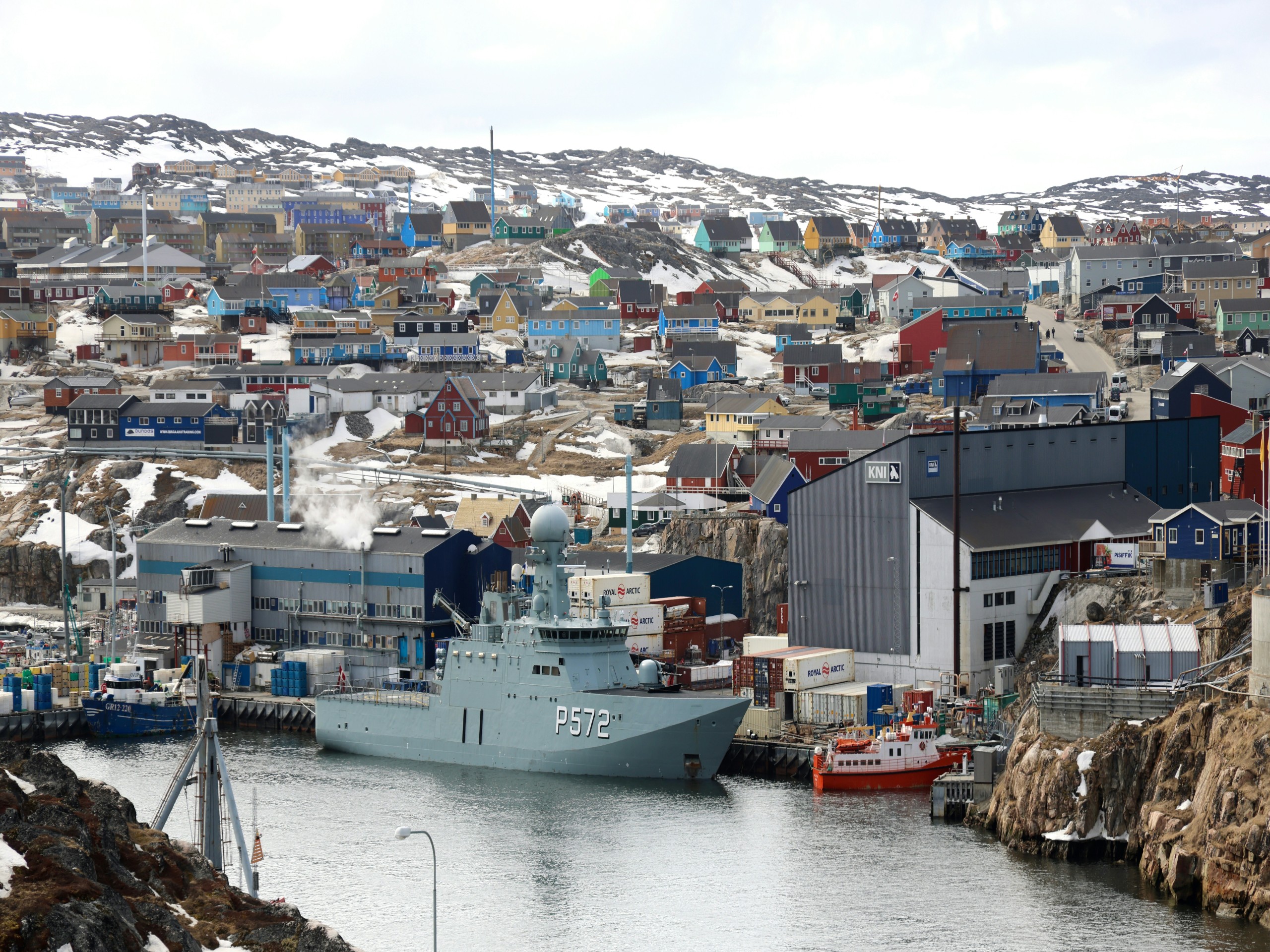
Photo Credit: Photo courtesy of Unsplash.
In Ilulissat, a coastal town of just over 5,000 people in Western Greenland, daily life continues largely as normal.
“The only real difference is all the journalists,” said Nukaaka Lund-Mathæussen, a project manager for the local municipality. “Every time we drive somewhere we see them walking around with huge cameras.”
While Danish and NATO forces have increased their military presence in Greenland, with Denmark sending at least 100 soldiers this week, Nukaaka said he has not seen any military activity in Ilulissat itself. He welcomed the deployments and increased naval patrols as a show of support, though he was less impressed by the brief visits from several NATO allies.
“I think some countries sent soldiers for a day or two and then left,” he said. “That wasn’t very reassuring.”
In other areas of Greenland, the situation feels more tense. The Greenlandic government published a crisis preparation brochure this week advising residents to keep at least five days of essential supplies at home, though officials said the guidance was not issued in response to threats from the United States. Greenlandic outlet Sermitsiaq has reported shortages of items such as generators, gas stoves, and water containers in the capital city of Nuuk.
Nukaaka said he has not seen similar shortages in Ilulissat. “A few of my coworkers were joking that we should go buy a generator,” he told Last Week in Denmark. “It just didn’t feel logical to us. We live in a small town. All the resources in Ilulissat are going to stay here.”
The joking, he added, was a way of dealing with the sense of unease. “I think it’s a coping mechanism,” he said. “You can’t really know what’s going to happen.”
Nukaaka also described feeling a sense of powerlessness and frustration as Greenland becomes an object at the center of international drama. He believes that Americans need to take more responsibility for Trump’s actions, and he worries the large number of international media outlets in Greenland distort the story of what is happening on the island.
For now, he does what he can by texting with friends in Denmark. “A lot of them are already really supportive,” he said. “I’ve been asking them to go to demonstrations and represent us.”
Recalibrating the Danish-Greenlandic Relationship
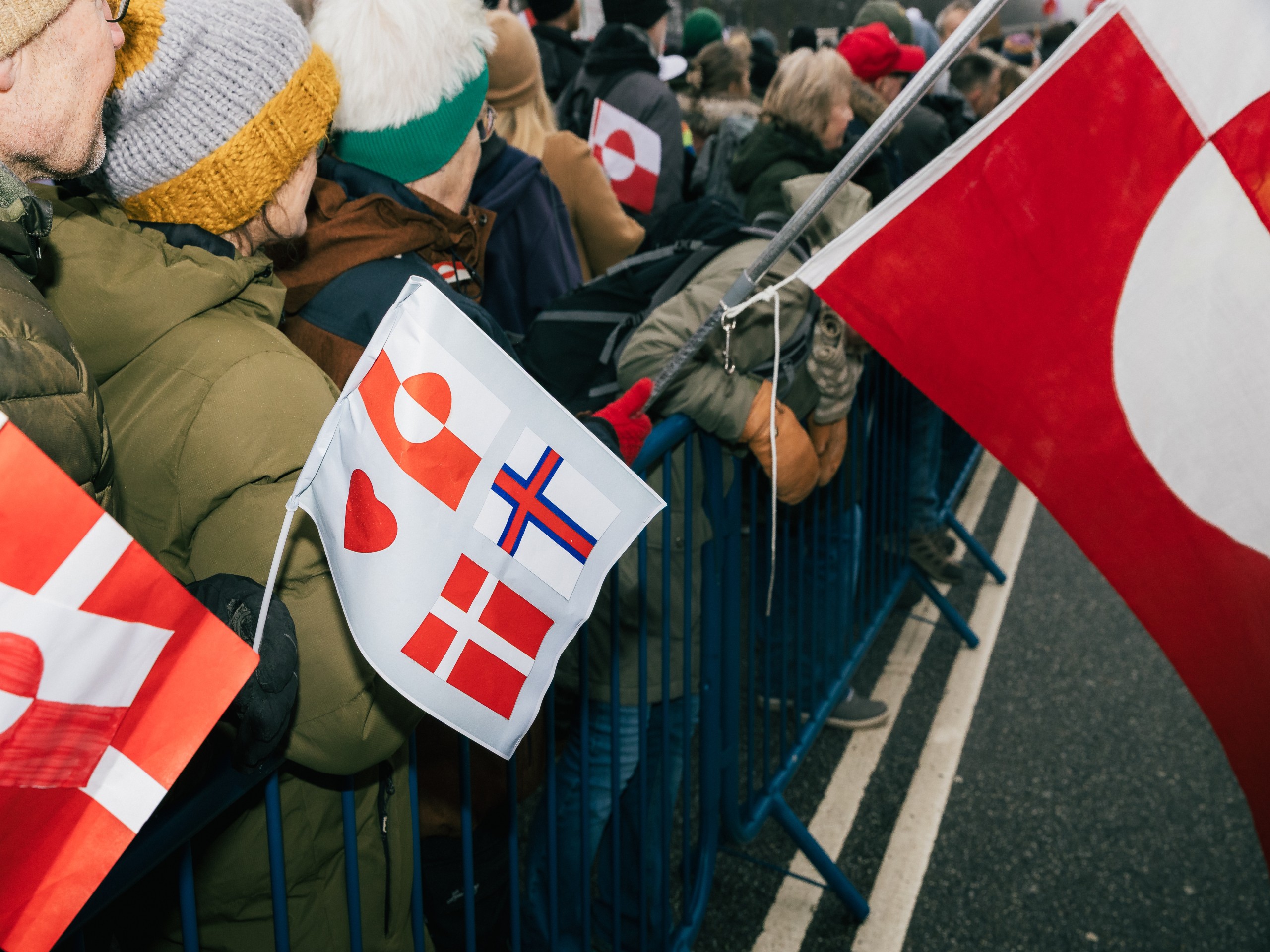
In interviews with Danes and Greenlanders, many said the current standoff with the United States has changed the dynamics of the Danish-Greenlandic relationship. After Greenland has spent much of the past decade distancing itself from Denmark in a push towards independence, it is now asserting itself more on the world stage while, simultaneously, drawing closer to its former colonizer.
Marie Stougaard, a Dane who has close ties to Greenland and who helped to organize a protest on January 14 outside the U.S. Embassy in Copenhagen, said the past weeks have made it difficult to imagine a return to the status quo, in which Denmark spoke almost entirely on Greenland’s behalf in foreign affairs.
“I think this is a turn in the relationship because I don’t see how we can ever go back to where Denmark completely leads foreign policy for Greenland, now that we have seen them speak and negotiate for themselves,” she said.
Under the 2009 Self-Government Act, Denmark remains responsible for all defense and security related foreign affairs, but Greenlandic Foreign Minister Vivian Motzfeldt’s participation at the negotiation in Washington D.C. has been seen by many as an important shift, signaling that Greenland expects a seat at the table in decisions affecting its future.
Nukaaka Lund-Mathæussen in Ilulissat said that, while he holds more trust in Danish Foreign Minister Lars Løkke Rasmussen’s foreign policy experience, “Vivian Moetzfeld being in those talks is really reassuring. She is there to represent our interests and make sure we aren’t being overlooked in negotiations.”
This pressure test for the two nation’s relationship comes at a time when Danes are just beginning to seriously reckon with Denmark’s colonial past in Greenland. That reckoning has been marked by a series of high-profile apologies from Danish Prime Minister Mette Frederiksen, following decades of pressure from Greenlandic politicians and civil society.
In 2020, Frederiksen apologized for the so-called “Little Danes” experiment, a 1950s assimilation project that removed Greenlandic children from their families in an attempt to raise them as Danish. After a lawsuit was filed by the survivors, the Danish government agreed to provide financial compensation, and Frederiksen traveled to Nuuk in 2022 to apologize in person.
In 2025, the Danish PM returned to Nuuk to deliver another apology, this time for the “Spiral Case,” in which Danish doctors implanted thousands of Greenlandic women with contraceptive devices, often without their knowledge or consent, from the 1960s through the early 1990s.
“I think a lot of Danes have been forced to reflect on the colonial relationship in the past few years,” Marie Stougaard said.
Though Denmark has now apologized for these two offenses, a long history of discrimination and cases ranging from “legally fatherless” children to the recent use of parental competency exams against Greenlanders living in Denmark represent additional hurdles to overcome.
In Greenland, where polling consistently shows a majority favors full independence, the relationship is still a contentious subject, but the current moment may be changing the attitude of public debate.
According to Nukaaka Lund-Mathæussen, as political conversations in Greenland increasingly focused on a push for full independence over the past decade, support for Denmark became socially taboo, as it was associated with anti-independence attitudes.
Nukaaka feels that many people in Greenland prefer independence while having generally positive feelings towards Denmark, but they tend to not express that much publicly, leaving the loudest voices to dominate public discourse. Now, as Greenlandic Prime Minister Jens-Frederik Nielsen has declared, “we choose the Kingdom,” Nukaaka said “this feels like the first time you can express support for Denmark without people criticizing you.”
Perhaps it is possible that this moment could represent both a step towards increased political power for Greenland and an improvement in the relationship between the two countries. However, the details will likely depend on the outcome of current negotiations.